
Professional education
En Bloc MoLEP with early apical release, step by step
Dr. Fernando Gómez Sancha · ICUA
Dr. Fernando Gómez Sancha · YouTube
Language: English. YouTube audio metadata.
Professional education. May contain surgical footage.
Playback connects to YouTube. Your search query is not sent to the player.
About this video
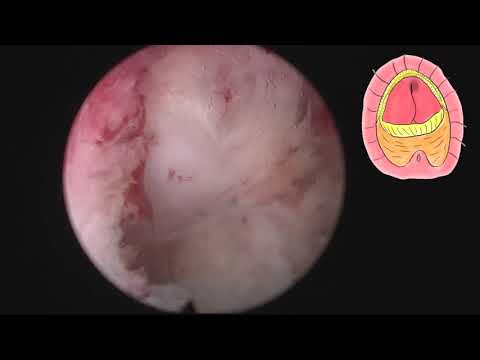
A step-by-step demonstration of en-bloc HoLEP with MOSES technology, also called MoLEP in the source. The description focuses on early apical release and protection of the sphincter during the operation. It presents a teaching explanation, without a measured postoperative continence result.
Documented details and sources
Only details explicitly stated in the sources. Missing information does not mean it did not occur.
- En bloc
En Bloc MoLEP with early apical release, step by step
- MOSES / MoLEP
En Bloc MoLEP with early apical release, step by step
- Early apical release
En Bloc MoLEP with early apical release, step by step
Source checked: 2026-10-06.
Available transcript · English
Subtitles exported from the original-language YouTube Studio editor. Not clinically reviewed; source identity and timestamps verified, full audio coverage not verified.
They may contain transcription or translation errors; check the explanation in the video.
- and block m'lip with early apical release this technique has been recently published and tries to reduce the rate of temporary stress incontinence after Halep probably due to the epithelium of the external sphincter that is typical of the classic thrill of technique the new Moses technology with two consecutive pulses provides better cutting and coagulation ideal for the performance of this technique the operation starts by scoring the limit of the external sphincter creating the white line that is a landmark to protect the sphincters mucosa throughout the procedure the lower aspect is liberated first on the posterior plane is developed the white line is then deepened anteriorly to release the apex completely early in the operation the adenoma will then be released
- from the capsule circumferentially with optimal visualization we believe that scoring the white line protects the sphincters mucosa and this prevents early post-operative incontinence this is a moderately enlarged land the procedure starts by scoring the white line at the limit of the external sphincter the fiber is positioned at six o'clock to facilitate reach to the interior part [Music] there might be some mucosal bleeding in some cases the incision must be carried out right on the limit of the center and not further proximally it is important to look back distally to check that the sphincter in its Mikasa is perfectly preserved the attachments of the apex to the sphincter are caught in the posterior
- aspect to allow for localization an entry into the plane without tearing this intern [Music] the white line is deepened and forms a groove that allows for easy and gentle mechanical dissection of the lower epochs allowing the localization of the nucleation plane in both sides after this the fibrous tissue on top of the very long tunnel is cut to unify and start developing the posterior plane [Music] [Music] once the small cavity has been developed it is possible to appreciate how the lower half of the apex has been already released from the sphincter the fiber is positioned at 12 o'clock for the remainder of the procedure the posterior plane is developed further until it is comfortable avoiding dissecting laterally as to prevent stretching of the sphincter
- [Music] [Music] then the liberation of the interior epochs is started in one side in order to release the epics from the sphincter it is necessary to cut on the adenoma five millimeters in depth over the white line and then the correct plane is sought from below progressing upwards until twelve o'clock is reached [Music] the same maneuver is carried out on the other side following white line until 12 o'clock and completing the release of the anterior prostatic ethnics it is important to enter approximately as we ascend with this incision and to cut horizontally from eleven to one o'clock to prevent sphincter damage as the interior sphincter is tilted proximally [Music] [Music] as the anterior up X descends with the progressive dissection the
- 12 o clock last attachment is verticalized an easy to cut to connect the dissection plane anteriorly completing the release of the sphincter when apical liberation is completed it is possible to cross from one side to the other anteriorly and it is then possible to retract the scope and observe the excellent preservation of the sphincter and its mucosal lining that we believe is so important to achieve the watertight seal effect that provides perfect post-operative continence [Music] from this moment of the operation own works the sphincter is safe on the circumferential dissection of the adenoma is performed under excellent visibility due to the small size of the cavity that we are irrigating
- [Music] also the recognition of the plane is facilitated by the circumferential nature of this plane [Music] when in doubt one can look to the sides and understand the anatomy with relative ease the bladder is centered anteriorly and the bladder neck is incised also circumferentially [Music] as the incision of the lateral aspect of the bladder neck is carried down it is advisable to check the position of the original orifices to be careful and to prevent their damage [Music] finally the six o'clock last attachment is cut and the adenoma is flipped and block into the ladder chemist Asus is checked and modulation follows and again we can see the excellent preservation of the sphincter and the radicality of the procedure
- you [Music]