
Surgery
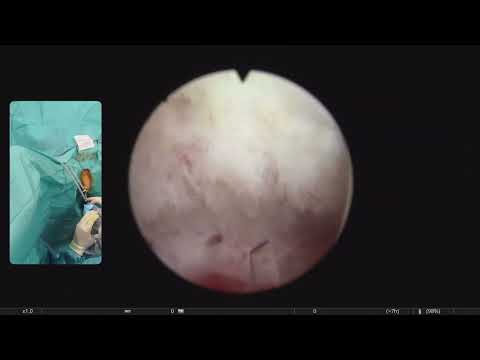
En bloc HoLEP for a massive prostate 500 cc. Unedited Full Case
Dr. Fernando Gómez Sancha · ICUA
Dr. Fernando Gómez Sancha · YouTube
Language: English. YouTube audio metadata.
Surgical content for professionals. Contains footage of an operation.
Playback connects to YouTube. Your search query is not sent to the player.
About this video
An unedited, real-time en-bloc HoLEP recording in a prostate with a documented volume of 500 cc. The technique includes early apical release. The accompanying description highlights instrument reach, intravesical protrusion and morcellation as challenges when operating on very large glands.
Size and recording format
The case-specific measurement is a prostate volume of 500 cc. The separate discussion of prostates above 300 g is general background in the source and must not be substituted for this patient's documented volume. The author describes the recording as complete, unedited and in real time.
Documented details and sources
Only details explicitly stated in the sources. Missing information does not mean it did not occur.
- En bloc
En bloc HoLEP for a massive prostate 500 cc. Unedited Full Case
- Early apical release
This case demonstrates how the En Bloc technique with early apical release safely handles extreme anatomy.
- 500 cc
En bloc HoLEP for a massive prostate 500 cc. Unedited Full Case
Source checked: 2026-10-06.
Available transcript · English
Automatic YouTube captions, not clinically reviewed. Names, technical terms and numbers may contain errors. Check them against the video; complete audio coverage has not been verified.
Selected spellings of enucleation, morcellation and holmium terms have been edited. This is not a full audio or clinical review; the original captions remain the source.
They may contain transcription or translation errors; check the explanation in the video.
- Hi, this is Fernando Gomes Sancha and you are going to watch a video of an enucleation in two stages. So enucleation first stage and morcellation second stage in a patient with a huge prostatic gland. It is unedited and I hope you will enjoy it. Seeana.
- Okay. Perfect. Uh, fever.
- SP
- What I see
- for the popular
- Ben
- There we go. It's a very large prostate. Crazy. Let's see what we can do. I explained to the patient that there's no good solution for a case like this. You know, any option we take is not perfect. We discussed open prostatectomy, laparoscopic robotic combinations like doing a nucleation and then um opening up to finish, you know, probably with less risk of bleeding.
- And finally we decided we would try and probably stage it into in two parts. So one for enucleation if we are successful and the other one to to do the the morcellation. So we don't keep it too long. We don't we don't have a very long operation. Now let's see what's bleeding. Let's see if we can connect to have the posterior line ready. But there's something bleeding from the pro prostate. I think is these big veins.
- Thank you.
- Let's
- see.
- I was half an hour. Another
- Okay, this time lapex. This is AEX. This looks like uh probably white line here.
- That is transparent uh deep. No. So we need to correct a little.
- It's the swin there.
- Not in a very comfortable plane. It's not so comfortable, not so detaching so nicely. So that's why we keep going a little bit into the capsule and a little bit into the adnoma trying to find the best plane. It's looking better.
- This is the 12:00
- I think this is the upper plane, the upper part. It's not easy, it's not difficult to get lost, no in different depths. So we need to let's say confirm the line that we want. No, we want to connect everything so that we are in the same line and we don't generate several different lines that are going to confuse us later. No. So let's try to get here. Let's see what we find. If we come down, we find our previous line. No. See,
- come see.
- Okay, so far so good. Let's see where is this bleeder coming from. So, here we are nearing now the 12:00 region. This is the 12:00 here. We are lucky that the morphology is not so aggressive. So, it's not so it's not so bad. Here we should see something. It seems to be It seems to be the white line.
- This plane looks very much nicer.
- You know, lady
- See? Correct. Correct. Be careful.
- [ __ ] Okay, Mala, it's not so bad. I think we are trying to to progress here. Let's see. This plane was very, very nice. Very. This is around 12:00. Let's see if we can gain more mobility. The thing is that um we've done many 400s. many probably nine or 10.
- And uh the difference between a 400 and a 500 is not so not so much in terms of because little amounts in little increases in diameter can induce a lot big big big improvement big big augments augmentation of the volume you know. So just uh half a cm more diameter means that the volume grows uh a lot. So there's not so much difference. Let's see. Let's see how lucky we are because there's a component of luck here. No, but the case is not uh I don't know finding a good plane, finding a tissue that doesn't bleed all the time. All
- these things can determine know the success or not of this crazy situation. Okay, there we are coming up and coming out to to check what do we have here. try to cut this 12:00 and try to preserve the sphincter as as much as we can. No, possibly can. So, here we get one more cmter here coming up. We'll take it there. So, we get more mobility and more detachment, more access.
- You see?
- We are now very close to finalizing the aical release here. This is one side. Now we're getting towards the other side here. I think the other side is coming
- now. I think we connected both both sides. Let's see anteriorly. Where are you? There a little bit of heistasis to do. Let's focus now more distant to see better.
- Let's see. And now this is anterior.
- Probably we haven't connected completely yet. Let's see. This is one side coming from there and the other side coming anteriorly here.
- Now we have to come from here.
- this anterior line. Let's see if we can cross towards the other side. We are very close to the bladder neck, I think. I think which is not a bad thing. It's big arteries there.
- Let's take it easy. Let's progress carefully.
- This is a bladder. These are very big veins.
- This is coming from the prostate. So it's not so important. Now we are in the bladder. Okay. What's bleeding here? This one.
- I'm not sure there if there is something here limiting. I don't I think no h there's nothing. Let's see.
- Where's the bleeder?
- here. Still the same.
- Don't do any much.
- We still are not so developed here. So I did not follow my own advice of being symmetric and structured.
- Now we have here that's where the bleeding was coming from. And this is coming. This is more anterior. So, we're doing well. We need to connect here.
- Ladder neck in this side.
- difficult.
- Is the ve
- No
- heat. Sterles.
- Look at the control. No.
- Oh, what was that so much?
- for no chance. Okay, let's go somewhere else. This is the other side. Probably around here. Let's put some pressure on that.
- I stop.
- This is uh another lobe. The middle lo there. So we need to go back down.
- You must be somewhere there. Not so easy to see.
- It's the ligament also.
- This is the middle lobe that we saw there protruding.
- It's a clot in the bladder. We cannot see the e. Okay, let's see how this is working out. We have a lot done already, but we need to come down from 12 towards 6. Let's do some hemostasis. We haven't done much. We need to start looking after heasis. I think.
- Must be the archery around here.
- I don't know if this is the one from before or another one. So many. There are many. Yeah.
- Sometimes the hemoasis is so sat. satisfactory and sometimes it's so difficult to
- now the middle low pocket. We are under the middle loop.
- Don't touch my chair.
- Very difficult to see where is the U. Maybe we will take it.
- I really have to push hard to get here. I hope it's somewhere there. Otherwise, we might have hit it. No. Okay. So, I think this is moving a little bit better. In my dreams, I would be able to to push this lobe into the bladder. That would be my dream. come true. But it's not going to be so easy because it's it's so huge. Something is going, huh? Something is moving. Some of it went Yeah. So, let's see if we can come under or
- Yeah. We'll have much better access from below now. Huh. Much much better.
- Now it's moving even more.
- It's now inside the bladder.
- Mhm. This is retro.
- handle.
- Come here. One. One is safe. At least one is safe. You're lucky.
- There we are. The other ones. We don't know.
- Maybe we hit it. But in this case, it's not uh the end of the world, I think. Let's see. Okay, let's do some heostasis of the fossa and see if we can live with this. Or maybe we need to enter with the rectocope and the rolly ball.
- Okay. Okay.
- I was watch mango.
- I cannot see anything.
- probably this is the same place as before. You couldn't eh see
- Retoral
- Easy
- now.
- [ __ ]
- Mr. Now,
- This one is here. The other one should be around here somewhere.
- We don't see it. It's probably
- Persech.
- taking
- No. It's okay.
- Super fish.
- So, rolly ball. Let's come out and see what we have here. Here we have the the sphincter. Here's the sphincter. Huh? It's not looking bad, huh? It's looking very good. So, there is hope for this man.
- It doesn't roll you. It doesn't roll.
- Okay. See
- two bit. Then we'll te it in
- Noa roll. It doesn't rotate. They call it the rolly ball, but it doesn't rolly. It doesn't roll.
- Maybe last much.
- Not seeing bad. I just check the edge here. Yeah. The problem is that the UO could be around here somewhere and I don't want to quagle it on top. I know. It might be somewhere here.
- here. No problem. There's a vein there.
- No.
- Okay.
- There's no space for such a big. Okay.
- Come on.
- foreign.
- I see.
- Mr. Speech.
- Okay.
- Come on.
- I guess
- Okay.
- It's very soft tissue. I think it morcellates well in principle.
- Fore!
- Foreign! Foreign!
- I think
- Open
- the fa. Yes, Thomas.
- Didn't well was it huh? Okay.
- Perfecto.
- But B, but on
- Let's put in the
- Come here.
- Come
- Ah, we mask.
- I don't know.
- Yeah. Foreign speech. Foreign speech.
- They want the
- Foreign speech. Foreign speech. Foreign speech.
- service.
- Seor Let's continue.
- Come here. Get
- See, I love it.
- It's not morcellating. Well,
- No, we took out 50 g maximum. So, it's terrible. It's Rosara in Oello.
- No, no.
- It's very hard tissue or what?
- I'm interested.
- disability is getting worse and worse and we don't progress.
- Empty everything.
- for
- heavy.
- Come on. Come on.
- Grandech.
- Let's see. It might get faster and faster.
- That was
- important. That's how
- The Rosa
- No, no.
- That is
- This There's more.
- TB.
- I'm not going
- to go
- Pocus. All right.
- I haven't heard enough. No.
- foreign.
- Okay. I'm going to do a second stage because it's impossible to to moistate, I think.
- Don't be stuff.
- See
- There's some clothes which is normal after more.
- I think I'm going to stop and come back on Wednesday. to do the morulation and then the tissue will be much more softer because it's a problem and I discussed with the patient and I think it's a good idea not to prolong this uh to 3 hours and a half or something like that. So, I'd rather come again.
- It's still bleeding, huh?
- We don't see the y these sides.
- That's the piece. Some cloth.
- It's a pity because with good morcellation I think we could have pulled it in one I mean in one go. But I don't mind. I prefer the safety.
- It's better than the roll.
- What the [ __ ] are you?
- This normally will stop when you put the catheter, but such an extreme case that I'd like to make as much as I can to make sure that he's going to be okay. Okay.
- It's a big piece.
- No, I think we took the the I
- This is one. This is the bar. And the other one should be Maybe one of these openings is the U. There it is. You see? That's the U. Let's wait. It's not a not a problem. Not Not so Not so dangerous. Okay. Now
- See one last try if it doesn't work very well
- Hey, I don't know what
- I'm spiriting the clocks.
- Same issue I think bad visibility but
- Okay. Okay. Let's put I think it's sensible to to to to wait and let the tissue get become more soft. It's going to be fine and it's been a reasonable time. Not not too long. Okay. Okay.
- Okay. Cannot see with this bubble here. There's some bleeding around the catheter. This is the sphincter. So we're quite quite happy no with this uh aspect of the sphincter. And now we are entering the the fossa which is uh covered by you know there's some clots in it. He had some postoperative bleeding although the urine now was coming out quite clear. So let's mobilize this because we will hopefully very easily um morcellate the clots and then morcellate the the tissue. Let's see.
- So I'm trying to clean the the fossa from the cloth existing cloths. There shouldn't be much bleeding now. But of course with such a big wound, I think it's normal to to have some oozing.
- So we mobilize more or less everything. trying to come from from the veru on the bladder neck. Sorry, from the apex. This is sphincteric region. Trying to mobilize everything.
- Okay, I'm trying to speak English here. Okay, there we are. That's a piece. That's probably the piece here. And the inside the bladder there's not so much clots. So I think we could try to enter with a morcellator. Huh. I think we can try to enter with a morcellator because there's not much bleeding. Just just a little bit of clots nearly everywhere. Let's see.
- Okay, give it to me and prepare the morcellator. Now we close the outflow. And here we are. This is the morcellator. This is the bladder neck. And up here we see the entrance to the bladder. I think or that is also the piece. No, that's the piece. Let me see if I see the the bladder neck here. Blink and piece. There we are. So, let's see if we can start to morelate. Hopefully, the tissue will be much uh softer now. power.
- There we are. So, I'm I'm looking for a safe position. I think the feeling is that there there is more tissue being morcellated. The anoma was quite quite hard. Hopefully we don't find any you know strange uh anatomic anatomic isopathology you know because sometimes for the prostates to grow so much there might be some component
- Okay. So, they tell me that there is tissue coming out. Let's see if we could
- get enough visibility to continue morcellating. I mean we could have done a much more thorough cleaning of the fossa before we start. But uh I think we we have enough vision. Uh what we really want is to remove the tissue now as soon as possible. make the marks as fast as possible and if if we can keep a reasonable visibility I mean there there is no active bleeding so we just see the the the the the clots being washed out no being uh giving the the urine or the water some red color but it shouldn't be active bleeding Okay.
- And I think once the bladder is without clots, I we can try to enter the fora and see if we can try to keep at the midline more mostly midline. Not very happy with the view there. Let's see. So, typically the tissue of course without vascularization and soaked in the urine and the bladder wash out that he had for the first day and then slow you know drop by drop irrigation for the second day. I think this tissue gets much much softer and uh much more ammenable for morcellation
- also. So I think when we wash out with the end endoscope and the continuous in and out flow that we get from morcellation and irrigation we should become we we should start to see better I think over time let's see let's see you know we cannot say that we have extensive experience in prostates more than 400 grams So there is a little bit of adventure here but I was quite happy with the uh enucleation time. I think it was more like 1 hour and a half I think when I saw the the video of the first part. It was more like 1 hour and a half
- enucleation time and uh then we kept on trying to morillate without success. So we decided to stop and come back in 2 days. The active bleeding stopped or the post-operative oozing no of the capsule stopped and the tissue is softer. So I think we will get a more efficient morcellation. Interestingly the pathologist in a previous case was able to see the hisystologology still. So even when there must be some you know necrotic phenomenon happening or starting in the tissue. Uh he could say he could tell that there was no cancer when he did the sampling of the tissue. Say again.
- But no no we don't have it yet. Our pathologist is uh able to do next day histologology for prostate biosis but uh normally not for the nucleation. It's not standard let's say. So we don't have information from the tissue yet. There we are. So in this case you see we have a lot of tissue in the in the bucket uh the tissue basket and uh there's not much water coming out uh with morcellation. That means that morcellation is being efficient. So let's see how long it takes.
- I still have some red red stuff here. This is bladder neck. This is adnoma. I like to be able to see a little bit what's going on with the with the blade. No. So, I look for the most comfortable position and
- this is under the arenoma.
- Mhm.
- SM is doing strange stuff also. See? Okay. Morcellation. We have to be patient.
- Hopefully this patient can be sent home tomorrow without a catheter because he's not bleeding anymore. And uh actually we did G. It would be forcing it too much to leave him without a catheter, you know, after the operation to see if he could pee in the postoperative. I think it's probably better to keep the catheter overnight and then tomorrow morning give it a a try to to voiding. Oh, but in theory if we find that at the end we have a clear fossa without clots without tissue and the visibility is good we got might give it a try. It's an interesting concept. So you do enucleation
- a very large gland. You do a second stage for moreation and then patient wakes up already being let's see
- I think what we saw in winter that uh the clot was like um smooth was the the balloon effect. No, on the clutch. I mean, there was a clot formed around the balloon. We only had like 40 ml in the balloon. So, of course, it's um useless to try to fill uh such a big fossa with with a balloon from a catheter. I think it's it's not possible. But we did apply a little traction uh because there was some red color. I couldn't I didn't see this typical palpating hematuria that you see when there's an artery. But in any case, we did a little
- traction uh with uh small bottle of of u saline uh hanging from from the bed and pulling the catheter and uh it was actually quite good. The urine got much clearer and then we left it for for 3 hours or so.
- Sometimes if there's an aical uh vessel near the sphincter um a little traction with the balloon in the fossa could help. Of course, uh when the bleeding is from the bladder neck, in these cases, it's impossible to to use a catheter because the fossai is so big that there's no chance that this is going to control the bleeding. So, we are progressing. No, apparently the the basket is getting full.
- It's quite an adventure. I think uh as a urologist it feels how do you say when I was younger I would have been very excited to do another record like you know I did this huge prostate in a limited amount of time and I think as you get more experienced you start thinking more about the patient no so that's why I told the patient you know I did a lot of cases before but uh this is a challenge and uh we cannot predict exactly what's going to happen. So but in this case you know half a kilo prostate um there's no good method you know I think there are risks uh involved with every method and but I said to him it's reasonable to try because
- I've done a lot of cases I've done a lot of big prostates and uh the outcomes were quite good you know patients were quite happy and we were successful. No, but of course I cannot tell you. We don't have a lot of data to to tell you, you know, what's going to happen or what is likely to happen because we have no idea. We don't have I mean I you know in all my life and having done you know more than 10,000 inucations I've done a lot of over 300 grams. I've done a few over 400 but uh only two over 500. Of course there's always this um error no in the estimation of volume.
- Sometimes the radiologist can tell you 500 and then of course you do the enucleation and you remove 250 and then you have the feeling that uh this was not a truly 500 g prostate. There must be some difference in volume between the let's say a nucleiated piece. No, if you do an open prostatectomy and the moreated tissue, but it's not clear for me what is the relationship and what weights more and it would make sense that when you um do the morulation you squeeze the tissue a lot with the blades. you know there's one cutting edge but um there is some compression of the tissue and then of course probably some of the water in the tissue will be destroyed by morcellation. So my my my bet would be
- that more tissue weights less than the original alenoma but I I don't have any data or knowledge to to tell you what I I don't understand you when you speak you need to speak a little bit slowly. The weight is not the same for example different volume different I don't know if it's normal or not I know that volume and weight is not the same but um to me what I'm trying to express is that the relationship between the let's say a nucleated tissue and the the posterior weight is not very clear when it reaches the pathology and he
- weights the tissue it has been fixated. So I don't know if if that weights more or not. And um what I'm saying is if if you have a 500 gram prostate in the in the MRI and then you take out 150 grams, of course the estimation of volume was not correct. There is some correlation. And I I I do my own ultrasounds in the clinic. And of course over the years I think I get uh relatively reasonable estimations. No, I know that the formula of the ellipsoid that we use is not very accurate. No. And uh to calculate the volume and it doesn't really match the anatomy of the
- of of the areno. So, but of course this was a a genuinely big gland. Let's see how much tissue we take out. And of course, when you are, let's say, competing or, you know, trying to see who did the biggest prostate, it's incredible. I I think we should uh refer to the Okay, let's change. We should refer to the we should refer to the to the weight of the moreated tissue. Maybe see
- so we get an idea.
- Not so much. Not so efficient the moreation. So still for some reason we're not being able to take a lot of tissue out in a short time. Let's see. We have to struggle here until
- These are the mysteries of urology know that we don't um understand many things completely. No. Also I had a patient who one of the patients who developed sepsis with holip. No I had like three maybe four cases in my life and uh he started shivering in the operating table and the blood pressure was crazy and u the anesthetic said we need to stop. you know, and uh I was morcellating and I left one uh lube in in the bladder and then he was in the ITU for almost 20 days. Finally, he recovered and then he came to my clinic to to
- check and I couldn't see the the piece inside the bladder or the fossa and I did a cystoscopy and I couldn't see any tissue remaining. So in 20 days I I think the tissue roted completely and vanished or or maybe a little bit more I don't know but it was quite strange and uh probably if you leave a a piece long enough you know it will probably rot and come out. I don't know it was it was very very puzzling for me at that time and I couldn't find other explanation.
- So what do you think? If we have uh the adenoma, we do an open prostctomy. We take out the adenoma and we wait it. Okay. And then we put it in a jar with water or and then we morelate it. We dry it up and we wait it again. Which one waits more? The completenoma or the fragments? Wait. This is my point. When you do the morcellation, you see there is some squishing of the tissue. There is some squishing you know and um so some of the secretions inside the adenoma, some of the liquid inside the adenoma is going to be uh removed. No. And uh that's why
- maybe the weighted volume or the weighted uh more seellated tissue is probably weights a little bit less than the complete adenoma. No, this is my understanding although I have no no data. I think it probably will be like that. There is some publications but I I don't know. I I probably read them some time ago and I I didn't quite understand or I was not convinced no of that but it says for example 500 mgram it's a volume with three dimensions yes but the the density of water is very similar to the density of the prostate that's why we tend to I mean you can calculate but it's it's fairly similar there is a difference probably there's
- more difference in a very large gland you know 500 maybe I don't remember exactly what is the relation no between but but the density of of the tissue is similar to water and and we all assume that cc's are similar to to grams no of tissue it's not exactly the same I don't I don't recall it because it's not we don't use it every day and you can calculate the with with the specific density of the prostate have the same amount of muscle. Yeah. Yeah. There are different compositions. No. So different prostates might wait a little bit different. So there's so much variability that it's difficult to to be precise. No. And to know in Spain for example, and this is very
- typical from Spain and not I haven't seen them seen that in other countries. We say prostate the prostate is grade one, grade two, grade three, grade four meaning grade one very small, grade two slightly enlarged, grade three quite enlarged and then grade four massive prostate big prostate. No, it's uh it's it's not it was used with the digital recamination description. No, most people said recamination soft uh non-suspicious grade three prostate for example. No. And um sometimes you you have an ultrasound they say 40 grams and then you do the rectal examination and you think wow this is u much bigger than you know so for me it's one of the mysteries of urology. Um you see we are progressing the piece is
- getting smaller and smaller have the two loes there or the three lopes there. This is the upside down morcellation technique. which is uh very nice. I like it very much. Although it depends how you have to find what is the best. You see I don't want to be very close to the bladder. But we are progressing nicely. I think at least better than than two days ago where we tried to morcellate and we only were able to take very small amount of tissue. It was like if the blade was kissing the the adenoma and only removing little little pieces rather than what it usually does. No scratching
- the surface. Scratching the surface. Yeah. So it must be very hard tissue this one. And hopefully we are now getting some more efficiency.
- I was how do you say nicely surprised because in another in another half a kilo proate I I it took me two hours to to do the the enucleation phase and I also stopped and I also did a second um stage and um in this case it was faster. I think this is probably due to the quality of the plane. In this man the plane was excellent. So we could move faster. No. And uh so it's a little bit uh trip to the unknown. One of the nice things of the case was that um you see if I had tried
- uh to do an incisional technique I would have needed to to do like imanic uh to do a pinal erthrotomy to enter because I was not able to bring the the scope into the bladder due to the huge uh prostate and huge middle lo from the outside the penis was like an accordion you know it was like all contracted and was pushing to the limit. No. And I couldn't enter the bladder. So, but with the unblock technique, you can confidently start the procedure and uh you're going to be able to you're going to to be able to reach the bladder neck above above the adenoma and below the adenoma. So, here it's not so good, huh?
- I don't know if this is adenoma or or bladder neck. Yes, it looks like adenoma. Let's see. There we are. So I think um with an embro approach you never you can never say never but this was 500 grams and we could perfectly reach the bladder neck below the anoma around the adenoma rather than through the adenoma and there was no need to do a perennial orthotomy. Um you might argue that uh the stress to the urethra will be less maybe if you do a perennial urethotomy because the angle of entry is not forcing the urethra but if you think about it you're doing a perennialtomy which is a stress for the urethra no uh there could be a stricture
- where the urethrotomy was was caused so I don't see the point it's not very clear to me if if that is safer than trying to do what we did so to do the enucleation and uh using the natural canal of the urethra. No, let's see. This is the norma. That's a little clot there. Maybe we can try to aspirate the clot. We'll have to aspirate many clots later.
- Even today I think it's not perfectation. No, usually there must be some hard tissue here still.
- Also, it's nice to go back when you're fresh, you know, and do the morellulation with not so let's say tired after uh difficult enucleation. So that's another advantage. You go in with a very fresh uh feeling. So even when it's going to be a long more solution, we will
- Oh, it's getting smaller. Of course, we are removing the first um bucket. I think we removed about 80 grams or 100. Let's see. It must still be a big piece, but it's definitely getting smaller. Let's see. The full basket in the piranha morcellator is about 200 grams. I think holds 200 grams. And the first uh stop we did uh we took out like half. Say again. On the mother. No, I don't understand you. Another half. H we took less than half. No, the first day. Sorry. less than half. Sorry. Yeah, your English is um diabolic.
- The Greek accent is uh complicating things.
- Okay, there we are slowly. You see there's still a piece there. No, I don't think it's They're asking me if it's if it's uh uh No, it was completely free. But let's see. Let's see. It's a possibility. But we might have left some attachment of the arenoma to the to the bladder neck. So we need to be careful.
- I think it was completely free. But there's a little clot. Sometimes removing the clots that will add weight to the to the basket. You see when we wait the tissue there will be some clot which might be waiting and not be adenoma you know so more uh confusion factors no and
- so it probably won't be nice as a patient to to know no to when they start telling you you are in retention your prostate is half a kilo everything you do might be more complicated than let's say the next person noh you must feel that you have a a problem but if it works out well you see this patient could be out uh he came in on Monday we did the foration the enucleation in the morning state Tuesday Wednesday afternoon we are removing the the adenoma and maybe Thursday morning he will go home maybe it's quite I don't know I think it's uh in a little
- bit in the in the in the fossa but not not attached
- It's not so easy to catch.
- And also of course what do you do with a big man with a big prostate who can pee very well? We know that bigger prostates um statistically have more trouble. We know that the highest PSA is also it's a factor a predictive factor of complications BPH. So, but if I see a a patient who has a 200 gram prostate, he's very happy, he sleeps well at night, he feels that he can pee reasonably well, you know, maybe I will say let's wait no and see. the size. I think before when I was a resident the I had a senior urologist who said we should leave the prostates to mature to get bigger you know and don't operate
- on smaller prostates because at the time open prostatctomy was not so nice to do in a very small prostate or on a smaller prostates of course at the time also TRP was being done but not every senior urologist was good at TRP. Sometimes they they they were too late. They would still do open prostatctomy and then they said you have to let the prostate mature and they would say to the patients you need an operation your prostate is very big but um sometimes I see patients with um very large glands and they are happy and um so I tell them no maybe you have more risk of complications but if you're happy why would you another fact that many people don't know
- is that um one of the reasons to have um um a retention of urine is a prostatic infuction. And we know that because in the past when a patient went to the emergency department with a retention, he would be catheterized and he would be admitted in the hospital and then he would be added to a surgical list for surgery. And when the open protetectctomies were done, sometimes the pathologists would see that the tissue had an infection which was probably the um triggering problem. And as you know some tumors when they grow they don't develop the the enough uh vascular supply and they
- get schemic and maybe some you know factor would precipitate an infection in the prostate. And also another fact that was impressive to me is that uh about 25% of patients who have a retention have a prostate cancer. So there's an underlying prostate cancer. So interesting facts, interesting trivia about the prostate.
- I was lucky enough to get to know John Bllandy. John Bllandy was a British urologist who wrote a book on TRP. and his book was was very nice explaining everything about TRP and uh he did his own drawings in the book. It's one of the classic books on TRP and apparently they told me the the story that um he was in a congress and he did a TRP and there there was Watanabe. Watanabe was the guy who invented the transrectile ultrasound and they had a I don't know if it was Watanabe or or he just had a a transrectile ultrasound in the operating room but someone suggested let's have a look at the prostate and when they looked at the prostate they could see that there was a central
- cavity but there was still a lot of tissue remaining which apparently was very confusing to John Bllandy who thought that he was reaching the capsule with the resection and I For those of us who do hole, uh we know that when we retreat a patient after TRP, there is of course the tissue had had time to grow. No, but probably TRP leaves more tissue than one would expect. After HOL, I would say that the volume estimation after HOL is usually very small like 15 20 grams of remaining tissue with all the you know difficulty to measure because sometimes there is a cavity inside and you can of course measure the total volume calculate the volume of the
- cavity and subtract but uh usually what I'm trying to say is that it's very monotonous. This morning I saw a patient he had a vaporization with laser or TRP. He couldn't tell me what he had done but he was peeing really bad and when I entered he has a navvicular urethral stenosis. So we dilated him and then he was able to pee. But then I when I did the dilotation I completed the cystoscopy that I was doing the flexible systocopy and I could see that the fossa was full of uh remaining tissue and quite there were a lot of synchia. So after the dilotation, of course, he was being better, but it was like eight or 10 uh miters per second. So probably he was not completely unobstructed. No. And
- that's why you learn to love you learn to love. You end up loving pol because it really feels like a very good job and a definitive treatment for for the great majority of patients. Oh, there we are. It's a lot of tissue to take out. Okay, the the canister is starting to get full.
- But it's incredible that we can do a nucleation in such volumes endoscopically. So of course there's always a bigger prostate. This year I was contacted by Thiago from Brazil. They had a 760 g prostate and they actually did a perennial urethtomy to try to minimize the urethral risk but they were able to morcellate. Of course you never see this in video. No people talk about what they do but I will try to produce a video with this full length first stage and second stage to show you the reality of it. to know if you are interested. Many times I think that many people will not situ for example the morcellation for the whole uh but uh at least they
- can calculate the times and they can see the time it took it took no it's too let's change sometimes when the basket gets compacted the suction is not so good and then it's better to change the Okay, while I wait for the change, you see that the visibility is getting better. There's some piece also here. At the end, we will suck all the clothes. Leave a catheter, maybe no irrigation to see what happens. No. So this basket was completely full. So this is now probably 200 g.
- Okay. Ready? No. So if we calculate we did probably 300 grams came out already or 200 something plus the initial removal of tissue it was I think that was 40 grams or something we we will see so it would be probably around 300 came out already you
- See the piece is smaller and it's moving much better, much faster. This is a good sign. The suction is able to mobilize it from side to side which I think is important for efficiency of the morcellation. No, that the piece can move.
- There we are. No, it's it's very puzzling. Know sometimes we see patients who come to the clinic and they tell you, "I'm peeing very frequently. and they don't feel they don't they have a huge bulge in the abdomen you know and a three liter bladder retention and they are not able to perceive that something is wrong you know what I mean you put a catheter and the the abdomen is so flat and uh I don't know they got used to it no it happens so progressively that uh I don't know we see sometimes very very funny very not funny strange things and how people
- once I I I had a someone I knew no a friend of a friend and uh she came to the clinic one day and she said I don't know I'm getting weight and getting fatter and he had a a belly like if she was pregnant you know it was like full fullterm pregnancy and and I said to to her, "This is not normal. Let's do an ultrasound." And I saw a big mass in the abdomen. So, we did a CT scan and we we saw a huge tumor filling the abdomen, much bigger than a baby, you know. It was some something crazy. But it took her a long time to to to consult. And then we got together a general surgeon, a gynecologist, and
- myself to open the the the the abdomen and watch. And it was uh an ovarian tumor, absolutely smooth in the surface and it was hanging from one of the fallopian tubes, you know, and u so it was very easy to remove. We filled a bucket with it. It was really huge. But it's incredible to me. It was incredible to me that this woman felt the abdomen growing and growing and growing to a ridiculous point. and she she was shy to consult, you know, and uh luckily it was a benign ovarian tumor. So, nothing bad happened except a big scar in the abdomen. But, uh I don't know. I thought she was psychiatric or something.
- I don't know things you will see. Sancho, you know, Doniote said this to things you will see like in in ancient Castellian like you will see amazing things. So I I I you know at the time I was getting a little bit tired of enucleation and um this is when I decided to go into robotics because I realized that I would never forget what I knew already about enucleation and there was more room in my head to to learn uh robotic surgery. I never did laparoscopy myself because I had some
- colleagues who did it very well and I thought I would concentrate on BPH but I had done a lot of open surgery before and uh I had a very solid training on open surgery working for five years with the general surgeon and then doing my urology res residence and everything and um so it was very very nice to enter the robotic realm, you know, and uh still, of course, I do probably more BPH than robotics, but I do robot robots every week. And I think we we had a very significant uh contribution by Rishagast. He taught us everything we know in this department. And so learning from a master is always shortening your
- learning curve. And we copied everything he does. And um I'm very happy and and very happy with this patients and the results we we get. And so that's uh mostly what I do now. I do the occasional urethroplasty which we have one case this Friday. We have a buckle mucosa graft bulbar urethral stricture. Yes. So, this is getting better. I think we are moving on.
- You see it was it was a it was a big piece if you consider we already took out like 300 grams maybe.
- So if you have a robotic or laparoscopic approach, approach. You need some holes in the abdomen. You need um new operonium. And it's probably not going to be easy either. Huh. So of course the robotic surgeon who is very good at robotic surgery feels that he can do a very safe uh open well robotic uh simple prostatctomy which is okay because it's what he does. No, but of course when we discuss about the options for bigger prostates like 200 plus prostates, uh there's a lot of discussion and maybe you know they tell you ah you can have strictctures with uh
- you can have incontinents with temporary incontinents with with hole and with robotic we have less of that but then you have more of other uh problem complications maybe and um when you drop the bladder there's an incidence of hernas and there's so it's very difficult to measure and um of course the problem is that sometimes the robotic surgeons use the big cases to defend their indication for for robotic but then of course what do they do when they have 60 70 80 90 100 gram prostates which are I think 80% of the prostates are smaller than 80 grams so you know Do you do robotic when they have 90 grams? It's a it's a pity because that's really really the sweet spot for for
- nucleation. I think from I don't know any size small size to to maybe 200. I think in nucleation is a jolly good jolly good technique. Uh we can do 200 grams in in in in less than 1 hour or 1 hour and a half. It depends. But uh watching these patients going home the next day it's the next morning without a catheter is it's amazing no and u I don't know of course I do hole and I prefer hole than robotic but to tell you something I I own uh 50% of the of the robot we bought it uh our group bought the robot half half and half with a hospital so for a lot of years we've been having to pay uh the robot, you know, and to pay
- the maintenance and to pay for everything and and I didn't um I didn't enter the robotic approach for BPH because I could do hol and I felt it was not fair for the patients to to have this a little bit more aggressive uh operation. No. uh even when I had an economic incentive let's say to make the robot work of course yeah there are many factors no but I think also that uh for other surgeons with less experience maybe hip is not ideal because if they need four hours to to do the nucleation of a 200 gram prostate probably
- the indication is also not so good because 4 hours will carry more chance of complications especially urethral complications. So there's an ongoing discussion. No, I think probably you have to do uh what you do well. But uh settling to do robotic for 80 g prostates probably it's not thinking let's say about the best uh for the patient. What I mean is that uh you should try to learn to do holly because it's it's a lot of fun. It's uh very safe and uh patients um do really well. I think H produces mainly happy patients.
- This is the 6:00 train. It was very very noisy.
- probably it's obstructed inside and it's making effort to to to rotate. So always remember the black triangle technique. Huh? We we try to keep the blade a little bit inside so that we can see the adinoma on top of the image and then in both sides both sides of the of the blade we see two little black triangles and that means that we are far away from the bladder. That's my way to know that I can keep on morcellating safely even when I'm not exactly sure where I am. I'm probably inside the bladder a little bit. Probably on top of the bladder neck one
- or two cm. You see probably that's clot coming in. You see how we morcellate the clot.
- When we mostly like this, we have no idea where we are because all the screen is covered by ultra. Yeah, the morcellator is tired, I think.
- That's a beat wall or a nodule. I think it's not so easy to to chew. It's coming along, but it takes some effort. And more more pieces here. That's a cloth. Can I pass out?
- See, we are in the fossa. You see, it's we're still inside the fossa. So, it's not so difficult because it's like a second bladder. Let's slow it down a little bit. See if we can get better aspiration. Not so fast moving blades. That improves the engagement. It's slower more seellation, but you see it can chew the the pieces much better.
- It's obstructed. Let's hold it. I think the bladder is okay. We saw the UO yesterday. One was here in this little mountain and the other one was uh right at the edge. I think it's looking good. This is the fossa. There's still clots that we will have to remove now. And there are a number of pieces here in the fossa. You see, it's like another bladder. It's very, very large.
- Okay. So here now we have some more pieces. Let's see. It's very hard tissue. So it obstructs again.
- Doesn't look at him.
- Let's see if I can get the clots. So basically, you slide the you slide the the the tip over the capsule to try to remove the clots. Let's see. See, must be very hard, very hard tissue. Trying to remove the hard clots attached to the to the bladder wall. No, there's no no it's not aspirating well.
- Okay. sectors. Let the center with a rectocope to try to take out that little piece. And I think we are finished now. The urine for the wash out is is coming out clear.
- Now we have the light here. Okay, let's see if this will come out. No, we'll have to reect it on the are so we can try to move them again. I try to give the patient some relief. No, I think if we take out the clots, you will not have to pass them.
- No, he doesn't want to come. It's super hard. That's super hard. Yeah, even after the soaking. It's getting smaller. We can take it out. I think we finished. Let's see if we can take some of these clots out. So, the ver
- these were clots that I didn't pay attention to at the beginning. You see, still feeling some of the fossa.
- We can probably wash out to see if we can extract some of these clots. You see the the the fossa is is great. There's still some fragments. These fragments could obstruct the catheter. No. Not so large.
- Trying to split this plot, mobilize it, and try to clean up the fossa a little bit. hopefully leaving a clear clear urine and facilitating that uh he doesn't have obstruction tomorrow. No, when he wants to pee.
- So here this is all plot. Clearly the bladder is uh there no no fragments. Now here we still have some little clots. See if you can get them out of the capsule. Let's sell a little bit. See what we can get. There's not much in the bladder. So, I'll stay in the fossa to elic.
- No. Now, now we got some out. Let's
- Okay, more clots didn't take many out. So, let's see if we can manually remove some. Yeah, this is nearly finishing now. Let's see.
- taking out some of the old clothes. So,
- antiorly also. I think we have some some floss hanging here on the anterior part.
- So he bled a little bit postoperatively. That's a long operation and then probably some oozing postoperatively. Relatively old man and relatively weak. Huh? But okay.
- We're nearly ready. I think just to take the majority of this cloth out.
- I think in most patients who have a hol there is some clot formation even when you do a very good hemostasis the oozing is going to cause uh some clots that's why when we remove the catheter we like to wash out the best we
- And we're going to finish, I think. These clots can also block the catheter. So you don't want to leave a lot of clots. But I think most of them are now coming out.
- is now probably going to influence the patient's comfort with the catheter. No. And uh it doesn't experience blockage. Okay. in some cloth.
- Still hint here. Skinter fossa. It's a huge wash again. This is coming from the from the ceiling. No, it's attached to the the ceiling there.
- It's a big lot. Maybe we could go in with a more again and
- one more.
- We had it, but it's guitar. See camera.
- Have a look. This is just clots. This is not tissue anymore. Just removing the clots.
- It's an excellent instrument to remove clots because it sucks them out and mosulates. But they have to be free, you know, in order to to come. We can clean the the fossa.
- Oh, there's another little piece.
- No m some clo. Okay. catheter finished. I see. Can you record the the screen please? Uh with a mobile phone. See
- Okay, now we're going in. Okay, so you see that huge fossa we cannot see. So that's the huge fossa. You see this is the endoscope inside the fossa and that's the huge fossa of this uh prostate. It looks like a bladder. You see there's still some little clots but we will put a catheter. Okay. He can pee very well. I think flow. He has good flow. Bal
- and this is the hisytological analysis of the piece. Pathologist weighted 492 g so nearly 500 g of tissue and everything was benign. So the patient is happy and grateful for what we did for him. So I hope he continues to do well.
Available transcript · Spanish
Subtítulos en español publicados por el canal. Pueden ser una traducción asistida por IA; no se utilizan para inferir atributos clínicos.
They may contain transcription or translation errors; check the explanation in the video.
- Hola, soy Fernando Gómez Sancha y van a ver un video de eenucleación en dos etapas. Eenucleación en la primera etapa y morcelación en la segunda etapa en un paciente con un gran glándula prostática. No está editado y espero que lo disfruten. Estamos bien, me gustaría ver la zona esfínteriana. ¿Esta se podría echar un poquito para atrás?
- Esta es la próstata, no sé si vamos a poder entrar en vejiga o no. En principio no llegamos, es una bestialidad. Vale, ahí está bien, ahí está perfecto. Vamos con la fibra, si soy capaz de enhebrarla bien. Vamos a marcar aquí que el esfínter ha sufrido. Ha sufrido solamente de entrar. No está bien conectado, esto se sale el agua.
- Ahora sí. Chicas, si vais a hablar, por favor saliros fuera del quirófano para conversaciones. Porque esto no es un caso fácil y necesito concentrarme. Venga, si estáis hablando pues es muy difícil para mí. Que no quiere decir que no habléis en un momento dado, pero no quedaros hablando, ¿entendéis? Esa es un poco la idea. Bien, bueno, ahí vamos.
- Ahí vamos. Es una próstata muy grande, ¿eh? Increíble. Veamos qué podemos hacer. Le expliqué al paciente que no hay una buena solución para un caso como el suyo, ¿sabes? Cualquier opción que tomemos no es perfecta. Discutimos la próstata abierta, la robótica laparoscópica, combinaciones como hacer una eenucleación y luego abrirse para terminar, ¿sabes? Probablemente con menos riesgo de caer. Y finalmente decidimos que lo probaríamos y probablemente estagiarla en dos partes.
- Una para la eenucleación, si somos exitosos, y la otra para hacer la morcelación, ¿no? Así que no la mantengamos demasiado larga. No tenemos una operación muy larga. Ahora, veamos qué está muriendo. Veamos si podemos conectar para tener la línea posterior lista. Pero hay algo muriendo del próstata, creo. Estas grandes venas. ¿La habéis dejado sin aguas?
- No veo nada. Se suelta este instrumento. Aquí estamos en el ápex. Este es el ápex. Esto parece que es probablemente una línea blanca aquí. Pero es transparente, profundo, ¿no?
- Así que necesitamos corregir un poco. Este es el esfíncter. No está en un plano muy cómodo.
- No es tan cómodo. No está tocando tan bien. Así que es por eso que seguimos volviendo un poco a la cápsula y un poco a la adenoma tratando de encontrar el mejor plano. Está mirando mejor. Este es el 12 horas.
- Creo que este es el plano superior.
- La parte superior. No es difícil perderse en diferentes profundidades. Así que necesitamos, digamos, confirmar la línea que queremos. Queremos conectar todo para que estemos en la misma línea. Y no generamos varias líneas diferentes que nos confundirán más tarde. Así que intentemos llegar aquí. A ver qué encontramos. Si bajamos, encontramos nuestra línea anterior. Dime. Sí, como quieras. Sí, sí. Bueno. Sí, porque las cámaras graban,
- digamos, el fútbol, lo están grabando, ¿sabes? O sea, que se queda grabado en la tarjeta, aunque no salga en la edición. Sí. Bien. Hasta ahora está bien. Veamos de dónde viene este fútbol. Aquí estamos llegando ahora al 12 horas. Región. Este es el 12 horas aquí.
- Estamos afortunados de que la morfología no es tan agresiva. No es tan... No es tan malo, ¿no? Aquí deberíamos ver algo. Parece que es... Parece que es la línea blanca. Este avión se ve mucho mejor.
- ¿A qué hora hemos empezado? Tenemos una idea del tiempo. A ver, le he dado a grabar aquí al botón de la cámara también y no le di. Llevaremos 20 minutos. 25 minutos. No lo ponía ahí, ¿no? Creo que no. Cuadro pequeño, un rectángulo.
- Sí, correcto, correcto. Pero ahora lo acabo de mover y quedó bien centrado ahí para el inicio, pero no estaba bien centrado hoy. Vale. Para que ahora sí se vea perfecto la endoscópica para la normal. Maldita sea. Bien, no vamos mal, ¿eh?
- No es tan malo. Creo que estamos tratando de avanzar aquí. Veámos. Este avión fue muy, muy bueno. Muy... Esto es alrededor de las 12 horas. A ver si podemos ganar más movilidad. La cosa es que hemos hecho muchos 400. Muchos. Probablemente 9 o 10. Y la diferencia entre un 400 y un 500 no es tanto en términos de... Porque pequeñas cantidades en... Pequeños aumentos en el tamaño pueden inducir una gran mejora, una gran aumentación del volumen, ¿sabes?
- Así que solo medio centímetro más de tamaño significa que el volumen crece mucho. Así que no hay tanta diferencia. Veámos. Veámos cuánta suerte tenemos. Porque hay un componente de suerte aquí, ¿no? En este caso no es... No sé. Encontrar un buen plano. Un tissue que no huya todo el tiempo. Todas estas cosas pueden determinar, ¿sabes? El éxito o no de esta... ¡Ah! Situación locura. Bien. Ahí estamos, subiendo. Y saliendo para comprobar qué tenemos aquí. Tratamos de cortar estas 12 horas.
- Tratamos de preservar el esfíncter lo máximo que podamos, ¿sabes? Lo posible que podamos. Aquí. Un centímetro más. Aquí, subiendo. Lo tomamos allí. Así obtenemos más movilidad y detección. Más acceso.
- Ahora estamos muy cerca de finalizar la liberación apical. Aquí. Esta es una parte. Ahora estamos hacia la otra parte. Aquí, creo. La otra parte viene. Ahora creo que conectamos ambos lados. Veámos. Anteriormente. ¿Dónde estás? Hay un poco de hemostasis que hacer. Vamos a enfocar ahora más distante para ver mejor.
- Veámos.
- Ahora, esto es anterior. Probablemente no lo hemos conectado completamente aún. Veámos. Esta es una parte que viene de allí. Y la otra parte que viene anteriormente de aquí. Ahora tenemos que venir de aquí. Esta línea anterior.
- Veámos si podemos cruzar hacia el otro lado. Estamos muy cerca del cuello de sangre. Creo. Creo, ¿eh? Que no es una mala cosa. No es una mala cosa. Esta gran arteria está ahí.
- Vamos a tomarlo fácilmente. Vamos a progresar con cuidado.
- Esta es la glútea. Estas son las venas muy grandes. Esto viene de la próstata, así que no es tan importante. Ahora estamos en la glútea. Bien. ¿Qué está huyendo aquí? Esta. No estoy seguro de que haya algo aquí.
- Limitando. No. Creo que no. No hay nada. ¿Dónde está la glútea?
- Aquí. Todavía la misma. ¿Dónde viene?
- Mucho. Todavía no estamos tan desarrollados aquí. Así que no seguí mi propio consejo de ser simétricos y estructurados. No.
- Tenemos aquí. Es de donde viene el dolor. Y esto viene. Esto es más anterior. Así que estamos haciendo bien, ¿eh? Necesitamos conectar aquí. La glútea en este lado.
- Difícil.
- Es de ligamento. No le han dado el señal en el brazo ni nada de eso.
- No. Unos vasos terribles. Creo que se controló.
- No. Huevos de este vaso, macho. No hay forma, ¿eh? No hay chance.
- Bien. Vamos a ir a otro lugar. Este es el otro lado. Probablemente alrededor de aquí. Vamos a poner un poco de presión en eso. Algo me estaba pesando sobre el cable este. Ten cuidado. Este es otro hilo. Un hilo central. Tiene un hilo central ahí.
- Así que tenemos que ponerle un poco de presión. No. No. No.
- No. No. No. No. No. No puede estar acá. Debería ir hacia abajo. El hilo debe estar algo ahí. No tan fácil de ver. Es de ligamento también.
- Este es el ángulo medio.
- Eso es el ángulo mediante. chester al hilo central que vimos allá. Detrucción. Es una cobertura en laolleta. No podemos ver el hilo. ¡Bien!
- Veamos cómo pasa esto. Ya tenemos mucho Ya ya están hacer lo mismo, pero necesitamos bajar de patties. Desde el doce, hacia los seis. hagamos un poco de hemostasis, no hemos hecho mucho, tenemos que empezar a buscar la hemostasis creo que debe ser la arteria alrededor de aquí, no sé si esta es la de antes o otra
- hay muchas, a veces la hemostasis es tan satisfactoria y a veces
- es tan difícil, es ahora el poquete del piso medio, estamos bajo el piso medio no me toquéis la silla por favor, no toquéis mi silla, venga, es muy difícil ver dónde está el
- yuo, tal vez lo tomaremos, realmente tengo que empujar duro para llegar aquí, espero que esté
- en algún lugar allí, si no, podríamos haberlo tocado, no, bien, así que creo que esto está moviendo un poco mejor en mis sueños, sería capaz de empujar este hueso a la nariz, será mi sueño suceder, pero no va a ser tan fácil porque es tan enorme, algo está pasando, algo está moviendo algunos de ellos fueron, sí, así que veamos si podemos bajar o sí, tendremos acceso mucho mejor desde abajo ahora, mucho mucho mejor, ahora está moviendo aún más, ahora está dentro de la nariz, así que
- esto es retro, ¿cuánto tiempo llevamos? ¿sabéis más o menos? una hora, increíble se está dejando el pobre, lo vamos a intentar morcelar, yo creo, si conseguimos buena visión la vamos a buscar, mira, uno está seguro, al menos uno está seguro,
- estamos en suerte, ahí lo tenemos, el otro no sabemos, tal vez lo toquemos, pero en este caso no es el fin de la luna, creo, veámoslo, bien, hablemos de unas hemostasis del fósforo y veamos si le va a quedar bien para que se quede, así que vamos a ver como viene la otra, porque creo que está funcionando bien para comenzar la cucha, nos vamos a esperar muy bien, lo logramos, y esto es todo, para que no os dejear, pero ese hueso no es suficiente para usar para el otro nariz, así como si fuera a haber de comer uveros en un TIAD, pero no es suficiente para comer. Quizás podamos dejarlo así, o quizás necesitemos entrar con el resectoscopio y la bola de rola.
- Esto es el mismo lugar que antes.
- Bueno, hemos terminado la eenucleación. Voy a ver si hago mostaza e intentamos morcelar, porque no hemos tardado tanto. Y a ver, 50, o sea, 500 gramos, 400 gramos en 50 minutos se pueden morcelar. Voy a ver. Este es aquí. El otro debería estar alrededor de aquí, en algún lugar. No lo vemos.
- Es probablemente... Bueno, vamos a coagular toda la fosa. Increíble, ¿eh? Vamos a poner la bolita, yo creo.
- Yo creo que para esto es mejor. Estoy aquí enrollado y no me ha decidido a cambiar.
- Pero no, pero sí, sí. Déjame que voy bien. Vamos, que se va viendo muy bien. Te tengo ahí en vilo. Pienso que no. Pienso que no. Déjalo ahí por si acaso. Sí, déjame la bolita. Vamos a darle con la bolita, porque es mucha superficie. Y si no vemos bien, morcelar va a ser imposible, ¿sabes? Vamos a ver.
- Así que, rola, vamos. Vamos a ver qué tenemos aquí. Aquí tenemos la esfíncter. Aquí está la esfíncter, ¿eh? No está mal. Está muy bien. Así que hay esperanza para este hombre. Esta bola no rueda, joder.
- No ruede. No ruede. ¿La vieja o qué? ¿Una nueva o qué? Y ahí te ha ajustado una nueva nueva. Y si no, esta que tengo en la mesa va mejor, yo creo. Sí. Usted ve qué rota, ¿no? Qué bola. Cuando la toca. Se mueve, ¿no? Cuando la toca y se mueve, sí. Sí. Espera. De nuevo. Sí.
- Dame. No. No rueda ninguna. Sentimos. Se llama roly-bol, pero no rueda. No rota. Lo llaman roly-bol, pero no rola. No rola. Una mierda de bolas, macho.
- No veo nada malo. Bueno, solo chequeo la punta aquí. Sí, el problema es que el yugo podría estar por aquí, en algún lugar, y no quiero coagularlo. Debería estar por encima. No sé. Puede estar por aquí. No hay problema. Hay una vena ahí. No. Si mañana está bien.
- Pero vamos, seguramente un día más. Sí. Seguramente un día más. Pero vamos. Si no sangra, está bien. O sea, si con toda esta coagulación conseguimos que no sangre, ya hay algo. No cabe en la vejiga de la próstata. No hay espacio para estas vigas de nómada. Ok. Creo que vemos bastante bien como para intentar morcelar. Venga. Pues vamos. Vamos. Vamos. Vamos. Vamos. Vamos. Vamos. Vamos. Vamos.
- Vamos. Vamos. Vamos. Vamos. Vamos. Vamos. Vamos. Vamos. Seca bien. Espera. Primero quitamos la luz. Venga. Muy bien. Espera, que esto ya está joder con lo siguiente. Venga, tira. A ver qué pasa. Hombre.
- Aquí no podemos fallar en estas cosas. Venga. ¿A qué hora habéis calculado que hemos empezado? Que tal los minutoceros y media ha sido, ¿no? ¿OTRA HORA ES? Esto no está morcelando bien. El motor está haciendo cosas raras. Está tropezando para... Tenemos 1.500, ¿verdad? Sí. A ver si podemos morcelar en paz. Mira, ¿me podéis quitar de aquí atrás
- las dos cosas que se me clavan ahí atrás en el culete? Perdona, ¿eh? Ahí se pueden abrir hacia los lados. A ver si se puede un poquito. Ahí, para que no esté... Sí, me siento ahí, pero se me... Vale. ¡Oh, qué lijo, qué gusto, macho! ¿Qué quieres?
- ¿Puedes o viernes? ¿Me acercas un poquito el pedal hacia mí para traer el pie más acá? Ahí. Sí. Está raro. ¿Está saliendo tejido bien?
- Sí. Es blandita, es una presata muy... It's very soft tissue. I think it morcelates well, in principle. Venga, no podemos estar así, ¿eh? Preparar un cambio, a ver, rápido. Ponle el motor, ¿cáblele diferente también? Cáblele el motor. ¿Y cuchilla también? Todo. ¿Nueva? Sí. Venga, pues te lo cambio. Venga, toma este y dame el otro. Venga, que no podemos esperar mucho.
- Venga, lo tenías que tener preparado en la mano ahí. Ya está, conectado. Pero ¿por qué cambiáis eso? Todo diferente. Venga, a ver. Sí, sí, tienes razón. No lo pensé. Y está haciendo vacío, ¿no? Sí, sí. ¿Me avisáis? Sí. ¿Cuánto falta? Ya estamos.
- Tengo agua. ¿Tengo agua, es verdad? Sí. ¿La subimos un poco? Un pelín. Perfecto.
- Botón, botón, botón. Vamos perdiendo visión.
- Morcela muy allá ahora. ¿Cómo va la cesta? ¿Cuánto? No está morcelando bien, entonces. Sí, sí. Ah, había antes más. Que también ha salido antes. Ahora se va llenando, ¿o no?
- ¿Esto salió de la otra? ¿Me lo podéis enseñar, o no? Sí. ¿Lo que salió de la primera? Y ahora tampoco sale. Sí, sí. ¿Veis? No estaba morcelando bien el bicho anterior. ¿De agua o de tejido?
- De agua. Va por la mitad, otra vez. Nos vamos a enternecer aquí, ¿eh? Que nos vamos a enternecer aquí. A eternizar, perdón. El chiste que hago siempre. Lo decía un cirujano amigo mío. Nos vamos a enternecer, decía. Va bien, ¿eh? No sangra. Es largo, es largo, sí. Está bien el señor, ¿no?
- Es que tenía un melón ahí. Ya se le podemos ahorrar el segundo tiempo, vamos. Es que no lo tengo claro porque depende de cómo progresemos aquí, pero lo voy a intentar. Si la visión sigue siendo mala... No sé por qué no quiere agarrarse bien. ¿Ves? Que está como medio raro. ¿Y está a 1500? Sí. Está muy lleno, ¿eh? Pues si se le suelta.
- Si va a soltar más eso, que... Sí, venga, pues cambiamos si quieren. Venga, cambiamos. Bueno, sí se ha llenado bastante el bote. A ver cuánto se ha llenado. Voy de acá. Enséñamelo a ver. A ver. Que no ha salido nada, ¿eh? No hemos conseguido morcelar nada. Me avisáis, por favor. Lo veo yo. It's not morcelating well. No está morcelando bien. No está morcelando bien. No está morcelando bien. Me has dicho que esta es una cuchilla nueva, ¿no?
- No. We took out 50 grams, maximum. So it's terrible. Es como si lo rozara y no se lo... Y está a 1500, ¿no? Seguro. Sí, sí, seguro. Podemos bajarlo si quieren. No, no.
- No, no. Es que si lo bajamos... No, no. Nos vamos a comer los mocos aquí. A ver. A ver. A ver. A ver. A ver. A ver. A ver. ¿Tú ves que salen fragmentos en el tubo?
- Terrible. Que no chupe, joder. No lo entiendo, no lo entiendo porque... It's very hard tissue or what? Pero si van cayendo cosos ahí. Bueno, vamos a probar mientras esté bien el señor. Pero si vemos que vamos muy lentos. ¿No es que la visión va empeorando poco a poco?
- The visibility is getting worse and worse and we don't progress. We won't be able to see everything. Vamos a bajar todo.
- ¿Puedes apagar el ruido ese? El aspirador ya no respira que nada, ¿no? ¿No se puede apagar? Sí. Pues apagarlo ya, además. Y no parece que se lo coma, ¿no? Parece que le cuesta. Como que se hace muy duro.
- Sí, sí. Parece que es muy duro. Es igual que el otro, ¿verdad? ¿Cómo? Es igual que el otro, pero nada. El misterio de los prostatales. Es que yo lo siento como si fuera un poco diferente a otras veces. O si se moviera más despacio, no lo entiendo. Son 750 a cada lado, ¿no? Sí. Bueno, se mueve más despacio el tejido, porque no puede con él. Es tan grande. Vamos a ver, puede ir más rápido. A medida que se haga más pequeño, irá más rápido. Lo vemos bien.
- Es más fácil poder moverse. Sí, sí. No se mueve y no... Y que es más difícil moverlo de lado a lado, ¿no? Que es importante para que la morcelación... Está como cansado el morcelador. ¿Cómo que le cuesta? Lo roza, pero no lo...
- No veo. No veo cómo va. ¿Sabéis? Sí sale. ¿Sale algo, no? ¿Sale poco tejido? ¿Y hay poco en la cesta? Pues le ponemos una sondita y volvemos el próximo día.
- Es que si no, ¿sabes? Vamos a ver, cuando se llene el bote, jugamos. Si no sale mucho, nos vamos. Porque dentro de dos días esto está blandito. Y no tardamos dos horas ahí con el endoscopio en la uretra. Ya se lo advertí al señor, que igual... Bueno, no sabemos muy bien. Esperemos que no sea nada... Es un mioma raro, ¿sabes? Es una cosa... Estas prostatales están grandes. A veces tienen detrás. Y si es muy duro...
- Llevamos dos horas, ¿no? Sí, a veces pilla y... Parece que iba a la mitad de la cesta. A la mitad serían 100 gramos. Eso no estaría mal. Me estáis juntando todo en una... En un coagulazo en la vejiga. O sea, en la celda. A la medida que no.
- ¡Uy! Es el cuello, esical. ¿Qué le sale ahí? Poco sale ahí. ¿Ahora no sale nada? ¿Nada? No. No quiere comérselo, ¿no?
- No quiere comérselo, ¿no? Decidimos. Venga, cambiamos el bote. Enseñadme lo que ha salido. Y decidimos, ¿eh? Vamos, que... No sale, ¿no? Vale, ok. Vamos a poner una sondita y nos vamos, ¿eh? I'm going to do a second stage because it's impossible to morcelate, I think. Déjame el resector un momento. Entramos a mirar a ver que no sangre nada, pero yo creo que no es cuestión de sangrar todo. ¿Podéis poner glicina? Voy a echar un vistazo. Quítame este. Podría ser puesto el asa mejor que la bola.
- Espera. Sí.
- Creo que voy a parar y volver el domingo para hacer la morcelación y luego el hueso será mucho más suave porque es un problema. Y he discutido con el paciente y creo que es una buena idea no prolongar esto a tres horas y media o algo así. Me gustaría volver. No está huyendo, ¿eh? No vemos el hueso de este lado.
- Es el pie. Hay un poco de cloto. Es una pena porque con buena morcelación creo que podríamos haberlo tirado en una hora, quiero decir, en un paso, pero no me importa, prefiero la seguridad. Tenemos un helicáin, ¿no?
- Sí, lo preparamos. Es mejor que el rollo. ¡Hala, p***! Normalmente esto se detendrá cuando ponemos el cathéter, pero es un caso tan extremo que me gustaría hacer lo máximo que pueda.
- Quiero asegurarme de que va a estar bien. Ok. Es un gran pie. No tenemos otro morcelador para probar, ¿no? Porque es una pena, ¿eh? No, el otro quiere decir por si acaso, ¿no? Es que ahora se ve muy bien. No, creo que tomamos el UO, ¿no?
- Creo que... Este es uno. Este es el bar. Y el otro debería ser... Tal vez uno de estos abrimos es el UO. Ahí está. ¿Ves? ¿Ves? Vamos a esperar, ¿eh? No es un problema. No es tan peligroso. Ok. Ahora...
- Déjame... Vamos a cambiar de nuevo el morcelador otra vez. Una última intentona y si no nos vamos. Venga. Sí. Una última vez. Si no funciona muy bien... ¡Ey! Me falta el adaptador. Marina, este. Venga. ¡Coño! Ahí, venga. Déjame aspirar los coágulos. Aspirando los coágulos.
- El mismo problema, creo. Algo malo. Maldición de visibilidad, malo... No sale, ¿no? Ok. No sale tejido, ¿no? No. Ok. Vamos a poner el cáncer. Venga.
- ¡Venga! ¡Venga! Creo que es sensible esperar y dejar que el tiju se vuelva más suave. Va a estar bien. Ha sido un tiempo razonable. No... No demasiado largo. Vale. Ok. Bajamos un poquito la mesa de altura, por favor. Gel. Gel. Ok. Pone la visión endoscópica. Ok. Pone la visión endoscópica. Isabel. ¿Le das a grabar? Endoscópico, sí. Ok. No puedo ver con esta burbuja aquí. Hay un poco de herida alrededor del cáncer. Este es el esfíncter, así que estamos bastante felices con este aspecto del esfíncter.
- Y ahora estamos entrando en la fosa, que está cubierta de... Sabes, hay algunas flotas en ella. Él tuvo un poco de herida postoperativa. Aunque la urina ahora estaba saliendo bastante bien. Así que vamos a movilizar esto porque esperamos que muy fácilmente morcelemos las flotas y luego morcelemos el hueso. Veamos. Así que estoy tratando de limpiar la fosa de las flotas, las flotas existentes. No debería haber mucha herida ahora. Pero, por supuesto, con una herida tan grande, creo que es normal tener un poco de herida. Así que movilizamos más o menos todo.
- Estoy tratando de salir del ápice. Esta es la región esfíncterica. Estoy tratando de movilizar todo. Dígame. Claro, que les he dicho que pongáis la pantalla de una vez, hombre. ¿Cómo que no da el gris? El gris no. No, no. ¿Cómo que no está grabando? Sí está. Aquí no. Pero yo quiero grabar allí. No se preocupe. Qué sustos me da Marina, joder. Estoy tratando de hablar inglés aquí. Bien. Ahí estamos. Esa es una pieza.
- Es probablemente la pieza aquí. Dentro de la flota no hay tantas flotas. Así que creo que podríamos intentar entrar con el morcelador. Creo que podemos intentar entrar con el morcelador. Porque no hay mucha herida. Solo un poco de flotas. Más o menos en todas partes. Veámos. Quita el cable de la luz. Quita este. Vale. Venga. Ok. Voy a tomar esto de aquí y preparo el morcelador. Ahora cerramos el salto y aquí estamos. Este es el morcelador. Este es el cuello de la boca.
- Y aquí arriba vemos la entrada a la boca, creo. O eso es también el hueso, ¿no? Es el hueso. Déjame ver si veo el cuello de la boca aquí. Cuello de la boca y hueso. Ahí estamos. Así que veámos si podemos empezar a morcelar. Espero que el hueso estará bien. Espero que el hueso sea mucho más suave ahora. ¿Podéis callaros ahí, por favor? Saliros fuera a hablar. Ahí estamos, así que estoy buscando una posición segura. Creo que el sentimiento es que hay más hueso siendo morcelado.
- El adenoma es bastante fuerte. Espero que no encontremos ninguna anatomía extraña. Es una patología, ¿no? Porque a veces, para que el próstato crezca tanto, puede haber algunos componentes miomáticos. ¿Tengo aguas, verdad? Sí. ¿Me la subís un poquito, por favor? ¿Me decís si sale tejido, por favor? Bien. Me dicen que hay hueso saliendo. Veamos si podemos obtener suficiente visibilidad
- para continuar morcelando. Podríamos haber hecho una limpieza mucho más profunda de la fosa antes de empezar, pero creo que si tenemos suficiente visión, lo que realmente queremos es quitar el hueso tan pronto como posible, hacer la morcelación tan rápida como posible y si podemos mantener una visibilidad reasonable. Quiero decir, no hay hueso activo, así que solo vemos los huesos siendo limpiados, ¿no? Diciendo que la urina o el agua tenga un color rojo, pero no debería haber hueso activo. Y creo que una vez que el hueso no tenga hueso,
- podemos intentar entrar en la fosa y ver si podemos... intentar mantener la línea central, más o menos, la línea central. No estoy muy contento con la vista ahí. Veámos. Típicamente, el hueso, por supuesto, sin vascularización y mojado en la urina y el deshidratante de sangre que tuvo el primer día y luego el hueso de forma rápida, la irrigación del segundo día, creo que este hueso se vuelve mucho más suave y mucho más disponible para la morcelación. También, creo que cuando
- lavamos con el endoscopio y el continuo flujo de in y out que obtenemos de la morcelación y la irrigación, deberíamos empezar a ver mejor, creo, con el tiempo. Veámos. Veámos. No podemos decir que tenemos una experiencia extensa en los huesos más de 400 gramos, ¿no? Así que, hay un poco de aventura aquí. Pero estaba bastante contento con el tiempo de inoculación. Creo que fue más o menos una hora y media, creo, cuando vi el video de la primera parte. Fue más o menos una hora y media de inoculación. Y luego seguimos tratando de morcelar
- sin éxito, así que decidimos parar y volver en dos días. El hueso activo se detuvo o el hueso postoperativo de la cápsula se detuvo y el hueso es más suave, así que creo que obtendremos una morcelación más eficiente. Interesantemente, el patologista en un caso anterior fue capaz de ver la histología todavía. Así que, incluso cuando debe haber algún fenómeno necrótico sucediendo o comenzando en el hueso, él podría decir que no había cáncer cuando hizo la simulación del hueso. ¿Dice de nuevo? Pero no, no lo tenemos todavía, no. Nuestro patologista es capaz de hacer el siguiente día
- la histología para la biopsia del hueso, pero normalmente no para la enucleación. No es estándar, digamos, así que no tenemos información del hueso aún. Ahí estamos. No, el bote se va llenando. Así que en este caso, vemos que tenemos un montón de hueso en la caja, en la caja de hueso, y no hay mucha agua saliendo con la morcelación. Eso significa que la morcelación está siendo eficiente, así que veámos cuánto tiempo toma. Todavía tiene algo de rojo aquí. Este es el cuello del hueso. Este es el adenoma. Me gustaría poder ver un poco lo que está pasando con el hueso, ¿no?
- Así que busco la posición más cómoda y esto está bajo el adenoma. Este morcelador está haciendo
- cosas extrañas también, ¿eh? También está girando raro. Sí. Bien. Con la morcelación tenemos que ser pacientes. Espero que este paciente pueda ser enviado a casa mañana sin el adenoma, porque no está huyendo más. De hecho, hicimos GA. Lo que sería forzarlo demasiado es dejarlo sin el adenoma, ¿sabes? Después de la operación, para ver si puede estar en el postoperativo. Creo que es probablemente mejor mantener el adenoma por la noche y luego, mañana mañana, intentarlo para evitarlo, ¿no?
- Pero, en teoría, si encontramos que al final tenemos una fosa clara sin huesos, sin hueso y el adenoma está bien, y la visibilidad está buena, podríamos intentarlo. Es un concepto interesante, ¿sabes? Hacemos eenucleación de una glándula muy grande. Hacemos una segunda etapa de la morcelación y luego el paciente se despierta ya llorando. Veámos. Creo que lo que vimos
- en invierno que el adenoma era como suave fue el efecto del balón en el adenoma. Quiero decir, había un adenoma formado alrededor del balón. Había como 40 mililitros en el adenoma. Por supuesto, es inútil intentar llenar una fosa tan grande con un adenoma de un catéter. Creo que no es posible. Pero aplicamos una pequeña tracción porque había un color rojo. No podía ver esta palpación típica de hematuria que ves cuando hay un adenoma. Pero, en cualquier caso, hicimos una pequeña tracción con una pequeña botella de salina
- detrás del cama y agarrando el catéter. Y en realidad fue bastante bueno. El adenoma se quedó mucho más claro y luego lo dejamos por 3 horas o así. A veces, si hay un vaso apical cerca del adenoma, una pequeña tracción con el balón es imposible usar un catéter porque el fósil es tan grande que no hay ninguna posibilidad de controlar la huelga. Así que estamos
- avanzando, ¿no? Se está llenando el vaso. Aparentemente el vaso está lleno. Es bastante aventurero. Creo que como urologista se siente, ¿no? Yo hice este gran adenoma en un tiempo limitado y creo que cuando tienes más experiencia empiezas a pensar más sobre el paciente, ¿no? Así que es por eso que le dije
- al paciente, ¿sabes? Hice muchos casos antes, pero con cada método. Pero le dije que es razonable probarlo, porque he hecho muchos casos, he hecho muchos grandes adenomas y los resultados fueron bastante buenos. Los pacientes estaban muy felices y fuimos exitosos, ¿no? Pero, por supuesto, no puedo decir que he hecho más de 10.000 adenomas. He hecho muchos más de 300 gramos, he hecho algunos
- más de 400, pero solo dos más de 500. Por supuesto, siempre hay este error en la estimación de volumen. A veces los radiólogos pueden decir 500 gramos de próstata. Debe haber alguna diferencia en el volumen entre, digamos, la pieza enucleada, si haces una próstata abierta y el hueso morcelado, pero para mí no es claro cuál es la relación y qué es la diferencia entre
- la pieza abierta y la pieza abierta. Y luego, por supuesto, probablemente el agua en el hueso se destruirá por la morcelación. Así que mi prensa es que el hueso morcelado pesa menos que el hueso abierto. Así que la diferencia entre la pieza enucleada y el hueso
- posterior no es muy clara. Cuando llega la patología y pesa el hueso ha sido en realidad fixado, así que no sé si pesa más o no. Y lo que digo es que si tienes una estimación de volumen incorrecta, hay alguna correlación. Yo hago mis propios ultrasonos en la clínica y, por supuesto, durante los años creo que obtengo estimaciones relativamente razonables. Sé que la fórmula del elipsoide
- que usamos es una glándula genuinamente grande. Veamos cuánto hueso tomamos. Y, por supuesto, cuando estamos competiendo o tratando de ver quién hizo el más grande próstata, es increíble. Creo que deberíamos referirnos a... Ok, vamos a cambiar. Deberíamos referirnos a... Enséñame el tejido que salió. Creo que sí, que ha salido más. Tiene mucho líquido. Quítaselo así para que tengamos una idea.
- Venga, vamos. Se está poniendo el vacío, ¿no? ¿Me avisáis? A ver. Isabel. ¿Mitad? No tanto, ¿eh? No tan eficiente la morcelación. Así que, por alguna razón, no podemos sacar mucho hueso en un tiempo corto. Veamos. Tenemos que luchar aquí hasta... Estos son los misterios de la urología, ¿sabes? No entendemos muchas cosas completamente,
- ¿sabes? También tuve un paciente que... Uno de los pacientes que desarrolla sepsis con holev, ¿sabes? Tuve como tres, tal vez cuatro casos en mi vida y comenzó a llorar en la mesa de operación y la presión de sangre era una locura y el anestésico dijo que necesitábamos parar, ¿sabes? Y el paciente estaba en la UCI por casi 20 días. Finalmente, se recuperó y luego vino a mi clínica para chequear y no pude ver la pieza dentro del hueso o la fosa y hice una cistoscopia y no pude ver cualquier hueso permanente. Así que en 20 días
- creo que el hueso se rompió completamente y desapareció o tal vez un poco más, no sé, pero si dejas una pieza larga suficiente ya sabes, probablemente se rompa y sale. No sé, fue muy, muy asombroso para mí en ese momento y no pude encontrar otra explicación, ¿no? Entonces, ¿qué piensas? Si tenemos la adenoma hacemos una prostatectomía abrimos la adenoma y la calentamos, ¿de acuerdo?
- Y luego la ponemos en un vaso y la calentamos otra vez. ¿Cuál pesa más? ¿La adenoma completa o los fragmentos? Este es mi punto. Cuando haces la morcelación ves que hay una mezcla del hueso, hay una mezcla ¿sabes? Así que algunas de las secreciones dentro de la adenoma algunos de los líquidos dentro de la adenoma van a ser removidos, ¿sabes? Y por eso tal vez el volumen pesado o el hueso del hueso es probablemente un poco menos que el adenoma completo, ¿no? Este es mi entendimiento, aunque no tengo datos, creo que probablemente será así.
- Hay algunas publicaciones pero no sé, probablemente las he leído hace un tiempo y no entendí o no estaba convencido de eso, pero sí, pero la densidad del agua es muy similar a la densidad de la glándula que es muy similar, hay una diferencia, probablemente hay más diferencia en una glándula muy grande, ¿sabes? 500 tal vez, no recuerdo exactamente cuál es la relación ¿sabes? Pero la densidad de la tisca es similar a la del agua y todos asumimos que las cc son similares a gramos de tisca, no es exactamente lo mismo, no recuerdo porque no lo usamos todos los días y
- puedes calcular con la densidad específica de la tisca, ¿sabes? Sí, sí, hay diferentes composiciones, ¿sabes? Entonces, diferentes tiscas pueden pesar un poco diferente, así que hay mucha variabilidad que es difícil de ser preciso ¿sabes? Y saber en España, por ejemplo, y esto es muy típico de España y no lo he visto en otros países, decimos la tisca es grado 1, grado 2, grado 3, está bastante ampliado y luego grado 4, tisca masiva, tisca grande, ¿sabes? No es, no lo es, se usó con la descripción digital de la examinación
- reclusa, ¿sabes? La mayoría de la gente dice que la examinación reclusa es suave, no suspensiva, grado 3, tisca, por ejemplo, ¿sabes? Y a veces tienes un ultrasonido que dice 40 gramos y luego haces la examinación reclusa y piensas que es mucho mayor uno de los misterios de la urología. Ves que estamos progresando, la pieza está creciendo cada vez más. Tienes los dos huesos ahí, los tres huesos ahí. Esta es la técnica de morcelación hacia arriba y hacia abajo, que es muy agradable, me gusta mucho. Aunque depende, tienes que encontrar lo mejor. Ves que no quiero estar muy cerca del hueso,
- pero estamos progresando muy bien, creo. Al menos mejor que hace dos días, tratamos de morcelar y solo pudimos tomar una pequeña cantidad de hueso. Fue como si el hueso estaba abriendo el adenoma y solo retiraba pequeños pedazos, en lugar de lo que normalmente hace, estirando la superficie. Así que este hueso debe ser muy duro. Y espero que ahora estemos obteniendo más eficiencia. Estaba, ¿cómo dirías?, muy sorprendido,
- porque en otra mitad de kilo de próstata me tomó dos horas hacer la fase de eenucleación. Y también he parado y he hecho una segunda etapa. Y en este caso fue más rápido. Creo que esto es probablemente debido a la calidad del avión. En este caso, el avión fue excelente. Así que pudimos mover más rápido, ¿no? Así que es un poco un viaje al desconocido. Una de las cosas buenas del caso fue que si yo hubiera intentado hacer una técnica incisional, tendría que hacer como Amy Krambeck, hacer una pirineal erotrótoma para entrar,
- porque no estaba capaz de traer el escopete a la espalda debido a la gran próstata y la gran espalda central. Desde el exterior, el páncreas era como un acordeón, era todo contractado y estaba empujando al límite, ¿no? Y no podía entrar a la espalda, así que... Pero con la técnica de embloqueo, puedes comenzar con confianza el procedimiento y vas a poder... Hace cosas raras el morcelado detrás. Vas a poder alcanzar la espalda superior del adenoma y debajo del adenoma, así que... Sí, no es tan bueno, ¿eh?
- No sé si esto es adenoma o espalda superior. Parece ser adenoma. Veámos. Ahí estamos. Así que creo que... Con una técnica de embloqueo, nunca... No se puede decir nunca, pero... Esto fue 500 gramos y podíamos alcanzar perfectamente la espalda superior debajo del adenoma, alrededor del adenoma, en vez de a través del adenoma, ¿no? Y no había necesidad de hacer una uretrótoma perineal. Podrías argumentar que el estrés en la uretra sería menos, tal vez, si haces una uretrótoma perineal, porque el ángulo de entrada no está forzando la uretra, pero... Si lo piensas, haces una uretrótoma perineal, que es un estrés para la uretra, ¿no? Podría haber una estructura donde la uretrótoma fue causada, así que no veo el punto... No es muy claro para mí
- si eso es más seguro que intentar hacer lo que hicimos, ¿eh? Así que hacer la eenucleación y usar el canal natural de la uretra, ¿no? Veámos. Este es el adenoma. Es un pequeño adenoma ahí. Tal vez podamos intentar aspirar el adenoma. Tendremos que aspirar muchas uretras después. Incluso hoy, creo que no es una eenucleación perfecta, ¿no?
- Normalmente... Debe haber algún hueso duro aquí, todavía. También es bueno regresar cuando estás fresco, ¿sabes? Y hacer la eenucleación con... No tan, digamos, cansado después de una dificultad en la eenucleación. Así que... Es otro beneficio. Entras con una sensación muy fresca. Así que, incluso cuando sea una eenucleación larga, vamos a... ¡Ah!
- Se está haciendo más pequeño, por supuesto. Estamos removiendo... El primer paquete, creo que lo removimos de unos 80 gramos o 100. Veámos. Debe de ser un gran pedazo, pero... Se está definitivamente haciendo más pequeño. Veámos. El paquete completo en el piranha morcelator es de unos 200 gramos, creo. Tiene unos 200 gramos. En el primer descanso que hicimos, tomamos como la mitad... ¿Dice de nuevo? ¿En la madre de la madre? No, no entiendo. Otra mitad. Ah, tomamos... Más de la mitad, ¿no? El primer día. Lo siento. Más de la mitad. Lo siento. Sí, tu inglés es... Diabólico. El acento griego es... Complicando cosas. Bien. Ahí estamos, lentamente. ¿Ves? Todavía hay un pedazo ahí, ¿eh? No creo. No creo que sea...
- Me están preguntando si es... Si es... No. Fue completamente libre. No. No. No. No. No. No. No. No. No. No. No. A ver, vamos. A ver. Es una posibilidad, ¿eh? Podríamos haber dejado un aseo de adenoma en el nape de los labios, así que debemos ser cuidadosos. Creo que fue completamente libre. Pero, hay pequeñas gafas, a veces, sacando las gafas que agregarán peso a los pacotes. Ves cuando agregamos el hueso habrá alguna gafa que quizá esté agachada para no INHIRAR
- una adenoma. ¿Sabes? Así que... Más factores de confusión ¿no? Y así... Probablemente no será bueno como paciente saberlo, cuando te dicen que estás en retención, que tu próstata es de medio kilo, todo lo que haces puede ser más complicado que, digamos, la próxima persona. Deberías sentir que tienes un problema. Pero si funciona bien, este paciente podría estar fuera. Él vino el domingo, hicimos la inoculación en la mañana, quedó el domingo.
- El domingo por la tarde estamos retirando la adenoma y tal vez el viernes por la mañana va a ir a casa. Tal vez está un poco atrapado aquí, pero no sé. Creo que está un poco en la fosa, pero no está atrapado. No es tan fácil de atrapar. Y también, por supuesto, ¿qué haces con un hombre con una gran próstata que puede peinar muy bien?
- Sabemos que las próstatas más grandes, estatísticamente, tienen más problemas. Sabemos que el PSA más alto también es un factor, un factor predictivo de complicaciones, el BPH. Pero si veo a un paciente que tiene una próstata de 200 gramos, está muy feliz, duerme bien en la noche, siente que puede peinar bastante bien, tal vez diría, esperemos y veamos. El tamaño, creo que antes, cuando yo era residente, tenía un urologista más joven que dijo que deberíamos dejar que las próstatas maduren, que se vuelvan más grandes, ¿sabes? Y no operar en próstatas más pequeñas, porque en ese momento, la próstata abierta no era tan agradable en una próstata muy pequeña o en una próstata más pequeña.
- Por supuesto, en ese momento también se realizaba el TORP, pero no todos los urologistas más jóvenes eran buenos en el TORP. A veces eran demasiado tardes, y todavía hacían la próstata abierta, y luego les decían que debían dejar que la próstata madurara. Y les decían a los pacientes, necesitas una operación, tu próstata es muy grande. Pero a veces veo pacientes con una gran cantidad de glándulas y están felices. Así que les digo, tal vez tengas más riesgo de complicaciones, pero si estás feliz, ¿por qué no? Otro hecho que mucha gente no sabe es que una de las razones para tener una retención de la urina es una infarcción prostática. Y lo sabemos porque en el pasado, cuando un paciente fue al departamento de emergencia con una retención,
- él sería catheterizado y sería admitido en el hospital. Y luego sería añadido a una lista de cirugía para la cirugía. Y cuando se realizaban las próstatas abiertas, a veces los patólogos verían que la tibia tenía una infarcción. Lo que probablemente era el problema que provocaba. Y como ya sabes, algunos tumores cuando crecen no desarrollan suficiente suministro vascular y se hacen isquémicos y tal vez algún factor precipitaría una infarcción en la próstata. Y también otro hecho que fue impresionante para mí es que alrededor del 25% de los pacientes que tienen una retención tienen cáncer de próstata. Así que hay cáncer de próstata subyacente.
- Así que son factos interesantes. Trivia interesante sobre la próstata. Fui afortunado de conocer a John Blandy. John Blandy era un urologista británico que escribió un libro sobre TORP. Y su libro fue muy bueno, explicando todo sobre TORP. Y hizo sus propios dibujos en el libro. Es uno de los libros clásicos sobre TORP. Y aparentemente me dijeron la historia de que estaba en un congreso y hizo un TORP y allí había Watanabe. Watanabe era el tipo que inventó el ultrasonido transrectal y ellos tenían un... No sé si era Watanabe o si él solo tenía un ultrasonido transrectal
- en la sala de operación. Pero alguien sugerió que fuéramos a mirar la próstata y cuando miraron la próstata pudieron ver que había una cavidad central pero todavía había un montón de hueso que quedaba, lo que aparentemente era muy confuso para John Blandy que pensaba que estaba llegando a la cápsula con la resección. Y creo que para nosotros que hacemos TORP sabemos que cuando tratamos a un paciente después del TORP el hueso tiene tiempo para crecer pero probablemente el TORP deja más hueso que uno esperaba. Después del TORP diría que la estimación de volumen después del TORP es muy pequeña, como 15 o 20 gramos de hueso restante con toda la dificultad de medirlo porque a veces hay una cavidad dentro y por supuesto puedes medir el total volumen
- calcular el volumen de la cavidad y sustituirlo pero usualmente lo que estoy tratando de decir es que es muy monótono. Esta mañana vi a un paciente que tuvo una vaporización con láser o TORP él no podía decirme lo que había hecho pero estaba siendo muy malo y cuando entré él tenía una estenosis urethral navicular así que lo dilatamos y luego pudo beber pero cuando hice la dilatación completé la cistoscopia que estaba haciendo la cistoscopia flexible y pude ver que el fósforo estaba lleno de hueso restante y había mucha sinequia así que después de la dilatación por supuesto que estaba bebiendo mejor pero era como 8 o 10 mililitros por segundo así que probablemente él no estaba completamente obstruido y eso es por eso que aprendes a amar aprendes a amar te acabas amando el fósforo porque
- realmente se siente como un muy buen trabajo y un tratamiento definitivo para la gran mayoría de pacientes Ah, ahí estamos es mucho hueso para sacar ¿Cómo va el tubo, el bote? El canister está empezando a llenarse pero es increíble que podamos hacer una enucleación en tantos volúmenes endoscópicamente por supuesto siempre hay una próstata más grande
- este año fui contactado por Tiago Otta del Brasil tenían una próstata de 760 gramos y en realidad hicieron una perineal erototomía para tratar de minimizar el riesgo de urethra pero pudieron morcelar por supuesto que nunca lo ves en vídeo la gente habla de lo que hacen pero voy a tratar de producir un vídeo con esta larga primera y segunda etapa para mostrarles la realidad si te interesa muchas veces pienso que muchas personas no se sentarán para ver por ejemplo la morcelación o todo el... pero al menos dale al botoncito por favor pueden calcular los tiempos y pueden ver el tiempo que tomó no, es demasiado húmedo vamos a cambiar
- a veces cuando el tubo se compacta la succión no es tan buena y entonces es mejor cambiar el... vamos a ver venga, fuerte, hay que conectar fuerte ok vamos a ver el tejido que salió mientras espero el cambio ves que la visibilidad está mejorando hay algunas piezas también aquí al final sacaremos todas las muñecas dejaré un cacetero, tal vez sin irrigación para ver qué pasa está lleno, ¿no? esta bolsa estaba completamente llena esto es probablemente 200 gramos dejadlos ahí para que los veamos todos juntos hacemos una foto y tal déjalos en la mesa si quieres si, ahí en un ladito ahí, venga, muy bien
- ok, decidme ya cuando estemos listos ya listos, ¿no? así que si calculamos hicimos probablemente 300 gramos que salieron ya o 200 y algo más la removera inicial del tijero creo que eran 40 gramos o algo así veremos así que sería probablemente alrededor de 300 salieron ya, ¿no? sí, el tijero es más pequeño y se mueve mucho mejor mucho más rápido esto es un buen signo la succión es capaz de movilizarlo de lado a lado lo que creo que es importante para la eficiencia de la morcelación, ¿no? que el tijero pueda moverse ahí estamos
- no, es muy asombroso, ¿no? a veces vemos pacientes que vienen a la clínica y les dicen estoy bebiendo muy frecuentemente y no se sienten, no tienen una enorme agujera en el abdomen ¿sabes? y no pueden percibir que algo está mal ¿sabes lo que quiero decir? pones un cástero y el abdomen es tan flaco y no sé se acostumbra a ello ¿sabes? sucede tan progresivamente que no sé a veces vemos muy, muy divertidos muy no divertidos cosas extrañas y cómo la gente una vez tuve alguien que conocí ¿sabes? un amigo de un amigo y me di cuenta que cuando cuando cuando se dio una conferencia una vez y ella dijo no sé estoy con peso estoy envejeciendo
- y tenía un pecho como si fuera infirmedad ¿sabes? era como infancia y y le dije esto no es normal hagamos un autosan y vi una gran masa en el abdomen así que hicimos una cita y vimos una inmensa tumor eh cubriendo el abdomen mucho más grande que un bebé, era algo loco, pero le tomó mucho tiempo consultarla y luego nos juntamos, un médico general y yo, para abrir el abdomen y mirar, y era un tumor ovario absolutamente suave en la superficie y estaba atrapado en uno de los tubos alopeciales, ya sabes, y así que fue muy fácil de remover, volvimos a llenar un buque con él, fue realmente enorme, pero es increíble para mí, fue increíble para mí que esta mujer sintió el abdomen creciendo y creciendo
- y creciendo hasta un punto ridículo y ella estaba tímida para consultar, ya sabes, y afortunadamente fue un tumor ovario benigno, así que nada malo sucedió excepto una gran herida en el abdomen pero no sé, pensé que ella era psiquiátrica o algo así, no sé, cosas que verás, Sancho, ya sabes, Don Quijote dijo esto a cosas que verás, como en el antiguo castellano verás cosas increíbles, así que yo, ya sabes, en ese momento estaba un poco cansado de la enucleación
- y fue cuando decidí entrar en la robótica porque me di cuenta de que nunca olvidaría lo que ya sabía sobre la enucleación y había más espacio en mi cabeza para aprender la cirugía robótica, nunca hice laparoscopía a mí mismo porque tenía algunos colegas que lo hicieron muy bien y pensé que me concentraría en el BPH, pero había hecho muchas cirugías abiertas antes y tuve un entrenamiento muy sólido en la cirugía abierta trabajando por cinco años con un cirugía general y luego haciendo mi cirugía urologística y todo, así que fue muy, muy agradable entrar en el mundo de la robótica, ya sabes, y todavía, por supuesto, probablemente hago más BPH que robótica, pero hago robots cada semana y creo que tuvimos una contribución muy significativa de Richard Gaston, nos enseñó todo lo que sabemos
- en este departamento y el aprendizaje de un maestro siempre corta tu curva de aprendizaje, copiamos todo lo que hace y estoy muy contento y muy feliz de los pacientes y los resultados que obtenemos, así que, la realidad siempre que hago más, que haz ta urreteroplastia ocasional千 zag afuera este hauer me aseguro formALI 해요 un, no tiene que Caraft de uréter boli, sí, así que esto 20死
- m 11 aván es una gran pieza si consideras Performance, estamos en torno a una gran masacre que ya recibimos, como 13, si veremos, hemos tomadoACE härara que llevamos 3,5ентиgrité trail los últimos días incluso 300 gramos tal vez, así que si tienes una abordaje robótico o laparoscópico necesitas algunos agujeros en el abdomen, necesitas neumoperitoneum y probablemente no va a ser fácil tampoco, así que por supuesto el cirujano robótico que es muy bueno en la cirugía robótica siente que
- puede hacer una muy segura, abierta, robótica simple prostatectomía que está bien porque es lo que él nos da, no, pero por supuesto cuando discutimos sobre las opciones para próstates más grandes como 200 y más próstates hay mucha discusión y tal vez sabes que te dicen que puedes tener estructuras con incógnitas, con incógnitas temporales, con holep y con la robótica tenemos menos de eso pero luego tienes más de otras complicaciones tal vez y cuando bajas el pulmón hay un incendio de hernias y hay, así que es muy difícil medir y por supuesto el problema es que a veces los cirujanos robóticos usan los grandes casos para defender su indicación para la robótica pero
- entonces por supuesto qué hacen cuando tienen 60, 70, 80, 90, 100 gramos de próstata que son creo que el 80 por ciento de sus próstatas son más pequeñas que 80 gramos, así que sabes, ¿haces robótica cuando tienen 90 gramos? es una pena porque eso es realmente realmente un lugar dulce para inoculación, creo que de, no sé, cualquier tamaño, tamaño pequeño hasta tal vez 200, creo inoculación es una técnica realmente buena y podemos hacer 200 gramos en menos de una hora o una hora y media, depende, pero ver a estos pacientes ir a casa el día siguiente es el día siguiente mañana sin cápula es increíble, ¿no? y no sé, por supuesto, hago holep y prefiero hacer esto, no sé si tengo una logística que diga que no. Entonces, como lo que decías, a veces es muy difícil de hacer una modificación y no es fácil, pero por eso son todas estas opciones, si la propia everyone, es un grupo para la gestión, es una solución, entonces es muy fácil de hacer. No lo sé, por supuesto que hago HoLEP y prefiero HoLEP que robótica, pero para decirte algo, yo tengo el 50% del robot. Nuestro grupo compró el robot a la mitad con un hospital,
- así que durante muchos años hemos tenido que pagar el robot, y pagar la mantención, y pagar por todo, y no entré en el enfoque robótico para la BPH, porque yo podía hacer HoLEP y sentí que no era justo que los pacientes tuvieran esta operación un poco más agresiva, incluso cuando tenía un incentivo económico, digamos, para hacer que el robot funcionara. Por supuesto, hay muchos factores, pero también pienso que para otros enfermos de mama con lesión artesanal, que se usan los pacientes con lesión artesanal, a partir de esos pacientes, menos experiencia, tal vez no es ideal porque si necesitan cuatro horas para hacer la enucleación de una próstata de 200 gramos, probablemente la indicación también no es
- tan buena porque cuatro horas traerán más posibilidades de complicaciones, especialmente complicaciones ureterales, así que hay una discusión continuada, creo que probablemente tienes que hacer lo que haces bien, pero asistir a hacer robótica para 80 gramos de próstata probablemente no es pensar, digamos, sobre lo mejor para el paciente. Lo que quiero decir es que deberías tratar de aprender a hacer hollip porque es mucho divertido, es muy seguro y los pacientes lo hacen muy bien, creo que hollip produce principalmente pacientes felices, esto es el tren de las seis de la tarde, ah, fue muy muy ruido, es como si se enganchara
- el, lo hace, probablemente está obstruido dentro y está haciendo esfuerzos para rotar, así que siempre recuerda la técnica del triángulo negro, tratamos de mantener la espalda un poco dentro para que podamos ver el adenoma encima de la imagen y luego en ambos lados de la espalda vemos dos pequeños triángulos negros, y eso significa que estamos lejos de la espalda, esa es mi manera de saber que puedo seguir morcelando con seguridad, incluso cuando no estoy exactamente seguro de donde estoy, probablemente estoy dentro de la espalda un poco, probablemente encima de la espalda, 1 o 2 centímetros, ves, probablemente, esa
- es la glotea que está entrando, ves como morcelamos la glotea, cuando morcelamos así no tenemos ni idea de donde estamos. Porque toda la espalda está cubierta otra vez, el morcelador está cansado, creo que es una pared o un nódulo, creo que no es tan fácil de checar, está corriendo, pero
- toma un poco de esfuerzo, más piezas aquí, esa es una glotea, ¿qué le pasa ahora? Sí, son fibromas muy duras, ah, estamos en la fosa, ves, estamos todavía dentro de la fosa, así que... ¿Qué le pasa ahora? No está aspirando nada, ¿por qué? Porque es como una segunda glotea, no está aspirando nada, ponéis un poquito más lento puede ser, vamos a bajarla un poco, a ver si podemos obtener una mejor aspiración, no son las espaldas tan rápidas, eso mejora el engaje, es más lenta, más celación,
- pero ves, puede checar las piezas mucho mejor, ahí está el botoncito, por favor, mirad la pantalla y... es que no aspira, es obstrucción, toma límpialo, vamos a cerrarla, creo que la glotea está bien, ¿no? Está bien, vimos las gloteas ayer, una estaba aquí, en esta pequeña montaña, y la otra
- estaba justo en la punta, creo, está bien, esta es la fosa, todavía hay flotas que tenemos que retirar ahora, y hay un número de piezas aquí en la fosa, ves, es como otra glotea, es muy, muy grande. ¿Estaba lleno o qué? ¿Estaba obstruido? El bote anterior no está. No, ponerlo ahí también. Aspira. ¿Aspira? Sí. Ok, sí, ponerlo ahí para hacer una foto luego. So here, now we have some more pieces, let's see, se ha vuelto a obstruir, it's very hard tissue, so it obstructs again. Toma, mira a ver. ¿Qué pasa, que no está, está obstruida, no la puedes desobstruir?
- No. Venga, si tenéis otra cuchilla, la comprobamos con otra. Cuanto antes me podáis dar el... ¿Te has dado en la cara? Es que no succiona bien, ¿eh? No, no va bien. Voy a ver si puedo succionar los coágulos, let's see if I can get the clots. So basically you slide the tip over the capsule to try to remove the clots, let's see.
- ¿Nos aspira los coágulos, sí? Sí. Must be very hard, very hard tissue. Trying to remove the hard clots attached to the bladder wall, no? No aspira bien, eh. It's not aspirating well. Ok, déjame el receptor, vamos a... Let's enter with a resectoscope to try to take out that little piece and I think we are finished. Now the urine for the washout is coming out clear.
- Sácala por allí, sácala por su sitio, siempre mejor. Now we have the light here, cuidado con eso, no lo tenga en la mano, déjelo en la mesa. Ok, let's see if this will come out, no, we'll have to resect it on the fossa. Vale, tenemos glicina, these are clots, so we can try to move them again, try to give the patient some relief, no? I think if we take out the clots, we will not have to pass them, no, he doesn't want to come.
- It's super hard. Adorísimo. That's super hard, yeah. Even after the soaking, se cayó ahí. Now it's getting smaller, we can take it out, vale. Gel? I think we're finished, eh? Let's see if we can take some of these clots out. This was the veru, these were clots that I didn't pay attention to at the beginning, you see? Still feeling some of the fossa. Mejor todavía voy con el morcelador un momentito para sacar esto.
- Voy a ver, o si tenemos un helic, puede ser? We can probably wash out to see if we can extract some of these clots. You see the fossa is great. Ah, there's still some fragments. These fragments could obstruct the catheter, no? Not so large. Trying to split this clot, mobilize it, and try to clean up the fossa. A little bit. Hopefully leaving a clear, clear, clear urine.
- And facilitating that he doesn't have obstruction tomorrow, no? When he wants to pee. ¿Tiene el helic? Sí, ahora vamos a lavar con el helic. ¿Lo tenéis? Ahora hay que llenarlo, ¿no? So, here, this is all clot. Clearly the bladder is, there's no fragments. And now here we still have some little clots. See if we can get them out of the capsule. Let's helic a little bit, see what we can get.
- There's not much in the bladder, so I'll stay in the fossa to helic. No, espera. No sale ni uno, ¿eh? Now, now we got some out. Let's, vamos a lavar más. Llénelo mientras yo voy mirando. Okay, more clots. The helic didn't take many out, so let's see if we can manually remove some. Yeah, this is nearly finishing now.
- Let's see. Ah, here again. Taking out some of the old clots. Esto. Lo voy a ir a securecer. So, it's anteriorly also.
- I think we have some, some clots hanging here in the anterior part. So he bled a little bit, ¿eh? Postoperatively. That's a long operation and then probably some oozing postoperatively. Relatively old man and relatively weak, ¿eh? But, okay. Vamos a lavar un poco. Esto el helic lo hace mucho porque es muy, muy traicionero.
- Toma. We're nearly ready, ¿eh? I think just to take the majority of this clot out. I think in most patients who have a holep, there is some clot formation. Even when you do a very good hemostasis, the oozing is going to cause some clots. That's why when we remove the catheter, we like to wash out the best we can. And we're going to finish, I think.
- These clots can also block the catheter, so we don't want to leave a lot of clots. But I think most of them are now coming out. It's now probably going to influence the patient's comfort with the catheter, ¿no? And he doesn't experience blockage. Okay. In some clots, still in here.
- Sphincter. Fossa. It's a huge fossa. ¿Hacemos la eco? ¿Tenemos ahí? Sí, vamos a lavar una vez más. A ver si sale esto. Let's wash again. This is coming from the ceiling, ¿no? It's attached to the ceiling there. It's a big clot. Maybe we could go in with the morcelator again and... ¿Tenemos el morcelador listo todavía o no? ¿Vamos a entrar con el morcelador la última vez? One more elic.
- Se ha soltado de aquí. Se bloquea. We had it, but it's... Se sale de los dos lados, macho. El quitar este. Espera. Toma. Sí. Dame. Voy a poner la cámara así. Déjamelo.
- It's just clots. This is not tissue anymore. Just removing the clots. It's an excellent instrument to remove clots because it sucks them out and morcelates, but they have to be free in order to come. We can clean the fossa. There's another little piece. Ah, no.
- Eso no va, ¿no? Veru. Some clots. Okay. Vamos a poner una sonda al scura catheter. Finished. Ah, sí. Déjame. Toma. Ah, sí. Can you record the screen, please, with a mobile phone? Sí. Grabarlo con un móvil. No encuentro el culete.
- Espera. Hemorroides. Okay. Now we're going in. ¿Dónde está puesto el...? Okay. So you see that huge fossa. We cannot see. Dale al botón de cambiar el transductor. So that's the huge fossa. You see? This is the endoscope inside the fossa. And that's the huge fossa of this prostate. It looks like a bladder. You see? There's still some little clots, but we will put a catheter. Okay. Vámonos. He can pee very well, I think. He has good flow. Vale.
- And this is the histological analysis of the peas. The pathologist weighted 492 grams, so nearly 500 grams of tissue. And everything was benign. So the patient is happy and grateful for what we did for him. So I hope he continues to do well.