
Surgery
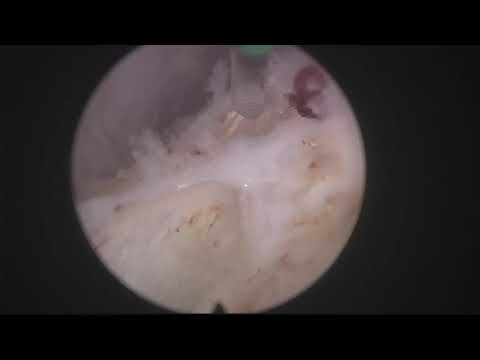
Real life MoLEP case 24: nice trilobar fast case
Dr. Fernando Gómez Sancha · ICUA
Dr. Fernando Gómez Sancha · YouTube
Language: English. YouTube audio metadata.
Surgical content for professionals. Contains footage of an operation.
Playback connects to YouTube. Your search query is not sent to the player.
About this video
An en-bloc MoLEP in a relatively bulky, three-lobed prostate. The description highlights early apical release and correction of dissection planes that are too deep or too superficial. The recording uses holmium pulse modulation and centres on the technical explanation of those manoeuvres.
Documented details and sources
Only details explicitly stated in the sources. Missing information does not mean it did not occur.
- En bloc
This is a nice en bloc MoLEP in a man with a relatively bulky three lobe prostate. The video shows how streamlined En bloc enucleation with early apical release is and how Holmium pu
- MOSES / MoLEP
Real life MoLEP case 24: nice trilobar fast case
- Early apical release
The video shows how streamlined En bloc enucleation with early apical release is and how Holmium pulse modulation provides a dream-come-true tool to perform anatomic Endoscopic Enucleation of the prostate. Nice apical release explanation and how to correct too deep or not so deep planes...
Source checked: 2026-10-06.
Available transcript · English
Automatic YouTube captions, not clinically reviewed. Names, technical terms and numbers may contain errors.
Selected spellings of enucleation, morcellation and holmium terms have been edited. This is not a full audio or clinical review; the original captions remain the source.
They may contain transcription or translation errors; check the explanation in the video.
- hello again this is another case um for our collection of olive cases here you can see that it's a little bit tricky to enter there's some relative relative structure of the urethra near the center it's a very typical situation i think probably one in four or five patients has this relatively thinner or uh not so wide urethra near the sphincter and i have to do a careful dilation to enter i i like to annotate this in my clinical record because it gives you a clue that there might be you know a structure forming in the future if the patient starts losing avoiding quality flow okay so this is another example of the n block a nucleation technique in this case i'm using the moses fiber and you see that it's a
- mid-sized prostate not extremely big but quite bulky with a big middle lobe you see how fast we can finish this nucleation with the in block technique they're their main advantage of this approach as you all probably know now is that by marking this apical line the white line around the apex of the prostate we are protecting the sphincter's mucosa if you look at classic techniques where the dissection of the lateral loss is carried out without looking at the sphincter um [Music] you see that very often the sphincter is peeled the mucosa is peeled off the sphincter and at the end we have a curtain a curtain anteriorly and i this is what i call the infamous curtain you know we shouldn't see a curtain
- because that means that we have the epithelialized the sphincter and that's not a good thing and that that is probably one of the reasons why patients can have a temporary stress incontinence but with this approach i have to tell you it's quite rare to see incontinence in a patient here this is the tissue around the very montanum here i do a little bit of mechanical pushing sometimes to find the proper plane that's the plane you can see that i was entering a little bit below the proper plane and this can happen sometimes you see you could go following the deep aspect or or on the right side of the image or the more correct one which is in the left so here what i'm trying to do is trying to follow the right plane
- and correct a little bit the the the plane as we were entering a little bit deep at the beginning so it's important to to recognize this because then if you follow the nice anatomical interface between adenoma and surgical capsule then things are much easier and this is why often we can see educator ducts you know when you go a little bit deeper you can cut the educator reducts right there at the little bit proximal to the very montanum which usually has no other consequence than producing retrograde ejaculation so this is the development of the posterior plane you can see if you look at the tissue effect that there is a nice opening of the plane huh despite not all cases are the same and you know in some cases the
- plane will open a little bit easier than others this is a relatively sticky plane so it doesn't open you know as easily as with other cases but you can see that we get some dissection of the plane effect and as well a very nice first pass hemistasis this is the main advantage of pulse modulation and i think that's a sphincter at 12 o'clock this is a line now look this is very important i'm going to cut on the abnormal you see i'm not looking for the proper plane yet and what this does is this cuts the fibers that unite the sphincter to the apex of the adenoma and then looking for the proper plane it's much easier so we have gained access by this incision that i did on the prostate initially this incision is going to rest
- a little bit more medial to where we are now and more that more than an incision what it tries is to disconnect like here you see but here anteriorly you have to be a little bit more horizontal to try to protect the sphincter which is above that right above that so that's 12 o'clock regen 12 o'clock fibers and you have to initially do this horizontal incision to make sure that we take the battlefield a little bit more inside further away from the sphincter anteriorly so here you see what you want is to make sure that you the sphincter is no longer in connection to the apical tissue and but of course there is a little bit of risk of leaving anterior tissue so if you do a horizontal cut sometimes
- the anterior tissue goes you know very high up and that is why you have to be aware of that and here we're going to do the same you see another incision on the adenoma following the the white line that we marked at the beginning but to try to gain a little bit better access and then look for the plane you see it's like a three four millimeter deep uh incision in the in the anoma and then up up up anteriorly take the scope out and check you see this is where we have to cut horizontally because we want to protect the sphincter that is right above you see by cutting this we are taking the operation a little bit further proximal away from the center so once you have arrived to this point you know where the center is no longer
- at risk then you have to try to find the most eccentrical plane you see here we're coming up up up trying to remain up up up because follow the direction of the fibers of the capsule you know that are pointing upwards and they're telling you what is the right plane there you see i'm keeping the most eccentric i can here to make sure that i don't leave a significant amount of tissue anteriorly and then of course trying to do the connection anteriorly up further up you see further up a little bit further up following that plane that's beautiful yeah this is the most difficult part of the operation the apical liberation but once you get the hang of it it is a reliable way of dissecting the apex from the sphincter
- it allows you to do an early apical liberation and that's i think important because when you move around your scope you know around the abnorma the sphincter is going to be contracted oh and this is the interesting detail uh so apart from that you know when when you are dissecting the plane circumferentially now that the sphincter is free you have to judge the depth of dissection you see sometimes you see the good plane sometimes you reach a little bit deeper plane that you would want you see this is this is such a situation so let's see how we correct that so it's very simple if you are going a little bit deep in your dissection like here you have to point your fiber a little bit more to the adenoma you see
- you go a little bit more medial and you develop a new plane to correct you see here and this is the way to correct as long as you keep the fiber moving around the adenoma so you don't go very deep in one point but you rather try to develop this line this circumferential line of attack this line of dissection you know but a little bit at a time so don't go very deep which if you do a little bit you see like this go back go again and you do wide excursions wide movements of of the fiber what you're doing is a progressive dissection and if you deepen sometimes too much then you can correct but of course it hasn't been a very very deep uh perforation because you're trying to be careful of course i try to progress and
- you can see that as the plane is not dissecting so well i'm tending to do a little bit of contact with the tissue you have to be careful when you use moses or any other form of false modulation because when you are sticking the fiber in the tissue the you create a cavity you know and then of course there's going to be cavitation bubbles but the reach is a little bit more than usual which means that you can make a slightly deeper hole so when you do contact it has to be a very light contact and don't stick the fiber in the tissue you see there that is an example of uh what can happen see that's the plane it's a little bit sticky but still thanks to the improved cutting properties of this laser we can
- progress quite fast trying to dissect this uh line i'm trying to progress there's a lot of fluffy tissue there probably a little bit of anomalous tissue we will check later so this is the circumferential dissection of the plane you see that of course we use a tool now that provides excellent hemistasis but also the fact that we are irrigating this very small space allows us to have very very good visibility throughout the procedure this is another of the advantages and now as you can see the angles are changing now we are dissecting a spherical adenoma we passed the equator and now we have to bring the fiber closer to the enoma you see here it's almost uh coming down no the plane is almost coming down downwards you see
- here there was a bleeder for some time but the irrigation is able to clear the blood easily so we don't we hardly ever have this red screen that where you cannot see anything because of the bleeding because of this enhanced irrigation of of such a small small space so that's again trying to adapt to the curve trying to adapt to the new angle and this this is the area that was slightly deep in the peripheral zone and we correct it with absolutely no consequence so this is the nice thing of this block approach as well you see you you have to position your scope aligned with the line of attack the lineup dissection so you can see both adenoma and capsule possibly half of the screen is is filled with abnormal and
- half of the screen is filled with capsule and then your work is to develop this plane but judging if you are too um too close to the capsule or leaving a normal so judging the characteristics of the plane and correcting you know going a little bit out if you need to take more adenoma or to move a little bit closer to the anoma if you think that you're going too deep in the in the plane it's really easy and if you do it like this with progressive and ample and excursions of the fiber you see you go from side to side you don't stay too long in the same spot so you try to improve a little bit for example here you have to challenge as well your your planes you see here i was looking maybe this is a normative tissue
- and it was huh so the challenge here we did the opposite as before i found that there was a normal tissue probably sticking to the capsule and i went a little bit further out to to take it with the norma and uh that's it it's not rocket science it's not very difficult just have to get used to see to seeing this these different planes interestingly different patients have different quality of planes sometimes might be your fault i mean if you're not in the proper proper plane but there you see we we see again bladder [Music] and there i'm coming up up to see if i can connect with the other incision in the bladder you can see how fast the mucosa is cut and how effectively this is new to holmium pulse modulation
- has provided a much better cutting quality and you can see the first passive mustache is amazing which means that you can concentrate on the dissection you don't need to concentrate so much in keeping good hemostasis as you progress which makes the procedure really really very fast so here again that is again dissection under the adenoma probably now reaching six o'clock and here what i want is to connect now the lateral with the posterior plane a little bit of contact there to cut these fibrous tissues and it is it is a joy of this operation you know we leave a catheter until the following morning we're going to try to do a bulletary holy but up to now our operating rooms are in the evening so it's a little bit difficult
- we're looking for morning operating rooms so we can operate the patients and there will be enough time to send them home maybe without catheter or maybe with a catheter to remove the next day the following day in the clinic so that's a finalization of the nucleation here i'm coming down to connect the other side you can see that the cutting properties of this impulse modulation help are are much improved with the normal it might take a little bit longer to to cut this fibrous tissue so what can i say i'm delighted with this with this new possibility to perform hollap and we have seen that we are much faster than before you can see how the sphincter was perfectly preserved mucosa is on the center
- and then probably you don't have to spend a lot of time doing hemostasis because the first passive status was good enough so it's about 17 minutes for the nucleation and this is changing the paradigm you see that's a small amount of tissue hanging at 12 o'clock which is something that is not going to be obstructive just you see very attached to the sphincter but a huge fossa very nice and we can move on to two more solutions so we we spend one minute doing hemostasis so 17 minutes in nucleation one minute hemostasis and now with the fast piranium oscillator we will need probably i don't know two or three minutes to five minutes to to remove the the aetna so this operation uh i mean this was not a
- very huge prostate but if you did a trp it would would have been quite a challenge quite a you know bulky prostate to to resect it would be bleeding and of course there would be residual anomalous tissue after turp and that's why i think endoscopic inclusion of the prostate is the next step in an endoscopic surgery or pph it's the evolution of trp so drp is the old-fashioned way of doing endoscopic unique prosthetic to me but now we have better ways we can ensure that we take the adenoma out completely today i read a paper where in 10 years after trp 40 of the patients are having medication and i have to tell you in in 10 years after nucleation patients are extremely happy and they are boiling
- extremely well and they're keeping their quality of life so i think we have to make a big push to to learn this procedure and and i'm play i'm placing these videos online so that people have a reference people who want to learn have a reference and they can see different cases and they can learn the apical liberation how it works it's always the same sometimes it's a little bit tricky they have to be i mean get used to the manipulation of the scope near the sphincter which is a little bit different than we are used to and you have to learn to perform a safe marcellation you see here we can see the the tissue in the middle of the screen so the upper part of the screen is occupied by tissue on the lower part you can see the
- morcellation blade and hopefully you can see two black triangles on the sides of the blades which allow you to keep an eye on the bladder wall wall you see and this way you can avoid any any accidents as i said fast more selection is is is a joy because you don't have to spend too much time um [Music] in the morcellation phase we we get an average of 11 grams per minute out with this so if it's a four-minute morcellation it would be probably 45 gram adenoma so yeah this is it this is the real life this is what we see in the operating room every day and this is uh what you should have as well i don't understand why many urologists limit themselves to sticking with drp when you can learn this procedure and
- and provide the best outcomes for for your patients most of my patients are relatively old and you know truly ejaculation preservation is not their goal in life you know very often they have very seldom sexual interaction with their wives and that they of course they ask you about it but i have to say that the great great great majority of my patients are very happy even when they have retrograde ejaculation because their life has changed significantly and when they see that they can still have sex they can still enjoy it and the only thing they miss is the final ejaculation part um i don't know they're really pleased with being able to sleep at night and not having to look for toilets which now in the pandemic with all the
- restaurants and bars closed is more difficult than before but here you are this is marcellation we have still a couple of pieces to take out but i hope you enjoyed this case and i hope this will motivate you to try to learn it's not so difficult anymore we have better instruments better hemostasis and i hope to see you around soon