
Surgery
9 Consecutive HoLEPs in One Day — Real Life Series from Sofia, Bulgaria
Dr. Fernando Gómez Sancha · ICUA
Dr. Fernando Gómez Sancha · YouTube
Language: English. YouTube audio metadata.
Surgical content for professionals. Contains footage of an operation.
Playback connects to YouTube. Your search query is not sent to the player.
About this video
Based on automatic YouTube captions; not clinically reviewed. Check technical details against the video.
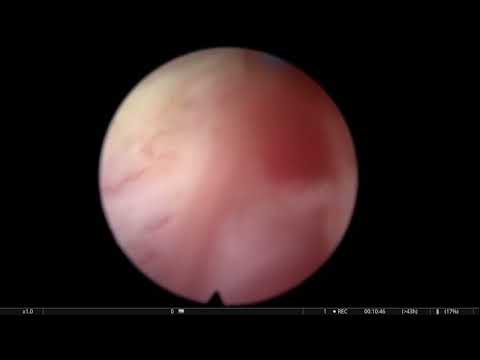
A recording presented as nine consecutive HoLEPs in one day in Sofia, Bulgaria. The available automatic captions include teaching points on continuity of the surgical manoeuvres and maintaining orientation when the anatomical plane is not clearly visible. The cited passages describe technique, without establishing separate clinical outcomes for the nine patients.
Recognising a plane in daily practice
The commentary explicitly notes that the surgeon does not always encounter a clearly visible plane. It discusses the circumferential dissection line as a reference for assessing depth when progressing around the adenoma.
Continuity of the operation
The cited discussion draws attention to continuous movement and action during the procedure. This describes the speaker's approach to the recording; it does not establish that faster operating is appropriate for every patient.
Documented details and sources
Only details explicitly stated in the sources. Missing information does not mean it did not occur.
No clinical case details have been extracted for this video.
Original title and description on YouTubeSource checked: 2026-10-06.
Available transcript · English
Automatic YouTube captions, not clinically reviewed. Names, technical terms and numbers may contain errors. Check them against the video; complete audio coverage has not been verified.
Selected spellings of enucleation, morcellation and holmium terms have been edited. This is not a full audio or clinical review; the original captions remain the source.
They may contain transcription or translation errors; check the explanation in the video.
- hello this is and I decided to record a full day of operations performed at the Hill Clinic in Sofia Bulgaria the tractors show the real life um performance of of holip this is the this is the list of patients we had for that day uh I have to say that when we finished we found that the sizes were a little bit overestimated by the ultrasound but and and I will post you know the the list of uh weighted uh samples uh at the end of the of the video but this is uh a video that has nine cases one
- after the other right as they occurred right as they happened trying to show the the real life of this because I think there's a lot of talk and people say and you never know what to believe you know in these times when ah it's difficult to separate the truth from the from the from the not so true stuff uh I think this this will show you what is the the current status of of uh holep how fast it is and um how the blood technique with early apical release has a lot of advantages and it's very fast um so I hope
- this video albeit a long one it's very long it's like uh almost four hours of video it is uh showing nine consecutive procedures of holip that we performed in one operating room in one day of surgery from eight uh a.m to 5 PM so that's the sphincter Edge and that's the white line you see I devote a lot of time to um reflect about holep and how to to make it more simple how to um make it faster of course we don't want to run
- in any operation but I think some good practices are going to help us improve our surgical time of course experience as well is important because it gives you more and more um knowledge and it gets easier to approach the prostate you have more relaxation when you have experience of course but as you could see one of the important aspects is the continuous movement the continuous action you see you will see that the pausing time in in this operation is going to be very very reduced so most of the time something is happening you see there are brief bosses
- like this but there is this intention to keep on uh working to keep on advancing in the operation that will uh make you a fast holy surgeon so this is the entry into the posterior plane on both sides of the varu sorry I'm out of getting out of a cold and um as you can see it's a fast entry um here also it's Paramount to have this constant attention that will allow you to progress highly concentrated you need to be really
- flowing you know during the operation almost uh in a meditative state where you are in in communion with with what's happening no inside the patient and you have to have your mind totally focused too see and interpret the tissue and how it's behaving I I have already described the the steps of this technique and of course in nine cases I hope we have time to reflect on some other you know tips and probably reinforce some of the things that you might have heard from me um before in in my videos but as you can see there is a Non-Stop working idea uh you have to
- look at the tissues look if what you are seeing is okay if we do a small perforation in the capsule I tend to say that small perforations are allowed but of course you don't want to make them bigger also um well here as you can see there is constant progress and only five minutes into the operation probably most of the posterior you see that's a small a small Nick telling us uh that's uh deep enough but we already did probably a big a big percentage of of the posterior and dissection now these are the deepening incisions uh once you have marked the white line and before you try to develop the lateral plane it's nice to do this incision because it will open up a little bit of access
- and then we're going to try to do two or three four five millimeters of of the lateral lower plane this is important because if we take this dissection towards the bladder neck it will start mobilizing the Apex and also it will allow us to understand and to connect the posterior line of dissection with the lateral line of dissection you see as we are starting to do now so we will always have this landmark of of the line and many of you will be wondering wow how can he recognize the plane well you know that occasionally we see a very beautiful plane that you can recognize because it's
- shiny it's it's very nice there are vessels running parallel to the surface and that is the plane no that is the anatomical plane but in my experience uh you don't always see a beautiful plane you don't always see this plane in circumferentially around the prostate sometimes you do but it's I would say it's quite unusual and more more often you know you find that this plane is a little bit Elusive and difficult to find so if you're going to base your operations in the identification of this plane um you're going to be frustrated and I think this is what makes the operation difficult for a lot of people you know they're hoping to see that plane which not always is so
- easy to to to to see especially when you use high power lasers like this because I mean you might be in the good plane but the energy is more hemostatic it's true for the pulse modulated homiums it's true for the for the atilium fiber lasers and pulse atulums so we have to start thinking that we had to recognize the plane not because it's beautiful but because because it's capsular and their there is a subtle difference that is to me very important because you can identify capsular planes because they are usually whiter than the adenoma
- this is one factor they are fibrous planes so you see fibers um and of course you know often we're going to be a little bit deeper than the anatomical beautiful plane and you will see in this case I remember this case because at the end I could see that the capsule was really flimsy at the end very very thin um you can see that uh it's a capsular plane you can spot if there is a normative tissue that you're leaving behind and this is the idea try to identify the capsule not because it's beautiful but because it looks like capsule it's
- uniform it's fibrous it is consistent also and this is very important I love to develop these lines this is now the anterior line I make sure that it connects with the lateral line you see so we have a circumferential line we are starting to develop a circumferential line that is going to go around the anoma so this this circumferential line um is going to orient us about the right depth of dissection or you know one of the right depths of dissection meaning that sometimes we might be a little bit deeper than we would like but um if we don't perforate the peripheral Zone
- it's okay because you know when you enter the peripheral Zone you can find a little bit maybe more vessels um you can thin the castle you know but as long as you don't perforate it we are okay I I don't think the peripheral zone of the prostate has a function that we need to preserve or anything like that um so if your plane is let's say two millimeters deeper than the true anatomical plane and you don't prefer it uh and you don't cause you know extravagation of liquid and like that I think it's okay I think you can live with that and you see when you do polyp of course you have to face the reality and the reality is not
- the reality is that you don't find beautiful planes all the time sometimes they're really difficult planes uh sometimes uh you know the better or the ideal could be enemy of the good you know that's that's the philosophy so if we can perform a fast holip that doesn't take hours you know to perform if we can be fast if we can be practical um I think it has advantages it advantages I mean globally I think this approach makes a holy very fast very convenient I think for the patient is is fast of course it's uh it's better but um
- there we are this is what I'm trying to explain this is it's incredible how you know something that looks pretty simple no this is surgical technique these are the steps like that how behind that there's a lot of philosophical questions and ideas no so my and and when you spend a lot of time doing this this operation you you start reflecting no and so here we have this uh concept okay we don't want to see the beautiful capsule if we see it it's fine we're we're happy we know that um we know that we are in the good place it's another factor that helps us recognize a capsular plane all right but not the only one not the only one and you have to
- you have to to learn to to identify of course these lines that I'm carrying around the prostate the dissection lines helps us a lot and if you think about it when you see a an MRI of a transverse cut of of section of the prostate you see that there's usually a very very uniform line and if we wanted to draw it you know with a pencil we would be very very able to do that because we know by heart what is the shape of of the adenoma inside the capsule so these factors come together you know the recognition of anatomical features of the capsule the connection of the lines you see my anterior line from this side has connected to the anterior line from the other side and now the Apex is
- completely relieved and now we can continue and here we have a circumferential line going around the adenoma and this circumferential line is going to allow us to follow the lines you know to continue with the dissection and we only have to concentrate on are we going into their normal are we going into the capsule and if you are able to use your fiber and the energy in a careful way you see having this soft dissection effect that is efficient but at the same time is quite safe because we don't we don't risk let's say doing a very very big perforation in a moment you will just
- following the line deepening the line trying to follow the planes and then with time enough to correct the aiming of the laser so what so the if if you get a little bit capsular you can try to aim closer to their normal and if you get a little bit into their normal you can aim a little bit laterally or externally to correct so following these lines um and interpreting the anatomy with this constant feedback where your attention is totally devoted to what's going on um seems to work we can do this relatively large glands in a very very short time you see it's it's now 15 minutes in the operation and we are probably
- reaching the half you know of of the operation so it's not going to take too long of course this has to be achieved with practice and I would recommend to those of you who do holy per nucleation to use every case that you do as a training case let's say I mean you could do the case of course trying to do a good job but you can also consciously try to see if you can improve your organization you know your strategy and also your skills so here for example you see that I'm going back and forward uh
- side to side you know always the laser is on I see some people they do short bursts of energy think about it and then continue with their dissection so you have to try to train yourself to use a continuous dissection technique which is and this circumferential plane uh is very helpful for that of course we're going to stop you know to get orientation to see what we are looking at but we have to make sure that we um are able to work fast not because you're moving fast no because you're taking risks but because you're very efficient in the use of time so not stop unless you know totally necessary and uh of course you see there's a bleeder or
- something you can you can stop you can take your time to do hemostasis because this is usually always very um time efficient so if you carry a good hemostasis during the operation you'll have to spend less time later on so I'm not saying that you rush the operation saying that you train to become very efficient very efficient so every move and filming your videos it's a good idea because it makes you see the oppression in a different way than where you were actually doing you know you spot a lot of your mistakes and you're it's a very very good learning tool to record your operations and um have a look at them at home afterwards because that that will teach you a lot okay so
- here I'm following the lines you see and I'm very very um careful trying to find out you see here for example I think I am firing a little bit inside you see a little bit against the enorma rather than against the line because um the angles you know initially when we when we start the procedure the fiber is almost parallel to the capsular surface but as we progress towards the bladder neck often the capsule is absolutely perpendicular to the fiber so you have to address this by firing closer to the adenoma when you fire closer to the anoma most of the energy is absorbed by the endoma and and there is little little danger for the for the capsule and as I said if you do a perforation
- make it small I don't make it bigger try to correct your planes and this way you will be able to navigate this initial difficult cases with with relative is and safety you'll see that the capsule looked quite deep in certain areas in this case so there for example we are a little bit thin and you'll see it more clearly clearly at the end but uh the operation went really well and the patient went really well afterwards the urine was totally clear and the catheter was removed he was continent so you see we we have to be practical and
- well at least for me this is how it has worked out over the years you see this is my posterior line you have to work on the line all the time because you want to make it recognizable you want to keep a line that you can recognize so don't mess up your anatomical guide you see that's deep but here I am correcting again you see I'm going up to try to remain uh close to the anoma and not so close to the castle also I have to say these very very large clients sometimes have extremely thin capsules and so these things happen and this is at least my real life holiday cases I don't know because we tend to see videos but they're usually cherry-picked and many
- surgeons show the best cases rather than the reality of it so that that was the idea behind this concept to try to show you nine cases and how they happened and what we found so you can see that holup is quite reliable it's quite safe even when you sometimes might get a little bit deeper in the profession that you would want so the fact is try not to get too deep because that might bring some trouble uh and focus on moving the operation forward don't lose time you see correct your planes this is a clear example of how I'm getting closer
- to the edge of the anoma to try to remain outside of of the capsule so I don't deepen more it's already a little bit deep but you see this seems to be an anatomical plane I tend to think you know when I was a resident I did a lot of open um adenomectomies open prostatectomies and um you used to put your finger there and you used to break the fibrous attachments with your finger and often when we looked into the fossil there was capsular tears there was uh you know a little bit messy inside no we had destroyed the area with our finger significantly and you know you did your hemostatis you kept the catheter for for several days
- and it was impressive that patients were doing really well you know I was I was surprised as resident I thought wow we did quite a lot of damage with our fingers there and and um patient's doing well you know we remove the catheter is being well he's happy so all these capsule are tears and uh the seem to have no effect so here we are seeing the highly Amplified image where we see minutes detail you see the fiber is measuring half a cent um half a millimeter you see so probably the screen is what five six millimeters wide so when we see these images we think wow this is a very dangerous but
- over time with experience you realize that probably it's not that bad of course this was a relatively let's say extreme case in the sense that we went a little bit deeper than usual but there it is this is the reality I didn't Panic you know I didn't chicken out of what we were doing and what I was trying to do is to correct look where I'm firing you know I'm trying to leave capsule behind you see I get close to the anoma I correct all the time and of course we're going to see a very very thin capsule this is now the flipping of of the anoma so I lift the lobe and then I push it in the bladder carefully without doing a lot of pressure because when you when you push too hard
- and it's not going in many times it's because there are attachments like here for example you see and if you push very hard these attachments can break the capsule it's already very thin there so but you know when once you tilt one lobe you can go in there and the space is a little bit more uh easy to to develop because there's only half a loop now in the fossa okay what I was trying to do is to follow the same rotation to see if I could tilt the anoma completely you see it's now 24 minutes since we started you see that that's a little bit deep but often not in Bulgaria but in in Madrid we have a transactor ultrasound in the operating room and in Bulgaria we can have it too but
- what I say is that if if I want the ultrasound at the end of a procedure like this I can stick the transvector ultrasound inside uncheck and often when you see this deeper planes you know deeper than of I mean this this is this is a fast case but of course it's not a perfect case to to brag about you know what I mean there is some capsule or deepening there and like that but often when we see this if we do a truss we see that there is only a very localized actualization of saline it's so I managed to deepen into the capsule but not perforate and there's no distended app domain or anything like that and you know what I think happens in these prostates when you
- when you put the catheter and you relieve the pressure because the water is distending the bladder and distending the force up um so you see now it's 25 minutes in nucleation time huh so we haven't rushed the operation this is very common to see especially when there is a retro trigonal growth of the anoma and as I said this is a thin plane but you know if you don't take hours to finish the procedure if you can do hemostasis and more select and go it's going to be fine this in these patients we also remove the catheter the day after and clinically there is no consequence so they seem to tolerate this very well what I tend to think is that these patients when they relax their
- external sphincter they just drop the water you know the urine comes out by gravity and if the bladder contracts of course there's a preferential way out which is the the urethra and um that's why these things do not have a lot of consequence if you feel safer to leave a catheter another day then you know of course you can do that that has no real Ultra sentence we are treating patients with you know relatively big volumes of prostates and that's the fossa that's the bladder neck you see some areas are a little bit deep you could see some fat even in in some little areas I have to say that fat often accompanies the vascular pedicles but well maybe here there is a little
- bit of deepening and of course we don't like this as a norm but if it happens uh well it's not the end of the world let's continue let's try to be fast because we if we keep the irrigation going for like you know two hours more I guess it probably would be a significant extravasation and I pay a lot of attention to the mucosal Edge you know holmium is quite explosive quite disruptive in its effects we use that very happily for the dissection of the anatomical plane but when you cut the bladder mucosa often these disruption causes a little bit of bleeding and if you don't specifically go to find it
- there you are quite quite capsular quite radical uh removal of the adenoma and probably uh facilitated by this thin capsule in this man oh he had a huge fossa and having a thin capsule will of course um facilitate this sometimes we do post-operative ultrasound and youth you flip it when you see the the thin capsule especially anteriorly uh typically posteriorly it's a little bit thicker so there we are you have to see how it goes sometimes you will face that you went a little bit deep in some areas if if it's not a huge preparation if
- it's not a very deep perforation if it's not a total preparation we are okay that's okay uh when we put a catheter and when we release the pressure that is distending the capsule I'm sure that this is all going to contract there will be some cloth forming near the the wall of capsule and there we are the visibility seemed quite uh good so it was like four minutes hemostasis time and now we will go to to more selection this was the bigger biggest prostate of the day I think the smaller prostates often provide a better um learning experience in the sense that
- you can understand the steps of the oppression much better and here we are this is a real time video you can see that time tracker you know on the bottom right you can see that the recorder keeps track of the time that we have spent in the operation and this is now the more solution phase I I use the perennial system from Richard Wolff and we put the morcellator a little bit on top of the bladder neck and I tried to push the the tip of the modulator inside the bladder a little bit so I can see anteriorly they had Noma and I can see lateral to the blades these two little black triangles and tell me that I'm not close to the to the bladder if they're black it means that um
- there is some distance to the bladder wall if you see it red or pink that's another another story I think it's difficult for these cameras to interpret you know when you have the Noma so close and the light you know making it so bright then of course these deeper areas are seen as as black now it's difficult to keep to keep good visibility in both both depths if you know what I mean so this is more selection yeah we have to try to make it um as efficient as we can hear the quality of the suction and the quality of the tissue are in my opinion major determinants of how
- good demonstration is going to be if the suction is not very powerful then you're in trouble and if the tissue is hard or smooth it is more difficult for the morcellator to catch to catch the tissue so sometimes we're lucky with uh good more selection you know operational settings and the devices behaving good I always say this mostly it was a very temperamental and sometimes you cannot know why you know they do better than others and um also I I try to keep in mind the inflow on that floor the balance of influence law that I'm having
- so for example when I see that the mouth of the more Solitaire is visible like that I know that I'm sucking a lot of water out because the mouth is wide open and I'm sucking so the water is coming out but when there is contact of the tissue with the morcellator mouth that means that there's not so much water coming out it's mostly or it's more let's say tissue with a little bit of water so in my experience if I even using one irrigation line which I don't use two irrigation lines doing flows because I think it makes things more complex but in exchange I'm very careful to check that the bladder is keeping full and sometimes I pay the price of not using a second line
- meaning that I have to wait a little bit and let the bladder feel before I continue so if I see the mouth of the most later a lot then I have to do stops I palpates the bladder suprapubically to check if there's tension there or if it's a soft suprapubic area that means the bladder is getting empty so I have to do some stops to fill the bladder before continuing but if I see that the tissue is being more selected efficiently and I cannot see the mouth of the more selector blade um too long periods then I know that the bladder is going to keep distended this is my way to check what is going on
- it's fundamental I think to have this attitude to more solution and holy in general to be very very calm you know many people are a little bit anxious when they when they do holiday because they think that they can produce in a very short time a complication that makes you know they're facing disasters so they are fearing it throughout their operation and then when you reach the more selection phase you are wasted because this anxiety you know wastes you so I try to remind very technical I have a technical mentality you know I I think I am a surgeon I had to concentrate on doing a good surgery and I will act you know technically whatever
- happens but I don't give you know way to to anxiety or worry I just try to keep working try to use all my knowledge and experience to to try to advance the operation and even in very difficult cases you know this this serves you very well because if you keep a good visibility if you keep calm if you don't do stupid things you know just keep working and keep reacting to what you see you know when we did the the procedure plane in this man I did a small profession posteriorly you know probably two or three millimeters wide but yeah I didn't have a an emotional reaction I had a technical reaction and I thought this is not going to
- avoid me continuing you know in the posterior aspect we have the numbers fascia which is very very stuck to the capsule so you know experience I know that this is not relevant so I I continue I continue with the operation and I continue totally calm and happy [Music] so there we go the more solution is working really well I think it's uh advancing very nicely and there we are in a safe position trying to continue taking out tissue and here also you have to be conscious of the average you know more solution time so don't do silly things yet keep keep morcellating keep morcellating keep working and keep advancing the procedure
- and now you see that's the near the end here what I try to do is I try to fish the remaining little nodules or whatever there is at the end I'm not sure what I was doing here but I fished this with the suction oh probably we were changing the the buckets you know sometimes the bucket gets full and then there is a person helping me that uh will change the bucket and very fast you see we can continue with we can resume the the more solution and that's that's all that's another piece inside the fossa so it was good to to see it you see there is a little bit of blood in the in the fossa because
- mostly it doesn't irrigate properly so there's always some accumulation of blood and that is quite normal so I don't give much attention to that and here we go to the second case as I said the the weight of this specimen was lower than expected we waited 110 grams so there was a significant uh overestimation of the prosthetic size by ultrasound which is quite which is quite common so this case it's a smaller gland just checked the uos now we will introduce the laser fiber
- so you know these things getting ready setting everything up and then we start that's the barrel that's the edge of the sphincter and I'm going to mark the white line in this case I went over there not always I do that I don't know it's it's a matter of you can do it later I think the most important Mark is the optical mark especially anteriorly because that's where um that's that's the landmark for the procedure and again we follow the same steps you know that and block technique this in Block technique is excellent for all kinds of prostates small prostates big prostates redo cases
- especially in the redo cases sometimes the fossa is so difficult to interpret you know there's so many anatomical changes sometimes it's even difficult to get into the bladder and you can start epically no need to get into the bladder before the operation so you start epically and then you will see the bladder later on at the end so it is really a joy and here again I am connecting both planes trying to develop the posterior plane you see it's not a beautiful plane but still it looks quite capsular there for example it looks a little bit deep and often when I find this deepening in in the capsule when I do the posterior plane I try to to stop there leave it there and start developing the Apex because
- when we Liberate the Apex there's more mobility and I think it's much safer to try to get [Music] um to that deeper plane when you have released the Apex or or at least gain some more mobility and understanding of the shape of the prostate and the shape of of the capsule so here again this is the entry into the lateral plane in this case it was quite nice and easy um but again you see that the quality of the plane is not it's not a beautiful plane it's it's more um a capsular plane you see that their normal often is a little bit more yellow so you can tell you see this yellow
- stuff there you know it's telling me to go a little bit deeper because um their normal tends to be like that's yellow and when I see yellow on the edge on the line I I try to correct the plane and go a little bit deeper again it might be wrong on this yellow might you know misguide me and then if I see that the capsule is getting very thin or I'm deepening in the capsule I can correct again so it's always it's always a balance but you know we are moving forward we are uh developing the plane and we're not wondering you know we're not spending time thinking where is the beautiful plane that's that's the thing so we are happy if we
- have a capsular plane this is a 12 o'clock Mark that we did before and there I'm trying to cut you know horizontally below the sphincter and then once you get in a little bit inside and this thing just starts you know you leave this thing to behind then you can start a pointing your laser much more upwards because of course we want to preserve this sphincter but we don't want to leave a normative tissue of the Apex again to enter the lateral plane it's just some millimeters but then the dissection is taken towards the bladder neck and this way you will gain a lot of mobility and we take the opportunity to connect the lateral line with the posterior line so we have a a nice Landmark that we can
- recognize which is the vertex of this dissection plane you know the Confluence between capsule and anoma if we carry a nicer compression line around their normal then we have a very nice landmark very simple to follow and also we have the the peace of mind that the sphincter has been liberated early and that our movements and that our manipulation will not distend the sphincter anymore because it's totally liberated from the Apex so here I'm coming towards 12 o'clock horizontally initially you see this initial incisions allow you to gain some access that's 12 o'clock but then you know what you want to do is
- you want to go all the way up once you have incised and below this winter for you know two three four five millimeters depths you can then try to go up as much as you want because the sphincter is already quite safe and what you want to avoid leaving a bump of tissue optically so here you see I'm trying to find the uppermost plane now that I can get that's around 12 o'clock so again you see you can do some horizontal line but then once you get a little bit deeper in this sphincter is left distally then you have to try to get us anterior as you can there you see to try
- to remove it all and check the color you know if it's yellow it's a normal so you there you see it's a little a little a little bit of work that you have to do sometimes to try to clean this part of the Epic so of course you can always come back at the end of a nucleation and check that everything's okay and there if there is residual anterior tissue then you can take it out quite freely but despite my insistence on you know keeping the right lines and the connected lines the lateral line connects to the interior and so on uh this is a work in progress and you have to correct if you realize that your line is not going deep enough then you have to to amend well you have to correct
- go back take the right plane and develop a new one try to have the new lines connected as well you know so that you have a reference and you don't get lost but you see how these operations usually transfer without much bleeding because we are irrigating a very small space and if you can keep a constant rate of dissection you know every minute we will have advanced a lot in our dissection I tailor the speed of movement of the fiber from side to side or do the hemostatic response of the tissue neural prostates are nice you know like this one here we can see the sign that we're going to
- enter the bladder so you see it's constant movement constant progression trying to advance and follow the lines follow the lines the lines are good the lines tell you where to go I trust the lines more than anything else I think you see of course you have to see the quality of the tissue you are working with you know if it's capsular or not I have to say this capsular plane takes many forms sometimes sometimes it's a little bit weird you know sometimes it's like little cells little cavities sometimes it's perfectly smooth and fibrous uh
- you know inflammation very prosthetic calcifications all these things you know influence how the plane looks like also I guess you have a lot of saying you know if you choose to go a little bit deeper than the uh let's say beautiful anatomical plane of course you can see different aspects of the plane but there's some characteristics that keep you happy and as you can see the plane that we are developing doesn't look um too deep you know it doesn't look uh as if there is a thinning or a perforation you know so well maybe thinning there
- could be but it's it's not uh deep in the sense that we are Perforating you know we we might choose to develop a little bit deeper in the peripheral Zone than if we follow the perfect plane but I think practically speaking it doesn't pay off to try to watch to try to see this beautiful plane yeah and that's a concept you have to know that you are in a capsular plane you have to correct that was the deeper area that we found before you see and what I'm doing is I'm trying to mobilize things around it so that I understand better uh the anatomy and of course instead of insisting in the depth of that little um
- penetration in the capsule that we saw posteriorly and that we are going to face now I'm sure um instead of deepening more I'm going to correct so that it doesn't go deeper than that okay this is bladder neck sometimes it's a good idea to work where things are easy you know Advance the operation and then go back to where the little problems are okay so here we are and you see it's just 11 minutes on the operation and we're nearly finishing the nucleation phase so as you see the movement of the fiber is reasonable I'm not running but I'm constantly constantly dissecting constantly uh trying to move the procedure forward
- and this is how you gain speed and efficiency during a nucleation you can see that I'm not using the Kunz element I I don't like it I like to have the fiber held by my fingers most of the time the fiber is at fixed distance but I have a lot of freedom to push it in and bring it even closer to the endoscope if I want um you see the thing is that I'll I think that the cons element probably restricts your freedom and if you're used to work with a fiber like this you will feel very very restricted when you use the cons some people love
- it because they are used to it and they love their trigger but I think it's not necessarily uh the best idea you know um I always tell the same story you know when they invented television the first thing they did was to film the radio you know they they filmed a guy from the radio with a bunch of papers in their hands and and a big microphone in front of him you know and because we came from the radio and then I think when when holop started and the laser Market started someone thought why don't we add a trigger because this is what we do with trp you know but and that was the motivation we are used to triggers so maybe a trigger is a good idea but
- uh if you reflect about the control that you have and the sensitivity that you have when you hold the fiber with your fingers rather than than with the trigger you know and the problem I have with the trigger is that when you fix the fiber to a certain position you know the fiber starts breaking so you're using the trigger and the fiber is shorter or longer and you know the same kind of position in the trigger you know so your finger is on the trigger and you push like one centimeter every time the fiber tip is a little bit different because you know the trigger doesn't correspond to where the fiber is of course you're seeing it but I think biomechanically probably it is
- not so nice that the trigger position in your finger doesn't correspond always to the same um penetration of the fiber in the surgical Fields if you know what I mean but anyway this is a matter of preference and you know for many many years we did the trps and we still many people still do and there's no consensus on how things are done and every every urologist has his own perceptions preferences and this is probably perfectly okay just stressing my preferences I think the fact that we're not rotating the fiber also you see the fiber is kept at 12 o'clock but the majority of of the procedure you know I start with fiber at six o'clock but then I
- I keep it at 12 o'clock all the time maybe at the end when I'm going to cut the bladder neck um I will put it at six o'clock they see the fact that I'm not constantly rotating the fiber gives the procedure a lot of stability it's very easy to interpret and you don't need to I think moving the fiber and rotating adds another factor of complexity to to this operation some people tell you you know but the angle of incidence is better but I think I really think the angle of incidence is not as important as where do you fire where do you fire your laser in relation to the to the um line of the section you know so even with different angles of
- incidents and you see that's now 16 minutes this is the perfectly preserved sphincter you can see that the mucosa is attached to the sphincture and that is going to nearly guarantee uh perfect continence at the beginning as I said check the mucosa because the mucosa tends to bleed during more solution and it can make it very unpleasant because you don't have a good visibility so I I try to spend a little while coagulating this this edge of of the bladder neck so this is the trimming phase you check you see it it is a capsular plane there's no question
- about it it's maybe not very beautiful and in some areas it might be slightly deeper but we have managed to stay within the peripheral Zone without extra position of water and we have done a very fast and efficient procedure which is quite a nice goal to achieve because um you know the fact that you are keeping the endoscope a shorter time probably also influences the the possibility of developing strictures and and I think everybody would agree that a shorter procedure is a good thing if you can perform it safely now I'm changing the cystoscope for the nephroscope you see you need to work in a highly
- trained team so these things can be done really fast now they most later comes to my hand I push it in and modulation starts do you see no time to lose uh and if you develop good habits and you repeat repeat the same operation every time you know following the steps and these steps I have to say these steps are quite logical and are tested over thousands of patients I I I don't I can't say uh you know uh perfect number of cases I didn't register every single case that I did I operated many times in other hospitals in other countries in in many places but my estimation is that I probably already
- passed the 10 000 laser prostatectomies and and um you know repetition repetition is very good and also one of the nice things of this procedure and these steps is that if you start doing them and you follow this technique you will have good visibility they make sense you know they work for all sizes of prostates you know some people come to me with new ideas and I tell them you know I was there before and it looks like a good idea but then you know you face a lot of difficulty in in certain types of cases for States unlike that so this is a very mature technique and I think if you start reproducing it you will soon be confident with it and you don't need to do 10 000 cases too
- start getting very very similar outcomes and results and um this is what I see with my colleagues when I when I teach my colleagues um working in my department there reproducing you know everything maybe they are a little bit less fast at the beginning but uh there we go and this is the third case it was estimated to be 125 CC's prostate but at the end of the procedure we measured 39 grams of tissue which means that probably it was a 60 gram prostate and this happens very often
- I have the feeling that both ultrasound abdominal ultrasound an MRI have a tendency to to to to overestimate sizes sometimes and that's why I try to keep calm even when I have to operate a very large Clan because most of the times prostate is not as large as you would think of course there are some exceptions but there it is don't be because some people are anxious just because of the you know the the idea that the prostate is very large and then probably the interoperative experience is different you know not so difficult so uh just keep this in mind
- so that's the white line You'll see that in all these cases I start by marking the white line which is a reference of where the Apex finishes and when where the sphincter starts the aim of this line is to preserve the mucosa of the sphincter attached to this winter to provide immediate perfect continents post-operatively once the line is marked I enter in both sides of the very Montana I'm trying to um go to the floor of the Vera Montana to find the plane and as you see I'm not very worried about where is the beautiful plane I just go in and start trying to develop the plane that I find to me it's good if it's a customer plane
- it doesn't need to be beautiful but we have already spoken about that then again the development of the posterior line of dissection is quite fast and what I try to do is to do these wide movements going from one side to the other side I'm trying to Advanced Advance the the line of dissection you have noticed that there was a an area in the posterior capsule that was a little bit thinner so I decided to start with the dissection of the Apex and this is the initial incision to dip the white line to deepen the white line it give us access you see to see the plane I tend to think about this the same way
- as when you do a Frayer operation you are inside the bladder and you have to incise the mucosa and submucosa of the bladder you know below the middle lobe to try to reach a place where you can distinguish where is a plane between the anoma and the capsule so here again this is the lateral lower part of of the dissection and I try to connect I try to connect you can see how the presence of this yellow tissue at the Apex tells me that this is tissue I want to remove so I try to protect the line I try not to touch the mucosa of the sphincter you know that's why the white line is a good reference because you can clearly see where it is and but
- of course we want to remove all the anonymous tissue the idea is that I will take the dissection upwards but first I have to cut the optical attachment so because if you want to continue this dissection though it's going to be a moment like here you see where the instrument is going to clash with the tissue that is holding the sphincter on the Apex together and and then you will do traction of that tissue if you want to continue the that dissection so I tried to dissect uh towards the bladder neck but I I make sure that I cut the apical attachments first so that this movement this position of the scope between the anomal and the capsule is not going to damage the sphincter because there wouldn't be no traction
- it's already liberated here again you see I'm deepening the incision depending the white line sometimes it looks as if we cut on the anoma but it gives us axis and then we're going to look for the good plane this is always the same you know to me it's um something that I repeat over and over again but it works beautifully and you know when you understand this axis then it is no longer difficult to approach the anterior part you know enough Liberation enough mobilization of the Apex gives you much better access and much better understanding on how how this apical part works here again just like the other side I want to remove all the yellow tissue
- that I can you know trying to progressively reach up there you know approach the 12 o'clock region and of course when with experience you can do this more and more systematically and more and more convincingly now you know where you are you know that we're looking for for a capsular plane we're looking at the tissue remaining in the capsule is a little bit White and the tissue remaining in the normal side it's more yellow we don't want to penetrate too deep so if if I see that my line is taking me deep I will immediately correct here we are trying to come up up but
- you see the optical attachment first is cut horizontally and then once there is some Detachment from the Apex on the sphincter what I will try is to go all the way up up up up up there I'm communicating with the line from the other side you see now the Epic collaboration is is completed we call it early apical Liberation because it's early in the operation not not immediate you cannot just go around the epics and liberators because the upper part of the adenoma apically can be very high and sometimes higher than the sphincter level so if you want to get to that point it's very wise to Liberate the Apex initially posteriorly climb up towards 12 o'clock as we have done
- let the Apex detach it from the capsule towards the blarenek enough that it will move and tilt you know and then when it's movable when it's not fixed then of course you can work you work your way up to 12 o'clock many times we put the tip of the scope on top of the tip of the anoma and this pushes it down and then the 12 o'clock fibers are much easier to see and now this is the construction of the anterior line you see here I'm always obsessed with connecting the lines so that I have a circumferential line that that goes around there I'm seeing a little bit of yellow tissue so you know whenever I see yellow tissue I I try to at least explore if I can go below that because sometimes
- it looks that you are already quite deep but then you see yellow tissue you go deeper and you realize that that was a good thing because there is a big piece of adenoma or a big nodule or something that was worthwhile uh exploring and of course you know people are always quite afraid of the capsule and Perforating the capsule and getting too close and some surgeons even say I'd rather leave some tissue than then go deep and cause trouble you know but the thing is with experience if you understand how to use the energy from the fiber you know it's like when you draw with a pencil you know the pencil does different lines different kinds of
- lines depending on the pressure depending on of the handle angle you know so an artist will use the pencil to to make the most of it and with this lasers even the high power lasers you can have a very very subtle effect very careful effect or you can choose a more you know efficient effect but you are the the tailor of this of this dresser you you have to decide how to do and when when you get used to using this energy I think uh and when you know where you can anticipate you know if I put the fiber at this distance and if I move like this what kind of effect am I going to get then I think it's very safe to explore all these uh depths you know when you
- need to go deep uh to explore so if I see yellow tissue even when I think that I might be quite deep in the capsule I explore below it but of course I use the energy very very careful very carefully and I tried to to make sure that I don't you know go deep and I have time to correct if my appreciation is not correct I I hope I can make myself understood um there we are so you can see how this technique allows you to work with excellent visibility conditions we don't see much blood of course this is also thanks to the wonderful you know post modulation this is the virtual basket setting at um two joules and 50 hertz
- that's a sign of entering the bladder you know the vertical fibers the we have given it many names you know the rain under the bridge the Berlin whale sign you know the name is relevant just when you recognize these fibers you know that you can confidently go in the bladder because you're reaching the bladder neck okay so look at this continuous movement of the fiber very little pausing time here I was trying to check a little bit of the hemostasis anteriorly but now we are continuing continuing the line and continuing the incision of the bladder neck you know it has to make sense here is where I do contact very often because I know that on the other side of the
- bladder neck there's the water in the bladder so despite these ideas that you should never do contact with the laser on the tissue if you do contact there will be a very disruptive effect the cutting will be very very efficient and I do contact in places where I can feel that there is resistance or fibers or when it's absolutely safe like working against the bladder neck so you know all the rules and all the recommendations that we can make to do holip I think have to be taken with um caution you know what I mean they're not absolute rules that you can never break sometimes you will break some some of the let's say rules
- because you need to adapt your Technique to what you're finding now so here basically when you go posteriorly there is a very abrupt change of plane Direction so instead of going just posteriorly trying to reach the bladder neck I try to release a little bit laterally because if you have this information you know if you can if you can see the bladder neck above on this side and then I will try the other side you have a much better understanding of the angles you see that's the plane opening it's so thin that sometimes due to the mechanical presence of the scope it could try to to to to be opened and to prefer it so just be gentle here I'm firing closer to the anoma to try to develop
- a little bit safer plane there and you see every time I change direction I correct the position of the fiber because if if you develop the plane a little bit then when you change direction you have to um correct to get even closer to their normal in order to to be safe so there you can see the capture is again quite thin quite flimsy but if you keep the fiber close to their normal interiorly then it is going to be a safe dissection even when sometimes the capsule gets a little bit thin um you know below their number there we are all these things you know the the the
- color that I'm talking about the BPH tissue being yellow and the capsule being white you know everything has to be taken with a little bit of of Relativity in the sense that these are not absolutes now here for example it looks as if there's an audio down there so I'm going to risk a little bit even when the Cuffs is quite thin you see and I'm going to to try to remove all that tissue I don't really mind about a thin capsule um but I I really like to take out all the all the enormous tissue if I can you know and often they're not as tissue pushes in the form of of these nodules that leave a footprint on the on the capsule and thin it you know this this nodules
- pushing growing against the capsule make it much thinner and sometimes we can see that on MRIS so you can see intro inside the peripheral Zone you can see this this nodules that are um almost let's say invading no they prefer sound or ectopically uh positioned there we are you see it's always a very careful very careful job very careful trying to use the energy carefully that's the flipping of the Noma into the bladder and now my fiber got to the six o'clock position to end this is personal preference but I think it's a little bit safer and easier I think when the prostate has
- been flipped to cut the attachment at six o'clock you see always doing wide movements because we do understand very well these lines you know they help us Orient ourselves very very much and there we are trying to understand the anatomy of the bladder neck trying to decide what should go and what should stay that's um bladder neck often the middle lobe sits on the Trigon you know and then you are nearly there at the bar you know your rhetoric orifices
- this is good to check where are they where are they where are you yeah they seem to be far away at the beginning of the operation and that's why I'm not paying too much attention to them there is the second one so um often you see that there is danger or not if there's no danger then you can do the your operation with a little bit more relaxation regarding the urethral orifices and you see now this is the end of the nucleation when we are ticking the 17 minutes and a half or something like that so you see it's a very very efficient uh way to work that allow us to do several cases in one list
- is no longer like before and here you can see the excellent preservation of this thing to smoke Corsa now it's the time to do some hemostasis you see how often we get a little bit deep and but if we correct if we correct there's no trouble there's no problem so um that's why we have to not only gain experience in numbers but also again experience and start improving our technique and our surgical efficiency to be able to do fast operations and safe operations as well keeping keeping them safe
- that's again the coagulation of the mucosa because often the bleeders come from there and you can see it's always a radical exhibition of the anoma there's no we are taking sometimes some of the peripheral Zone in some areas or we're deepening a little bit but uh it looks it looks uh perfectly fine so now again I rely on my team to do the the change of instrument and it should be relatively fast I wanted to to leave this because I think it's interesting to see you know it takes a little while but not too much and there there we are with the
- instrument and now the nurse will hand me the more Slater and I will introduce it in a nephroscope you see when we do the change there's some little amount of water coming out and then I put the instruments I open the water so that the bladder is getting filled while I wait to be handed the morselite and then by the moment we enter with the Morse later we can start right away with more solution of course the fast modulators are super important because they cut down the surgical time enormously compared to the older morcellators and this is a great advantage often when you start the more solution you know you're not really irrigating there's some water
- going in and some water going out but it's not at all as efficient as a normal you know receptoscope flowing and that means you know without the standard bladder sometimes if you suck more water the pressure goes down so then there starts uh to be some bleeding and you know the visibility is worsened so the tendency of this situations is that visibility will get worse with time so you need a fast fast marcelator because you have a window of opportunity to morsel it in a short time before you know the bleeding starts and then you're done and you put a catheter you go home next patient you know um there it is always keeping in mind
- that if you see the mouse of of the Mars later too often you are sucking too much water out and you need to be careful okay so that's the that's the third case 20 minutes total time the fourth case was uh supposed to be 122 we extracted 75 grams of tissue so it was probably more close to um 95 foot 100 grams of tissue I say this because when I do post-operative ultrasound in these patients it's very monotonous you know the the residual volume of this capsular area once the prostitute has collapsed and gets smaller is typically 15 to 20 grams of tissue so I tend to
- calculate like that you know 75 grams of tissue obtained plus maybe 20 25 maybe some of the tissues vaporized maybe also during the more solution you know the tissue is squashed this some of the fluid of inside the tissue goes out sometimes we see a little bit milky aspect of the irrigating fluid during more solution because there is a lot of secretions inside their Noma that are going to be you know squashed and and that might uh represent you know some or explain some of these differences in in volume now the world calculated volume and obtain volume
- so again you know demarcation of the white line entering the plane in one side you see I do this movement side to side movements I go to the floor of the Montana you see floor and I started doing this movements coming you know medial and natural of course I'm observing the tissue to see how it's behaving and where does it want to go and and then I just have to follow you know it's a constant feedback that tells you uh where to find a reasonable plane a capsular plane it doesn't have to be the beautiful plane it could be any plane that looks capsular and looks safe now that's the incision of the frenulum of the veru
- to connect both cavities the both cavities that we can we have done epically and then we get to establish the posterior line of dissection there there you see so I'm looking to see where should I position the fiber to get a nice dissection of the posterior line and then I will push laterally to both sides when I say push I'm in you know continue with the operation because I never push hard against the tissue what I try to do is I try to position my scope close to the line of dissection because this is positioning of the scope yeah I hold the camera with my with my fingers you know with my fingertips so I'm not doing any Force but
- just putting it there you know the contact between the tip of the endoscope and the line of dissection will generate some tension and counter tension you know on on the surface on the line so when you want to dissect you see the positioning is important because I'm not doing mechanical um dissection what I'm doing is energy dissection with the laser but the position of the scope the position of the tip is helping me because it opens up the plane and shows me the line you know so that's a very very important detail that's why I work with the fiber relatively close to the lens you see
- it's occupying like one third of the of the circumference of the image occasionally I push it in but normally this is the working normal distance because I need to be there with the tip of the scope you see how the tip of the scope helps preparing the fields exposing the line so that the laser can then act and then you have to decide where you're going to fire the fiber depending uh on where you are in the operation initially we will fire right against the line of dissection but as I said in the second part of the operation in the second part of the operation I will be firing closer to the side of the anoma
- so that's the end Ascension you see I'm trying to ascend uh that is that the scope you know sometimes the the clicking connections between the inner sheath and the outer sheath wear out over time and if the scope is a little bit you know prisoner of the capsule and they had no man I try to take it out sometimes that happens it will happen several times throughout these videos now that again is 12 o'clock I'm trying to do a little bit of a horizontal cut there you see because the sphincter is right above us so but then once the the line is done you know the deepening
- of this line is done I'm always careful to try to go anteriorly because I don't want to leave uh adenomous tissue at the Apex there you are this is now the anterior plane I like to do a little bit of the anterior plane because that descends the adenoma and if you want to cut this 12 o'clock fibers you see you need the tip of the anoma to descend a little bit to be able to reach their 12 o'clock region so initially I did my deepening incision now I'm going to do the entry into the lateral lobe so this is what I call a mobilize and connect face because I will be mobilizing a little bit the lower part of the Apex laterally there and also I make sure
- that my line the line I'm starting to develop the lateral line connects perfectly with the posterior line so I can really um have a nice reference there and I don't have separate separate fiber separate lines I want a single line that goes around the adenoma map so that's now 12 o'clock here also I am deepening the white line a little bit you see initially this incision is horizontal it gives me better access but now I'm going to try to see how can I keep as anterior as I can to be able to remove the whole unknown that's it at the beginning you might feel a little bit uncomfortable
- navigating this apical region you know many turp surgeons or surgeons who have done turp are used to having a very static scope in the sense that with one hand over the penis they are stabilizing the receptoscope on the other hand is firmly holding it so despite you move it there is let's say like a framework like uh reference there's some fixed positioning of the scope and when you work up here out here at the Apex nearly at the Apex the feeling is that the scope is just in your hands you know you you have no other point of support that so that feels a little bit strange at the beginning
- but then again you see we are connecting we are connecting with the other side and that would be my anterior line you see anterior line now we have to continue the dissection of this line that looks like the beautiful plane that everybody looks for and you see that Detachment that beautiful dissection there that tells you that you are in the correct Lane but most of the times it's not that I've tried to look for the plane and then I get there you know it's more I follow a capsular plane and often I find out that I am in the right place you know it's a different different slightly different concept so here again we're coming up
- and then down one of the factors that help you uh perform this with quite uh you know conviction and uh knowing where you are is is the anticipation of of the plane we know how the Contour of the Noma looks like and we know that the direction is going to change that's the bladder neck you see so now we enter the bladder so there is a lot of factors intervening here one is the theoretical knowledge of how the anatomy looks like more or less because we see MRIs every day huh and we we have a very clear understanding of the anatomy of the prostate
- of course there are variations in size there are variations in shape but more or less we know and the more we see how the prostate looks like inside the more we are able to interpret you know how things are going to be so there is some I don't know how to call it Intuition or knowledge or you know basic understanding of anatomy of their Noma that will help us to develop this this plant then there is the lines you know the lines are good because we have learned you know since we were kids how to draw a line from one point to the next and basically this is what we are doing we are
- we have a beginning and we have an end and we're trying to connect these lines then of course we have the information that we get from the screen you know the real-time information so all of this intuition and all of this lines and all of this is going to be corroborated or is going to be changed by what we are seeing so you know you more or less know how the line is going to go but then of course you have to tailor where are you aiming your laser so that the plane will develop safely so we don't want to fire against the capsule and here you can see that I'm getting let's say firing at the edge of the side
- of the anoma because I don't want the energy to go deep into the capsule but here you can see it's quite clear what's going on I want to cut the attachments of the adenoma and the capsule there we are if there's some yellow stuff remaining in the capsule but it's a really really minimal it's like not very significant it doesn't look uh important enough as to go and dive deeper but maybe I will you see here I didn't remember particularly this case but when I'm seeing it I'm you know anticipating what I would do you know in such a situation and there you see this
- is yellow so I'm trying to go below it but of course I can see the capsule below it's very thin and I don't want to prefer it so I'm going to aim my laser closer to the adenoma keep very very close so that the plane develops but without deepening into the the capsule or trying to find this balance no this is the other side I think it it's easier to develop a posterior plane if you develop both lateral planes first because then again we will have two points of reference at each side and with our later we will have to Define you know the line that we're going to follow so from one already developed plane to the
- other already developed plane now so not not so difficult and here again you can see that we are progressing pretty fast pretty fast that's not because I'm rushing the things it's because I'm not stopping and I'm being quite efficient in the movements and in the the section always obsessed with moving things forward even if it is only a little but every every minute every second every moment you should be doing something that is useful don't lose time of course you need to understand what's going on and at the beginning you will have to stop more
- but what I usually say is this is a mechanism of an orange it's not so difficult to understand which is going around in circles and with the only you know with the attention paying attention to the details and trying to understand where to fire to get rid of the pneumatus tissue without Perforating too deep into the into the peripheral Zone into the capsule so again that's posterior line but now it becomes more intuitive when we can go from side to side and there is already some nice lateral dissection done so that
- we know the shape of of the posterior aspect and we can follow the line you see from the bladder neck here that was checking for the uo there we are that's bladder neck that I'm cutting now below the adenoma often the middle lobes sit on the Trigon and you you have to there's like a plateau after the raising off the off of the bladder neck now so there we are now that's bladder neck you know when you have a pedicle at six o'clock that holds the normal and the capsule together
- but it is a narrow pedicle then you can perfectly push there no mind to the bladder and it will normally go inside but if you have a very wide uh you know hinge because the union between the six o'clock the tissue from their normal the and the capsule is is very wide then rotating the anoma might be more difficult [Music] you see here what happened is when I pushed their normal in the bladder I broke the last attachment so that's why we don't see a six o'clock attachment anymore just pushing their normal broke it so it has been released completely and here this is a
- coagulation now I'm I tend to use now a a very long pulse I you know the long pulse is very hemostatic so I use the most the longest bolts possible with one joule and and 40 Hertz for this coagulation phase the beauty of it is that you don't see that it um using one joule the effect on the tissue even when there is a thin area of the cup saw is going to be mild and gentle so I like this setting now for coagulation we have also used the bubble blast setting which is quite it's a big bubble it's a double it's a pulse modulated emission mode that produces a very big bubble and if you if you use a softer setting like I described like
- you know one Jewel and the you know 40 Hertz something like that 30 Hertz you can also get a very nice coagulation effect here especially in the bladder mucosa you don't want the effect to be very disruptive you know very powerful you want just you know longer poses and softer effect so that this disruption of the mucosa that might cause the the bleeding uh is is no longer happening no here is sometimes this can happen you see the sphincter has its mucosa but has been detached a little bit on the lower aspect if there is only mucosa um I will leave it where it is I think it will necrotize it will fall off
- I don't think it will be obstructive probably by taking it out you might you know probably make more damage than just leaving it there to fall off you know after some days and again this is the 18 minutes point where we finish the nucleation and hemostasis and now we go to more solution and as I said this in this prostate we took out 75 grams so it was not a small prostate and you can see that it's an equally fast procedure and you know there's a lot of people with experience and we all
- have our comfort zones and we don't want to try new things because we're happy with what we use but if you do whole happen your surgical times are longer maybe even if you have a lot of experience I think the more the merrier you know you have a lot of experience it's it's intriguing to try this and block technique and see if you can improve your Earth surgical times further you know we tend to feel safe with what we do uh we tend to blame the same thing happens with postoperative early incontinence you know many centers have 10 20 even more incidence of stress incontinence post-operatively and
- when you do these Decent Block technique and when you do the white line and when you protect the mucosa um the rates of incontinence are extremely low you know probably nearing one percent or two percent I I cannot I don't know if it's possible to go lower than that you know what I mean it's already some of these patients are I don't know are incontinent before the operation so and if you look at the prevalence of incontinence in the elderly population you know 65 years of age there is a proportion of them or incontinence so I I don't think there is a 100 percent uh good result for for continents after holy but but it's there is a difference between a 10 and a one percent and I think it's worth uh exploring these
- Concepts we tend to blame you know different things the size of the prostate the fact that we used high energy in the Apex uh but the truth is if we can get one percent you know and we also operate big prostates and we also use high energy at the epics probably those are not the defining factors and and as a surgeon I think if you have more incontinence I think it would be very honest to to give to give this a try you know I I think that will all only make you greater as a surgeon if you are open to to try new stuff and especially stuff that works for for others no there we are so that's a more solution again
- and you see that uh we have done uh this is the fourth case and here the visibility maybe I didn't pay so much attention to all the vessels around the bladder neck and you can see that there's some little bladder neck bleeders [Music] making it a little bit more uncomfortable to to morcellate because the visibility gets somewhat impaired no it's not bad enough to have to stop having to stop you know the truth is with experience you get very comfortable with more solution and it's very very rare to have an accident with more solution I think with experience if you are um systematic and careful you know I mean you can have an accident for
- example if you forget to open the water or something like that but these things can happen no but but the idea is that uh you you get very comfortable positioning the blade in safe sport and more slating and you can tolerate a little bit of bad visibility sometimes this is what I'm saying of course if you're starting if you're a beginner you should make sure that you have the best possible hemostasis before starting to morsel it until you get more confident and then you might be able to tolerate a little bit of that that is the Apex yeah I was coming out and that's a sphincter so next next let's go now to the fifth case there was a change in the order of patience so the ninth patient had arrived
- to the clinic and the fifth didn't arrive yet so we went for the ninth and this was supposed to be a 45 gram prostate it's rather small we took out 25 grams of tissue at the end of the the procedure you see that irrespective of prosthetic size technique looks always the same see it's uh marking the Apex in this case you know it felt a good idea to Mark around the the very Montana as well on above that's a little bit of deepening my advice is if you're doing your white line and you can't see very well at the beginning of the procedure it makes sense to deepen it a little bit deepen the white line a little bit here
- I'm doing the entry in the posterior plane so one side but for some reason I decided to cross over to the other side of course they smaller prostates are smaller in size and the plane is not as well developed you see so only by developing a little bit a posterior plane we are all already reaching the place where the capsule changes its direction you know near the bladder neck because the prostate is so short here I'm trying to do what I normally do you know I deepen the white line a little bit and now I'm trying to develop the posterior sorry the lateral line the lateral posterior line trying to mobilize the Apex a little bit and trying to connect it's not easy in the smaller prostates
- because there's no good good interface between prostate Noma and capsule so here I'm trying to go around circumferentially and trying to stay on this capsular plane that we were referring to that's 12 o'clock you see now that anterior part has been developed a little bit this is the deepening again of the line of dissection of the line in the white line you see and now I will try to get all the way to do some of the lateral posterior plane again coming up and down trying to see if I can follow some
- past there you see you have to catch the apical attachments before continuing with the dissection because you'll want to tear the sphincter there here I am well within my white line so I know that the mucosa of the center is quite safe trying to climb up going up trying to look for the most eccentric plane most external plane I can you know to to make sure that we remove the whole adenoma this is a small prostate usually have a thicker peripheral Zone you know the thickness of the peripheral zone is much much more and I think often if if you go a little bit deeper there's some more
- um relaxation in terms of of the possibility of of causing a perforation that's again you know now the anterior line once we have liberated the Apex from the sphincter we can go around around we can go around just following this plane and if you had let's say the Devotion to watch this whole video you know we'll still start feeling familiarity you know when you see many cases you start realizing there is a pattern there's a there's a simple concept or a number of simple Concepts that govern this oppression you know and
- there is a surgical strategy on one side then there is surgical technique and you know physical basis of laser tissue interaction that we use and we know how to use and but it's all pretty simple you know we're just getting at the Apex marking the limit of the sphincter and the Apex then we generate this circumferential line of dissection that is going to guide us throughout the procedure and then we follow it until we start you know Finding other landmarks like the bladder neck and you see there you are this is another uh lateral dissection I'm trying to check he sees my lateral plane connecting well
- with the bladder neck here with the posterior the congruent doesn't make sense you know what I'm seeing what I'm doing that's the other side now this is 12 o'clock going down following the edge of the bladder neck trying to see how it connects to the lateral line that I had been developing and there we are here's where I touch sometimes with the tissue to get up more aggressive cutting effect see I'm in contact with the tissue despite I would also agree that it's nice to develop the plane using a non-contact technique most of the times huh but as I said this is not this is not a universal law that you cannot break you can break the rules a
- little bit and this is uh part of the artistic aspect of our uh crafts no we we use the instruments you know following some basic rules but of course we adapt to the circumstance and with experience we can tweak a little bit these principles so that we can progress faster and safer and you see there is the posterior aspect sometimes these small prostates you you don't have a good plane you cannot find a good plane so it has to be a capsular plane it has to make sense
- I feel uh very very reassured by my habits to put in the respective sorry the the transfectal ultrasound probe at the end of the procedure you know you use the the transvectal probe to check what's going on you leave the cystoscope inside you feel the bladder you feel the fossa and you check how much tissue has been left inside you know how much and I have to tell you the capsule looks really thin the dissection looks really anatomic let's say you all always checking so despite the you know feelings that this might arise or these Sensations or the thoughts that you
- might have because we're not seeing a beautiful plane you know just going through this capsular plane idea that I'm telling you despite that when we do the ultrasound that's a small profession I think you see below we could see a little bit of fat fatty tissue but I'm always correcting so I don't make these professions bigger I just stay up up up and try to reach you see so it's constant exploration and constant correction to be able to continue with with the operation and there we go you see below that there was a little bit of
- that visible so that means a thin posterior plane I've never seen uh in my experience rectal fistula anything like that because what we're doing is we're thinning thinning the capsule so much and getting closer but you see the fiber is mostly parallel to the surface there's no penetration of energy that goes you know very deeply distillation doesn't penetrate very deep so I I have to say I feel very very safe down there so there we are again that's a six o'clock attachment six o'clock attachment [Music] and again this is a very uh fast operation of course it's a small gland but
- sometimes smaller glands are more difficult and it's not so unusual to hmm to see that a smoke Land can take you sometimes more time than a bigger one so there it is splatter neck trying to make a nice Detachment of their Noma and you see 10 minutes in equation time it was not so bad this sphincter looks perfectly preserved the cavity is very nice and now we go to the hemostasis and as always you see we don't lose time we don't lose time there's no time to lose and wow that mentality
- makes you you know want more want better want uh safer you know for for for for your patients and this is how we evolve no as surgeons and how things improve and change over time here again I'm trying to coagulate the mucosa probably stimulated by the former case you know the previous case where we um had some bleeding during more solution so I that's very often now when you experience some problem you get more conscious of the possibility of it and then you try to prevent it again this is the changing of the
- instruments and it takes a little while but as I said I want to show the real life so you can see how long it takes even you know when it needs a little a little time I kind of stress enough the idea that you have to have a very good trained team work is uh fundamental you cannot do this operation alone you have to have good help and people who understand the procedure I tell them they have to be present in the operating room but they have to be present as well in the operation because uh
- four eyes see more than two eyes you know and before I was saying it could be an accident if you forget to open the inflow when you're going to morsel it you know and if you know you have a good team you know the nurse should be aware of that possibility and every time you're going to start to more slate check if your water is open if there is enough water you know the nice thing of working with a good team is that you can rely on them to help you and then you don't have this stress that you need to control everything that happens in the operating room you know they have their responsibility they're very good at it and basically you can focus on the operation you have at hand
- and they look after you in the sense that they're accompanying you and they're making sure that you're never short of water during more solution or during the laser prostatectomy and this is the way to work I insist a lot on that that's a little bit harder nodule and sometimes the problem is when you try to chew these nodules you suck a lot of water so you have to be conscious of that that the bladder might be emptying more than usual and you know just be careful here I'm trying to lure it into the mouth of the most literal using the suction pedal but then again I'm a little bit concerned that the bladder is emptying because most of the time I can see the mouse of the of the morcellator that
- means that I'm sucking out a lot of water and that's why I stop now let the bladder feel even when we are close to finish because the accidents can happen at any given moment there we are it was a small prostate but uh you see it was extremely fast 14 minutes 21 seconds now that we're finishing and I wanted to check on the urethra because we found some difficulty going in at the beginning this is now the sixth case and I think this is a crazy video with so many operations and I'm going to try to put some markers so you can jump from one to the other if you want to to watch you know single operations rather than
- the whole video but there we go this was supposed to be I think which operation is this this is the sixth case we say no one two three four five um the fifth case was changed for the ninth and then we continue with the sixth in the list I think one two three four five or no we we did the ninth case and that was number five and now we go to the fifth case which was not at the hospital when we wanted to start and this was a estimated to be 121 grams although when we finished the the
- procedure we only extracted 56 grams huh so again another you know over estimated volume calculation here I'm marking the white line now you're getting very used to this trying to protect the mucosa because the problem with the old three Loop technique is that most people would dissect the lateral Apex you know from the very upwards but they would never look at the Apex and what was going on there and what was going on is that the sphincter was being a ripped off its covering mucosa you know the lateral aspect of the sphincter was peeled completely because of the
- mechanical movement of the scope and probably that's my explanation this is what I what I think about why some people had very very high post-operative stressing continuance rates it was a temporary incontinence so patients would recover over time but of course uh these temporary incontinence was probably due to the fact that there was no mucosa covering the sphincter and the recovery came on the mucosa grew back you know and epithelialized again all these raw area of of this sphincter by marking this white line at the beginning of the procedure what I'm trying to do is to make sure that I break the mucosa where I want to you know so even when I do some mechanical Force down there there is less chance
- that the mucosa will break you know like in the old-fashioned Technique No three love technique and the classic technique so here again this is the posterior line you see very fast once you go in a little bit you start pointing up your fiber because uh you would think that the plane is going down a lot that might be a utriculus or a ejaculatory duct so we are maybe a little bit deep but you can see this plane develops very nicely so that's the posterior line going from side to side slightly pointing upwards because often you see when the plane changes
- there's a tendency to get below there and I think that's enough people ask me when do you stop developing the posterior plane and I say to them I develop until I'm you know stop being comfortable developing it so if you're comfortable if it develops nicely if you don't see that you're dipping into the capsule then you continue but if you see that you know you're getting a little bit deep in the castle or you're not very comfortable there's some tension on the field you don't force the scope or anything like that you just start developing the apical dissection here again we are doing the mobilize and connect maneuver so we're starting to mobilize the lateral lobe you see here making sure that the lateral line
- connects with the posterior line then here again we do a horizontal incision near the sphincter you see we want to stay below the sphincter but then once we have gained some space there we're going to go up as much as we can to try to remove the [Music] um the apical anterior tissue see we want to take all that tissue out in my experience there is no need to purposely purposely leave tissue at the Apex like some people do because I don't do and my race of continence post-operatively are extremely low so my rates have incontinent so what I mean is that 99 of patients are perfectly continent post-operatively
- or at least devoided of stress incontinence huh it is quite common you know in these patients when they come with hyperactive bladders and urging continents but preoperatively I tell them you know maybe this is going to happen also post-operatively for some months so if you had to you know if you have to reach home and run to the toilet uh or you know you took the lift to to go to your apartment and you know you had this urgency in the lift which is very very typical um it's probably going to happen still for some months you know this this hyperactive bladder Behavior will bother you for some time but of course
- we are talking about a patient who coughs for example and leaks urine or stands up from sitting down and licks urine you know so in in our experience patients are quite happy they don't need to wear a pad in the majority of the cases just because we do a very very careful dissection of the sphincteric area so here you can see the steps are the same but the length of these lines the lateral line the interior line the posterior line is going to be much bigger because we are dealing with a much bigger prostate [Music] here again this is trying to connect anteriorly
- as I said we don't want to leave a normal tissue there so I'm always challenging the plane you see there there was some Anonymous tissue and I'm correcting my plane because I suspect then there is some BPH tissue there or yellow tissue there so I'm not afraid to probe tissue to to test what happens if I go deeper until I see this capsular plane the plane I'm referring to with this fibrosity with the white aspect with the smooth aspect with um I don't know all these features that I now recognize us as the capsule or you know interface between capsulin and adenoma and not necessarily
- the Beautiful the beautiful capsule and there we go that's another example of how I tried to fabricate you see these lines that I can follow so when there is a part of the line that is not easy to follow I spend some time trying to make sure that I can connect this line to the line we have above you see it so we can have a very nice and you can see the correction there you see I noticed I was going a little bit deep and right away I correct it I don't want to go to the Deep area I want to keep closer to the anoma and and this is the part of this operation you know you dissect the plane and you check what's going on what is the aspect of
- the tissue how does it look like and then you decide right there in that moment how do you correct your aiming of the laser how you use the settings and uh you know we know that the settings are fixed in the machine but the settings are going to determine only how the energy is coming out of the fiber so we can manipulate how the energy reaches the tissue and that's that's our role you see to decide in every single moment how we are going to use the fiber to get a tissue effect a dissection effect a coagulative effect a cutting effect A disruption effect you know what proportion of this we want
- what we're going to use to try to make a safe dissection but also you know an efficient an efficient one there again trying to develop the anterior line here also you have to have the idea of how the prostate looks three-dimensionally so when we do this anterior line we know that at the beginning it's going to ascend a little bit but once you pass the equator of the anoma it's going to start descending so you have to push a little bit downwards with your scope to be able to take the fiber you see the fiber is looking down now and this is what you need to go down this plane until you reach the sign that tells you that you're
- going to open the the bladder neck and this is again um you see not only you need to have an idea of how the line of dissection looks like on the transverse section of the MRI as we were mentioning before you know but you have to have an idea of how the prostate looks like uh in in the other sections you know so you have to integrate in your mind an idea of the 3D anatomy of of the adenoma inside the prostate no so and dearly we do this line you know we're make this semi-circumferential
- line um going from side to side but at the same time we have to know that as we approach the bladder neck the angle of the capsule is going to be changing and is going to change from the initial ascending tendency to the posterior you know descending tendency so we have to think 3D this is this is the idea it's actually very easy and very intuitive for us because we've been dealing with prostates you know for all our professional lives so there we are this is the lateral line I'm trying to find a nice dissection line you see the lines of
- dissection sometimes in a big process like this you can dissect them from above like I'm doing now and then you can go below like this and you get to the same area but from below you know and there's these are two different ways to look at the same region at the same line of dissection and sometimes it's more handy to dissect from above and sometimes it gets easier or more convenient to dissect From Below just you know so you notice the difference and there again you see I'm trying to develop the lateral and posterior aspect near the bladder neck before I do the pure posterior aspect sometimes when you follow the posterior line you find that
- there is a nice plane but if you have released the lateral aspects I think you're much more reassured of how the anatomy looks and becomes easier I think to to dissect that here this is a little correction of the plane I'm just playing you know just playing to see where should I go how much more should I take so if I do that and I realize that I'm very capsular then probably I go to the previous plan and I follow through the the line I was developing before
- so there we are advancing on the lateral dissection near the bladder neck and that will give us you know an idea of how the posterior plane should look like you can see there below there's a tendency to thin you know of the capsule so we might be in a good plane and now we're coming up again you see you shouldn't get anxious and you shouldn't try to force things just very very carefully let them evolve you know just dissect one millimeter more go back go back to the other side check you see that's a little bit flimsy there so we need to be in a good plane you know
- that's for sure a good plane uh as I said I don't want to go Transat Noma I want to remove the whole adenoma I want to be radical about removing the adenoma but I don't kind I I don't care so much if I take some peripheral Zone with me that's why sometimes you see when I see this yellow looking Parts I don't mind deepening a little bit and checking if I see that I go very deep then you know I will correct but it's always worth trying carefully to to see if you can remove more because sometimes we find big big nodules that deepen into the capsule and we need to take them out I'm trying to put voice to this video
- with some Reflections but I'm I know that I will repeat myself and I'm sorry for that but uh you know four hours of explanations are slightly difficult to to to to to to handle without repeating oneself so sorry for that but I think you know repetition is good in the sense that sometimes you have to fix in your mind this Concepts very very um firmly you know and integrate them into your work and your intuition and you know this these are good sound uh principles I'm I'm telling you I think
- also I don't like you know silent surgical videos I think they lose a lot of their Spirits you know we get uh a lot of people who are interested to come and learn with us and this uh sessions in Bulgaria are quite good because we do a lot of cases in in a short time so in three or four days we tend to do 20 to 30 cases and we move very fast through them and most people who come you know after they see such a number of cases they they start to understand as I said no the simplicity behind all this and they see when I tell them this Concepts and they see them once and again and
- again and again and again something starts to you know change in their minds so that they understand what's happening and I think they're much better prepared to to get to do uh holep or or any other you know energy education because they understand the principles and the principles are probably the same for all you know energy sources I think I like better to use a homemium laser for the moment telium lasers are less so the the pulses that they emit are a little bit less uh intense so
- with chromium we have very short pulses that make or deliver a very very high instant power in to the surgical field and this supposedly provokes a heating of the water inside in front of the tip of the fiber and that will generate this explosive reaction where water is transformed into vapor very very violently and this is like a small explosion tip of the fiber and this explosion will have this shock wave that will help us dissect the plane so here again you see when you use the repeated pulses of formium against the tissue
- you'll get this you know dissection effect are you usually tell people to who come to visit me that is like if the fiber had a two scissors uh Blitz you know uh on the tip and they were opening with every pulse so that that would cause this dissection effect um on the tip and with Tulum you know this pulses are much less energetic and they don't have this dissecting effect so here I try to push a little bit early and I think what happened is I got very close to the uo initially I couldn't see it very well so I went to check for the other one because sometimes you know this is the
- one of the things that can happen this was perfectly safe but on the other side I got very close to the to the euro so I started looking for it this is one of the things that can happen in real life and there it is there it is that's the uo let me see I've seen it now because I know it was so you see we got to one edge of the uo with some energy and I decided it was not important you know we tend to check these patients in the post-operative uh period with ultrasound to check that there's no um there's no um dilation of of the kidney sorry the message came in and I got
- a little bit distracted and uh also the you know these laser penetrates very little and uh so it's very unlikely that this will cause a structure of the uo so before you know when we use the green light laser it was more concerning because the green light penetrated a lot more in the tissue and here you can see that at least half of the you always is okay even if it was completely you know damaged by by energy as long as it is it is with home and we don't we don't play systems there's some papers out that uh show that the risk of stricturing is very very low so not not a worry
- there we are so that's again the change of the instrument for to start modulation usually you have to focus your camera a little bit because there is a different Focus for the laser cystoscope and the morcellator and then again I look for a safety position a little bit up with respect to the bladder neck and oscillation starts sometimes the two or three initial minutes are less efficient because the tubes for the much later are full of air you know and they're not primed correctly with water so
- the suction is a little bit less reliable at the beginning and then after this minute or two you know the things get better here I was trying the Japanese way because it was somewhat uncomfortable with the tissue jumping on me all the time and this is the way that they do more slation in Japan and some Asian countries and there is some evidence to back it up you know if they think that the probe is the the blades are more Centric in the in the bladder Center and uh apparently efficiency efficient C wise it was more efficient to more slate with the blade on top of the anoma I have to say I'm used to to the six o'clock position and occasionally I resort to the
- Japanese way but I tend to prefer to to to stay at six and in this case you know we started relatively bad and then it got better much later loves the regularity and that's why sometimes I will do some cuts on the tissue if I see their normal is very very round I will do some cuts on the tissue surface so that the most later can grip a little bit better and uh chew the tissue without much much trouble with more selection you have to be patient and you know often the modulator will have these pitch balls inside these are Big fibromas that are quite difficult to chew so the same way you know when you eat a
- peach you eat the meat of the peach and when your teeth get to the Bone you know you don't chew the the bone you don't pierce it you don't masticate it you know the the idea is that the more selector will dissect these nodules out of the softer tissue around you know and then when you finish your modulation you're kept with these hard nodules this hard fibromas that are much more difficult to morcellate so you have to be ready when you do more solution you might need to enter with a rectoscope and that's what I do when I get very very hard uh beach balls that I cannot uh mostly I use a resector scope I take them in the fossa and inside the false I cut them into pieces until
- they can be extracted so the rectoscope keeps being useful for this uh these cases some people try to use a trident forceps you know that you're using a nephroscope so you could use a trident forceps to to take the piece out but it's if it's very big it might stretch the sphincter you know if you pull from a very large fibroma you know it might cause some damage here what I'm doing is trying to bring the Noma inside the fossa in order to do that you have to have excellent hemostasis at the fossa and sometimes there's a little bit of bleeding that you know when you get into the fossa you start flushing this blood out and it gets
- darker but often when you have a harder normal it's a good idea to bring it at least closer to the bladder neck because it will Clash with the edges of the bladder neck and it will not go away so far from the from the Morsi later so the idea is if you bring this hard pieces inside the fossa often you can morcellate them better in the fossa than anywhere else huh so here again we finished we had this your thing but it was quite good and this is the seventh case this is the sixth on the list where we had a relatively bulky prostate and a three centimeter Stone I have never done you know upper tract
- uh Stones well I did as a resident but I have never you know needed to to to do stones for my job I always had a partner Dr Luis who is an expert in stones and uh he he does all the stones with my colleague Moises now Rodriguez and so I'm not I'm not an expert I don't pay a lot of attention to to Stones because I don't I don't do this oppression you know and of course uh I occasionally see patients with stones but then I send them to my colleagues who are much better qualified than I am to solve their problems I I devoted myself
- to BPH mostly and now I do you know robotic surgery for oncology cases as well but stones have has never been my forte so I'm a little bit uh how do you say ignorant about stones but you know with this high power lasers you can be England because they break so nicely and I use the same settings you know two two joules and 50 hertz to break these Stones I think they do break very well and I never you know maybe there is another setting that I could use that would be faster or better but I think it is quite quite uh sufficient and gratifying for what I do this was a uh
- uh relatively Big Stone you know three centimeters it was very different when we had to use low power for for these Stones you know so when I had to use a 50 watt laser to do holip and we found this relatively large Stones you know it was a big big suffering to treat the stones you know it took a long time and then you know everything got much worse but this high power lasers and the the the fact that you can pulverize most of the stone so you don't have a lot of fragments you know that you have to break um it it is it is quite nice to be able to treat the the stones and
- the BPH problem in in one sitting in an operation that doesn't need a long time to to perform so these cases that were before excellent for open surgery can be now managed uh perfectly endoscopically because we have now this this high power tools and the pulse modulation the virtual basket setting which is uh excellent not only for prostate but also for for breaking the stones so I tried to remove the the crust around the the stone tried to pulverize it as much as I can try not to deliver too many fragments because I think breaking the fragments later on when they are floating in the bladder is probably
- a little bit less convenient than having this dust coming out off of the of the stone that can be then flushed out and washed out very easily um I think there is a tendency to have less and less cases like this because at least in in Spain we tend to check patients you know they start coming to the urologist when they're 50 and then they do yearly checkups so it's more unusual to to see big Stones like this in in our environment Maybe in Bulgaria people tend to go to the doctor a little bit later
- when they are already very bothered by their symptoms and we tend to see more of these cases in in Bulgaria more or less every time I go there is some some patience uh with with stones that we have to break um one reflection is you know if you have a huge Stone that is going to take you a long time to to break or you have you know multiple stones that make the challenge enormous you know and sometimes we have seen cases like that I remember one in particular you know the procedure took like almost three hours because we had to break so many stones we took out the smaller ones first
- using a you know a rectoscope I could grab them with a loop and take them out using the outer sheath then we broke the rest but you know hundreds thousands of fragments in the bladder waiting to be broken or popcorned you know it was it was a big big challenge long operation of course this patient did very well afterwards you know we solved the stone problem we solved everything but it was a long operation so sometimes the question is if you have a huge Stone maybe you just do a very fast nucleation and then you do a system systos to me that allows you to extract the Noma and the stones you know that might be a reasonable option especially if you have
- a low power laser you know because this case I think we took like you know 20 to 30 minutes to to break the stone but with the low power laser it could be a lot more than one hour and a half or something and then well if you have to decide and I don't think there is a right or wrong answer you know if if the patient is free from the stones and the prostate on this car is probably a happy patient but of course in principle we don't want to do very very long procedures ridiculously long procedures this is what I I want to say I we really don't know what what is the best approach but I have to say it's very tiring to break many many many stones and then
- you know do the do the nucleation and using the high power laser is is a joy not only because of the advantages it offers for a nucleation but also because of the advantages is it offers four four Stones so here you can see my strategy to try to remove the outer shell off the stone pull rice as much as I can of course at the end when the Stone gets smaller it tends to it tends to to break into pieces and then there's some small pieces that you have to chase and break to be able to extract them
- and then you see I try to mobilize the stone to have good access to as I said the crust and approach it in the periphery like this so I don't provoke a crack of the stone but more vaporization of the fragments you know it's quite tedious also to extract them I I don't like to use the Alik evacuator so much so I try to use you know I feel the bladder and they come to they come out when I empty uh the bladder they are lured by the outflow and because the elite is a blind procedure and sometimes with the aspiration you can catch the bladder wall
- and I don't know I feel it's more elegant to try to extract this by feeling and emptying is more gentle and that's how I I do it I don't know it might be other strategies that people follow I don't know I think here the principle is the same as with prostate we have to make sure that every minute there is a advancement in the breakage of the stone so we want to have a constant rate of stone you know pulverization that will finally take us to the end of of the Stone part of the operation
- if if you have a resident maybe it's a good idea to let them do the stones because they get used to manipulating the fiber and the endless Cove and they get familiarized with a very very low risk so if you have someone who you plan to teach to do holep it's not a bad idea to let him do the stones I think it's quite safe and it will give them some some time on the on the endoscope with the fiber you know you have to put it in and out to get to the right distance but by now I think you have realized how lazy I am you see I have this plastic things coming out of the fiber that are a little bit bothersome you know the the
- but I I don't bother to take them out because it means stopping and prolonging the the surgery so unless I am very very bothered and I cannot see or it's it's really uh a problem I I tend to to continue you know we have all seen the beautiful lectures of on how the fiber reacts to the energy and how it cracks and how the quality of the beam is much worse after a little bit of usage so you cut the fiber you have a fantastic fiber cut and you have a fantastic output with an excellent beam profile and after some minutes of using it it gets really bad so
- again some people take the fiber out and cut it often you know but I think all these things keep you from your goal which is to do a fast and efficient operation so unless the fiber is interacting with this efficiency you know so it has to be worth it worthwhile to take the fiber out and cut it um because you know that after some minutes you know the beam will again be not so good so with a nucleation if I see that it's not coagulating properly you know if I don't get the right feeling of what the fiber is doing in in the tissue I might decide to take the fiber out and cut it but I would say that most of the times I
- think I can get away with working with what I have and hopefully enough it will break and refresh um soon you know and this moments of less efficiency will [Music] um will be finished so yeah this is a personal preference and it depends as well on your personality I think some people are more prone to I don't know they don't mind stopping and having these long operations and I'm more inclined to try to be very very effective and go in there start working non-stop until um you know the procedure is finished and
- well just a matter of reference I would think here the piece is getting the stone is getting smaller there's a fragment that was came out of it so we'll have to deal with that later as you can see the laser has chewed the majority of the stone in the first uh you know 13 minutes so it is a joy to use this high power lasers too to break the stones which is not a very frequent situation but uh common common situation I would say that you have to face and you don't want to be limited by your instrument so whenever you consider uh buying a laser I always recommend to buy a high power laser because with high
- power lasers you can you can use low power if you wish which you want I think for a nucleation but because it doesn't make a lot of sense and when you have to break a stone like this or if you do you know urethroscopy and and pcnl and everything it's going to be much nicer to have um a nice powerful laser that can deliver and can break a stone like this I know this is not very interesting for for for viewers you know this is one of the let's say most boring parts of our job but I said I wanted to tell the
- truth about you know one day of surgery how it looks like so you can see the the things no we saw in the first case we saw that uh there was a very very thin capsule uh we went a little bit retro trigonal we didn't see a big profession but we saw very very important thinning of the capsule where we see some fat in some areas but uh well I handled it properly this is something that can happen to us often and uh I think in the overwhelming majority of cases it doesn't have any clinical consequence also I did uh you know I got very close to one uo in another case so these things can happen I have to say I was a little bit unlucky because
- that's something that doesn't happen so much and I'm normally quite quite careful and quite obsessed with respecting the uos but uh in this occasion we had this little you know you know getting too close to the euro and we decided not to do nothing so we will monitor this patient's kidney in the follow-up and it is in my opinion very very unlikely that this is going to have any any consequence and again now we have this Stone and I wanted to show the stone as well I I think it might be interesting for some of you to see you know how I deal with this and it's the truth and at the end of the day you know it's been now 16 minutes so probably
- the stone will add up about 20 minutes to the to the total surgical time so it's also it was a Bucky Stone not huge but uh you know three centimeters this is how I like to extract the the tissue I close the inflow and then all the outflow comes out and uh takes the dust and the little Stones so I'm going to feel the bladder and empty maybe while the bladder is being filled I tried to break the remaining pieces that might not come out through the through the endoscope is popcorn it a little bit and then again another go you know maybe
- we will need five or six goals of this to empty all these fragments the problem with the fragments is that when if you leave a lot of fragments when you do your more solution maybe some of these stones will be absorbed by the much later blade so that's why you know I I try to clean as much as I can although if there's only you know two or three little tiniest remaining fragments then I probably wouldn't bother so much the fact that I do the stone first this is a very common question should you do it now or should you do it at the end well I think there are two reasons one is that
- if you if you break the stone now um all the time that you're breaking the stone that you have a distended bladder and water going in and out happens with a totally nice mucosa lining of the blood around the prostate if you let's say do a small perforation during holep or you know you have a flimsy plane you don't want to spend a lot of time irrigating inside because this could cause extra position so I think it's much safer it's much safer to do the stone first also you see all this dust you know if instead of uh dealing with a normal mucosa we would be leading um
- uh having a fossa you know prosthetic fossa full of uh you know recently coagulated with some blood and clothes it's all these stones are going to you know cover this surface and they will go into the prosthetic force and it will be very difficult to clean this you know and then there is a risk that if this Stone material stays there in the fossa attached to the fossa this calcifications could stick to the necrotic tissue maybe further the classification process and you would get this uncomfortable situation where the fossa is full of full of stones that you have to clean up later on so well this was the end of the stone I think it took us exactly 20
- minutes now I'm marking the the white line that like we did before here you can see that I'm struggling with the fiber tip but as I said I tend to be very lazy and I don't know what I did but I think I I just left it like that and as the fiber breaks you know that changes I don't know maybe I I took it out and I asked my colleagues to to cut it there we are you see there's the sphincter Edge and I'm trying to mark we had a we had a live surgical session where I was moderating um another colleague who was doing hollip and he said he didn't do artificial lines on the prostate you know and he said you see when I find the plane I decide
- where I cut in the Apex and I progressively cut the mucosa blah blah blah so I asked him you know what is the difference between an artificial line and a non-artificial line you know and he said well I have I have clear landmarks you know to do my my line and my thought was I have them too you know the fact that when you see this uh for the first time and many people tell me no where where do you do the line you know how do you how do you know where to do the line of course we have some landmarks as well we see this sphincter Edge and once you get used to the anatomy of the Apex I think you can very very safely decide what is the limit and
- you want to do the mucosal incision uh right at the edge you don't want to do it more inside because you might think this is safer you know to live a margin of two three four five millimeters uh uh and do the initial white line more insight on their normal and not exactly at the edge but then the thing is that when you dissect these planes you know the dissection is going to carry the anatomical position you know the limit between the sphincter and the Apex is where the you want the mucosa to break so you have to mark it there you know what I mean so I don't do this kind of beginner preventive strategy to do the mucosal
- incision inside because many times you have the surprise that the mucosa has broken you know exactly how you wanted to avoid by doing a a white line so that's my advice I try to learn to understand the Apex Anatomy so you have a nice reference to mark your white line and then uh don't do the white line further inside because it's not more safe I think it's less safe and uh there you just have to learn and you just have to follow the the nice plane there we are we did the posterior dissection now again we are entering the and see if you have if you have
- been with me and if you have watched these operations you see how repetitive this is it's always the same it looks like the same video you know it is if it wasn't for the stone you would say I have seen this before because you know it's always the same it's always the same now we go out because we want to cut the optical attachments first initially that looks like a little bit of adnoma there you could see that so that's why I angle the probe to to make sure that we remove that here initially a horizontal cut below this sphincter and then we look for the good plane we look for the good plane we progress a little bit I take the day section towards the bladder neck because that will give us
- apical mobilization an apical mobilization is Paramount if you want to reach the 12 o'clock area and see what's going on there you see as we go up following the lateral plane we're going to reach a moment where the scope is going to sit on the anterior part of the Apex you know it's like there's a word in Spanish for riding a horse you know how do you sit on the horse so this would be the the idea and also the endoscope rides the tip of their number and then everything comes downwards you see this is still lateral plane you see I'm coming out to check the apical attachments at this level this is going to be a horizontal line until 12 o'clock this is what I call the access line you
- see when you do that you get better access you see once I have some access I go up up because I want to be very thorough and remove all the tissue that a normative tissue at the Apex so here coming up coming up coming up coming up trying to paint the line you know I want to have a single line that I can follow and that I can recognize you can see that's the beautiful plane we are in the good plane it dissects very very nicely just by the presence of the scope there I'm not doing mechanical resection I'm just making contact with the line of dissection which is facilitating you see when you're in a good plane like this it facilitates the action of the laser and it helps prepare some tension you
- see between the edges and now we are writing you know now the scope is on top of the adenoma so the tip of the prostate is descending and that is going to show us the 12 o'clock fibers very nicely if we do the same on the other side you see now we go to the other side these are the 12 o'clock five as you can see they start to verticalize a little bit there so here I decided to go a little bit further before I would do crossover right to the other side but then I realized that it was probably the symmetric approach where you go from 6 to 12 First in one side and then from 6 to 12. on the other side makes a lot of sense here again this is the initial
- development of the lateral plane I was a little bit more aggressive going upwards because we had very nice access in this in this side so it's going to be faster you know it's not just three four millimeters it's more but of course before I continue with my dissection I will check there's no Optical attachments that will um bother us there we go always looking at the quality of the plane that we are seeing it looks capsular it looks fibrous it's okay to me it doesn't look too deep and here we are reaching the 12 o'clock area as well you see that's aiming towards the 12 o'clock initially horizontal but very fast coming up to follow the proper plane you see we always are in the white zone
- which means that the mucosa of the Sanctus not be going to be affected [Music] there we are you see if in these Maneuvers I see that the capsule gets very thin or gets transparent then I would correct the aiming you know instead of aiming in the same line that I was following I would go maybe less than one millimeter inside you know I would get closer to the adenoma to correct the plane on the other way around ah if you get into the anoma then you can correct by going outside but you see develop these lines develop these wide lines do wide movements because the wide movements keep you in the right line and here you see now the epics is descending and I can go from side to side
- you know cutting the 12 o'clock fibers and the access to this part of their normal which is quite anterior and I would say maybe sometimes one or two centimeters above the sphincter Edge you know it gets facilitated by the fact that we are uh descending the Apex here there's a discrepancy in the plane you can see that this plane looks better than in the other side you see we we were going under uh we were leaving some at NoMa so it doesn't matter you we can correct it this this is uh you know actually a double check you know we we look for the good plane anteriorly on one side and then we look for the good plane anteriorly on the other side and then we check the best plane
- so we have two opportunities to decide uh what is the best plane entirely and that's the anterior line development of course look how I always worry about the connection you see the line interior line has to connect with the lateral line and the lateral line has to connect to the posterior if you connect the lines if you have this strategy this philosophy you will be able to recognize very well where's your line you know you will not get lost and you will just worry about dissecting the plane and keeping in a right depth that's a bleeder that's an arterial bleeder and that's the continuation huh
- to me I have to say it's a piece of cake after many many years working with the prostate and lasers and doing Hollywood as well and doing you know big big numbers of polyps every month and teaching a lot and I I recommend all of you who do holiday to to engage in teaching you know there's a lot of people wanting to learn and if you can share your experience with others I think it's not only good for them who get to acquainted with with Hollywood they start learning but also it will be extremely good for you because the fact that you have to answer their questions the fact that they ask you these questions you know the fact that they are already often seasoned neurologists
- who know a lot uh it's it's a very very good um exchange of information and I have to say my impression after all these years is that in my interactions with people who learned with me or from me I I probably learned more from them than they think you know they really helped me a lot and you know having to explain things make you makes you reflect on these things that you talk about uh and help you understand better what you're doing why you're doing it you know and I have to say that many of the developments in the surgical technique came from questions asked by people who were visiting you know they really made me think and
- so I recommend all of you who do holep and who have an experience and who can teach do teach because it really really makes you a better surgeon and much more conscious of what you're doing that's because you know when we do surgery it's a manual activity I think the brain and the cerebellum have a lot to say you know we learn to do things often we do this intuitively you know but uh if we don't reflect about what we do maybe we do we know how to do things but we cannot explain them you know we cannot you don't understand them really oh it's your brain that understands and your cerebellum who executes you
- know uh the program of how to move you know your hands and and like that but uh yeah it's fantastic to to to to to teach other people and to show and to also I think it feels very good to know that many patients are going to benefit from your influence on other surgeons and that's has been you know my motivation for all these and for the videos and everything so there we are you see again we are in this case 33 minutes into the operation we did spend 20 minutes doing the stone and now there we are continuing with the dissection you know just
- moving steadily carefully you know you have to have a steady hand not a shake you know you have to have a very very accurate control of the movements of of the of the scope and very accurate control of the fiber because it's Paramount to be able to develop the the planar here I'm seeing I I was thinking about it you know I I don't know these videos by by heart but I was thinking wow that looks like a Noma there see I don't mind going in there again probing the tissue checking because often that means that there is some
- automatous tissue below so here you can see how this capsule didn't look capsular you know it looked more adnomatous there and uh I am now exploring you see and there is an audio so with a little bit of experience and observation and especially if you are Vigilant you know some people can do surgery many many times and they will never change anything you know this is how I learned this is what I do But If You observe if you you know critically look at what you're doing often you you find there are new things that you can do that will improve the quality of of of of what you do of your oppression
- so here again you see I keep the fiber very close to the edge of the nodule so that I don't penetrate too much in the in the capsule here I'm also probing the tissue to see if this plane is good it looks good it looks good well I have to oh apologize a little bit for the quality of the images um I know that sometimes the focus is not perfect I think this camera is very sensitive to distance you know and what is focused at a certain distance very fast defocuses you know if the distance changes so most of the time we are working with a little bit out of focus image
- and that reflects on the videos so I'm sorry for this it's it's whatever we have but uh I hope you know these videos will help you if you're doing Hollywood want to improve or if you want to learn from zero and also I want to I wanted to add let's say the freshness of live surgery let's say the fact that I my intention was to record the kisses and to publish them whatever happened and here I am oh so you have a better idea or I don't know how this looks like you can see this nodular you can see this nodule that we dissected coming out of the anoma now we are under it and I'm reaching the the bladder neck now
- very carefully always very carefully always trying to use the energy in a way that is soft and careful that's uh Blair mucosa I think the nodule is causing a little bit of interference and it's not so such a big problem man so here I think I wanted to to flip one Loop and that's the other lobe already huh already going in the bladder so there we are that is the bladder neck area from side to side from side to side trying to
- to cut the last attachment and that's the uo there's some little Stone fragments there sometimes they can get into the Morse later so you know it's better to clean them all but it's not so much I think and I think it didn't cause any trouble and that's the end of the nucleation at exactly 38 minutes so we needed 20 minutes for the stone and only you know 18 minutes to to do the nucleation in this case we took out 86 grams of tissue so it was probably okay this estimation of 110 grams and again
- I checked the hemostasis before moving on to nucleation and try to this this you know high power laser and the pulse modulation have really changed our lives in the sense that we are now using a tool that is much more reliable coagulation is excellent the dissection properties are excellent surgical times have gone down big time and of course this these patients uh are not going to go home ambulatory you know now you know there's a move towards holy being performed in an ambulatory setting um
- most people who do that would recheck hemostasis after more solution so but I don't I just make sure that I have good hemostasis then do the modulation and as you have seen at the end and here what I'm doing as I suspected this is going to be a very smooth round prostate I'm going to be doing this cuts on the surface because if you cut the surface it gets irregular and the more slittered blades love that you know they they can bite the tissue and it's really helps engaging the enorma especially when it's a very big you know this is a big piece so
- maybe a nice tip a nice tip and I occasionally do it sometimes I forget to do it and then I regret I didn't do but when I remember I I do it huh [Music] that's a change of the instrument I'm sorry for this this maybe you can scroll forward but I wanted to show the the real time uh I didn't want to to cut the video so you would be able to know exactly you know how long does it take and again that's the plate going in I'm trying to focus
- and there we go when I connect the morsoscope I open the water and let the butter feel and then there are some seconds there until I start the more solution where the bladder is getting full so it's all thought of and you as you can see it's a big piece the more solution is looking good for the moment when when we reach the the planes that we already cut you're going to see that the attachment of their normal is going to be even better I think the most later also likes the mucosa and you find mucosa sometimes in the middle of region and inside the prosthetic urethra foreign
- then also you know if I see that I see the mouse a lot because the prostate has these engaged I try not to keep the pedal on for a long time if it's a short burst you know where I'm sucking water out I don't worry but if it's very repetitive or if you know I'm totally disengaging from their Noma I don't like to keep sucking water so you your foot has to be very agile you know very very responsive so that you can remove it from the pedal in case you see that more slation is not taking place normally sometimes when there's a blockage of the blades
- you see there's no suction despite pressing the pedal and everything what I do is I give it to my nurses and they check that there's no tissue in the motor there's no tissue in the blades there's no kink in the tubing that you know the chair is not standing on the tube all these details you know things that can make you lose the suction and lose the contact between the blade and their normal sometimes you have to wait patiently let them check because you are the surgeon you're sitting with a patient you're holding their instruments you shouldn't be standing up to go to the table and check the Morse later on you know it's it's very important to have a good team and I want to thank the team in the Hill
- Clinic for their help in doing this this session on these videos I've been working with them for many many years you know petia dubo and Alex as well as the anesthetic team they do in a great great team and it's a pleasure and an honor to to work with them they're really really super in the operating room and it's thanks to them that we can work at this high level you know because they're always there and especially when we are in trouble you know maybe in very difficult cases or very large cases or it's important to be backed by your team you know they
- they're there to help you if you request an instrument change their fast to deliver it you know they accompany you so also morally you know or I don't know how to say sometimes in these sessions when you do several surgeries you get a little bit tired um and I tend to do the most difficult cases in the morning you know the first case in the list is always the more difficult because you don't want to deal with very difficult cases when you are already a little bit tired but you develop this tolerance to work you know I had some medical students coming to watch operations the other day they watched two and one of the one of the students said I'm so tired to watch these two cases
- how can you do um many cases you know yourself if it's so tiring to watch you know but I think I don't know it's probably the younger Generations are not so used to the hard work but what I said is you develop a habit and then if you are uh relaxed during the operations if you're very technical if you don't have anxiety then you can work uh very nicely and you can go through the cases but of course it makes sense to do the difficult cases in the morning or first thing in the list because then you can relax more on the the the other cases are more routine cases I tend to tell my patients I am warming up you know sometimes they ask me how many cases have you done
- already and I say okay I did seven but or eight or nine but I'm now warming up you know so you you should be assured that everything is going to go well and I guess we have all experienced that surgery has this effect on us you know I remember when I was on call as a resident and they called us to do surgery in the night even being very very tired surgery has the power to keep you awake and alert and um there we are but I agree that ergonomics are important you know I have a nice chair a nice working conditions and adjust the height of the table I'm quite comfortable I have to say during these operations I at the end of the session so I feel a little bit tired but not
- specifically tired because my neck is aching or anything like that it's more like okay I had a work day and it finished and um but I also reflect on one thing you know we are going to have in in 20 years time and this is probably the change of the bucket of the morcellator in 20 years time we will have a double number of patients with BPH and I think despite all the minimal invasive options for treatment I think there is a there is a very good features in holup I think the duration of the operation you know the low complication rate the possibility of treat treating you know big glands
- in an overnight stay or even a bulletory uh old patients with minimal risk all these things I think it's it's going to be a very good competitor you know for the future and I think we have to get more efficient you know we will have more patients we'll have to try to deal with them faster and faster and be equally effective so I think with all these worldwide waiting list problems after the covet pandemic and like that we are saying that there's a higher demand you know of patients in the waiting list patients with catheters on retention so trying to become proficient at doing many cases and trying to be comfortable doing them I think it's a
- good idea and it solves it solves the problem very fast so that's these are things that I think of you know about holep and that's why I I try to be faster maintaining the safety and I try to to be efficient and I try to communicate this to you all so that's the end of the case I think there's no more residual tissue just some little Stone fragments that will probably come out and it was uh 50 minutes total surgical time and we move to the eighth case now so there's only two more cases remaining in the session of course I wish we could work like this without having to change the patient
- clean the operating room you know and wait until the next case is ready I have to say that the turnover in software is quite good our turnover in Madrid is also very very good uh so we can do fast changes between patients because of the coordinated efforts of all the team members so now this prostate was cataloged as being 75. Rams in in volume you know sometimes you look at the endoscopic aspect and you think wow this is a small gland but sometimes the glands can be very wide you know so even when they're short in length they're very wide and sometimes you have
- surprises but in this case it was certainly smaller I think it was more like 50 because we took out uh 27 grams of tissue so again the steps are the same but they take a shorter time to to carry because the longitudency of these lines is much you know the diameter of the prostate and the circumference of their normal is much smaller so but a smaller glands have worse planes and then sometimes they can be tricky to handle so there we are that's a connection you know if you have watch this video and I hope some of the most interested guys
- around you know in this in this operation would sit down and watch it with patients I think you're now quite familiar with the steps you know I tend to watch the robotic cases from Dr Porter from from Seattle in the states he does this retropreneurial retropolitanalympanectomies take four or five hours so when I have time I like to sit down and watch them and enjoy them sorry for for this I've been talking now for three hours and 15 minutes so I'm starting to notice the the effect in my voice
- so again this there we are developing the lateral plane a little bit only some millimeters initially then going apical to catch therapical attachments first horizontal below the sphincter but then very fast try to go up and look for the good plane exactly the same steps all the time but you will I hope if you watch this video you will be convinced that this is a nice philosophy a nice strategy I would say generally safe you know I I do I do a lot of cases every month I probably do 60 70 cases per month and
- I have to say that it's quite unusual to see complications uh of course we see some retention post-operatively we're very aggressive taking off the catheter and you know occasionally patients get a retention um but my philosophy is that the majority of patients will be going home without the catheter the next morning so I think we have a rate between you know five and six percent of possibility retention and I think you know we advise patients that this could happen and we do a trial without catheter the next morning unless there is some factor I think if we see uh you know very tight
- urethra or you know sometimes when you're going to enter the just a sphincteric urethra the ball by urethra can be you know you have to dilate it and then they can get a little bit of inflammation and there's a tendency for retention you know sometimes we judge and we discuss with the patient you know we can try to take the catheter out now if you cannot be then we would put a catheter and leave it for another day and then remove it the day after sometimes they say no keep it because it's not so uncomfortable sometimes they say please take it out I'll take my chances also when a patient is in retention after removing the catheter the first time if the urine is clear you might consider doing self-dilitation as well some patients
- you know are taught how to self-dilate and they can go home with some catheters in their hand and a Clinic appointment and usually they have a to catheterize they catheterize two or three times and then they they don't need to catheterize anymore so that's another option for Motivated patients who don't mind to to learn you know self catheterization instead of having a catheter for another day so there we go the Apex is liberated and now you see the anterior line trying to connect with the lateral line to develop a plane again in both sides
- I can see that in recent publications of Hollywood and like that the surgical times are coming down you know if you see historical data you see that the length of the operation was quite you know much much longer than what we are seeing today and that was one of the drawbacks of holip you know people would say it's slow but not anymore I think we have very very high efficiency you know we can take out three four grams per minute and that is that is quite good and of course as I said you don't need to do thousands
- of cases to become dispicient if you learn this technique properly you can see very good results very early on your surgical times are going to go down very significantly and unless you're a super expert I think if you do the three Loop technique and then you switch to and block you will see that your surgical types uh are reduced and I say that because some people are super experts many many years of experience doing a three Loop technique and they they can be very fast as well but I guess you can be faster within block with the same experience or with less experience you know you can
- be faster within block than another guy who is learning trillo because of the good visibility because of the Simplicity because of the fact that we don't stop you know most of the time spent dissecting and moving on in the procedure there we are again that's a little bit deep so we have that in mind where's the uo we saw it before there it is not so far from The Edge so we have to be a little bit careful there now that is the posterior line there it's also a little bit flimsy so we will keep the fiber close to the normal up there you see
- trying to cut the attachments between a no man capsule but not insisting of that let's say relatively deeper area that could be uh educator redact Maybe usually if you see that you have to continue your dissection above it because when you you shouldn't go below the ejaculatory duct but sometimes we cut them there maybe it's the sometimes it looks like similar vesicle already but I think this is the inter-prostatic you know differential and pull out another differential dilatation that we see sometimes already inside the prostate
- that is posterior see the trick here is to keep your fiber up close to the anoma and understand that you're tinting the the capsule so you don't want to cut you don't want to cut the tinted capsule in the lower part because then you will perforate you want to cut it close to where the tent let's say attaches to the to their Noma so you keep close to their normal now the fiber is at six o'clock to finalize the light the detachment and I guess I will go in and look again to check the URL before you know cutting there because if we know it's close or nearby you know we have to be careful to try to avoid damaging it
- so I said if you do it's not the end of the world but of course you sleep better if if you can preserve the whole circumferential you will there's a little bit of a normal tissue there that I wanted to remove so I took a little bit wider bite there and here I guess I will also go in to check because we saw it was very close and also because before we experienced the other case that you saw so you know is how we are we get confident when we don't experience a problem for a long time we get overconfident Maybe thinking that it's not going to happen to us anymore
- and then of course when you think wow that was close there it is I see it's a very capsular plane that's probably the executory duct from that side nothing really to worry about it was 11 minutes of nucleation time and now we will proceed to more selection again this is the change of instruments [Music] and the nephroscope is not connected to the camera I think and now the inner she is of the nephroscope will go well the initiate no the element of the
- inertoscope will go inside the external sheath now we are inside let's take the bubble out with the suction pedal and now let's start the modulation
- wait when I think I think you know I I did once 14 holips in one day this was in Poland and we worked like from 8 00 am to 10 pm and we did this in one single operating room you know when you have two operating rooms the experience is much better because I think what gets you tired is to have to wait between cases huh the time you are in the operating room operating is quite fun and enjoyable and you know if I can do a long list in two operating rooms you know like the next patient is being prepared when we are finishing the last case things like this the efficiency is much better and the feeling of
- doing a lot of cases is much lighter than [Music] doing it the the other way around so this is now the ninth and final case I think I think this would be the eighth case yeah because the ninth patient was already operated and the estimated size was about 45 grams I think it said 55 there but it's uh I think it was 45 again not a not a very large gland here we have again you see the edge of the sphincter very nicely you know it's a little bit different in the smaller glands you have to be much more
- careful in the smaller glands the veru is a much better reference than in the bigger glands because often in the bigger glance the lobes push downwards and when they grow and the various stays inside so sometimes the various I don't know three centimeters away from the sphincter in a bigger glance but here in the smaller glances it's probably a good reference here again we are entering in both sides now cutting frenulum in the midline and now trying to develop a posterior line so you see I make no big effort to see a beautiful plant it just needs to look capsular
- and that's something that I have mechanized uh a long time ago and if you enter in both sides and you connect them in the middle you see that's quite capsular of course now we deepen the white line you see cutting a little bit on there normal it doesn't matter because I mean this separation will give us some access and then we will go to look for the good plane there you see the cut is going to stay there with the prostate it's going to be removed with the prostate so this cut just gave us a little bit of access so that we can start developing the lateral plane and it's exactly the same of what we have been doing on the previous cases that's now coming up towards 12 o'clock it's a little bit
- horizontal below this winter until we reach the 12 o'clock fibers but we have to make sure that the plane is good that we're going up as much as we can you know just checking checking that it is uh the most eccentric plane we can we can develop the most there we are aggressive you see so I don't just cut towards [Music] 12 o'clock without looking at the plane I I have to follow that curve you know it has to be congruent with the anatomy the direction of the fibers at the capsular level at 11 o'clock there are quite
- informative they tell you what is the direction of the plane and there we go coming up in this side this is 12 o'clock let's do the other side you see here we deepen the cut we get some access and then we look for the good plane again there sometimes you see we have to challenge the right depth and again let's continue the dissection of the lateral plane um that's now the horizontal incision to get access
- below the sphincter and then as we continue we will try to go up up up up up up up all the way up like that to be as thorough as possible removing I know what's this tissue there you can see some yellow tissue I don't like that so I'm going to try to take this and what's this tissue there you see here have deepened more yeah and stay up to try to make sure that we don't leave an anterior apical remnant of tissue because that will definitely cause a chance of of recurrence over time or you know patients that have a very small gland remaining but they have obstructed voiding and when you enter right after this thing till you see this
- thing hanging from above and that's you know because the Apex was not totally cleared of a normative tissue specially anteriorly you know there we are going around you see how intuitive it is to go around their normal progress progress there we saw a little bit of depth and you will see that when I pass through that area I will correct a little bit with my fiber so I don't fire so much on the capsule a little bit more closer to the anoma you have to register all these things that happen during the operation and
- take them into account when we come back to that area we'll surely be careful there because we don't want to get too deep this is now dissecting very nicely see I'm using a smooth beam that is helping me develop the plane carefully there you saw how I correct it a little bit the aiming to get closer to the anoma so we don't visit the same depth again now we don't want to continue deepening that area which was a little bit deep enough and there we are we see the straight fibers the vertical fibers below the bladder neck circular fibers
- and that's the sign that we're going to enter the bladder and there we go that's the other side always white movements checking that the lines connects that they are congruent at everything makes sense that's an attempt to do hemostasis anteriorly and now we have the enorma surrounded here you see the fiber has to carefully Target
- s so that you know we get a nice dissection without deepening in the capsule so initially I follow the line but if I see that the cops is getting very thin I will get closer to the anoma and trying to avoid going deeper there was the suspicion of a nodule a little nodule probably have no consequence and again it's a fiber going around The Edge now we are reaching the bladder neck there look at how I get close to the anterior part that again looks like a Noma so I'm going to examine that I'm going to explore that
- that looks a little bit like a small node you know and there we are
- that looks like a thin plane huh so we have to be careful progress carefully dissect the lateral aspect first you see here how the fiber gets closer to the anoma try to continue with the dissection without deepening in The Capsule that's that's the thing now where are you always there so very very close we have to be careful as well in this case and you see below that fiber there is an area which seems to be a little bit deep but if sorry if you correct this that was Siri you know
- she's quite inconvenient sometimes when you um see that the plane is is a little bit flimsy you have to keep the fiber close to the anoma like we are doing but never you know never leave a lot of tissue inside because you're afraid you know just you know try to use the energy properly to be able to detach via Noma from the castle without deepening too much into the into the capsule you see that looks very yellow very suspicious of a notice tissue and there you can see that there is like a nodular growth there so this uh capsule is going to get very
- thin because the growth of their normal thins the capsule you know so when you want to remove it you have to take into account that the cast looks very thin and be careful but if you don't take this tissue out it will grow over time and who knows I think I suspect that this big nodules you know have some inhibition of growth with contact because it's striking how much they can grow if you leave an audio you know and then you do a cystoscopy some months later and you see big nodule that you didn't see before huh so maybe you know once the there is space to grow you know there's no longer this contact inhibition
- so you know I've seen some cases where despite removing 100 grams of tissue the patient was extracted and we had to reoperate some time ago on and that's why I feel I feel very very adamant you know to to to remove this this notes aggressively huh there we are and this is soon going to finish I think we will detach the Noma we will start the more solution and being a small piece I think it will more slate quite fast so yeah sometimes we get bigger cases in
- a list and uh if if this initiative if you like this initiative let me know and because I could do more I we could record more sessions like this and upload them here if they are of help to you and I hope you enjoyed it it's a little bit of work having to to speak but I I don't think the Silent Video is illustrative enough you know I don't think it's it's good enough that's the other uo so the Euros are safe despite being relatively close and that's the fossa and that's a sphincter it was perfectly preserved still covers it a little bit of hemostasis and more
- selection that's again a little bit deep you see but uh within reason you know it's not unlikely that we see this kind of deepening occasionally and as I said clinically it doesn't really matter I think and uh all the patients in this session came out with clear urine we leave them with an irrigation that uh but it was clear and then you can lower the rhythm of irrigation until you can try to to remove the irrigation and I think all the patients went home the next morning
- in Sofia we are not so aggressive removing catheters so patients tend to keep a catheter for one or two days uh because they don't have let's say an emergency department that they so if the patient has a retention in the night uh they they cannot help them really and so they decided to keep it for a couple of days I think if you leave a catheter for a couple of days the rate of retention is extremely low and more days even lower so but it must be around 90 99 or 98 or something like that two days of catheterization after holip means that a great great majority of patients will be so that's the more solution and
- with this I think we are going to finish at the end I have the graphic of the estimated sizes and the weight of the tissues removed and you will see that in general all these prostates in this session were not so big uh and the tendency was to overestimate sizes by ultrasound you know we have better days and worse days this was especially striking now that some of the prostates were categorized of being as being very big and then we found that they weren't sometimes it's the opposite so that's the more solution I'm being
- careful I think I want to make sure that I'm actually here I started morcellating and I left the inflow of water off so I could notice that something was strange and then I opened the water and then I continued with the Morse later so okay so this is the end of the video I think we finish with this and I hope you enjoyed the the cases this is the tissues that we took out the weights and thank you for your attention all the best foreign