
Surgery
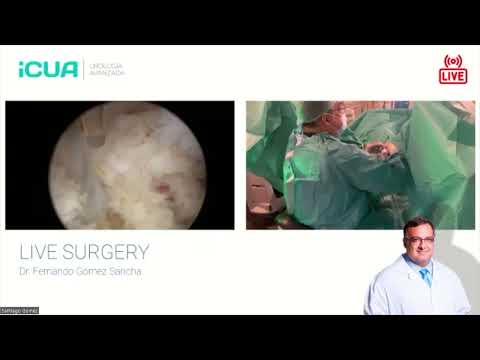
HoLEP live session with 2 cases
Dr. Fernando Gómez Sancha · ICUA
Dr. Fernando Gómez Sancha · YouTube
Language: English. YouTube audio metadata.
Surgical content for professionals. Contains footage of an operation.
Playback connects to YouTube. Your search query is not sent to the player.
About this video
A recording of two live HoLEP cases at ICUA–Clínica CEMTRO in Madrid for urologists from several European countries. Dr Marek Zawadzki from Poland contributed commentary to the session. The description identifies Cook Medical as the sponsor but does not supply separate clinical summaries for the two patients.
Documented details and sources
Only details explicitly stated in the sources. Missing information does not mean it did not occur.
No clinical case details have been extracted for this video.
Original title and description on YouTubeSource checked: 2026-10-06.
Available transcript · English
Subtitles exported from the original-language YouTube Studio editor. Not clinically reviewed; source identity and timestamps verified, full audio coverage not verified.
Selected spellings of enucleation, morcellation and holmium terms have been edited. This is not a full audio or clinical review; the original captions remain the source.
They may contain transcription or translation errors; check the explanation in the video.
- so I'm scrubbing will get dressed and we will be ready to go so who is connecting today we have again uh from the UK France Germany Switzerland uh attendees who are interested in slowly learning uh so again if you explain explain how to start for beginners for uh yeah as as last time really I'm brilliant we will try to cover all the aspects not only of the technique yeah and then specially especially how to use the settings the right settings of the laser and why yes well my settings maybe you can show the settings typically I use 100 watts and two joules 50 hertz and I use the virtual basket setting because it's uh excellent for dissection and population and then we lower the power a little bit using
- 1.2 joules and 40 Hertz and the Bubble Plus setting for coagulation so this is a setting setting twice but as you will see and I will pass I will try to explain there's not only not only the settings are important because the settings are telling you how the laser is coming out of the fiber you know these are the settings but then of course the person manipulating the fiber is insertion so let's do the white balance the most power white pencil yeah it's already done so you know with the same settings two different surgeons can have slightly different results okay so we will change to the endoscopic image or something because we're going to start and have a look inside okay see what's going on in here
- the initial part of the retrace a little bit resistant to the scope so I will let's put some more gel it looks a good caliber but for some reason I'm having trouble to enter and I don't want to force of course there we are okay so this gentleman has a lower urinary tract symptoms since uh 2014. he has had several episodes of retention and also high PSA with two negative biopsies and he has a 90 90 gram prostate as you can see relatively bulky bulky prostate and uh we did an MRI recently that was normal so probably it's just an inflammatory uh high PSA his PSA was 10.
- so I'm going to uh similar settings I'm going to start putting the fiber inside and as I said the settings are not the only determinant of tissue effects you see that the camera is a little bit out of focus do you see the endoscopic image yes perfectly oh brilliant uh I'm going to show the unblock technique and I will start at the Apex so it's important to come out like this you see and recognize where is the limit of the sphincter with the with the adenoma you can see this line here so I will start by marking this line with the laser the patient is coughing a little bit so I will these are movements from from the patients we are doing a spinal anesthesia so sometimes we have this lack of collaboration with the
- with the patients but here I'm marking the the white line you see it's the trying to determine where's the limit you see between the sphincter and the apex of the prostate sometimes this comes very much below the very Montana we see that we have to go lower because it's common knowledge or common let's say Dogma no that's if you're going to do a resection you shouldn't go below the veru but here of course we have to look for the anatomical plane and then I'm going to try to enter the plane and for that I'm going to go to the floor of the vermontanum to to to start developing a plane on this side this is the the right side of the patients and as I said and I will elaborate more and I think we can discuss on the other practical uh
- uh issues later on between patients if that's okay with you uh so here I'm going to focus more on on technique while we do the operation okay so here I'm going to enter as well to look for the proper plane uh you see that I'm going to the floor of the Vera Montana this is veru so I'm coming down here often I like to come all the way to the to the white line and release also these fibers here because that will reduce the amount of traction that the Apex is going to receive no from from this section so the idea is that this technique uh consists of a series of steps that are designed to allow for a tension free release of the sphincter early in the operation you know not immediately but early and that will provide excellent clinical results we don't worry anymore about
- post-operative stress incontinence we don't tell the patients to do careful exercises we tell them it's quite unlikely that they will have incontinence post-operatively because the rates of post-operative stress incontinence is lower than 1.5 percent so it's it's very very low so here you see that now I'm cutting the frenulum of the Vera Montana so I'm connecting the two spaces that I created at the beginning of the operation now we are developing the posterior line okay here it looks a little bit flimsy so I'm going to point my laser a little bit upwards and away from from that very very thin look off of the capsule so the idea and the way this operation works is mainly following the lines you
- know that we're going to develop this is the posterior line you know I'm following the posterior line so I try to position my spoke so that the line is in the middle you see so I can see a little bit of capsule and a little bit of anoma on both sides of the line and then I'm going to uh try to do dissection movements very carefully moving from side to side and trying to do very wide very wide movements you know I don't want to go deep for example here and continue here and do short movements because this is going to create an irregular line of dissection I'd rather go like this and you know follow follow follow through you know I tried to position the scope so I can have a look at the capsule and the adenoma at the same time
- we have lost this endoscopic View they're trying to correct Mr pasando sorry for that we're checking what's going on still black black with ndi mentioned the let's see if they can switch and now it's good no it's good okay yeah so we take it from uh the same point where we left it okay this is the posterior line we are developing okay I will develop this line uh and as I said you see if you work for example too far there's no effect if you get slightly closer there will be some coagulation effects but there's hardly any dissection you see you get even closer then you start seeing that the energy is disrupting the fibers that connect uh the capsule and the adenoma so working distance is Paramount
- the second Factor as I said is is the speed of movement I can choose to have a very slow like this we see very slow movement and that will give me very good hemostasis you see or I could go a little bit faster and of course that will give me faster dissection but maybe hemostasis might be compromised if you go very fast and then of course uh if this is the line of of dissection you see we can fire against the line like this you see we could fire outside of the line like in in the capsular edge you see and that's of course uh is dangerous because we get deeper in the tissue and then of course as the angles uh are changing you know between the capsule and the adenoma the the the aiming of the laser is is Super Paramount it's super important so
- here I'm trying to develop the posterior line I have to say that sometimes we see a beautiful plane we see a beautiful plane but very often we don't see it huh the beautiful plane and you know with these new energies and uh like with uh virtual baskets you know the double bubble setting often the tissue is a little bit uh coagulated you know the hemostats is improved but then sometimes the visualization of the beautiful plane is not so not so easy you see if I do a little bit of mechanical dissection you can start seeing this plane you see it's a recognizable often often we see that uh it's very beautiful here by the way there's an audio you can see there is a small nodule I'm going to try to take it out
- you see this is an adenomatous nodule so I'm going to try to dissect it off off the capsule so what I'm trying to say is you have to recognize the capsule and you have to recognize the interface between the abnormal and the capsule not just by this beautiful look of the interface between a normal and pep song you know that we see sometimes it's frustrating to try to see that all the time because it's not always there you know it's not always there uh everywhere around the prostate so sometimes you have a very nice plane anteriorly and a very bad plane posteriorly so we have to start recognizing the capsule because of other factors for example one is the smoothness of the of the of the capsule you know the capsule is quite smooth you can tell you
- see the fibrosity of the capsule now you have to start distinguishing the capsule because they're fibers you see in the surface uh also the color I would say the the lenoma is quite more yellow and the castle is more white so with these factors in mind we can we can progress in our operation okay so now that I did some of the posterior Liberation I'm going to come to the Apex you see here here I see my white line This is the sphincter I'm going to as the first step I'm going to deepen the the white line okay so here you see I'm deepening the white line a little bit because I want better access this is these are also called access lines so here I'm going to try to start developing the lateral aspects you know this is the posterior
- this is the lateral and I will be very very careful at the beginning not to push up too much just some millimeters four five six millimeters like this and I will take this dissection deeper towards the bladder neck the idea is to try to reach let's say probably a similar depth as we did posteriorly this is the phase that I like to call uh mobilize mobilization phase and connection because mobilize and connect so here what I'm trying to do is to mobilize the Apex a little bit initially posture laterally and also I want to connect with the line of dissection that we had posteriorly because these lines of dissection if you think about them and I I want you to picture in your mind a transverse section of an MRI of the prostate you know if you if you picture that
- in your mind you're going to perfectly recognize you see I'm seeing some BPH tissue here that's why I'm going a little bit deeper trying to find out and also this looks like maybe there is some BPH tissue there so sometimes you have to re-question or re-challenge your planes you know and if you think that they could be BPH tissue you have to deepen a little bit more so you know that's how we drive the operation we try to have a line that we can recognize you see all this looks like somewhat you know yellow and somewhat uh how do you say the aspect of of no manner anyway what we try to to get these lines okay that we can follow because once you have entered in a depth that is compatible with the plane you know the right plane
- following that depth is not so difficult by looking at the characteristics of the tissue here now this is quite you know this this guy had biopsies had a high PSA so probably there's some inflammatory changes there okay we'll we'll get back to that to that situation there but here we are at the Apex I'm trying to coagulate this little leader optically here this is the white line and I'm trying to follow this this white line you see now more horizontally trying to get towards 12 o'clock to get some access again and then to try to continue with the liberation of the lateral aspects okay this is the careful approach towards the anterior parts we have dissected initially a little bit of the lateral aspects then we came out again
- to try to check that the apical attachments you see this is an optical attachment this is a sphincter the optical attachments are not limiting me okay so if I can come up here which would be probably in the clock around 11 o'clock then I can come towards 11 o'clock as I go deeper towards the bladder neck okay I don't want to have and that was the problem with the original technique you know people would get under their Noma and come up all the way without looking back without looking at the string ground that would damage the sphincter and that would cause uh stress incontinence post-operatively you know because the classic technique the serial technique was very careless about what is going on on the at the Apex as you dissect the plane so
- here what I'm trying to do is to be careful as I dissect the Apex you know by releasing the apical attachments first and then trying to mobilize the Apex you see that for example here you know if we want to come up there is a very nice space because we have mobilized the Apex and then when I want to come towards 12 o'clock and here's here's the 12 o'clock Mark that we Mark at the beginning we have some space and we have some orientation because we mobilize the epics let's repeat these steps uh starting again here this is my white line on the other side so initially I'm going to deepen the incision a little bit this is an access incision so people tell me oh you're cutting on the adenoma well I don't mind because you know
- I can make a small cut but then I'm going to look for the good plane here so again two three four five six millimeters up to enter the lateral plane you see and again I'm going to do the mobilize and connect uh movements mobilization of the Apex and try to connect with the line that we had performed uh posteriorly here we are coming up a little bit you see this mobilization is Paramount if we want to if we want to get towards the 12 o'clock area but you see here I'm stopping I'm not going further up because when I come out you see this is still attached this is the optical attachment so I want to catch the apical attachment first I will do another access incision this time a little bit more horizontal like this and then you know this takes me to the proper plane
- and I can start and I can continue to dissect the plane you see here again I take another five six seven millimeters upwards and then towards the bladder neck this is the progressive mobilization of the Apex that is going to allow me to tackle the the 12 o'clock area very safely and very consistently okay so you see here I'm coming up but still I'm not forcing my way up I'm just trying to carry a nice line that then I can follow you see the line of dissection is coming downwards like this and it has to connect with the posterior Line This is the posterior line that we marked before this way we are oriented we have entered the right depth for dissection and then in order to carry this dissection towards the bladder neck we just have to judge if the depth of the dissection that
- we are taking is is good enough here again you see I have some attachment so I come out towards the Apex and then I try to touch the optical attachments first you see trying to progressively approach the 12 o'clock region here you see so very carefully trying to avoid traction on the sphincter area and now you'll see the magic taking place here I'm trying to you see Follow My Line This is lateral line and this is now becoming anterior line so here I also want to connect properly to the anterior line lateral line coming downwards coming downwards okay so at the end of this topic calibration we should have a very clear line that goes all around the adenoma so what happens if we come here towards 12 o'clock look we have developed this Liberation here you see this is the plane
- on the other side and this is the plane now on this side so we just have our 12 o'clock Mark here and now we know that we have to patch the 12 o'clock tissue to connect these two planes it's similar to what we did when we developed uh near the veru one plane first then the other side and then we cut the frenulum of the veru to connect so here again we're doing the same thing connecting these two spaces you see perfectly under control perfectly knowing where we are perfectly oriented and now I will try to construct the anterior line the anterior line sometimes needs some more more work you have to judge if the depth that you are taking is good enough or not sometimes there is a risk of leaving some abnormative tissue in this area at 12 o'clock
- so I don't want to leave tissue of course and I want to try to you see work on the interior line trying to work on the anterior line follow the arc we think on the MRI image and if you look at an MRI of a big prostate you will see how the line is quite uniform and we have it in our mind already you know so we know the anatomy of of the cut so we know how it goes from here you see what I'm trying to concentrate on is on these parameters I told you I have my settings but I want to do a nice dissection and at the same time try to carry a nice hemostasis if I rush it too much if I run too much what's going to happen is that I will dissect the plane very beautifully but the quality of hemostasis will be a little bit less so I have to look at
- a nice Tempo you know a movement that gives enough time to the energy to to to to provide a nice coagulation and then I have to check always and I have to connect the lines always so that we have a nice orientation all the time here you see that we have now the lateral dissection line coming down and here what we have to to decide is if we fire against the line this maybe looks a little bit deep so maybe you would decide to go a little bit towards the anoma you see to try to stay inside the idea is that we might cause a small perforation you see the the speed I'm moving and the distance I'm using and the tissue effect I am getting is quite soft it's not very aggressive so if I develop the plane with such uh care
- you know in every point I just do a little bit of dissection and that means that it's very rare that I'm going to post a major preparation and if I see that the capsule is spinning in some region it's very easy for me to correct the aiming I fire a little bit more inside you know what I mean so in this phase of the operation that the idea is that the sphincter has been released completely and if we come out you will see here the sphincters mucosa there is some small bleeder but the sphincter has been preserved exactly up to the line that we marked and now we just have to go around the anoma around their Noma you see we can go all the way around all the way around in both sides and you know it's very simple and then when you
- have a line of dissection you have to judge the characteristics of the plane if it looks a little bit deep we will fire closer to the anoma if it looks uh that we are living yellow tissue we will fire a little bit outside so that we can take that tissue with us no with the with the bulk of the prostate that we are dissecting so here you see also one of the details I I will I like is you see that my fiber is very static one of the problems with uh understanding the anatomy of olive is that sometimes surgeons are moving around the camera the fiber you know they have the theory that if you are at this position in this part of the prostate maybe the angle of incidence is better to do the dissection but to me this is like an
- Olympic shooter you know the Olympic shooter fires with the gun uh at 12 o'clock you know he doesn't fire like in the I don't know the New York gangs that uh fire with the pistol uh sideways you know what I mean so to me keeping the fiber still gives me a lot of control and I can decide if I fire against the line inside of the line outside of the line and it gives me a lot of control and also it's not confusing at all because I don't have to switch rotates the camera I don't have to rotate the fiber so my advice to people who are learning is try to keep the fiber in your fingers I'm holding the fiber with my fingers and you see try to move around the adenoma following your line and it's a simple judgment you know am I in the right plane am I losing the plane am I going too
- deep and then modify your strategy accordingly you know it's not so difficult it's not rocket science and of course I think once you see this kind of behavior it's quite uh easy to reproduce I teach a lot of people and I have to say once they get familiar with these Concepts you know when they get aware that you know the way you you handle the laser fiber and not only the settings because if you think the settings are going to define the the tissue effect you will not understand what's going on you know you you will say why did I perforate here what did I cut too deep you know of course your working distance was not correct you know you go too close to the tissue the energy was too disruptive so you have to reflect on these things to in order to understand
- and in order to be able to do a nice operation and a safe operation so here you see I'm following my line of dissection of course I'm trying to understand uh and I I really trust my line of dissection because as I said once you are in these steps uh it's not very difficult and especially with homium because now of course there's other lasers in the markets you know julium polystolium lasers uh Trillium fiber lasers they cut really well they provide very good hemostatis but they do not have the dissection effects that the formium laser uh offers and you will ask yourselves how is that possible why chromium dissects the plane on why tholium and thoulium fiber does not dissect the plane so much or so
- so the example to understand these effects is that hommium you know the wavelengths are very similar to microns for petroleum two microns and uh 140 nanometers for so 2140 nanometers for homium you know it's very similar so the tissues effects on the interaction with water is very similar as well the thing is that homium can emit pulses that are high energy buses in a very short time so short pulses and very powerful pulses and this this characteristic is well the the homonym laser kind of meets with very high peak power you know and the peak power is uh the amount of instantaneous energy coming out of the fiber and uh it is much higher than what Tulum or Tulum fiber can offer so basically when this energy comes out of the fiber it's going to find the water as it has affinity
- for water it's going to heat it very fast so you know close to the fiber there will be a sudden the position of energy that will cause an increase in temperature in the water you know very very abrupt to the point that we might have this uh super hot water you know water that uh is over uh 100 degrees and then of course this water has to transition very fast to to to to to to to to Vapor huh and that generates this bubble that we see on the on the videos from from companies and this bubble is like you can picture it like a like an explosion here for example we have a nice example you see that the capsule is looking thinner here so I don't want to fire against this I want to fire closer to the anoma you see I'm correcting my plane so that it doesn't go very very deep
- so as I said uh this this little explosion that happens on the tip of the fiber is going to cause some uh pressure wave a pressure wave a shock wave that is going to help dissect the the surgical plane following the path of least resistance of course it's easier for the bubble and the expansion to follow the right plane than to penetrate the capsule or to penetrate the anoma you know so that's why the behavior and I picture as if I had two little scissors on the point of my fiber and every time I I fire against the interface between a normal and pepsil what I'm achieving is uh like the effect of the scissor blades spreading you know so some expansion of of the space and some dissection of the plane
- when you use trulium or trulium Fiber lasers you know the pulses they do are not reaching this very high peak power so holmium has Peak powers of around 10 000 Watts uh an over antulum I think in the markets uh are reaching three thousand five thousand tops so the effect of a sodium laser dissecting the plane is going to be a little bit more like using a knife to develop the plane of course you can develop the plane with a knife if you try to think about peeling an orange we'd peel the oranges with a knife of course but uh many times what happens is some of the yellow stuff from the orange skin remains uh you know and some meat remains on the skin you know what I mean so the idea is that chromium pulses allow
- you help you to find the right plane due to this explosive effect whereas tholium has very good cutting properties okay so here as you see we're going around the prostate it's a big one it's a well 90 90 grams not a not huge but uh still it's giving us some work and now I'm trying to follow my line you see I can follow my line I'm trying to connect you see always and try to connect your line try to go from your line in one place and if there is some discrepancy or if there is something that the line is degrading a little bit you need to look after the line because the line will help you a lot and uh in in the in the areas where you know it's difficult to see the beautiful plane it helps you
- a lot to realize that you are more or less in the rights uh depth of of the dissection of course you have to analyze the tissue you see all the time and you have to judge for example down here you see we had some yellow tissue remember at the beginning so here for example it looks as if I was probably not aware that there could be some more uh tissue here let me try and you see that we can deepen quite safely I hope I can show you you see this uh this tissue that we see here is a little bit yellow in color and I'm deepening my dissection a little bit more to check this is of course at the beginning you you're happy if you can remove the anoma maybe you don't see these subtle changes in the capsule but as you
- get more experience you start seeing that maybe you're leaving some tissue behind let's see if I can develop a line also as we said this patient had a high PSA several biopsies so sometimes you know the inflammatory changes or but you see when I see yellow tissue I want to go deeper and find out and very often most often I would say I find that there is BPH tissue there that should be removed even when you know sometimes this BPH grows in a nodular fashion and uh and some of these nodules can so instead of thinking of a billiard ball you see we think of a a fruit no it's not always perfect and we have to judge of course this plane looks very flimsy you see it looks very very thin so I have to be careful and I have to uh Target my laser properly so I don't Target it
- against the capsule but closer to the to the edge of the arenoma so the energy doesn't deepen you know the the dissection too much here for example it looks flimsy I don't know if you can see the detail I hope you come but I'm taking a little bit more time in the dissection of this lower plane because I think there is some tissue worth removing here maybe a nodule maybe some sometimes this plane could be obliterated by inflammation by a tumor by you know maybe this carrying effects of multiple biases I'm trying to use the energy very softly very carefully so I don't deepen too much you know sometimes it's not easy because you are already working near a very thin plane but I think this is a normal so we should we should take it out so very carefully I'm
- going to you see we have advanced more rapidly in the rest of the circumference but here I'm trying to go a little bit slowly here and very careful not too deep and too much my dissection so there we are slowly getting better slowly getting you see I always protect the line because the line is your savior you know if you if you carry a nice line that you can follow I think it's uh safer you know it's much safer and you have a reference and I trust my lines a lot you know things uh that maybe what I'm telling you looks a little bit abstract for you when I talk about the lines but you know when you have to do this operation a lot if the lines become your friends you know and you talk to them and you communicate with them and you look after them so you become a little bit crazy
- and everything comes becomes a little bit philosophical okay so here you see we are looking at the circular fibers of the bladder neck below this we have the vertical fibers of the lateral neck so I'm going to deepen now I'm going to cut these vertical fibers because I know that the bladder is behind huh this is the anterior commissure here we're cutting uh uh the bladder neck now what we see here is probably muscle fibers submucosa mucosa of the bladder you see here and now I'm trying to follow the curvature of the fibers of the bladder neck to try to uh continue with the dissection here we are here we are and I'm going to do the same on the other side so you see if you reflect about it when
- we started we started at the Apex posteriorly we entered in one side we developed the other side we connected in the middle then we tried kind of did something similar to get uh towards the anterior parts so to liberate the sphincter so we went from one side then we went from the other side and then we connected in the middle and if we started posteriorly at the Apex here we are starting anteriorly huh so the bladder neck we enter anteriorly and you see now we have managed to open the bladder next so now my let's say next step see this could be a little bit of a Noma too here you see on this side so not only that side but a little bit here and if this happens of course you want to take it out you don't want to leave
- adenomatous nodules that could grow in the future huh the philosophy of holip is to try to be definitive to try to be aggressive and if you master the use of the energy properly it's quite safe to do so huh the safe operation okay so here you see I'm coming from the side I'm reaching near the bladder neck here I hope where are you well there's still some way to go so let's continue with the lateral and posterior dissection see if this dissection following my line of dissection will take me towards the bladder neck opening that we just did so here also I am very very careful looking at the characteristics of the tissue but so far so good I'm following my line of dissection you see I do white dissection movements
- I don't deepen just in one area I try to go and here you see here we are reaching the bladder neck again so we are now starting to catch the bladder neck in the posterior aspects we did the anterior now we do the posterior there's a moment here when you can you know enter the bladder and check Where is the uo so here I'm going to enter uncheck you see that looks like the bar this is the U so we're not so far and we have to be careful with that but you see now I can go from the lateral aspect all the way to enter the bladder here so let's go to the other side and we will do we will try to do the same here we still have to do some dissection down here you see that the plane is a little bit sticky let's see if I can finish this so we can continue and
- again this is my line of dissection I'm using the energy very Softly so that I don't deepen too much and if I deepen a little bit I can correct and of course a little bit is not dangerous dangerous is we can when you do a big opening or a deep opening but if you do a let's say superficial indentation in the capsule it's not going to have any any consequence huh here this is the posterior line connecting to the lateral line getting closer towards the bladder neck trying to follow my line okay so always connecting here I'm trying to connect with the posterior line let's see where we are here you see this is a posterior line here it's very beautiful and I can even continue towards the other side Maybe
- you see when we have these beautiful long lines it's a pleasure to to do a new creation carefully here let's see looks slightly deep there so when when I find that uh that I'm getting deep of course I have to correct my aiming I have to point towards the anoma huh in the side of the arnoma following my line but aiming closer to their normal because you see most of the energy is absorbed by the adenoma and I managed to separate a Norman capsule without deepening the capsule so this is I think the most important single thing that you have to know aiming is fundamental you know if we are here and you fire here you will perforate the capsule but if you fire up here you see you will develop the plane
- very simple Concepts very easy to learn and very easy to execute you see this is a posterior line that we are developing but of course I wanted to my original intention was to come here and try to connect with the bladder neck you see here we still have to detach a little bit but you see one of the advantages of the envelope technique is that we had an excellent View during the operation you see that we didn't have to do cuts at the beginning most of the time until we open the bladder the irrigation of this space is uh very very good because there is no passage of irrigation fluid to the bladder you know we're just irrigating the space between prostate sorry abnormal pepsil and that gives you excellent visibility
- when when you open the connection to the bladder of course if there is some bleeding you know the blood will enter the bladder and then it will be more difficult to wash uh the bleeding so here I'm trying to find out how this curve is is taking place coming from the posterior plane towards the bladder neck in this region so here we will make small improvements a small uh dissection you know you have to win the little battles if you want to win the war let's go to the other side when something gets a little bit more difficult you see the prostate is getting very mobile now so even maybe I could uh lift it a little bit not yet I think but I will try to get under and see if I can finalize or improve the
- dissection on this side you see here we will get towards the bladder neck this is posterior here coming up always correcting the aiming of the laser so that it doesn't go against the capsule it goes against the Aroma On Top and the procedure is nearly finished now huh we just have to continue dissecting the posterior aspect here let's see if we can see the bladder there you see this is the bladder we have the uo very close so we will be careful there I will go in again to check the position of the Euro before I cut this if I can let's see if I can go in yes we saw the uo here here and ah sorry I got upwards let's I have to go from Below if I want to be super safe let me advance this a little bit more before we catch the access to the bladder
- of course as the prostates get bulkier you know sometimes this is The Edge I want to touch and let's see if I can see where the uo is here nearby it is there you see that's the edge of my dissection so we are now quite uh certain that we are not uh damaging the uo let's see well all the time you spend uh watching the uo and uh let you know knowing where it is it's it's a well spent time there it is huh so now you see we are more medial than the uo let's go to the other side and see if we can do a similar thing so you see the approach here I did some movement I think and I went slightly uh deep in the capsule so let's see if I can correct here when they touch this sometimes you know the prostate capsule is so seen in these areas that
- even with mechanical movements if you're not very careful you can sometimes uh get somewhat deep in the Capstone but of course we haven't spoken about the attitudes you have to have for holler and I think it's almost as important as the technical aspects you have to be very relaxed you know when you do holep and you have to be very technical you see not not emotional but technical and if you see uh uh deepening in the capsule the perforation something like that you shouldn't panic but let's see now because I think the prostate is very mobile here I'm going to try to lift it a little bit and see if I can push it into the bladder carefully yeah so you see this side has rotated I don't know if you can see that this is prostatic urethra and this is
- bladder neck so now half of the prostate is inside the bladder now when we come down here to check how things are looking we have a much better idea you see we understand much better now because there is more space and we can continue with our dissection cutting the attachments that remain and many people tell me why uh I mean probably the prostate is so big that you cannot push it in the bladder and I have to say that the trick to push the the prostate and block to the bladder is to try to uh rotate their anoma you see we have rotated uh this this side now I'm going to continue the rotation in the same sense so I'm going to push very carefully trying to tilt the the prostate completely and I think I managed already
- and here's the last attachments you see let's see where the uo is in this side here so not so far but I will try to you know completely education you see one of the important things with hollab is to watch many cases because there is a simple there's some simple principles that you can follow to do follow-up but of course then the anatomic variations you know the difficult cases the patients make this application of these principles to look a little bit different from case to case so if you watch a very difficult case you might think wow polyp is so difficult but then you watch an easy case and you think well you might think you know you might have a wrong idea about the difficulty of Performing polyp but when you see many cases uh and you recognize the
- basic principles of holep you know you uh you can understand better that there are easy cases and uh difficult cases but as long as you stick to the surgical principles the euro is here you see that it's quite close to where we are working so as long as you adhere to this surgical principles everything is going to be okay so regarding the attitude as I said you have to be very relaxed you see sometimes in some areas you're going to find that the plane looks a little bit deep sometimes this could post some you know extravasation of water locally usually of of no concern here this is a bigger preparation I think and I did this mechanically not not with the laser maybe in one of my my movements but again I remain quiet I remain uh calm you know I try to
- do hemostasis maybe in this case I'll probably leave the catheter a little bit longer huh typically we are quite aggressive removing patheters but maybe in this case it went slightly deeper there so let's check the uo one last time here this is good if we go to the other side where are you we so it's here okay so let's check the final hemostasis especially it's important to check near the bladder neck because this explosive nature of polyp is a disadvantage here you see when you touch the mucosa it's an explosive cutting property you know so sometimes there's disruption of these vessels and there's a tendency to bleed from them because I'll etch so I spend a little bit of time trying to do more select sorry trying to to coagulate these vessels here there's some
- near the mucosa but of course we are very close to the uo so we have to check where we are and very carefully uh try to sorry control these bleeders without interfering with there we are okay so I'm going to try two more selects of course uh with a perforation I will keep my bags relatively low they are not so high no I'll see okay so I'm going to do the change of instruments okay so another aspect that is Paramount is that you cannot do holep alone so you need to have a good team that supports you you know here I'm changing the instruments I'm in order to do these things fast you have to rehearse them you know these movements and this you have to do some rehearsal and you have to have a good team that supports you often
- during morcellation you might find that uh there is some issue the most later gets obstructed it's not efficient you know the suction is not good there's some you know uh leak of vacuum in the system so the morcellator cannot attract the abnormal enough to to provide a good more solution so it's important to have a good team uh this is probably one of the most important factors of uh holep having a good team understanding uh as I said tissue effects you know laser tissue interaction on how to use the laser uh the fiber properly the settings are important but to a certain point because two surgeons with same settings will produce different tissue effects one surgeon could be very very safe and another surgeon could be very Reckless you know and uh
- if if he doesn't understand how tissue laser interaction works with more selection my advice is to get the best sports later you can because if you have a slow motion later typically you know the more selection process does not irrigate very well you know you are putting water in the bladder you're sucking water out of the bladder but it doesn't clean the The View uh the same way as a continuous uh uh irrigation endoscope because because there's not so much water coming out not so much water coming in many people use two irrigation sets you know four bucks using both entries in the nephroscope I use only one usually I use only one because I think it's simpler but I have a lot of attention I pay a lot of attention to the quality of more solution because
- when more solution is good as is as it is now you will see that most of the time the mouth of the blade is closed by the tissue you know it's obliterated by the tissue so there's going to be some water coming out but not too much and there's going to be a lot of tissue coming out only when modulation is not efficient when you see that you see the mouth of the most later a lot and you keep sucking sucking water you know then there is danger of emptying the bladder and of course trouble so for more selection you have to do to guarantee that you have a good good hemostasis and this laser is amazing in that respect because we usually have very good visibility you must make sure that your team is helping you because you have your eyes uh totally
- you know stuck in the screen you cannot look at the water unless you stop for a moment to look you know to check if there's water coming in and you have to rely on your team they have to help you they have to let you know that there's water enough and they have to be responsible they have to be present in the operation this is what I tell them you know you don't have to be present in the operating room you have to be present in the operation it's very different so if if you visit me sometime and you're welcome to to visit me whenever you want uh you will see that our team is looking at the screen everybody is looking at what's going on because it's a team effort it's not a certain effort so they will help me so I can relax
- I don't have to control everything that goes on in the operating room they control their own roles and I can relax and concentrate on what I am doing of course you want to have good visibility another advice is don't work like this you see if you work with with the blades too close to the lens you will not have any perspective of where you are if you take the morcellator a little bit more inside you can see that the upper half of the screen is occupied by tissue the lower half is occupied by the blade but in both sides of the blade you can see two black triangles and these triangles are showing you that the blade is far away from the bladder because they are black you know now we see that the color is black and that means that we're
- not close to the bladder if we get closer to the bladder you see we start seeing other colors pink breads huh so these black triangles give you the the Peace of Mind but you're not anywhere close to the bladder of course if you have a fast moreculator like this uh piranya more Slater then you will uh progress very fast and the mosulation period will be very limited we usually average 10 grams per minute of uh tissue so typically for a 90 gram anoma it would take us 9 or 10 minutes to take the tissue out which is much faster than the original morphellation speed you know that could be double or triple that that time Fernando may I ask you a question go ahead go ahead how does more the later works when
- you have scones inside the prostate well uh if if there is a lot of stones you might get into trouble because the stones can damage the edges of of the modulator Jaws and they could obtract the motor or the system so in a very Stony prostate it might be a problem but I have to say these situations are quite rare often we see little stones but uh mostly you know when there are Stones between the aroma and the capsule these are going to be let's say floating in the or or in the in the fossa or in the bladder floor you know so it's not a very common problem I would say occasionally you have to be aware that this can happen and if you see a stone instead of trying to modulate the stone you should
- try to go to another you know area of of the mosulation of the tissue okay thanks but uh well now we will have the time between patients we have time to to have questions and answers I think it was interesting to try to reflect on the different technical aspects but now modulation is nearly finished you see we have a very nice fossa with good hemostasis I'm going to try to do an ultrasound let's see if we can check with my ultrasound the quality of the job so I'm going to take the most later out now we have to switch to the iPad camera so what I'm going to do is I'm going to stick the ultrasound uh for settings okay so now you can see you see this is the fossa this is the fossa this is the scope inside the
- fossa you can see it's a perfect fossa there is some water extralization you see below the the bladder because I did a bladder neck perforation but it doesn't seem too bad comparison Purple Heart this is the longitudinal View now you see we have done a perfect anatomical clearance of the abnormal okay so we finished let's put a catheter thank you brilliant usually we use a three-way catheter we will leave some irrigation going on and we will tailor the speed of the irrigation to the need of the patients so in this case you see my nurse yeah I don't know if you're seeing this is going to help me make sure that the catheter goes in the right place good so the case was uh slightly more difficult in the left side because I saw that tissue there
- which was quite sticky but at the end we managed to do these cases in a reasonable time frame normally under one hour except in very very large prostates this was relatively large foreign as I said maybe in this case we will leave the catheter one more day just in case although often when we see this kind of you know supricable preparations we take the catheter out BCC very well there might be some conversation but it's too painful so we will see you tomorrow so now I'm happy to take any questions maybe we should go to the meet up to the patient and tell him that everything was okay I don't know okay okay so let's come out here foreign Ty of the image would you see everything yeah I saw I think it was a very good
- presentation and yeah the image was yeah only the minutes where it was broke down yeah but I I stopped at that time so I didn't continue operating so you could see the full to speak and to talk foreign fiber laser what's your opinion about it no it's perfectly feasible you know I think the effect is a little bit different but the surgeon can compensate for these differences you know if what I find I find that I am more relaxed if I'm using a whole new because I can rely more on on these dissection effects you know so to me the homonym is like if I had a scissor opening you know when I when I try to dissect the plane the scissor is opening and it's helping me dissect this pain with the Tulum fiber and with a postulum lasers and of course which continuous
- wave two limbs the idea is that the energy will cut very well will coagulate really well but it's like trying to peel the orange with a very sharp knife you know so it has a less dissecting effect but you have experience with that too Marek what is your opinion I think personally that for the very well educated endurologist in hollab using tholium fiber is quite easy as you mentioned but for new beginners it's rather difficult because the bubble is so small that they have difficulty to find the correct plane and they are cutting through tissue so for the new beginners not probably not so good laser in my opinion I agree I concur with you yes you know I think Holly is based on understanding the anatomy so for people who have been doing uh trp you know
- during their lives they never saw this plane the way we see it here so if you understand the anatomy and you get some experience with the anatomy then the tool is less relevant and I have to say that petroleum fiber and polystolium lasers provide even better hemostasis than ponium I think yeah true which is an advantage on the other side so if if you if you know your anatomy And if you know if you have experience then these are very competitive lasers because you get good hemostasis you get fast dissection and you can you can you know perfectly use these lasers as well my favorite I have to say is holmium though because of these dissection effects and but uh maybe it's my favorite because I use it more you know but but uh when you use a laser a lot
- you can compensate for the for the differences in the in the in the effect yeah but but in the word really the cost of whole new laser is much bigger and much higher than the Italian fiber laser and people are thinking that they will buy toolium fiber and it will be a laser for Stones which probably this laser is little bit better than whole new for soft Stones I'm creating better dust and will have the same laser for prostates and I think this message is little bit wrong we cannot compensate we cannot replace whole new steel with the Sodium fiber laser yes yes of course yes good yeah I I agree of course uh homium still has a big big role and uh many many experts like Widow usually in Italy for example Stone guys tell you that they they would never give
- away their homie you know they like William for particular cases they like the dusting effect but um they wouldn't give you know away the whole news you know and I I do prostate I have tried all the lasers I appreciate the perfect you know nearly perfect hemostasis from from TuneIn fiber and and postolium lasers but uh I still would stick with with homium you know for the majority of cases if you ask me what is your favorite I would go for for homonym too and the other question is about the prostate cancer and the risk of prostate cancer after what what's your opinion how how what will be the factor we should evaluate diagnosis of the prostate cancer before inoculation should we perform anuculation in pi in people with pirates
- 3 in the transitional zone or should we go on the biopsy what's your strategy well this is a clinical judgment uh cynical judgment question and this is what we do we have to face different cases every day it depends on the age of the patient it depends on the history of the patient if the patient had a high PSA but it was stable over the over the years or if it's a rising BSA you know there are many factors what we try to do is if there is a suspicion of cancer we we try to rule it out and uh is it a negative MRI enough well there will always be a risk of finding a cancer in a patients but we have to reasonably rule out these cancers recently we are doing these blood tests looking for circulating tumor cells and uh what's the problem no no no the camera oh okay
- so we we now have another tool that will I'm sure we'll get more and more popular which is to be able to do this blood test that detects circulating cancer cells and this is an additional you know non-aggressive biopsy uh uh you know CTC detection stipulating tumor cells is helping us too with this with these patients but in in the standard setting I would say if you have a high PSA and a normal MRI probably the normal MRI rule out rules out a very bad tumor and if the patient you know has a catheter or has an obstructive condition you know and then you detect the cancer this patient can still be treated by surgery or radiation therapy so it's not not the end of the world so I would say rule out a country if you suspect it but reasonably you know roll it out
- some cases they might have a normal MRI but the PSA is rising and raising and it's very suspicious and then we might decide so so we would do what we usually do to rule out cancer and if we are satisfied that there is no cancer then we will do the the nucleation and the last question what's the level what's the threshold of TSA after a nucleation which your makes you happy well I I have to say that most of my patients have a BSA lower than one okay I am quite aggressive uh uh as you have seen if I doubt that there is yellow tissue I take it out if there are nodules I take them out either apical nodules near the center I take them out you know I'm very aggressive taking tissue out and uh I have to say most of the patients have BSA below one uh we
- think uh based on Publications that other people have done that a PSA lower than 1.5 is is normal if it goes up from 1.5 we will start suspecting the possibility of our prostate cancer and then we would study the patient so in the follow-up and this is something that many for example GPS don't know if you have a whole app you know you I I tend to put it in the reports so I said to the GPS you know check the PSA if it's more than 1.5 refer the patient back to us because there is a chance that gets higher and higher as it goes up from 1.5 to 2 to 3 that this patient will have a prostate cancer yeah and do you agree do you agree Mark yes yes that's my normal role that I I accept the level less than one and if it's increasing or is a little bit higher
- than one and going up so I just perform MRI and trying to find if there is some Illusions very often it's inflammation inside the peripheral Zone and sometimes it happens that they are appealing some nodules which we hate with biopsy so that's everyday practice brilliant so regarding the question if there's no more questions from the floor from the people watching this uh regarding the learning and maybe you can give us your opinion as well Marek I think it is Paramount to see many procedures you know I think it's a complex operation and you have to to go to a center where they do a lot of procedures and see many because when you understand the procedure um then the chances that you're going to be able to do it are much better
- and I wouldn't recommend anybody to try to do holidays they have seen two or three cases it doesn't make sense you should see 30 or 40. and then of course ideally you should try to find a you know collaboration a mentor who can come and help you as much as we did with you America uh you I think you saw many many procedures before starting to do holiday and then when you were ready you could teach your colleagues and as I understand now uh in your team everybody does holy at a very high level yeah that's true that's true and we did we did in 2018 as you remember this uh concept of whole app in Poland in my country and it went very very well and uh we we didn't stop by doing it by ourselves we also shared the knowledge and until now in my country there
- is something like 10 15 people who can easily perform an operation yeah congratulations yeah but I think you know you experience it when you have a constant uh agreement and I say to people you know when you go into budget the purchase of a laser and instruments you shouldn't only budget the instruments and the the laser you should budget for training as well so you need to go to a center watch how they do and maybe you should save a little bit of money to have someone come and help you with your first cases and then revisit your Technique when you have done 2030 and this way you can you can you can make sure that the process is going to to work well yes true and the the what the people are lacking that they are they don't have a plan in the beginning they don't have
- the strategy for for treating the prostate so what is important to have always the plan which will be the same in every operation and they will follow it as a courses and they will succeed but that way sir political issues that we tend to discuss but many times people do not know so for example if if you um if you're going to do if you're going to start in your hospital with Holly you should invite someone who can do a very good job and make sure that the session is successful and and follow me with this if you let's say generate the attention you know from the hospital management the anesthesia Department the nurses everybody's watching you and you're doing your first case your first case is going to take you a long time
- and then the Necessities will come in your ear and we will tell you you could have done three trps at the same time as you did with the first toilet um you know then the manager will be not happy because it took too long and then when he does his numbers he thinks okay this guy is going to be able to do one or two cases in the morning on when he was able to do four or five you know trps so if you want to start if you want to kick off uh in your department you have to bring someone you know like Marek who can do a very good job um uh do a session with three four cases so that everybody is excited about it you know if you can do pieces under one hour and the urine is clear when the patient comes out the operating
- room and the nurses in the in the in the hospital in the words they see that the urines are clear they don't have to be so worried everybody is very happy and then when you do your first case everybody will understand that it will take you some time to get from what they see with you to what they saw you know in the first experience so so this is a clever way to to start also if you have to convince your hospital management I think it's a bad idea to tell them you know I need I don't know 200 000 Euros to buy a laser to buy a morcellator to buy the equipment and to get trained you know because they will say no you know why should I spend this money the way to to approach it I think is to tell the manager you know can you picture how my
- department is going to change how many more beds and how many more beds day days we will get if we can discharge the patients in less than 24 hours if we can do some cases ambulatory um you know and then when you start taking into account the change that the department is going to experience you know some departments still do open prostatectomy or laparoscopic or even robotic you know and and if you tell them we could get rid of all this you know all the opens all the trps uh in many centers doing trp the patient stays two three days you know instead of one day there's a rate of transition in many centers they prepare blood before the operation so when you start looking at all this when you do the big business plan when you when you see the big picture then
- 200 000 Euros or whatever you have to invest it's not not too bad you know do you agree with me or is there any comments yeah yeah absolutely that was uh in in our hospital that we started it and we get the long time view in the future so we I told them that it will first last little bit longer but at the end when we will pass the learning curve comparing to qrp will be much faster and the nurses will be much happier and it appeared it's everyday practice and nobody can imagine that we will come back to trp so even my residents and the new specialist they cannot perform qrp in my hospital they can only perform a nucleation in the prostate yes it is a cultural change and it takes a little while some people are hard to convince
- some people have to face you know to be out of their comfort zone you know because if you do trp very well you have to start from zero with with holep and it will take you some time to get to the same level that you had the level of competence that you have with trp but the change is amazing and the ability to get rich or to make your patients get rid of their problems you know their catheter their infections their symptoms uh is going to be Paramount what do you tell me Marek about the results I mean how happy are you with with post-operative outcomes for patients compared to to what you saw before the results are now that we um we we adapted your Technique we still using your Technique maybe a little bit more modified
- something between Felipe and and your Technique and and we have only in some group of patients there's some yeah and we have only urge incontinence the stress urinary continues is very very seldom and we we in our Hospital are doing something between 500 cases in a year so everybody is doing this operation and the people are very open-minded coming from a whole our region even geographic region so the results are really good what I not agree with some data and some publication that we tried we have tried to do some inoculation on the anticoagulants but it was I have bad experience with this and this obligatory to stop to switch to Heparin yes and so in these two patients we had to make a transfusion they were these two patients who were on Clopidogrel
- or Xarelto or something like that so we suddenly stopped and said no no no that's not good way yes I I think uh yeah of course companies when they do marketing they tend to be over enthusiastic and for some reason some surgeons are saying things that might be applicable maybe in their centers with their level of experience and they say you know I can do a fully anticoagulated patients with holep and uh okay bye-bye bye bye all the best take care so I agree with you completely I think anticoagulated patients you know when I was young I saw I had this experience of a patient phoning from home saying I'm bleeding in my urine and he was anti-gravated so we sent an ambulance and by the time he came to the hospital he had examinated he was dead so you know leaving
- in an anti-coagulated patient is very serious and we shouldn't under estimate this risk we have had also some some terrible cases where the patient bled and had to go to the operation theater more than one time you know and had block Transitions and nearly died because of of of of bleeding so we try to compete to to fight with the anesthetists and the internists who are very always very worried about the medical complications and they try to re-establish anticoagulation very fast and we we try to tell them please let us keep the patient a little bit dry on anticoagulation for for for some time so if you for example use Heparin use heparinet reasonable doses because with Heparin at very high doses patients bleed a lot as well even
- after laser procedures so uh of course you have to tell the patients that he might expect to have long-term uh mild hematuria you know the patients that do well they have hematuria for a month and a half or something and that's your experience as well yes that's true and the other is low level you know they don't get anemia but but you have to tell them otherwise they're very stressed and the other other um problem which which the people who are starting this operation May face is the longitudinal catheter so we had up until five patients with septic complication afterwards so I'm very actively checking the um urine culture before the operation I'm sending the tip of the catheter before the operational week before the operation for the your analysis
- for the urinary culture to check if there is no infection and it's a special um I fully agree you know because one one thing that happens when you do holep is that you get to do more patience because there will be more patients looking for you and then instead of doing the normal numbers of trps that a center does you know you start getting more BPH patients because they look for you and then you know if a complication happens in one percent of patients in your case if you do 500 cases you will see it five times in a year so yeah what I was trying to say is I agree completely we are very you know I experienced two sentences in my life with endoscopic procedures like this and since then despite the guidelines do not recommend that I started doing uh cultures of
- the tip of the catheter and uh I give them at least four or five days of antibiotics if the culture is positive which is usually positive in a catheterized patient um we have zero sepsis so I think it's a good advice and I'm very glad to hear that you are doing the same because I think it's what we have to recommend to people doing uh endoscopic endoscopic procedures like this yeah yeah we have to be safe and then we will get more patience by doing correct work correct job yes definitely the next patient is coming in the operating room so I hope in five five ten minutes we can start with the second case the second case I think it's I don't remember that characteristics but there is a slide I think no we have a slide let's see if we can see the slide
- no so let me see the case and I will tell you about it so this is okay so this this uh this man is a 59 year old man and he has a long-term symptoms in under treatment with dual darts a combination of the test trade and uh and tamsulosin and his PSA was a little bit High and his prostate volume is about 80 80 90 grams as well with a slow flow five millimeters per second five millimeters per second and they're getting him ready let's go outside again until he's ready sorry so Marek are there any other questions from from there yeah yeah or there are many questions let's make this uh discussion very discussion live yeah what what are your recommendation for the people who are starting what's the which size of the process
- what's the recommendation to choose the best patient for as a first case oh yes I I would say that uh very small prostates are difficult because the plane is not very well developed and they're very difficult I wouldn't recommend to start with 40 gram prostates and smaller my recommendation would be to start with probably 50 60. 360 because if you have any trouble if you have any trouble um you can manage the the situation with a trp you can convert you can get out of trouble if if you have to do initially a 120 gram prostate course at the beginning you're a little bit slow with your dissection you know you have to check many times and it will get it will become very long you will get tired of course there is some
- stress at the beginning and if you're stressed you will be wasted you know so I think 60 grams 50 60 is is the ideal yeah my recommendation is that to teach people in groups so that two people will will have to be in the same level and one is doing canoculation and after the first inoculation people are getting tired and more solution that the second person takes over and performs the more solution so they are switching with time and also I don't like and I noticed it in my residence they don't like strictures in the Euro because in my because in my opinion they have there is a little bit higher pressure inside the process and the prostate is a little bit sticky much more and they don't like the catheter patients they don't like the stone
- patients and all the cases are more difficult for them yes yes that's a quite reasonable quite reasonable so choose what size of the prostate is the most determinant factor I would say um don't go very very small and don't go very very big and then of course if if you can get a simple case without biopsies without infections you know without all these things then you will you will you will do much better no I'm not sure okay so what's what's your what's your strategy Still Still why why can you can we still because I was I joined your operation at the end when you are you are doing the morcellation and why you think that M Block is still the best well I think I think the block technique has many advantages the first one is that it's simple to understand
- because it's like you know peeling an orange circumferentially no it's easier to understand uh also liberating the Apex first marking the mucosa protecting the mucosal sphincter has let's say revolutionized I would say a holup in the sense that in some centers and some centers that have they honestly publish their experience like the Milan uh they they say you know we have 30 40 of stress incontinence at the beginning using the classic technique so this has now gone to nearly zero I mean you know very very rare and if it's a stressing continuous that will be it will be mild and not uh you know not so not not a problem anymore really in our daily life so the visibility of the field is amazing the uh speed of the procedure is amazing I have seen
- people tell me I I take half of the time doing in Block than when I did three lobe techniques um so it's it's all advantages really of course the initial part is is the most difficult in my opinion the The Liberation of the Apex but I will try if you if you see the second procedure I will try to show how I tackle progressively you know the Apex and how I mobilize the Apex so it can it can it can be pushed down so you can see the 12 o'clock area and uh and do a very very nice and very careful release of a stricter at the beginning of the procedure mm-hmm so many many advantages I remember when you learned a block we went to the Eau and you saw a video of a guy presenting a thrill of technique and you sent me a WhatsApp message saying why
- is he doing it so difficult you know yeah so when you learn and block uh and you see it the trail of technique looks uh also you know the visibility when you do an incision in the prostates There Will Be Blood and this blood will go in the bladder and then it will be very difficult to wash it out so many times when you see three love techniques the visibility is bleeding and that of course is not ideal with with uh and block even when there is an artery pumping blood into this space the quality of the irrigation is so good that uh it will wash out and you will continue you will coagulate The Vessel and you will continue to see perfect yeah they are always always people coming to our Center uh to to see how we are doing kind
- of relation asking me if I can perform tree law portal of technique and I always ask them should I know how to do it or is it enough with envelope I have to say you know occasionally and it's very rare but I remember one case of a you know like the theassic prostatitis was a prostate it was a bag of stones where I couldn't see very well the stones were you know jumping from one place to the next and I couldn't do a classic uh and block so I did a three lob so I think if you want to do three lobe there are some principles that you can follow and uh and uh of course you should do the the white line you should Mark the Apex you should look after the sphincter and probably the results of three lobe or two lobe or one lobe you know a block with one incision like scoffone published is
- is a good idea and you probably can reproduce the same or similar uh continent results so I think it's it's nice to know you know I would probably try in a favorable case so you get acquainted with the different variations of the technique and then you're fully prepared to tackle any case yeah yeah I'm going to scrub but uh we will follow follow me well yes Thomas mascara okay so I'm very proud of what you're doing in Poland Malik because now a lot of people are able to do hold it and they will teach other people and this is like a stain of oil huh okay but it was all was your huge influence Fernando so that was your job very happy I'm gonna hear this news because uh it's very nice that uh you were very generous to share
- the knowledge in your country I want to popularize not only BPH but also Endo Urology not for stones yeah okay so let's get ready you can ask me questions if you want but I will try to go through the step to the technique again classes okay so let's go inside Let's see we can see the endoscopic image do you have the endoscopic image yes we have it now you can see the urea right can you yes we see it yes okay there's some bubbles I don't like bubbles I don't know why I have so many bubbles I mean okay so here we are approaching the Apex typically it's a little bit tight here in the membranous urethra but here we are again I'd like to enter slowly because I can see the shape of the sphincter right from the beginning you see here
- we can see the limits between Apex and Noma and just as the last case you see the value is further inside huh so here that probably is assist that's a prostate so it's again relatively bulky case and sometimes you have to push a lot if you want to see that you also I don't I don't stress it too much because I could see them later but they're close to the bottleneck so we have to be careful you can see it's a trabeculated bladder but not too not too bad okay so I'm going to introduce the fiber good so here we are again Vero and here is the line you see I'm going to mark the limits of the dissection this is the white line white line but we'll try to make sure that the mucosa doesn't break uh due to traction but we will break it uh where we want you see and uh here I come
- out this is the sphincter so we're quite safe sometimes there will be a little bit of bleeding you see that the mucosa is very uh well vascularized but if if you cannot see very well my advice is to go in the plane very fast so here you can see the the floor of the very Montana here you see so here I'm going to come and I'm going to try to enter the plane let's see enter the plane I have lost respect for this step of the operation you know I don't hesitate too much you know I just go to the floor and I move laterally and I try to understand How uh steep is is the the This Plane you see in the bigger prostates it tends to be more vertical in the smaller process it tends to be more horizontal here this is the optical side of my white line
- and here I will come to the to the floor of the barrel again you see and I will try to enter again with these movements from side to side you see here I think the scope probably helps a little bit as well but it's a fast entry into the plane initially in one side and then on another side then of course when you have progressed a little bit you can see that you have two spaces yeah one space the other space and now we cut in the midline is similar to what we will do at 12 o'clock but in an opposite uh manner uh when we want to release the sphincter anteriorly so we come from both sides and we leave it for the end here what I'm trying to do now and as I explained later I try to position my scope so that half of the screen is without normal and half of
- the screen is with capsule and you see the line is in the middle and now I'm I'm keeping my scope you see I don't work with the fiber like that you see I don't work like that very far away because when I put my scope closer to the to the plane there is some traction and counter traction you see on the plane so keeping the endoscope close to the tissue and keeping the fiber close to the endoscope gives me some advantage in terms of dissection I'm not dissecting the plane mechanically this is dissecting the plane mechanically when I go in and push you see this is dissection with mechanical effort I don't do that I just contact I just hit close but you see by keeping close when I get closer you see there is some traction
- there is a little bit of traction and then it is the laser energy that does the dissection it's a very subtle it's a very subtle thing but it's very important I think to to help you carry out section as I said instead of going very deep in one place like this I go from side decide I do very wide movements because wide movements allow me to have a uniform line you see and we were discussing before that the settings of the laser and maybe Mark you didn't see that settings are important but they're not the only factor that from the determined tissue uh laser interaction so there is one factor that is very important or factor number two because if the first factor is the settings Factor number two would be working distance
- if I fire far from the tissue nothing happens if I fire too close I will make a hole you see if if I choose the right distance I will get some dissection effect that is soft and nice and the Fernando you still have the settings two joules to 50 currencies yeah yeah these are my all lifetime settings but see because I think that the settings are not so relevant uh let's say uh not not the only determinants you know walking distance as I said is number factor number two Factor number three is going to be the speed of movement you see I'm moving my fiber from side to side if I move very slowly like this you see I will maximize hemostatic effect so I will have very good hemostatis but if I move a little bit faster I will maximize the section effects you see I will
- move forward faster so it's up to the surgeon to decide what speed of movement he has to take he has to follow but it's important two different surgeons using slightly different distances and slightly different speeds of dissection we'll have we'll do a totally different procedure even when the the wavelength and the settings are the same okay so I did a little bit of posterior dissection here the the fourth factor I think and it's one of the most important factors is where do you fire the laser related to the line of dissection you can see this is my line you see I could fire against the line like this I could fire outside of the line so against the capsule which is usually a bad idea and I could fire closer to the abnormal you see this
- is what I call it aiming and aiming is Paramount because here for example there's some depths in the capsule so I have to aim a little bit closer to the anoma to correct you see and this is how we do this operation by conjugating not only the settings because settings automatically you know are not going to Define what's going to happen in the operation it is the way you handle these settings okay but this we said before so I wanted to stress that again uh with you Marek so now I'm going to start the uh anterior dissection this is my white line so initially I will cut to deepen the incision a little bit this reminds me of when I used to do as a resident Frayer operations have you done prayer operations yes yes long time ago long time ago open
- the bladder and the first thing you do when you when you see the middle lobe and the uos if you do a cut from the mucosa and then you cut this because you want to reach the proper plane so here at the Apex is the same you have to cut a little bit deeper to reach the the initiation of the plane now I am starting to develop the lateral plane here you see that I'm going to take my dissection a little bit deeper into the into the in the direction of the bladder neck and this is what I call the mobilized unconnect phase here what I'm doing is I'm mobilizing the Apex this Apex was attached here and now I'm releasing it so when I look up you see I have some more information I have better access here this is the
- line anteriorly so here the incision the access incision becomes more horizontal you see here there we are and then I will continue my dissection but looking at the proper plane you see here and why don't I go further up deeper in my dissection because there is some Optical tissue still here if I try to go up I will tear I will break this fiber so I'd rather cut them first you see if you cut the apical fibers first then you can continue dissecting the plane and then of course don't stay very close to the center just go a little bit inside because you need some Mobility you need some mobilization of the Apex to be able to reach the anterior parts and Fernando some people say that on the anterior
- part of the prostate there is no layer are you agree or not no no there's a perfect plane usually yeah yeah you can see a perfect plane you know when I saw this very well when I was doing green light a new creation oh there's a fantastic plane but of course as I said before also you know the plane the beautiful plane that you can see sometimes is not visible in all cases and it's not visible in all the parts of the prostate in all the cases you know what I mean sometimes you could see a very nice posterior plane and then in that same patient maybe the anterior plane is not so patent and the other way around sometimes you don't see a very good posterior plane and you see an excellent anterior plane so
- but that's why you have to start recognizing the plane not because it's beautiful especially with these lasers that coagulate so much and so good you know like julium fiber and so on if you have uh a view of the beautiful plane when you fire the laser it's going to coagulate it gets white so you don't you no longer see the plane I mean you see the plane but not very beautiful like before so you see here I'm mobilizing the lateral aspect and also a little bit the anterior aspect because when we go to cut the 12 o'clock fibers later we will have a very nice idea of where things are going let's go to the other side I will deepen the incision again this is like in the Frayer operation you need to go slightly deeper until you get more exposure
- of course I do it in the white line I don't mind cutting a little bit on the adenoma because here I'm going to look for the lateral plane initially the first let's say dissection is going to be only four or five millimeters like this because we will enter in the lateral plane so this is the mobilize and connect phase which means that I'm going to connect my line with the posterior line here you see here I'm doing lateral plane but I'm connecting with the posterior line because I want to have a line that I can follow you see if I continue here I connect lateral and posterior plane here we have the line that we did before you see I can follow that line I could go even to the other side and come up to the lateral plane you see because we we
- need to set the landmarks and we need to set the reference so that the procedure is easy of course I don't want to go up up up like this because we still have Optical attachments so I come out this is my white line and I'm going to in size again because we want to have this access incisions and then I'm going to try to go and look for the good plane here you see look where my incision was made here and look where I'm going huh so I don't mind cutting a little bit for access and then look for the good plane okay and then again I will gain four or five millimeters again and I will take this dissection towards the bladder neck because I want to mobilize the effects there we are always you have to judge if the plane is correct or not
- only by Beauty by seeing by seeing sorry the beautiful plane but also because we are able to distinguish some other characteristics the capsule is more white this is a little bit yellow you see so if you suspect that there is some yellow tissue you can go deeper I'm trying to take this tissue out and to correct your plane also the the capsule is quite fibrous it's quite uh how do you say that uniform so we should see a relatively uniform plane not bumpy not with um bread like bread like appearance which is typical of of BPH so here I'm trying to develops the lateral plane but again I come out to check you see here there's I could go further up with my liberation so I go a little bit further up following
- my line and following my plane if I see that you see here for example it looks a little bit deep so I don't want to fire there I have to aim my laser closer to the anoma to correct the plane you see and when you do this with very long lines like I do I go up and down I don't do pits I don't do holes you know I just try to keep a very wide line of dissection it's quite easy to to understand what's going on it's quite easy to judge what we are doing you get good orientation and now we are coming you see a little bit more here for example it looks like an audio you see it's a little bit yellow so we have to correct the plane again we want to take the nodules out this happens as I say in the best family so
- did you see that there is a residual and nomites it's nicer to go in and try to take it out so here now we are getting towards 12 o'clock so I'll do another let's say 12 o'clock more closer to the 12 o'clock uh incision for Access and then I will try to see if I can understand this plane that we saw here sometimes we get so close to the tissue I'm going to try to focus a little bit closer if I can and then of course when things get a little bit tricky or difficult just relax try to make a small advancements you know a small improvements sorry I broke the fiber in my hand this is not common but sometimes it can happen I don't know why there we are this is fiber again coming in so I think what was
- I have no pressure with my water okay Fernando I was I was climbing towards 12 o'clock yes let's discuss the instruments I don't know if you have mentioned in the first part of your presentation the tip of the instrument is it important to find to follow the correctly the plane or the every instruments are are good or some are batters I used to work with Richard wolf instruments and what I like from them is that the tip is very uh not aggressive so it's not pointy and also the lens is a little bit inside the tip so perspective even when I touch the tissue now I'm touching the tissue I can see what's happening with stores for example uh you get a situation where you see these Are nodules now we want to take these nodules out so I need to
- to go further up here so uh I prefer these instruments because of this particular uh situation when you touch the tissue with a sports instrument for example you don't see very well because the lens is going all the way out to the surface or the external part of the tip you know and uh so the tissue is going to block The View okay so now what I'm going to try to show you and we can continue on that you see this is this side we did this Dissection the Apex fell a little bit you see you're touching it from the interior allows the Apex to fall down and here in this side we have the same picture you see we have this plane and now in between we have the 12 o'clock fiber so now it becomes very easy to cut these fibers you see because we have
- perfect orientation so it's similar to what we did near the veru we opened the space in one side we open the space on the on the other side and then we connect in the middle by cutting the frenulum so here you see that we are trying to go and look for the uppermost plane I don't see very well let's see if I can focus better yeah and then I will try to construct the anterior line you know the anterior line takes more effort to construct here you see I see a nice nice round line here I see that if I follow downwards you know I should see let's see where we are this is still a little bit of anoma so I should construct this line until I can follow the line uh around the prostates you see the thing is that here there's some nodules anteriorly on this side and I'm going
- to try to take them with their Noma so yes but uh I haven't tried other instruments you know for a long time so I think um there's a very nice surgeons doing surgery with different instruments so I don't know what is your experience Mark with different instruments what do you like I really like the wolf and I also tried many times the milap for not Philip introduced 22.5 endoscope and it has a little bit steeper tip of the end of school but it can enugulate very well too I I literally don't like stores and I hate Olympus I don't know why right not company but tip of the end of course yeah yeah the instruments yeah well uh yeah you have to find what works well for you now you see we have constructed
- a nice anterior line that we can follow so I'm going to try to see if I can connect this line with with the lateral line you see this is lateral line now this is more anterior more anterior and you see now the operation becomes a piece of cake because we have a nice line that goes around the anoma and our only concern is to check or to to check the quality of the plane you know if the plane is you see that here if the plane is very good you just have to follow the line and we have to concentrate where do we aim the laser you know if you see if we as we progress in the operation the initially the angles of the planes are opening and now they're going to close you see now for example so initially the the interior was going up and now here the anterior plane is going down
- you see so in order to adapt to the curves for example in the lateral in the lateral aspects here initially the plane was going out but as we get here the plane is going in now you know it's it's because we are the dissecting uh pseudospheric uh structure no yeah so the idea is that you have to change your aiming to adapt for these changes in angulation initially working against the line is is absolutely okay but as as they change as the angles of the plane change you have to change your aiming and you have to do like a motorbike driver you know when a motorbike driver wants to take a curve what does he do he tilts towards the curve you know and here we have to tilt towards the curve as well so the fiber has to get closer to the to the
- to the tissue or to the adenoma so we can continue with our dissection but you see we have excellent visibility we have excellent orientation we're just going around following this plane and judging you know if I go very deep I have to point my laser a little bit closer to the anoma if I see an audio I have to point outside of the line because we want to take the nodule you know as we did before but also I do these movements you know that are long movements careful movements and if you think about it if we are trying to take the rights or to to use the right working distance with the tissue and you have a very uniform line it's very easy to move around and keep the right distance to the tissue because the line is uniform
- you know what I mean I don't have to go up in and out to to adapt for a very irregular line so if you can construct the lines and you can follow the lines and you can make them uniform then the procedure is greatly simplified Fernando let's discuss the minimum energy minimum minimum laser voltage people can start an oculation with if is is 60 watt laser enough or it should be 100 or 150 what's your opinion well you can work with low power you can work with low power 50 watts is enough I think and uh usually in many let's say 50 words lasers you cannot work with more than 40 36 watts of energy you know because they cannot withstand the continuous lazing time like this now you see that most
- of the operating time happens with the activated laser this is why the procedure is so fast because there's very little posting time so you can work and I have worked with low power for for a long time in in Bulgaria and I have to say I hate it you know because I don't think it is relevant for the patients but it is certainly relevant for the for the for the surgeon you know if you have uh higher uh the ability of having you know two jewels and maybe a higher frequency the quality of hemostasis will be better the quality of the dissection will be better so I think you can but I I wouldn't I wouldn't recommend it for a center that is going to do a lot of cases because hemostasis probably is more difficult to keep and uh I don't know I I
- struggle a lot with low power and I don't think there is a you know clear advantage or let's say demonstrated advantage to low power I think patience uh I don't believe that they do better than using high power and I will give you an argument you see I'm trying to do a very efficient use of energy you know I if I am a very good surgeon I can uh choose the right distance to the tissue you know I I have a nice effect that gives me good coagulation I'm a fast surgeon but then a slow surgeon could be taking a long time in the same spot you know to get good hemostasis to coagulate so two different surgeons could use a a hugely different amounts of energy so sometimes you know I am convinced that I am using a high uh High laser high power laser
- you know but maybe the amount of energy I use is not so high because it's it's a very efficient use of energy you know as a beginner will have a low power laser and he will have to go several times over the same position because have to stay longer you will have to move faster you know so maybe at the end the amount of energy that the tissue receives is not radically different you know thermostat and my setting has evolved a little bit since we started the operation and I was at the first two years using the two joules 50 hertz then I went a little bit down with the energy until 1.560 and now in the last one or one and a half year I'm using 1.27 TV virtual basket and I feel comfortable with the settings well yes everyone everybody you know their preferred uh
- settings depending on what you you know value most I I like the the two Jewels because they give me a nice push a nice Peak power that will produce a nice bubble and a nice dissection effect maybe in terms of hemostasis I don't know with virtual basket really it's it's a big change for the better no now hemostasis is really really good huh yeah so I find the virtual basket is a must I cannot treat yeah we have uh we have now published a paper recently with post modulation compared to the classic laser and we can prove that pulse modulation uh has advantages in terms of operating time you have to spend less time doing hemostasis you know so it really it really helps it really helps it's a game changer the modulation the pause so here what I'm doing now you see that I I entered
- I entered the bladder here I'm coming down I'm connecting the lines you know always trying to follow my lines I'm trying to connect my lines trying to get you see also I have to say that there's no fixed rules for Hollywood I think when you listen to me when you listen to Marek when you listen to scofone when you lose you have to let's say of course listen try to understand why certainly say certain things and try to to to validate that with your own experience you know I think many times we say slightly different things we have different opinions you know it's it's just expert opinion it's not uh proper science you know the level of evidence of opinion is the lowest level of evidence available in Medicine you know so uh I think it's important that you make your
- own minds you know and you decide what works better for you the same way that two surgeons would never do the same turp you know trp was made was used by everybody but you know everybody was doing something slightly different based on his experience his his ideas his preferences there are general principles but then of course uh it's like the no touch technique you know no touch of course when you know when you fire the laser from the distance and you let the laser do its effect it's very nice but sometimes when you do a lot of cases and you have experience you find certain fibrous areas where you want to move faster and then you do a little bit of contact you know it's not the end of the world you know what I mean it's not uh
- this is already dissected here I'm going to the posterior aspect and here of course is where the aiming gets very important you see that the plane is a little bit flimsy it's a little bit thin so I need to keep my fiber uh close to the upper side close to the anoma like the motorbike driver you know taking the Perth I need to tilt towards the anoma and see if I can progress in this plane without uh deepening in the Capstone you see the capsule is very thin so I keep my laser up I don't fire here I fire up there you see that will disrupt the fibers that are joining the anoma on the capsule but I will try not to penetrate in the capsule and this is almost finished now I need to check the position of the US which was quite close
- but now I am in the posterior aspect going towards the bladder neck also following following the line so low power no thank you huh in my in my opinion and I tell to people you know if you start doing holy of course low power laser is cheaper but I would invest the money you know I would spend the money because if you do holep you will have many patients and if you have many patients you will need to work in good conditions you need to work fast that's how are you all and we are now medial to it so it's quite safe now so my advice is always try to get the best equipment you cannot afford you know not not the one you can afford you have to buy the one you cannot afford because at the end of the day if you plan to have a certain number of patients
- you will have more you know because Holly brings you a lot of patience they tell you know you operate a patient you send him home and he tells his neighbor uh you know I was operated yesterday what you are already at home you know my cousin needed to stay in the hospital for a week you know and then you will get a lot of patience they will come here for example you see this is a little bit deep it's not outside but I'm going to keep the fiber up here you see this way I can correct the plane I can make sure but I don't go deeper than that this is how you can conduct a hollab quite safely huh by understanding the the laser tissue effects here again it's a little bit on the deep side so I will keep close to the anoma trying to release everything
- so yeah by the defensive equipment get your hands on a 150 watt laser I would say that despite you can perfectly work with uh the 100 watt laser I would say that 150 gives you a better better solution for one and this is the best thing that I love from the laser from quanta it's a very silent laser it doesn't make a lot of noise some low power lasers are like airplanes in the operating room you know they are so loud so you have to stay many hours a week you know operating with a laser you want the laser to be quite quite silent okay here again I'm going to show you what I do to tilt the prostate this is the the lobe I'm going to lift it a little bit so when I push it is not against the bladder neck huh
- so here I will push a little bit and now the lobe has tilted this is the prosthetic urethra this is the bladder neck so now this slope is in the bladder and when I come below to check for this side I can see much better what's going on you see there was some a little attachment here so I can do a better dissection now and then as I said before many people think that within block we cannot push the anoma in the bladder so what I do and this allows me to do and block in in huge Clans also huh not only the the smaller ones let's see if this is uh free or mostly free so instead of pushing this lobe in that direction I will push I will push the lobe in this direction you see so trying to make sure that the abnormal goes into the bladder uh on the sides you know on
- our rotational movements so I started the rotation by pushing the slope and I continue the rotation by pushing in this direction so that that Noma rotates you know it's like the head of a fetus going through the birth canal huh this is the same same idea it's a little bit poetic and if if Fernando if the adenoma is too big to go inside the bladder to so what's your recommendation do you calculate at six if if that happens then it would be very easy to go no no no because it's rotated but it's very easy to split it in two huh yeah so you go to the prosthetic urethra and you can very fast cut it in two and then of course and or you could do if you can make sure that there is no attachment here
- even when the the Noma is inside the the fossa you could try to do intra capsular morcellation but for that you must be absolutely sure that there's no attachment to the bladder neck well so here we're finishing you can see this side we can see this yellow probably around here somewhere now we saw it before here and now we can see this side and we can see the uh here so let's finish the nucleation so you see it's a very relaxed operation you don't have to be stressed you progress uh according to a plan you try to preserve the mucosa of this thing to as best as you can uh sometimes when you look back and I will look back now to show you this thinker we see a perfectly preserved sphincter sometimes we see it's a little bit shattered or ischemic
- because of the movements in the operation but if you follow these steps even when you see that the sphinct is a little bit shattered at the end endoscopically the functional result is excellent so let's see what we see when I come out you see I come out and I see the sphincter a little bit Shattered by the movements ischemia but the mucosa is on the sphincter there's still mucosa huh so that will guarantee that the patient will be continent uh perfectly coincidence we can check hemostasis at the end to check that there's no bleeding and more than the fossa which is important of course I would check the uh the mucosa here you see uh we we discussed that this laser has an explosive effect
- and it's very good to dissect the plane but it's not so good as a cutting tool huh so here instead of doing a clean cut and coagulate the edges it disrupts the mucosa and often you have to spend the last minutes of the coagulation phase paying attention to the to the mucosa because it tends to bleed and here is where you can find the trouble later on when you do your mosulation if you're not careful doing this final hemostatic you know then you can have trouble so let's go anteriorly and check see we have a nice fossa nice Center let's do the ultrasound now because before we did it at the end is this is a look this is an audio that I left you see I tried to dissect it but I couldn't so now
- it's the trimming phase I can go back of course and make sure that I can remove this little nodular aspect it would perfectly show up if you do an ultrasound this is quite nice it will show up very nicely ah there it is okay so what I'm doing is I'm introducing the the ultrasound you see now you can see the quality of the anatomical manipulation you see that so this is transvectal ultrasound I have a scope in the in the fossa here and you can see that we did a nice joke tell me about now we will see the laundry General View here and you can see perfectly as well that uh the anatomical job was very good there we go and now we will switch to more selection let's do the final check these bleeders are the ones that can bother you a lot with uh more selection if you don't
- spend the time to to prevalate so Marek is there any other question or aspect you want to cover yeah let's discuss the two complications which can happen first is the string the structure of the urethra and the second is bladder next stricture how to avoid it well the first uh the first idea is that if you do a fast operation the third from the urethra will be less and if you do a gentle operation of course we will set the urethra less I think if I like very much the autistic urethra to me I don't do it systematically but if I notice some you know difficulty entering with the scope I do an office uh urethrotomy a very mild very gentle autist because I think that reduces the chance of ischemia uh you know uh of the urethra during the operation and posterior
- uh stricture so of course uh Felipe has this concept that if you use a smaller instrument you have uh probably less risk of structures which is a nice concept which is not proven still no there's no evidence apart from his personal experience uh but it would make sense though for the majority of us that if you use a lower caliber scope especially if you find a structure urethra it makes sense that the risk might be less of course we see sometimes membranous urethral strictures that are very soft and in these patients post-operatively I recommend them to do self-dilatation with a low friction passators so they do it initially very often and then they do it less and less often as they get better and I have to say most of the times after six months
- they can stop uh dilating the urethra and they remain stable I have a lot of patients like that of course if you see a bad stricture then it's less likely that dilatation will help and then of course you have to treat it as you would treat any stricture now lately we are using the octolium balloon and we are quite positive with the results we are getting because it's a simple balloon dilotation with Buckley taxo that impregnates the picture tissue and apparently prevents it from structuring again so this is this is a comment regarding bladder neck I don't know how to prevent it I don't know if it is a matter of um perforation perforation yeah but I see horrible perforations which do not
- you know not horrible uh what I'm what I'm saying is sometimes you go very deep you fear that they will be structure and then there's no structure and sometimes you get a stricture in someone you wouldn't expect so I I don't think we know what is the the the the factor that plays poses for for planetary structures what we do with them is we tell the patient that this is a relatively benign complication and we do under sedation we do a mercedes-star incision and we inject crime scene alone in the incisions and we I have to say with very good results it's very unlikely that this will recur again yeah my impression is also that after trp when we are doing to our PD strictures of the bladder neck recurred very quickly but after laser operation when you incise
- it like you mentioned with Mercedes star it will probably not appear again yes yeah it's it's a yeah it's surprisingly let's say easy to to to solve yeah I remember in my life a couple of cases where the structure recurred and recurred and recurs but uh you know so the frequency of uh structures that will require is very very mild very slow very minimal and I mean and Thomas Hermann has some hypothesis on on this on the structure that the bladder is weak and in patients with weak bladder there may be the stricture bladder neck can happen more frequently data that I know of about that so it's it's probably an opinion I I don't know I don't know Thomas Hermann is also proposing to leave a little fluffy because at 12 o'clock
- but uh I discussed with Felipe recently you know because he was very very publishing a lot in Twitter saying in the small prostates I leave at 12 o'clock my personal Street blah blah blah when I asked him he said no I don't do it anymore because his patients tend to bleed a lot afterwards yeah so I think these are hypotheses and not that's what I say you know you shouldn't listen to The Experts believing that everything they say is true because many times it's it's their opinion and their opinion is not it's not science huh we should make a study together in the center and find the factors which can influence this yes you know invariability of what we do is so much you know for some guys polyp is a three hour operation
- they do a three lobe you know yeah they go with the receptor scope and they coagulate a lot at the end so you know if you want to to come to a conclusion in such uh a question you know it's very difficult to account for all the factors involved you know hold it more or less we have the same concept but the practical application of Holly varies a lot from Center to Center and uh I don't know if if we could find an answer easily no to this to this of course we know for for scarring problems you know like keloid stars that some people produce different kinds of collagen and this is genetically determined so probably some guys have more you know probability of developing scar tissue that tends to retract another guys might not have that kind of collagen you know so there's
- probably some uh risk factors that are related to the patient not only the surgeon or the surgery what I really think is that if you looked inside in every patients we would see a lot of subclinical learning structures you know I have often gone in many patients they have a uh not a stenosis but are very close you know bladder neck it closes like a photographic camera diaphragm and maybe the caliber is 30 French and they have incredible flows you know they are so happy but still they have some degree of bladder neck contracture you have a strong bladder yeah yeah maybe they have a strong bladder but happy patients with a relatively closed letter neck and then very unhappy patients with even bigger you know
- bladder necks I don't know in general I would say that most holy patients are happy the rate of structure of the bladder neck and the rate of structure of the urethra is quite low so you know so for example if you do a hollab with a minimal caliber instrument like Felipe is proposing but it takes you three hours is this more aggressive than doing a hollab in half an hour with a bigger caliber scope you know we don't know we don't know so this is the end for me I I don't check again you know what happens is that uh during mosulation the irrigation power is not so good so at the end when we finish modulation there's always always a little bit of blood in the poster but if we were able to morcellate properly usually I don't go back to check again
- so this is it I hope you enjoyed thank you very much more questions do you have any questions from my side no it was a very interesting evening so for me personally I learned a lot and I hope also all the attendees could get something and good a new spirit for hulip maybe one question regarding uh training makes it sense to do training also on on a kind of model or is it not so interesting simulators or models yeah I think it's it's a good idea before you start your case your initial case you know I think more simulators and give you some clues about how to fold the scope and also they give an opportunity for let's say the teacher to explain how to handle the fiber how to handle the scope and everything
- but I don't think when you have done some cases that keeping using the simulator will help you further you know what I mean so I think uh us as a an activity for people who are starting to do volleyball we're going to start it's probably okay maybe for some hours but then after that the benefit would be very very limited yeah I think that they help people to play with the energy but this operation is not only to see it's on it's also to fill and I I always tell the resident that it's 80 percent seeing and 20 touching and the touch we cannot replace by the simulator on any model models okay yes thank you thank you very much I hope you have enjoyed the session and uh it was very nice to to talk to you Marek again thank you very much welcome to the pandemic and everything and uh
- I'm very grateful and very happy that uh things in Poland are evolving and you're a protagonist for that and I don't know as a final remark I would say that if you're not doing hole this is something worth learning spend the time watch a lot of videos there's more and more videos online look at them with a Critic eye that you will learn from different surgeons different tips and uh try to get a nice Mentor if you can try to do as Mark and I did I was visiting him for 10 consecutive months doing the difficult cases where they were doing the easy cases until they told me you know we can do every case so I think it's it's a good idea and uh I would like to thank cook for their sponsorship for this session and their you know continuous support and uh
- I don't know if any one of you want to contact me and come and visit us we will try to accommodate your requests and uh I hope um whoever is learning will find the the same enthusiasm and we'll have the same generosity as uh Marek to to share with with other colleagues from other countries yeah thank you very much thank you very much for the last long words and have a very good weekend and I think we see us again in Torino in two weeks yeah I won't be there uh personally but I will connect for one of the sessions okay so in any case we can always talk huh yeah thank you thank you very much thank you very much thank you very much but we will stop now and maybe relax for a little while thank you for your attention and all the best to all bye