
Surgery
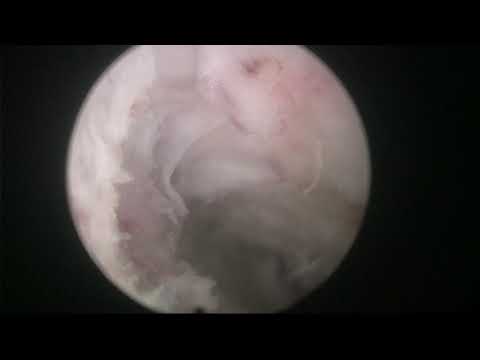
Real life Virtual Basket HoLEP. Case 27: obese patient with 190 cc prostate.
Dr. Fernando Gómez Sancha · ICUA
Dr. Fernando Gómez Sancha · YouTube
Language: English. YouTube audio metadata.
Surgical content for professionals. Contains footage of an operation.
Playback connects to YouTube. Your search query is not sent to the player.
About this video
A Virtual Basket HoLEP in an obese 67-year-old patient with a 190 cc prostate, high PSA and a single Gleason 4+3 tumour focus on fusion biopsy. The description states that the agreed plan was HoLEP followed by external-beam radiotherapy and hormonal blockade. It highlights the restriction of endoscope movement associated with the patient's body shape and large gland; it does not report completion or outcomes of the later cancer treatment.
Documented details and sources
Only details explicitly stated in the sources. Missing information does not mean it did not occur.
- Virtual Basket
Real life Virtual Basket HoLEP. Case 27: obese patient with 190 cc prostate.
- Coexisting prostate cancer
teresting case, a 67 year, obese man with a high PSA and a single focus of Gleason 4+3 tumor in a fusion biopsy. Due to his body shape and big sized prostate gland, after evaluating options of treatment, a decision was made to perform HoLEP and then ex
- Obesity
Case 27: obese patient with 190 cc prostate.
- 190 cc
Real life Virtual Basket HoLEP. Case 27: obese patient with 190 cc prostate.
Source checked: 2026-10-06.
Available transcript · English
Automatic YouTube captions, not clinically reviewed. Names, technical terms and numbers may contain errors.
Selected spellings of enucleation, morcellation and holmium terms have been edited. This is not a full audio or clinical review; the original captions remain the source.
They may contain transcription or translation errors; check the explanation in the video.
- okay so we're going to start with this man this is a obese patient with a strange-looking urethra with a very large gland he had a relatively high psa we did an mri and [Music] we found a suspicious pirate spore lesion we did a biopsy one of them had a gleason plot four plus three in a small full size focus and it was not enough for the pathologies to tell uh of course or he was cautious to say i don't know what the final histology will be [Music] so we discussed uh the options at large we offered him to do a robotic radical prostatectomy despite the big prosthetic size 190 something like that as uh estimated by mri and but he was very reluctant and we managed to visit other colleagues and discuss other options of course
- radiotherapy was an option but with such a large gland he everybody discouraged him to have radiotherapy with such a large land so we finally go to the point where it was agreed that he would have a hollap and then he will undergo radiotherapy and hormonal blockage unless something changes in the histology of that norma well we will have to see so this is a case of a 67 year old man with some cancer in the biopsy as i said he visited many many urologists they thought that operating such a large gland is not so easy you're happy to do it robotically as we have done other cases like that before but being obese and being is not a very good surgical candidate and so this was the final option sometimes
- in patients with extremely large glands you cannot apply the protocols exactly the same you know this is the truth about medicine no we have some guidance we have some guidelines but you can never be dogmatic about how to behave and what to do because sometimes we find special cases here i am developing the posterior plane and i had a conversation with a colleague from the u.s recently where he told me that he was breaking a lot of scopes because of the mechanical dissection and here's my piece of advice when you're going to dissect you have the line of attack you have the abnormal you have the capsule so how can you dissect this plane well one thing is if you have to push you shouldn't be pushing here for example
- because it's not mechanically clever you know it's not going to work but if you put the upper part of the scope there you contact the capsule and then you slide the scope you will be able to dissect a little bit better although you see sometimes mechanical dissection has its uh trouble let's try it here so here i am you see putting the the tip of the scope a little bit downwards so i can uh push more efficiently maybe this is not a very good plane the other the other way of doing it is to put the scope here you see and then move from side to side this way you see you're going to generate some mechanical stress between the capsule and the adenoma and then you will be able to dissect but of course
- you should never do a lot of force a lot of mechanical force to dissect because that's what is going to cause trouble and that's why i prefer the energy of a whole new laser because you know when you want to write with a pencil how do you hold the pencil do you make a fist and uh hold the pencil with your fist or do you grab it with your fingertips so the idea is that when you want to use the laser tool to be very precise to fire where you want to fire you have to be equally careful in the manipulation of the of the of the scope of the camera you see holding it with your fingertips not with the you know as carefully as possible holding things with your fingertips gives you a lot of sensitivity
- to know what's going on and now you get probably much better haptic feedback that if you hold the scope or the camera with your hand with a fist you know so i like to dissect with energy after having done a lot of mechanical dissection to do green lap over the years i probably did thousands of cases of green lab green lighting nucleation probably i don't know three thousand cases five hundred fourth four thousand cases and i found that it was interesting because when i it seems when you have a high volume of of patience and a lot of operations in a certain period you develop the sensitivity to do it better and if i was on holiday for example when i returned from the holiday i could feel that i was a little bit
- more clumsy more it was more difficult to to keep the same proficiency at you know careful mechanical dissection so but of course when i started using homum and looking at the excellent careful gentle dissection that you can have with homium i switched from mechanical initiation to energy driven of course sometimes you don't know exactly where is the proper plane but more and more i think with experience you are quite certain of where you are and quite happy to to recognizing the proper plane and not needing to do mechanical nucleation here as in every obese patient the mobility of the scope is a little bit limited by the fat pads you know in the perineum in the legs all around the prostate sorry the perineum which are going to
- limit it's going to limit the mobility of the scope a little bit also this colleague from the us told me that he used to do perineal urethrus to me of course i took a picture of this patient so you can see what obesity looks like in my country maybe in america obesity reaches uh you know more epic uh limits no or you know bigger fatter people and then of course uh we probably don't do that kind of patient here so i cannot speak from my own experience on super fat people but he was telling me you know i managed to do a very very large gland in an obese patient without having to do a perineal urethrome i think that might be another advantage of the unblock approach you see that you can possibly
- reach the bladder neck much better in patients with very large glands because you don't have to get over the middle lobe to enter the bladder you know the length of the posterior urethra is much more than the anterior urethra of course if you get under the adenoma it's a straight line to the bladder you don't have to go up and over the the middle lobe this is the sphincter etch i'm being very careful to try to preserve the sphincter the best i can here there is possibly some anomalous tissue there so i'm going to just incise here following the white line you see trying to get all the anomalous tissue out but of course but i'm trying to gain some access to get to the proper plane which seems to be
- behind this this is a nodule there see we don't want to leave it attached to the capsule so of course trying to liberate here initially i like to dissect the posterior affects a little bit so we gain access and we gain the mobility mobility of the apex so the apex is mobile and then we can push it a little bit more immediately to enter also the interior plane also here you see i like to connect the line of the section the lateral plane to the posterior plane so we we could follow this line you see from the posterior dissection to the lateral dissection without any uh big step or big uh you see that doing that dissection is not putting a lot of stress in the sphincter interiorly here so it's difficult to break it here
- now of course when we want to do the anterior part we have to be careful we have to detach here when you go up and you reach near 12 o'clock you have to cut a little bit more horizontally for some millimeters until you can enter here you know progress anteriorly a little bit and then of course you have to follow the direction of the fibers of the capsule to go the anteriorly as much as you can you see as the sphincter becomes more and more liberated more and more free from the apex you have better exposure better access you see and it's more and more affordable more and more possible to to get up there and to connect anteriorly so so far so good i think we are enjoying the pulse modulation system from quanta system
- they are the settings that i'm using are uh 2 joules and 50 hertz see here there's some anomalous tissue anteriorly so let's work on this interior line slowly you see here for example we know that we are in a good good plane here so let's take it towards the midline anteriorly and keep the fiber up you see now the sphincter is separated from the apex so we are quite happy that we're not going to stress the sphincter anymore i'm coming up up up all the way all the way up up here you see in some in some moments i might not be seeing what the fiber is doing but i know exactly where i am so i'm quite confident to to to work even when i don't see the fiber for a little while huh sometimes if you are always trying to see the fiber and
- what it does maybe it's going to be much more difficult sometimes so you see this is the beauty of the circumferential dissection of the unblock approach because you know more or less where you are you know the shape of the capsule and you're just progressing yeah sometimes the tissue gets in the way you don't see exactly what's happening over there you see like now but you know that you are doing a movement that it's totally safe because we are following the circumference of the prostate and it looks uh safe huh here you see the plane is not extremely beautiful but it's developing very nicely and here as i come anteriorly so i have to keep up up as anterior as i can and then as we get better better access
- you know sometimes there's a little bit of tissue that wants to remain there at 12 o'clock but it's a matter of of course if you if you see there is a little bit of tissue and you have already established a line that is more proximal on this tissue you can also you know leave it for the end so you can continue with your dissection as long as you have connected with the right plane after the remaining tissue i don't know if i can explain myself properly and then so we'll have to review here at the end to see you see it looks good to me up there but we have to unify unify the line of dissection anteriorly so i'm going to work a little bit on it sometimes anterior plane needs a little bit of works
- which means going back and forth like this you see to try to make sure that the anterior line is connecting properly to the lateral and the lateral is connecting properly to the posterior you see and we are following a nice apparently nice nice line here and then of course you have to work to connect with the other side and to to make sure that the line you're following is the correct one you see from the beginning we haven't seen a lot of bleeding we have excellent visibility the irrigation of this very small space is providing excellent visibility here i'm not sure this is a normative tissue it looks like a little bit of adenoma there so we are constantly trying to challenge the plane that we have and to see if the
- plane is correct here as i said you see sometimes if you work a little if you are a little bit stubborn to try to construct a nice line of attack kind of dissection looks a little bit yellowish you see and i like to remove the yellow tissue who knows what that would be also histologically you know but here i'm coming up i look at around you see to follow the the uppermost fibers here you see trying to go and search for the best possible plane anteriorly yeah there's some limitation to my movements as well because there's a lot of fat around the perineum but slowly i'm getting where i want huh which is close to the capsule until you see here it's not a matter of bringing the laser up up and forcing the sphincter you know
- sometimes you can split the sphincter in two if if you do a lot of uh strength anteriorly if you push too hard it's more a matter of trying to get above the abnorma and when you lower the adnoma everything seems to you know position itself properly here that looks reasonable to me you see but we have to challenge constantly challenge the quality of the plane if we're going all the way where you want to go okay so let's check what happens with our line of attack from the side looking at the sides coming a little bit more anteriorly crossing over you know to the other side posteriorly look at the beautiful hemostasis we get the nice things of pulse modulation the nice aspect the one i like more is that you get a
- pretty good this is probably the area where we were dissecting mechanically you get pretty good first pass hemostasis which means that you can focus in the dissection you don't have to be dissecting and controlling the hemostasis because it does get controlled very very nicely when you are dissecting the plane for the first time so this is the first pass the mustache is here you see that the posterior plane was a little bit deeper than the lateral plane that's why we have to come out a little bit too that's why you have to try to carry a uniform depth in your dissection so don't get carried away with one side you know or anterior or posterior try to go around several times you know trying to develop the plane
- i'm trying to follow the best possible plane you see to to to to a uniform depth now here let's come to the other side and continue with the dissection it's a very large gland but i have to say that doing this very large glance becomes much much easier when you have to when you have a tool like the pulse modulation because you're much more relaxed and much happier in terms of the safety of what you're doing you know the the bleeding control of course if you see properly you see the anatomy and the detail much better and the chances of having problems with the depth of the dissection or not recognizing the plane are you know diminished it's difficult to reach there with the fiber no let's see
- without pushing too hard so be careful with that come from the distance to see it's possible there we are we couldn't stop it i don't reach there so we'll see so progressively and carefully we will continue it has a certainly very high anterior tissue there so let's see what is the best way to get to that level because i'm having trouble and i don't want to use a lot of force reaching so anteriorly reaching so high without doing a lot of pressure sometimes you can see that the lens one of the corners of the lens starts looking black and that's because you are forcing the scope too much so i i try never to to see that if i can avoid it sometimes force is an enemy of also even if you have to leave some tissue interiorly in
- a difficult place which is not so usual and of course you can come back and have a look later and sometimes it's easier to remove any residual fragment towards the end you know you see then to struggle too too much let's move on a little bit with a lateral plane we saw a leader so come back and check you see the quality of hemostasis is amazing the laser opens the plane where it has to be opened following the anatomical plane between the normal and prostate and it's looking better huh let's see if we can come up up up up there and release this anterior mass the nice thing of this uh operation is that there's no two similar process you know every prostate is different and every case is different
- and you have to adapt to the anatomy of the prostate to the anatomy of the patient sometimes it is a little bit challenging to to do what you want but most of the times we can you know get to where we want if you are patient work carefully progress carefully so you see approaching the interior carefully it's so easy almost there i think it's relatively difficult anterior plane but we are getting there i think we are succeeding to take the anterior tissue you see normally you wouldn't have such limitation in a normal patient but this is an obese patient so the mobility of the scope is limited so that's why we're having more trouble accessing this i think it's looking good we will check at the end
- now i'm working to try to do a uniform anterior line of dissection you see to get a uniform line that will connect to the lateral line of dissection and progressing nicely and carefully yeah very nice okay here we are connecting with the anterior lane of dissection we have to check if we're achieving a similar thing on the other side in a moment so here again look at this size of this varicose vein we are coming down now down down down down trying to connect with the line of dissection of course here sometimes we can find a discrepancy in the plane that's what i call the ligament that is because sometimes the middle lobe pushes downwards and the lateral lobe pushes laterally when you follow the the plane below the
- lateral lobe sorry the middle lobe it looks as if you know the plane would have to follow this curve you see but then you go out and there's more you know so this case is not very visible but often we see that situation where the lateral plane extends very lateral and there's a it looks as if there were two planes and in the middle there's a fibrous tissue what i call the ligament the intraprosthetic ligament is not an anatomical ligament but i found that it was a nice way to explain it to people who are learning you know when you reach when you're dissecting the posterior middle lobe and you reach a moment where it seems that there is another plane outside and there is this plane inside you see
- so you're confused so just cut in the middle connect because you are dissecting two different spaces the space below the middle lobe and the lateral lateral space that's very interesting this we would never see that before with the three lobe technique because typically the incision would go right there right at the ligament right at the area where between the space developed by the growth of the lateral lobe and the space developed by the growth of the middle lobe so here we are coming up coming up up up all the way it's looking good again you see going around there norma following the circumferential line of dissection here of course you have to keep in mind that the anomaly is spherical or pseudo or spherical and but here
- we can tell for sure that this is the entry into the bladder at 12 o'clock we are above the interior commissioner now i'm not forcing at all my my scope to reach up there and that's because having the scope on top of the noma brings everything downwards you know and then instead of having to tilt the scope upwards to reach the 12 o'clock by lowering the adnoma the 12 o'clock region is going to come to you no more more or less so i don't see that often that i split the to the sphincter at 12 o'clock trying to reach the anterior the uppermost this is one of the advantages of the unblock technique you don't have to do extreme force to reach the 12 o'clock you know and which which sometimes splits a little
- bit the cost of the string through 12 o'clock so here we are continuing in our continuing mission it's like star trek okay here the uo is far huh so we are quite happy look at the you see the volume of of this norma it's quite big and round but we are progressing really nicely and efficiently i would say nice big visibility it's like yellow tissue there if it's too small you can you know vaporize it like this if it's bigger maybe you can try to correct your plane and try to take it under that anomalous tissue but sometimes you have to judge you know you don't want to go too deep but let's see now we have to understand the anatomy and understand that we are we are looking at a much magnified image of the plane
- it's very magnified so things that look very big on the screen are relatively small you know the fiber has point five millimeters so it's very very small whatever we are seeing it's rather small so i think all the enormous tissue should be taken out but not justifying you know leaving tissue behind but i'm trying to say is that you have to dis distinguish you know what is important and what is not important at all the penetration of the energy in the tissue is quite shallow it's not deep it's not not deep at all so just enough to to coagulate here we are coming towards the side let's see if we can release the side you see it's a matter of going around the arnon of course these very large prostates they don't leave you a lot of
- space so you have to learn to navigate around the abnorma to find your your position and to find but usually even in the very large glance you can you can find your your way here it looks that we are following the right direction reaching the bladder neck area also as we progress the noma gets more mobile you know it hangs from a smaller vertical a smaller connection area and it's more easy to tilt it from one side to the other to push it to take it out of the way so as we progress we are managing to you see here beautiful now again never stay too long in the same place you know you just go around look how you can improve the situation every minute you know every minute things should be better than before
- and doing some incremental improvements incremental steps you know you can make things better and better and better until we reach a point where we have finished the nucleation here again you see if you follow the middle lobe it looks like the plane is coming this way but then the lateral plane is going much much more lateral so i like this concept of the ligament because it it warns you about this possibility so when you find it you're not confused you know and you're not thinking that you have there's something wrong with you it's it's the anatomy of the anoma picadata it's a big big big prostate let's see you see i am positioning myself right at the edge trying to keep the line of attack in the
- middle of the screen so i can see both adenoma and one side and capsule on the other side and i can develop this plane very carefully i don't use force at all you know sometimes i have to say in the very last glance you can find some steps where it's a little bit more difficult but i think the advantages of the block approach uh surpass the disadvantages you know or how do you say compensate the disadvantages there's a little bit of yellow tissue there here i don't like that one let's come this this way maybe you see sometimes of course here you start to see that the plane is maybe too deep so but again as i said there's nothing wrong in in challenging your previous plane in exploring a little bit
- uh see sometimes we find this these nodules these are adenomatous nodules you see that i like to take out if i can this of course complicates the operation a little bit but if you don't take them out they can grow and this is a biologically fast growing prostate so see these nodules thin the capsule a lot so you have to be careful okay this this also maybe is another long nodule well it's a very large clan and we don't want to of course lose a lot of time and get carried away with small details you know but i'm quite how do you say that convinced that it is worth it to to remove this nodular yellow tissue if you can this thins the capsule a little bit but see here here's where we want to be i remember when we did open surgery at
- the end of the nucleation with the finger you would put your finger in the fossa again to check for nodules so these are these nodules okay so here we are it's virtually nothing but yeah almost there almost there things are getting better now that we have removed this nodule here and to try to connect with the previous plane you see here we are under the nodule there's still maybe some little attachment there see how we are progressing as i said sometimes you liberate on the other side the prostate gains mobility you can tilt it into the ladder and then accessing difficult areas can be easier huh here again we continue it's a very nice looking plane up to the bladder neck i think here we are coming up up we see that his
- splatter neck so we are reaching the bare neck also posteriorly look how as the prostate lifts laterally we have better access from this side as well you see so don't get stuck in one single place you know try your best and then move on go to another place and then when you return things will be easier don't get don't be so stubborn to remain in one difficult area and try to finish that you see because here we are under the ladder neck almost finishing the procedure the nucleation part let's see where we are here here you see there's only a little bit of attachment down here so let's again gain one millimeter at the time and where you are do it confidently you don't have to do anything you don't believe that it's the
- right thing to do it seems obvious but don't try stupid things you know just stick to the plan stick to the method follow the basic rules keeping good hemostasis skipping in the plane correcting the plane if it's wrong and improve the situation every minute and then finally you will you will manage to to to to finish the procedure here what i'm trying to do is to lift a little bit the norma from one side to push it in the bladder like that you see now i push more and then this is going to rotate the prostate you see this slope went inside and then instead of pushing that one from that side what i'm going to do is continue the rotational movement here like that you see and then it goes in the bladder so it's a
- beautiful beautiful nucleation case here we are at the sphincter you see we managed to preserve the mucosa of the sphincter there's some reasonable shattering of the mucosa because of the pressure and the movements we had to do look at the beautiful hemostatic properties of this laser let's look at the you oh where are you here and here okay let's motivate that no need to do a secondary hemistasis if we look uh anteriorly it's pretty good there is maybe a little fibrous maybe maybe a little bit of tissue around here but we're going to just remove it now i think it's going to be easier to finish that i didn't see it before but otherwise uh very good sir this is some anterior near the sphincter tissue but i
- don't think that's obstructive you see many surgeons try to remove to leave a little bit of tissue very close anteriorly at 12 o'clock near the apex because probably respects the sphincter even more but there we are huh also the improved cutting properties of this home make this streaming exercise much easier so i'm going to change the camera okay we did a relatively fast change with the musculature and sorry to the nephroscope and the musculation starts here you can see the big gland and how motivation is being quite good from the beginning let's see i'm trying to keep the musculature tip a little bit inside you see to make sure that it is well introduced in the bladder keep it in the center
- because sometimes if you try to work very close to the lens the pro the normal is going to clash with the it's going to collide with the tip of the scope so you need to go a little bit further that than you might intuitively feel it's safe at the beginning you know of your experience so but my scope is a little bit tilted up and i have two corners you see at the side of the oscillator blades that are quite black which means that there's no bladder nearby so this piranha oscillator is wonderful as it chews the tissue very fast and in this very large glance it's going to take a while we usually take out about 10 grams per minute which means that this is a 160 adenoma for example it'll take us around 16 minutes we will
- see this providing that the morcellation goes well and it's uh efficient but it's looking very good you see there's usually no problem in tilting the the nominee to the ladder this is one of the criticisms to the to the unblocked technique but uh in my daily practice i don't find but of course i found that lifting the abnorma trying to bring the lower part of the anoma in the bladder with your scope and then pushing would give you the best results and of course following the rotational movement with the rest of the prostate will help you tilt everything into the bladder in extreme cases we have had to musculate with the anomaly in the fossa which is not so bad either because there is i mean the prosthetic capsule
- doesn't fold uh like like the bladder so it's very difficult to catch the the capsule with the more uh moisturizer and also the irrigation is excellent because you're irrigating an even smaller uh space so typically you morcellate a little bit until the adnoma gets small enough to be able to be pushed but i say as i said i have probably done i don't know less than five of these situations in my life which means that it is quite rare of course very large clans are always a challenge and you have to take them seriously you know be properly equipped to do it both with the proper instruments and the proper experience that can leave you there but it's not so much difficult than maybe you can have some anxiety at the
- beginning when you do these large clans and i my recommendation is to keep calm and to trust the method you know if you keep good hemostasis if you keep improving the situation every minute you're going to be able to reach at the end maybe it'll take a little bit longer but you shouldn't be very afraid of course if you are a slower nucleator because you don't have a lot of experience and it takes you you know two hours to do a 70 gram prostate then it's not advisable to tackle the big lands until you get a little bit faster with with your nucleations uh in the smaller glance you know when you have the proficiency the skills the confidence when you have developed the necessary experience then
- moving on from 70 80 to 150 200 is not such a big leap you know but uh don't underestimate also the teaching power of smaller cases you know so if you're doing hollab in smaller glands each case is an opportunity to learn and to develop your skills to a level that will allow you to tackle bigger bigger glands with confidence as i said and i like to say with hollap you have to be present in the operating room you have to i mean you cannot keep working and forget about what you're doing you cannot go to the automatic mode you see this was very common with green light vaporization it was slightly boring to to have to vaporize larger glands and you could get bored and i developed this this idea to to be
- present you know to check every second what's going on is my distance from the fiber to the tissue correct is the movement of the fiber uh at the right speed am i doing am i achieving the best big bubbles that show you that you're vaporizing efficiently so here is the same you have to be present you know is the most relation going well am i sucking too much water out or you know and also when you're doing the nucleation phase it's very important to keep your eyes on the details details from the capsule from the anatomy you have to see with the corner of your eye as well you know to check and to understand what's going on here you can see bladder neck we're almost inside the static fossa it's such a big opening that uh they
- have normal can and it's a very safe position because i can see the ladder neck with my eye looking down you know i can i can perceive the the white [Music] there i know that i am a couple of centimeters above it and also the tissue is between the most later blade on the bladder then continuously so it doesn't go anywhere you know it doesn't tend to go away from the morse later blade so we are progressing very nicely i'm sure this patient will go home in less than 20 hours i guess we will leave the catheter overnight tomorrow morning we will take it out and he will be able to go home it will be interesting to see what the histology of the anoma says and then what is his remaining psa and uh but
- if if the tumor is less of four plus three i think he he should undergo active treatment and if we do radiotherapy in such a large gland it's a recipe for trouble whereas if we do the nucleation first of course the radiation will i mean we probably don't have to go back to to operate this man again now which would be the difficult part after either radiotherapy or the risky part so here we have some nodules inside the fossa here you see it's easy to to catch them and to musculate them interestingly even when we had a only two pieces of tissue this is very hard or sustainable i think the suction is not so efficient anymore because the canister is full there's only one little piece but it's not being very efficient
- oscillation anymore so maybe unless you see the the view is getting worse because i'm sucking too much water and the bladder is emptying so cambian moment [Music] let's change the canister because it's almost full to the top on the tissue in the canister is preventing the vacuum to to reach the tip of the so just now we have to stop for a moment yes okay see so we have lost a little bit of visibility here is the piece let's see now with better suction it is a beach ball huh so it doesn't want to come out