
Surgery
Real-life HoLEP 16: A man with rigid hips
Dr. Fernando Gómez Sancha · ICUA
Dr. Fernando Gómez Sancha · YouTube
Language: English. YouTube audio metadata.
Surgical content for professionals. Contains footage of an operation.
Playback connects to YouTube. Your search query is not sent to the player.
About this video
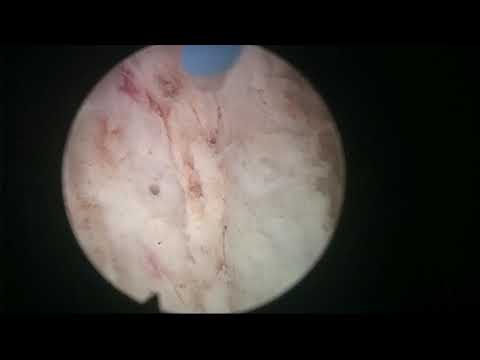
A HoLEP case in a patient with very rigid hips. The description reports difficulty achieving the lithotomy position and restricted endoscope mobility. It states that the operation was completed, without providing a detailed postoperative outcome.
Documented details and sources
Only details explicitly stated in the sources. Missing information does not mean it did not occur.
- Stiff hips
Real-life HoLEP 16: A man with rigid hips
Source checked: 2026-10-06.
Available transcript · English
Subtitles exported from the original-language YouTube Studio editor. Not clinically reviewed; source identity and timestamps verified, full audio coverage not verified.
Selected spellings of enucleation, morcellation and holmium terms have been edited. This is not a full audio or clinical review; the original captions remain the source.
They may contain transcription or translation errors; check the explanation in the video.
- [Music] okay so we're going to start uh we're going to start with the next case this is a 73 year old man who has a moderately enlarged gland who had a history of prostatitis with a high fever and he had a very big difficulty boiling and he left quite a big volume of residual urine after voiding let's see where is there you all i'm not sure over there okay that's the bladder trabeculated bladder with some diverticulums on top that's the bubble okay so we're going to do an initiation with uh holmium laser and let's get rid of the bubble so middle lobe it's not too big huh it's not too big okay so here we see the sphincter edge so i'm going to mark up there and i'm going to bring the line down towards this point and then up again
- in the same here so this is the the white line you can see the sphincter is here we are marking the optical limit this white line as you know helps us keep a reference of the apical limit of the operation i like to deepen it a little bit especially down here in the lateral aspects near the very montanum because this is going to prepare the way to the to the capsule and it's going to allow us to develop this plane without fearing to rip the sphincter or damage the sphincter uh there so here is the veil i'm going to put my scope here i'm going to try to push towards the side very carefully it's a little bit fibrous this this prostate so we're not entering this plane very easily let's try this other side
- i don't want to force uh too much that's probably it you see there's some stones which reflect so when it's difficult let's say mechanically instead of pushing too much i think it's better to try to explore it a little bit with energy and see where this takes us i have a conflict with the leg the man has some limitation to the [Music] to the positioning you know the leg doesn't allow for a good let's say lithotomy position so we might have some conflict there so here i'm cutting on top of every montanum trying to unify let's say a line of dissection that looks like a good plane to me more or less we will find out more about this plane sometimes it's not so obvious not so easy but it's never difficult i think it's never so difficult so that's that's a
- very sticky uh prostate because he had uh this uh episode of uh acute prostatitis i think last year maybe that's why he has this uh it's an inflammatory response and that looks like the plane now looks like a good plane so let's see how it goes so we have to explore this a little bit more that looks like good plane to me too so maybe we are on the right track here okay so we have a student uh staying with us he's a medical student from the second year and instead of going to the beach and enjoying his summer he he's staying with us and watching the operations he's very refreshing to have a visitor like that i was telling him if i was you you know when you take your residency i would keep an eye
- during the recency on who are the best let's say experts in the world on the new stuff and take the let's say the time to visit them and stay with them and learn from them you know even if they don't pay you find the money steal the money you know do your best to learn from the best if you can of course during the recency i think you you get uh proper training and uh you know basic say knowledge but if you want to let's say make a difference it's very important if you can learn from an expert and this reminded me of the people who taught me and people from whom i learned and i have to say the list is never ending i was my introduction to laser surgery was done by gordon muir from london
- he rang me one day and said fernando you have to try this green light laser it's so different from what we have been doing up to now and patients do not bleed they go home without a catheter after some hours you have to come and see you know and this phone call was so paramount in my life afterwards you know it really changed my life and then i started doing green light cases and i met some other let's say heavy users boston oliver ray from germany alex bachmann chip collins henry wu we learn from each other so and then of course i've been in many many congresses and i've seen many many you know life cases and people operating and you pick up details from everybody so okay so this is sphincter
- that's the the white lines i'm going to cut here trying to deepen again a little bit [Music] my incision that's a 12 o'clock fibers and now we have to look for the proper plane you see it's not easy this axis so i'm going to cut a little bit more there still in the white region taking into account that we're coming up we have to be horizontal here horizontally here let's see if we can uh you see access this area a little bit better that seems like i have a big a bit of a problem with the leg this man times when we operate this old gentleman you find someone who cannot move his hip or he has a fixed leg or something remember having to operate one patient with two people helping me lifting his leg up and now down enough so instead of having the leg attached to a
- stirrup they were carrying the leg on their hands and adapting the movement to to help me okay that looks like a small nodule yeah this looks like a good plane but it's going to be difficult mainly because of this limitation i have here now so i'm going to cut a little bit more here let's see how can we sort this problem out this is 12 o'clock fibers in a handy to cut so i will cut them [Music] let's see if we can slowly bring the the noma it's very difficult to get the proper positioning here if we gain millimeters you know every time we liberate one more millimeter and like that we probably will end up uh doing that we see that's a normal as well there so let's go to the other side let's see we have more luck
- sometimes when you mobilize the prostate uh gets easier huh so that's the incision on the prostate from the lower area going up deepening a little bit in the prostate and then let's see we can find the proper plane [Music] here now i have a lot of trouble you know no puedo las piernas it's very difficult i have no i have a lot of restriction to my movements so let's see how can we negotiate this or maybe i need to ask for help and change the positioning of the patients daily real-life cases you know when you see an edited video many times you don't see these difficulties and then of course you have to face them [Music] yourself when you go to the operating room and that's the idea of this series of videos you know
- i want to show you let's say the real knife cases because i can do a very beautiful edited video that means that i have to record maybe 20 cases to produce a nice nice nice nice video perfect video where everything is smooth and happy you know where hemostasis is perfect but many other times we have to struggle with difficulties of different kinds and i want to show you the real life because [Music] if you see that maybe when you have to face the same difficulties or similar difficulties you cannot i mean you you won't get so anxious and you will not think that this this it's you that's doing something wrong it's more like well some cases are a little bit more tricky to complete to do we face these difficulties and let's see how we can tackle them
- so slowly and carefully one millimeter at a time i'm going to try to it's uh it's interesting also how sometimes patients are very demanding you know they they hear laser and they think laser means something automatic something it's totally free of discomfort totally free of difficulty and well it's important to tell them you know that sometimes it's not so easy sometimes it takes a little bit longer sometimes you know there's no need to overemphasize or to oversell let's say the benefits of of laser surgery you know the benefits are evident but it's not magic it's surgery and as always you can find unexpected anatomies you can find unexpected things you can develop intraoperative let's say complications you can face difficulty
- so that's what i want to show you know how how to how to behave when things get a little bit difficult i mean that looks to me like bph tissue maybe let's we have to adjust that they have very bad access [Music] okay so my advice if you want to learn polyp i think would be to first be confident that you will do it be confident it's not rocket science it's just another surgical technique it needs to be learned so don't be afraid be confident that you can do it but of course then you have to do the homework and you want to learn you have to you have to visit i mean ideally a center that does hold up in high volumes for some time because you need to understand the procedure you need to understand the anatomy
- you need to see the instruments you need to see it firsthand i mean some operations that we can learn from a book you know i have done that i have seen videos i have read the chapters of the books i have read the surgical descriptions using the existing knowledge you know the existing surgical experience sometimes you can do things that you haven't really seen before huh so this is something that us surgeons sometimes we have to do and probably we can do that fairly well because i mean when you have to do let's say open surgery and you have experience with open surgery and it was not so unusual that you would say i i want to do this operation that i never did but i watch one video and i read about the technique and
- it's going to be enough to perform it with a good level if you're a proper it's a good surgeon in other areas maybe you can use that expertise to to move on to to do things that you didn't do before but see this is the applicable area that's the white line you see we have to come up here touch to touch this here we are huh so not so easy but millimeter by millimeter things become possible huh this anterior area now we have to go and see the other side the other side was also a little bit challenging so i lost track of what i was saying probably we lost that line of thought huh sorry i'm getting old maybe it'll come back later oh one thing to learn i mean if you want to learn maybe so watch many operations visit someone who can teach you use all the simulators simulators
- i think are good for the beginning i don't think it makes sense to use a simulator for a long time i think it helps you familiarize yourself with the grip of the scope and how to handle the camera the fiber and like that so probably it's clever to to do that before treating a real patient see as many videos as you can read as much as you can and as my line of thought was that probably with hollap you shouldn't do that you shouldn't do what we did sometimes and what we do sometimes like for example you are a robotic surgeon you know the anatomy of the pelvis and maybe you have to face a urethral stricture in a patient who had a cystectomy before or something and then as i said you have to do this operation for the first time and maybe
- you do it properly of course if you do 10 it'll be easier but you can still do that operation but with hollap it's a little bit different maybe you've done a lot of trp maybe you've done a lot of stones but if you want to do holiday you need to see a lot of polyps you need to understand the anatomy because it's totally it's a different from what you have done before endoscopically so my advice is to watch many procedures watch many videos and once you understand everything you should try to start uh with a little bit of help from from your friends i mean you have to get a surgeon who can come with you and mentor you for some cases until you feel that you can learn i have a very nice experience with some friends from poland [Music]
- marek zawaski from viaceno in warsaw he came to bulgaria to watch surgeries with me and he said why don't you come with us and do some surgeries with us and so for a year i was visiting his department and i was doing operations with them they were watching and at the same time they were doing their own cases so returning every month they had a chance to see what they were doing experience the first cases and then check you know with me what they were doing and what difficulties they were facing sorry i have no access there it's very complicated so i don't know how to do it maybe they have to move the leg at the end this optical liberation is uh a little bit difficult because of the restriction
- of the movement so here let's liberate here a little bit more and see if this descends slowly and we can get to a better so after the year they told me well you know we don't need you to come anymore because now we can do it and we're confident doing very large glands and so they they could fly on their own and the nice thing was that they were doing the easy cases they faced and i was doing their difficult difficult cases so they could do a very nice uneventful learning curve and they had the let's say reference because many people watch two or three cases and then they have to develop their own experience sometimes their case selection is not perfect so they select very large glance very difficult cases redo cases things like this and
- let's until your tissue so now we are connecting both sides of the dissection very good so this would be an ideal scenario you know if you want to set up a home laser unit ideally you should have someone who can be with you not only for a single session but for many sessions this way i think the the adoption is simplified so here we are trying to release some of that tissue i think the apex is already free and now the rest of the operation should be a piece of cake huh it was a difficult apocalyption because i had very bad access to the to the anatomy because of the impossibility for the patient to open his legs and to do a proper lithotomy position but here we are advancing and if you have the patience to see all these videos i think you're going to realize how
- this operation is quite let's say reproducible more or less always the same steps and similar let's say anatomy the initial the initial let's say discomfort of watching the plane and don't not understanding it you know gives way to a better comprehension of how the plane looks and what is the operation trying to achieve and how we recognize you know the deeper planes sometimes you see if you see that for example it looks a little bit deeper so you have to correct and how using this methodology you can perform a very safe almond laser manipulation of of the prostate and block how you can almost you know guarantee to your patients that they won't have skin carrick incontinence i mean some patients come to you and tell you you know i'm i have incontinence because i have this
- urge to void i have to go to the toilet running and on the way to the toilet i'm losing my urine so i tell these patients maybe this is going to still happen to you for two or three months we can give you a medication so you don't experience this urgency you know but it will take three or four months for your bladder to to normalize its behavior post-operatively so no i can't get around that very easily let's see [Music] so but i tell my patients uh we will respect the sphincter so you won't be leaking you're in drop by drop you know and you shouldn't be leaking you're in when you do exercises it is true that after a green light sorry after wholeneum and nucleation some patients experience
- leakage of urine when they are sitting down on the toilet and trying to do valsalva to to defecate huh so when they push and they relax this pelvic floor sometimes they leak urine which didn't happen before but they are already sitting down on the toilet and this also happens after radical prostatectomy okay so here we are moving on with our dissection you see going around the prostate trying to to carry a let's say uniform uniform dissection line or see how we do that that's a nodule this is coming this way that looks a little bit flimsy there a little bit thin so we are progressing slowly trying to develop the circumferential line of like a little bit deep there see if we can go past this we had the similar difficulty
- on the other side and it took us a little while to release this angle but a little bit of patience and with this concept that if you gain one millimeter then things get easier you know so you have to do progressive incremental you know advances in the operation you have to be patient and many times even when you're working slowly but you are progressing steadily you know the operation doesn't take too long but some cases are difficult and some cases are more easy so you know the wise man sees the difficult cases as easy cases and the easy cases as difficult cases this is one of my mottos one of my inspiration you know phrases no you have to when you have something difficult in your hands take
- it easy relax progress slowly make things better every minute and then it will be easy and when you have an easy case don't get too confident you know too fast try to be careful and try to do your best possible case as if it was a difficult case so there we go releasing this anoma from the capsule i can tell now why this man had a very very slow flow his bladder mucosa now we are entering the bladder neck and the operation is almost finished there we are this is the mucosa i don't like it to detect from dissect from the from the bladder because because it can't bleed and it bleeds inside the bladder it's difficult to see where the bleeding is coming from here we are this is the side of the middle lobe we saw the uo there so we are now
- coming below and i want to check where we are here see there's this tissue hanging that's bothering us a little bit because i guess it's bothering you as well so there we are that's the dissection of the posterior plane let's see if we can get past this little bit here you see now the prostate is already flipping in the bladder you see it's going into the bladder maybe here there's more attachments that's why it's rotating mainly on the other side let's see what we have here that flatter neck [Music] we didn't cut the bladder neck as much on this side and that's why this side doesn't want to go in the bladder here we are this is bladder there oh it's almost finished let's see see the
- middle up here and how it sits on the on the trigon inside the bladder it's very common let's say you oh there so we are quite quite happy let's push this in the bladder push it in now i changed my fiber to six o'clock see what is bleeding okay not so bad just some little leaders maybe some ghost leaders as i said before nothing really bad in the inside of the capsule we did a relatively good hemistasis as we progressed maybe here at the apex there's still something again i cannot reach there properly because of the leg not reaching so we have a bleeder let's see if we can take it with the fiber from above or something see if we can position our this leg is so uncomfortable there we are
- difficult huh difficult to reach okay so let's finish this splatter neck [Music] you see this is retro trigonal oh this goes under the trigon this is the bladder neck still some bleeder here ladder neck is the attachment of the middle lobe still sitting on the trigon as i said sometimes i find that the fiber at six o'clock is a little bit more comfortable to do this part at the end there we are you see how patience and positive spirits will help you get through your home in laser cases the patient is stable it's not bleeding so even when it's a little bit more difficult and it bleeds a little bit that's the sphincter you see this is a little bit uh stressed by the endoscope maybe in these extreme positions we have to take we have to
- maybe this is a little bit of a normal the apex we couldn't take out because of the but it's very attached to the sphincter i think it's just a little bit let's see i can take it out so little but sometimes this residual masses at the apex can get relevant with time no but i have a terrible access here also sometimes the chromium hormone is not a very good vaporizing tool but if you have a small amount of tissue you can you can try to vaporize it especially when it's awkward or difficult to remove it this will cause some crosses in the tissue it will fall off at the end and you you can be more sure that there is no important residual issue there it's a minimal piece nothing important but unless we cut the pedicle it won't go it won't float away okay
- that's it's not so relevant but of course some part of it has been vaporized i think okay we'll take it out with the more slater i think that's probably okay that's probably almost capsular sphincter almost [Music] i think i'm being a little bit paranoid but we can strive for perfection you know we have to being a claim and he actually says perfect is acceptable so we have to follow his commands there we are that's a piece this is reasonably clear i think that's anterior [Music] fair enough i think this is the trimming phase if you did a good job then it should be very short but if you do a bad job then you can correct and perfect hemostasis there we go so again you all you are from the other side big fosa nice thing to preservation i think a
- little bit of stress at 12 o'clock okay and then let's more select there we are so let's change the instruments there we go and more slate introducing the blades there's a bubble that's tissue it's tissue that's the bladder this is the fossa that's the piece inside the faucet a little piece i think there's nothing else in here let's go to the bladder there's two little pieces and now we start with a more solution huh it's probably some mucosal bleeding that's uh adenoma sometimes you can get scared when you do more slation because you see the prosthetic urethra mucosa you think you're catching the bladder but most often it's not in any case if you're not sure that you're more slaving the prostate you should stop and check
- there we are static morcellation it's very nice and very safe do we have water coming in yes there we are so i hope i didn't bore you too much just another case with some difficulty on the dissection you see if you keep patient and you follow the steps and you try here and there you know you progressively gain millimeters you liberate the prostate more and more and things that are initially difficult get easier and that always takes you to a good end and this is the last case for today and i hope you enjoy it let's finish the modulation and go home yeah the laser is very noisy in the operating room that's one of the problems you know we cannot listen to music or anything like that during surgery
- because there's a very high noise going on all the time i guess i will have some acoustic trauma i will not hear very well these frequencies anymore uh sometimes the tubing gets clogged with tissue and suction is lost that's the last part of the musculation and we're confident that everything is fine catheter we finished