
Surgery
Real life MoLEP case number 10: large prostate (190 grams) in retention
Dr. Fernando Gómez Sancha · ICUA
Dr. Fernando Gómez Sancha · YouTube
Language: English. YouTube audio metadata.
Surgical content for professionals. Contains footage of an operation.
Playback connects to YouTube. Your search query is not sent to the player.
About this video
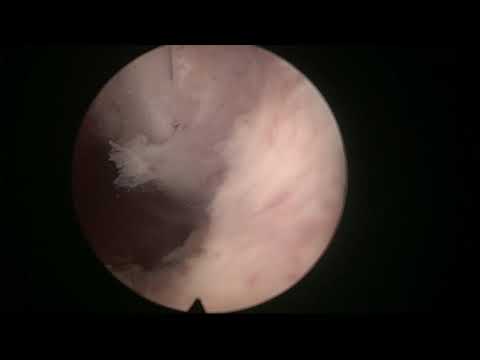
An uninterrupted, unedited MoLEP in a patient with urinary retention after an unsuccessful trial without a catheter. A transabdominal ultrasound estimated the prostate size at 190 grams, and the description records a previous negative biopsy performed for elevated PSA. The operation used a MOSES holmium laser 120 W system.
Documented details and sources
Only details explicitly stated in the sources. Missing information does not mean it did not occur.
- MOSES / MoLEP
Real life MoLEP case number 10: large prostate (190 grams) in retention
- Urinary retention
Real life MoLEP case number 10: large prostate (190 grams) in retention
- 190 g
Real life MoLEP case number 10: large prostate (190 grams) in retention
Source checked: 2026-10-06.
Available transcript · English
Subtitles exported from the original-language YouTube Studio editor. Not clinically reviewed; source identity and timestamps verified, full audio coverage not verified.
They may contain transcription or translation errors; check the explanation in the video.
- no mi Cielo Alto no nunca nunca llamas Harold manga estamos ok so let's do this case now this is a 62 year old man who had a biopsy for a PSA of 10 but he has a very very large gland he estimated 190 grams of static volume so coming in I don't want to force at all the entry into the bladder so I don't want to damage the sphincter here anteriorly so we will start with the dissection as I said this man had a biopsy later on well the Vives he was negative he had a retention of urine he had what's catheterize and they tried to remove the catheter with our success we're getting ready with the moses fiber and i'm going to start you can see the external urinary sphincter there's some damage from the catheter this whitish area here it's decubitus from the
- from the catheter I'm going to mark the lower aspect the lower aspect of the adenoma here I'm clearly I'm going in a little bit further because the stings resisted it tilted forward we want to respect the most until your part okay let's see and coming down towards this area we can protect the string too from the very beginning this is the the white line and I like to touch the fibers here you see the posterior attachments there are no ma I've had a little bit deeper so when we do the entry into the plane we will not damage the the sinker in the lower part just a small incision here you see sometimes visibility is not so good but now we have marked the white line and have a very nice idea of the limits between the sphincter and the adenoma this side I'm going to say deepen
- a little bit this incisions so we have better access and better protection of the external United stinker I think the focus is probably not proper let's get better focus here there we go we use this same camera for course radiation stone procedure and sometimes I find that the purposes has been changed and there we are so now we are going to enter the nucleation plane you can see the very Montanan here so I'm going to incise the mimosa it's not necessarily you know blicket or e22 in size the mcourser but it helps a little bit to break in the plane mechanically with the tip of the scope as you can see with minimal minimal pressure so that's the identification of the plane in this side is some bleeder the mucosal better let's go to the other side we'll in size
- the mucosal as well coming back to where the white line was marked and then I will do a little bit of pressure very very gentle pressure to try to find let's say the good a good plane mechanically here we can see minimal process considerations which usually correspond to the to the right plane okay so now we're going to cut and communicate both sides cut the on top of the very montana the pendulum of the very and try to unify the Asteria plane so initially it's normal to have to struggle a little bit with visibility with this approach but it gets better and better throughout the procedure now this is all posterior aspect you can see we have connected both sides we have connected both sides so now I'm going to put the fiber at 12 o'clock and we will do a let's say dissection of
- the posterior plane so we have to try to stay let's say follow this line of attack despite having a big clams I'm not finding the plane very very beautiful let's see it looks good to me that could be because of chronic inflammation so carefully you see I'm trying to develop this posterior plane and to follow the the white line the beautiful mostest energy you can see it allows me to dissect the plane and correlate at the same time and quality of the status that we are obtaining is quite good you see that tissue is blanching everywhere so despite using settings of 250 you see the reach of the energy is much further with the double pulse two consecutive pulses first one opens let's say the
- bubble the second one travels through the bubble without attenuation that's a nodule I'm ready to try to take it out you can see that with some little nodal there see we can just take it with the first day as I said the mostess effect has mostess technology fires' to consecutive pulses the first pulse opens the bubble second pulse travels through the bubble so the reach of the energy is much better here you see the plane is getting a little bit thin so we'll have to be careful there maybe if they continue firing a little bit closer to the Nama so we don't go too deep in the in the plane that for some reason in this case is not very very beautiful as one expects in a very large glance typically
- very large glance are very good let's say planes very very nicely developing planes but in this case and sometimes that means that you're not in a good good plane sometimes you are let's say a little bit deeper than you or you have to be vigilant and careful but sometimes you can let's say reconnect with the proper plane later on in the operation sometimes there's no other plane this looks very good this looks very typical we are more or less at the same depth sometimes one millimeter difference in depth can they mean that you are in a good plane or or not but well sometimes we can see the ejaculatory ducts let's see here do we have here so typically I have I developed a posterior plane until I am
- let's say comfortable I don't force anything just continue with a dissection while you are let's say doing it easily and happily don't force towards the sides or don't try to reach the bladder neck from the first goal I think we do that you have to do some pressure against the tissue and if you remember what you're going to try to do a very early apical release in the operation so that's just to generate some space we come back to the stinker you can see this is the sphincter this is the white line you see the posterior aspect has been detached but we still have to detach all this so initially I'm going to cut only Anoma you see I want to make a cut because this basically releases the epics from the sphincter that's just a maneuver
- you see it's not the good plane it's not the best plane just I want to detach the sphincter and I want to gain some access if you can bring let's say this incision all the way up is good and now we're going to go in the good plane you see but of course by detaching the sphincter we have to improve the situation there are some small bleeders there would be nice if we could control them but I don't want to force the instrument Oh huh let's see that's the good plane let's develop this and they'll be towards the previously dissected posterior plane you see we are here there we are it's always good to dissect a little bit further away because it gives you some mobility here I'm going to continue but I'm going to be very conscious of the white line of
- my position in relationship to the sphincter so we want to stay under the sphincter and as you go up we tend to cut horizontally so you don't cut into the sphincter so it's very progressive maneuver where you progress your dissection upwards slowly like this slowly upwards hey no se mueva yep I saw resent it on the little s think we are not supporting the Heartless volts have already sold Ella LSP Dolores a police a kind so we love to vote all right okay sorry one bag went on the floor and it gave me a little bit of a pool on on the end of scope when I was a little bit it's always strange when this things happen okay so let's continue we are progressing and clearly one of the nicest let's say features of Moses I think it's the improved
- cutting capabilities you see this is the 12 o'clock area we marked we're coming around here so here I'm cutting horizontal I want to get too close to the center and because once we get inside when once we are at this level after cutting horizontally we will look up and find the good plane find there the better plane you see the plane is probably a little bit further up so very gently and very carefully we're going to progress releasing initially the most distal attachments we can you see if you release the distal attachments then you have access to the rest what you don't want to do is to become let's say dissect a lot for example here go all the way to the bladder and I can leave let's say the rest of the apex attached so we want to cut very very initially
- very very fast we want to cut the attachments of the ethics from to the sphincter that's the 12 o clock area you see that's 12 o clock and as I said one of the nicest aspects of Moses is that you're dissecting the ethics the cutting properties are very good so you don't have to do many many passes to achieve to cut these fibres you see these vertical fibres we find here at 12 o clock they need to be cut so with Moses you can do several passes but each pass produces a notable effect so whereas with the classical home you cutting this fibers month might be a little more difficult so or they take more passes then we are coming down you see that we are very carefully dissecting everything try to correct I mean to carry a good paper status as you go
- because if we go a little bit carefully and we do have a status as we go by the time we finish the operation how much this will be very solid and we can move on very fast to modulation here you see I'm coming up up up up now I'm not afraid of damaging the sphincter because initially we cut some for example fibers and there we are sometimes you can get fooled here and cut through there Noma I'm not follow the good plain so you have to come lateral look for the good reference and all that playing all the way up and it has it needs a little bit of work couple of fibers there's some leader there also the irrigation is compromised in such a small space so now that we are progressing a little bit more I'm going to take the dissection
- a little bit further it's typical of these cases to have a very very thin gutter these men have very big enormous and very thin capsules but if you stay in the plane if you stay in a good interface between adenomas and capsule it's it's very very safe despite being thin the capsule has this leather like let's say leather like resistance no it's like the leather on a belt no it would be difficult to cut through it there we are I'm trying to come up Thank You Kari the good colonel status let the laser do its work opening the plane and providing good population usually the ethical dissection takes a little while especially in large process like this but then it pays off the rest of the procedure once you have liberated the epics and you can move
- circumferentially around the prostate you can then progress very fast especially with Moses I think there's some bleeder there see one of the nice things of this approach is compared to the thrill of approaches that we are relocating a very small space so even when there is bleeding you see it it clears very fast because the irrigation is very efficient if you have a connection to the bladder early in the procedure if you if you enucleate the middle lobe then the water is going to irrigate not only the area where you're working but the blood is going to go in the bladder and then washing out the blood is going to be much more difficult so here we irrigate a very very small space so here I think we have to come up up up let's see what does it take us
- these are very very tall prostates not only long but also tolls you have to be able to come up all the way to try to dissect the planes properly okay voice without forcing anything or doing a lot of course with the endoscope just careful careful manipulation okay I'm going to advance on the other side so I'm going to do something very similar and then once both sides are developed I will try to take connect anteriorly you see that's the 12 o'clock area this is the other lobe here we have the white line and here we have the distinct ER there's some cloth here so I'm going to fire against the cloth so it clears and we can see a little bit better I'm probably there was a small mucosal bleeder there and here's the edge of the sphincter here's the white line
- yes you can see going up so I'm going to say cut as I said on the Anoma trying to deepen a little bit this incision but I will follow the curve all the way up you see towards 12 o'clock if I if I fire on the white area I know that there's no going to be any problem with the sphincter you see that's the sphincter behind by cutting this I'm doing is releasing the epics from the sphincter then I have to respect the pause outside and come towards 12 o'clock and then this is going to give me that's a better access let's see what we have here it's like the flame there I mean this direction this would be the good plane this would be the good plane but here before developing the good plane I'm going to continue cutting
- on the Anoma this will give me access huh it's a very large London you have to liberate this thing's are very well before we move on to develop this this this plane okay so here we are I'm going to take it like I did on the other side a little bit further so the lower portion of the ethics can open up a little bit and you see show me the way a little bit better huh here again you see we still have attachments so carefully I'm going to cut them to protect this thing that we want to protect the sphincter this this men huh is very very large plan so gradually I'm going to gain access there liberating the apical from posterior - interior see there what do we have there that's 12 o clock it's important
- I'd like to keep the fiber at 12 o clock so have a good orientation you see that the anomaly is quite big it will ask us it will you'll have to go up up up it's all whites on quite complete confidence there is no deal there I have some problems of access with the leg of the patient this process are large and some daily conflicts I hope I can solve it but it's coming around now in this way bring it up there we are I think if you want to do very large lands you have to have a good command a good a good command of the classic order let's say that technique in a smaller glance I think natural and surround it with more difficult as always you have to have good equipment you have good equipment then everything is much easier we have very nice and also I think it's very important to
- have a good team and very very reassured when I work with my specialized nurses who can help me really well when things get difficult time if there's a problem with Malaysian or they are very very fast to react it makes our life much much easier ok so here I am connecting I think entirely from one side to the other side I'm going to try to follow now that upper most plane if I can find it so I don't leave adenomas anteriorly as I said once we come to this point the rest of the operation is going to be rather easy because you just have to go around the Anoma and see if I can develop some space so the endoscope can let's say enter this place and push the Nama a little bit downwards because that opens up the plane
- makes it more accessible see where are we coming from this side you see if we truly connected or not this some I'm not to stitch you there we want to go all the way up it opens up this is where we're coming from the other side so it's quite good I think there is a big nodule here optical interior on the left side we have to try to overcome huh sometimes if it's difficult from one side you have to try it from the other side so having the epics let's say release from this thinker if you have difficulties let's say reaching the uppermost plane coming from below on one side maybe you can do it from a ball from the other side so that's that's more that's a surgical strategy which is common to other operations you cannot reach your objective on one side maybe from the
- other side it will be somewhat easier here I'm trying to get my fiber as interior as possible you see if I get in this plane from this side I'm going to dissect a little bit more maybe the prostate will come down will descend a little bit and then we can progress with the rest the operation there we are see the endoscopes we use not always let us see what we're doing with the fiber but I'm quite confident if if I'm following the right line you see this is usually a circumferential line coming this way I have some clues that the anatomy is correct you see those fiber they're parallel to my trajectory I can I can tell the plane is ok and even if there's some say tissue of tract in my view for a moment I can just continue the arc of movement movement even when I don't see you
- see here like now for example I don't see but I know that I'm not doing anything crazy I'm just following the right plane trying to gain some millimeters this is a battle to gain one millimeter more one millimeter more you see as the prostate is the sectored from the capsule there is better mobility of the aroma reminds me very much of a robotic radical prostatectomy you you have to release the prostate from its attachments and then it becomes more mobile and easier so here we are coming up up up up all the way up you see it's a very very large prostate gland here I want to remain up up up all the way you see this is no deal here will hopefully descend progressively and I will be able to you see that it's starting to detach itself from the interior part I hope
- I can go around it and touch it completely you know let's see let's see what happens as I said sometimes coming from the other side can help you okay so here we are that I like the quality of the tissue I have evolved this side is much better let's say the touched on the other side so we're going to insist a little bit on coming up here we touch this until your apical nodule see if we can gain basically access as I said I'm not worried about this thinker anymore draw the figure I know I know now that these patients they got normal posture pretty continuous because we were releasing the thinker very early and this is the final you see the final detachment of this nodule it was quite difficult to get up there from from
- here you see what's not not so easy but we took it from the other side now I hope things will get easier let's follow our previous line of dissection you see the line of attack and now the main thing is you have to position your fiber firing more or less against the line of attack you have to receive a good feedback from the tissue you know if it touches nicely if you don't see very deep let's say planes on the capsule then you can continue in this depth we think you're penetrating a little bit more than normal or more than you shoot then you have to correct your targeting so instead of targeting against the line of the target you target a little bit further inside it's a matter of dissecting the plane and checking how things
- are progressing if you're satisfied with what you see and of course you have to take into account that's sometimes the prostate is not like a sphere it's quite irregular there are no deals sometimes there are no deals that grow into the capsule so but if you're careful if you have a good dynamic let's say that movement I have to say that I move my fiber much slowly err when I do the very large glance because I want to have a better handle status as I go as I progress you see that's quite nice and assesses for the moment if I could go faster but then maybe the quality of Emma status would be compromised and then I would have to spend more time at the end of the procedure trying to get a good mysticism oscillation so I think it's time
- efficient to carry out a very careful dissection with very nice homeostasis because at the end of the initiation phase which is not very far now we can then move on to more slate very fast yeah we are you see that's the interior plane there's a beautiful plane let's try to carry the dissection more or less symmetrically I want to I want to go very deep on one side and not so deep on the other side because then it becomes a little more difficult I want to keep more or less the same depth of dissection if I can because that makes the procedure easy when I teach people what I realized is that many times they make their life very complicated because of their say bad strategy so you have to be a good have a good strategy and plan what you want to do of
- course you find that one plane is very difficult and your it's better to go somewhere else and continue dissection because difficult becomes easier when you have liberated more tissue you know it's more evident the anatomy of the prostate gets more apparent easier to understand and then you can let's say move on to the difficult area which won't be so difficult anymore but in general I think if you can parry a nice structured dissection good hemostasis as you go then the procedure is very very safe and also very fast see that's the interior plain we are unclear to the nominal coming down to the other side checking that we cut the attachments we carry a nice let's say playing nice dissection very regular I don't know why man progress huh so here of course if
- you think about the prostate as a tennis ball you cannot continue going up up up all the time you have to adjust to the Anatomy right it's a very very structure so you have to go around it I have to say I think Moses is probably one of the nicest developments I have seen in laser technology recently because really chuckling the large lamps was much more stressful before I think having Moses makes you I mean face this cases with relative ease here we are seeing something very important you see these are circular fibers here we're seeing straight five fibers going from you see vertical fiber so that's the in equivocal sign that we are in the bladder already so I'm going to go like that to open up a communication see now probably 80% of the contact surface of the
- UNAM on the cut on the capsule have been already dissected the chance for significant bleeding is very reduced and here I am opening the bladder neck anteriorly this is a very very important moment it means that we will be able to finish the case very nicely there we are that's the other side you see some large prostate very wide prostate very tall process but we are performing the nucleation from totally you know calm and easy no stress just progressing at a pace that it's comfortable and not too fast not too slow trying to understand the anatomy and trying to make things better every minute we are so you see and to me it was also a good discovery that I could keep the fiber static 12
- o clock for this procedure you see I don't have to move my hands too much and just concentrated on ambulation of the scope and depth not so much on rotating the scope or rotating the fiber also the camera you know doesn't have to move if it's the same let's say relative position with the scope than done before all right so that's posterior plane here sometimes you have to let's say negotiate your way into the to the right plane and here we're going to follow here in this part of the procedure it becomes more important to keep the fiber targets the fiber against the normative edge of the line of attack not so much against the line but to keep it close to the adenoma you see if you keep it close to the Anoma the plane will dissect but you will not go deep in the in
- the capsule so and also I tend to separate the fiber a little bit more from the line of attack in the sense that I'm not firing right on it but on the anomalous side not so far not so close so it doesn't penetrate the capsule but just I wanted to cut the attachments you see ya see so very careful let's the laser how would I say it blow on the tissue is like blowing blowing let the energy reach there and do its job cuts the attachments perform hemostasis and let it do the work very gently very gently very gently as I said if you if you strategy sound it will move very fast through these cases and you will be able to operate large plants in a reduced amount of time with a very good post-operative recovery we have seen these patients well they go home the next morning even
- when they have very large lungs typically when I'm waiting for the patient I we have a computer medical record theatres medical record and so what I do is I write the anamnesis for the patient and I write already the orders for tomorrow morning and the orders are more morning wash out the the bladder with a syringe extracts clothes from the bladder and then withdraw the balloon so deflate the balloon and then wash so withdraw the catheter three centimeters so the tip of the catheter goes into the prostatic fossa and wash the pasta many times there are plots in the fossa and when you watch the fossa these cloths come out and then of course they before they remove the catheter definitively they put 250 milliliters of saline in the bladder and this way when we remove the
- catheter the patient has a desire to avoid very fast and once they avoid the first time they are psychologically convinced they can pee and they've avoid for a couple of times before they go home to make this process even faster what we do is we give them a frozen it I'll see you all on this side so we are quite let's say quite safe here this is a bladder neck I'm going to continue with my dissection check again I'm going to go in to check again the position of the UO it's far away huh so here you see that's the edge of the bladder neck in the middle lobe we are now entering below the middle lobe so typically the next morning and as I said while I'm waiting for the patient I'm writing this already because I know these patients are very monotonous in the
- post-operative period you know they they tend to avoid normally and they go home typically I prescribe them an anti-inflammatory drug I give them gastric protection as well and we give them an antibiotic for one week we before when we only did the single shot before the operation we would see these patients having orchitis and problems possibly seems to to work pretty well so also in catheterized patients I like to I'm very very probably say that the maniac of checking the urine cultures preoperatively typically we send the urine of Kathryn categorized patients for culture and we even change the catheter and send the tip of the catheter for culture and when we get the result of the culture and the antibiogram we prescribe antibiotics at
- least four days before the operation because the worst complication of endoscopic surgery sepsis and we want to avoid that at all costs so we're very very anal about checking you know the poulterer's and prescribed appropriate antibiotics before the operation but if we follow this let's say precautions and rules we can perfectly treat these patients in a very brief interaction in the operating room typically under one hour let's see how this how long this operation takes but I'm I don't think it will take much more than an hour I hope we shouldn't and then next morning they go home and we see them after a month course they have my phone they can reach me if they want typically they have only minor problems
- also we educate them very well in the sense that they know what to expect they know that Olivia hematuria is normal the first days especially at the beginning of the stream they know that they can have some discomfort at the end of oiling we know these things and if they know them they don't call them hold you so much they know how to interpret this this symptoms okay so now there are no mice hanging from a very very little piece of tissue here this is the bladder neck this is you see the middle lobe base already and then still attached to the the capsule here okay I'm coming around it coming around it towards the latter neck you see that's middle of large glands we are now coming below the adenoma you know Moses makes this case is beautiful because there's so
- much less bleeding and very nice into us is rather to see here we can really focus on an anatomy and strategy and all these things so I have to say I really really love it especially for the very large gland so if you want to do smaller glance low-power or whatever it's not it's not a worry but for the very large glance I think no power is probably insufficient you struggle much more with what's the nodule in the bladder and that's the last attachment you see I'm going to put my favorite six o'clock this is the lobe running in the bladder this is the last attachment the middle lobe to the bladder neck here the operation is almost finished now I think this is just middle of attachment six o'clock and I have tilted the prostate in the bladder already many people think
- that enloc is not good for large lands but it's not true you can perfectly tilt the enormous even when they're very large you see in the in the bladder that we are so how long did it take Maria 50 minutes 50 minutes okay so 50 minutes for a nucleation now it's quite long operation for me of course this is a very large plan typically we need 80 cases with Moses prospectively and mean operative time is 20 minutes for a volume of 70 grams or something like that so I mean prostate volume ascending runs so that's the that's the that's all within enzyme areas but in general we followed a very good plane that is probably just Leatherneck I don't think that's so relevant it's just a little nick here remove this little bit so it doesn't grow bigger later on I'm going to
- put my fiber again 12 o'clock and try to lift it lift it up maybe we left a bit of tissue there so this is the trimming phase once you finish your inoculation you have to say check that everything you did was okay the hemostasis is good we didn't leave a lot of tissue behind and where we are shaking we don't get too close to the you all I don't think so let's see [Music] there's a you all here this is little higher up see if you you think you left a note ill it's better to take it out there you go so it doesn't grow later on let's come out and see what happens to this thinker you see this is this thing Tarek area this is where we marked our white line going this way you see all around here so we had a very nice preservation of this finger this a little bit of mechanical
- let's say trauma to the to the to this thing but that's quite reasonable to see in this very large glance I'm going to use the ovulation mode now let's see then sometimes the full power mode is a little bit faster for population you have to tailor the distance you see the you go little bit further away and the effect is very good it's not much bleeding but it's a big wound and just check or there's no big leader anywhere just checking the quality of emphasis here improving so you can do a fast Malaysian without troubles post by bad vision that's quite good oh I see water is good ok so that's another net let's populate a little bit around here many times we get mucosal bleeders at the edge but it's nice to be able to travel it it was even there are a very small vessel sometimes they
- can secure visibility you think about it when you are doing more solution you're closing the airflow and you're only sucking out water from the tip of the morcellator blade so the thing is this very poor circulation of water in the bladder mostly it's a full bladder with very low exchange rate and if there is a bleeder going on you know after 20 minutes the quality of the visibility can be severely impaired I don't see any major bleeder just some areas where there is some red let's see where we are okay so let's move on to more solution now once again I'm going to check yours one you always find the other you always find it's more slaves believe numbers not deltas you can be on my foot so we're going to elevate a little bit the
- irrigation bags and I'm going to use new bags because I want to make sure that we have a good irrigation throughout the procedure and I'm making a change now to use the nephron scope the Morse's cope to do the modulation so this is the now this is a microscope has enough room a channel big enough to accept the blades that's the bladder neck is going to be my reference there in oscillation so I'm going to put my most later here and then lower my hands and then start with the modulation one of the major advantages well major developments in anatomic a nucleation of the prostate is the development of the fast muscle ators I think it changes everything you know you can take you can do I mean if this is let's say 100 grams 120 grams 150 grams it should
- take us 10 to 15 minutes to to take it out we measured a mean let's say efficiency of oscillation of 11 grams per minute in a study and for sometimes you can have most elation trouble problems but generally speaking it's a very fast part of the procedure in my experience when the apex is easier to develop due to release completely at the beginning the rest of the operation is very fast so I think the difference in time of operation is dictated more by the difficulty of the apical liberation done by the rest I think going around the Nama circumferentially is quite easy and fast also even when the prostate is very large doesn't take too long of course looking after the sphincter is the most important aspect
- so let's see how it goes you see that I like to keep the most later blade a little bit inside many people are afraid of martial ating and damaging the bladder and they work like this you see sometimes the Anoma can clash with the tip of the spoke and so they have it very close it won't engage properly and you ask yourself why and that's because the tip of the endoscope is pushing their normal way it's there's no way that their Norma will reach where you are placing the tip so a little bit inside is good also you see that we have the image split in two parts the parts the interior parts and the posterior part the interior parts is all white let's say Anoma the posterior part has of course the blade in the middle and in the sides
- there are two triangles and these are the safety triangles you see if you see them like this pink you have to bring your you have to bring your hand your hands then you can come here to fish but then you see you have to elevate your hands to to get away from the rudder wall so if you see the triangles now are black it means that we are separated from the lateral wall so it's a safety and as a precaution if you work very close to the scope like this there's very little information to tell you where you are because almost all of the screen is white there we are sometimes this big enormous clash with the bladder clash with the bladder neck and they disengage from the morcellator blades but in general they are quite juicy you know
- they are let's say the tissue is soft and easy to modulate there we are another say rules of oscillation is that you don't rotate the mouth of the Marcia later as in people you know more slating with very mean disregarding this advice and I think it's more dangerous you can it's more easy to catch the bladder you see if if you rotate your your window you see if you work here for example close to the bladder it's not dangerous but if you work like that you see with the mouth so close to the mucosa it's going to be much more dangerous so keep the keep the mouth looking up once you fish there normal lower your hands of the tip of the spoke the most later goes up and away from the bladder wall this not so efficient
- modulation I don't know why I mean it's eating tissue is chewing tissue quite well but lots of moments where it disengages that can happen because they you see that tubing that carries the tissue all the way to the retrieval basket can get obstructed with tissue you know if if the piece is too big to swallow let's say there can be momentary blockages of the pipes and what happens is the suction is not not reaching the tip of the morcellator and then of course the tissue disengages from there from the jaws of the blades see like now there is some problem with engagement they'll go down before there is a disengagement button on the banana modulator so my nurse is helping me and if we notice you know laa-laa okay no if we notice that there's these
- engagements like this she presses this button and that usually unclogs the pipes sometimes you have to take the most later blade out and check the most later blade and the motor to check that there's no tissue blocking there sometimes the blockage is so firm that you have to irrigate it with the need with a syringe and some saline and then you continue or remorse later of course you have to know that these operations are successful when you work in a team if you have a nice person helping you with your instrument changes with a fiber if there's any trouble interpretive ly you can get good help and readily available then these procedures are a joy to perform also we know that we are providing the patient with the best possible solution for his problem
- I mean this list case specifically a man in retention with a 190 gram prostate of course you can do a robotic procedure but you think about it this patient is going to be out with a catheter tomorrow morning he has no wounds in the abdomen he didn't need general anesthesia we are doing this under spinal and I think if you can do this it's difficult to justify I love a robotic surgery but I would never do that to a patient if I can do this endoscopic nucleation and so my advice would be for those of you who want to learn to a nucleate would be to go for it I think I don't know anybody who really wanted to learn who couldn't learn of course you're not going to learn by you know divine inspiration so you need to learn how to do it
- from someone with experience you need to get all the good advice from different let's say experts in in the matter you have to choose which advice you're going to follow I mean some advice is better than others you know and some would say technical tips can have better or worse consequences but in general I think most colic surgeons are very satisfied with their work to me the main advantage of this approach is to prevent post-operative stress incontinence I'm quite sure that this patient as well as almost all my patients are very very happy and Continent after the operation we have a very low rate of incontinence and when it happens it's usually a result of a hyperactive bladder high pressure bladder that keeps the patient I say having
- urgency for some time most of the patients recover after some months on these urgency and all these hyperactive bladders we have a few patients who didn't quite improve and we resorted to Botox to help them especially when they don't improve after you know six months or even a year we we then try Botox because it tends to help more than oral medications and patches and everything but I have to say we have a lot of happy patients and they come and they cheer you I saw one this morning ten years after and he still had away excellent low very low prostatic volume like 15 grams of prostatic volume wide open bladder neck and patients tell me every day this was the best decision I took in my
- life I read recently that 15% of 2rp patients are on medications after one year and I think that's probably because in many instances PRP doesn't remove enough Anoma to solve the let's say hyperactive hyperactive bladder and that's why I think TRP surgeons should start questioning themselves and thinking there's probably better operations than T ORP to offer to their patients these patients almost leave the hospital with the same hemoglobin and they came in probably they lost one gram in the process and they go back to normal life very fast I operated my brother on a Thursday and he was working in Monday so of course he had minor symptoms like any other operation there's no operation that won't cause some discomfort but they are very encouraged by
- the huge floor they have after the operation for many patients with the residual urine being able to empty provides them with very immediate improvement the empty perfectly so they can hold the urine for much longer they will wake up less often in the night and now we are progressing faster you see when the piece is smaller the same kind of suction keeps the there's less inertia and it's much easier to aspirate the tissue against the jaws you see it's much more continuous and much faster oscillation see I'm very very static in my position so the bladder is quite safe also I use the region wolf instruments and I have worked out that I don't need a second irrigation channel I can modulate continuously like
- this without the need for second irrigation channel so the change of instruments is very fast I don't need to have two other backs and another irrigation system just change the instrument and most late of course if I see that I'm not efficient with modulation like those moments when they when you can see the jar the the jaws of the blades there is water coming out of the bladder you know you're sucking water out and then if that happens you have to be conscious that you could be empty in the bladder know about Osito before yeah now the water container is is getting full so I think still good well yeah I still it's still going so one thing we can try to do is to try to suck the tissue into the prosthetic
- fossa you see suction now it's very poor no tell you know okay change change the change also the basket has filled up with tissue so the vacuum has more trouble reaching the tip of the most later now I'm waiting while my nurse is changing things we have two bottles of five liters or for dissection and typically it's enough with a bottle in this case as the prostate is very large we have to change so this is again bladder neck you see the visibility is quite good and we just have to mostly this piece what I was saying is if we can lure this prostate into the fossa then the the tissue is going to be trapped in the fossa so it won't won't go anywhere now we are reaching the proper vacuum stop estamos yeah no no let me know when it's ready okay
- so now you see I bring it in the fossa and then I can most lady in the fossa but it doesn't go anywhere of course if there's blood in the fossa you see the visibility gets a little bit damaged so you shouldn't do this when the visibility is not good let's get back to the bladder I'm fixed in a safe position I have water now see the tissue is not going anywhere it's staying with me so I hope to be able to remove it very fast when you see the visibility inside the fossa is not so good anymore another important aspect is to develop good habits so I tend to ask my nurses do I have water systematically every time you know you develop this let's say protocol of safety and you follow it then things are going to be much safer even the circulating nurse has a very
- important role in the operating room because she has to change the waters and make sure that there's water enough and if she doesn't do her job then applications might happen so you have to tell everybody and to explain their important job everybody has in the operating room when you do hope there's no bit here there's nothing there except some little stones there's no big piece of tissue there is one in the in the FASTA steel so let's take it out the procedure is finished I'm going to use a twenty French catheter and 3-way 2020 French 3-way catheter we also have 18 3-way and I leave a light irrigation for a little while until the the nurses in the in the room consider it's necessary so if the water is clear they lower the
- irrigation and if the water is a reddish they keep it going and so we have finished the procedure thank you very much for your attention and I hope you enjoyed the man was up on SS antenna Lalo