
Surgery
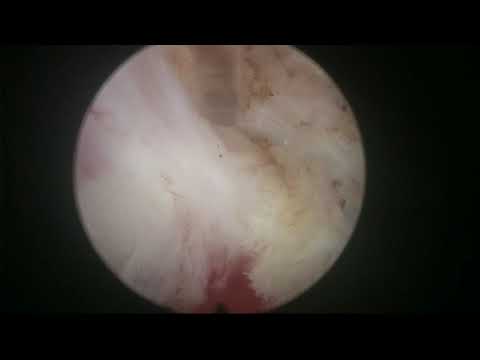
Real life Virtual Basket En bloc HoLEP, case 25: nice surgical tips
Dr. Fernando Gómez Sancha · ICUA
Dr. Fernando Gómez Sancha · YouTube
Language: English. YouTube audio metadata.
Surgical content for professionals. Contains footage of an operation.
Playback connects to YouTube. Your search query is not sent to the player.
About this video
An en-bloc HoLEP performed with a Quanta System 150 W laser using Virtual Basket pulse modulation. The description specifies 2 J and 50 Hz for this recording and introduces practical surgical tips. These are the documented case settings, without a claim that they are a universal prescription for HoLEP.
Documented details and sources
Only details explicitly stated in the sources. Missing information does not mean it did not occur.
- En bloc
Real life Virtual Basket En bloc HoLEP, case 25: nice surgical tips
- Virtual Basket
Real life Virtual Basket En bloc HoLEP, case 25: nice surgical tips
Source checked: 2026-10-06.
Available transcript · English
Automatic YouTube captions, not clinically reviewed. Names, technical terms and numbers may contain errors.
They may contain transcription or translation errors; check the explanation in the video.
- okay so let's start [Music] this man has a relatively large land with about 100 grams of volume and he's very bothered with his symptoms and decided to undergo volume nucleation of the prostate here coming in that's the middle loop okay let's go with the fiber let's see you all okay so not so close to the bladder neck and we can activate the laser if you want pretty far huh brilliant so we're going to use the quanta system laser the 150 watt laser with a virtual basket with settings of two and fifty so that's going to be the demarcation of the twelve o'clock limits of the operation some coastal bleeding and this is quite quite usual so see the sphincter edge so we could go a little bit further down i think
- i want to be relatively close this is close to the edge between the normal and the sphincter huh so this is a virtual basket setting which is a pulse modulation setting for calmium and as i will try to show it [Music] provides improved hemostasis and coagulation and cutting sorry properties here's the sphincter edge so it's possibly okay here i always like to mark this white line at the beginning of the procedure because it's a safety measure and i think also it protects the mucosa from breaking and which can result in the epithelialization of the sphincter okay so here this is very montanan okay so we cut on top of the rail it connects to the other side here now trying to generate a posterior line
- of attack so we can carry out our dissection posteriorly all these small vessels from mucous i will stop bleeding and i don't think there is any advantage in chasing these vessels because they are sometimes hard to coagulate they are in the mucosa or i think it's better possibly to establish a nice line of dissection line of attack and then when we generate a slightly bigger space we can tackle any bleeder that arises with much better chances of being successful also if you think about it as as we you touch there norma from the capsule many of these vessels from the mucosa are going to be disconnected here you see this is what happens if you continue upwards many times the mucosa of the sphincter
- will will break so we want to break it ourselves so cut it you see following this white line and keep them across on the sphincter that's why i like to touch the apex very carefully try to protect maybe maybe we could see a little bit better if i could focus the image also it is important to connect you see initially i dissect the lower part of the apex and i connected with the posterior dissection line we were carrying out you know we were dissecting we did more posterior a section here you see that gives the apex mobility again with these bleeders i don't bother because they're going to stop as soon as we detach the anoma from the capsule and unless it's very very bothersome and very you know bleeding too much or
- bothering us with the visibility i don't usually do anything with it here as we are coming up towards 12 o'clock here it's important to follow the direction of the fibers you see if you look at the castle on the right hand side you know you want to go up following those this direction now that the sphincter is a little bit away from us that we are just cutting here at the 12 o'clock region it's important as we try to dissect the anterior apex to you know take the the proper route so you want to go up up up keep going up keep going up you see towards that direction and not go towards the midline very soon and leave the anomalous tissue behind so this is the way to [Applause] protect the sphincter and at the same
- time ensure that the nucleation of the anterior tissue here is anatomical and complex here you see here just [Music] okay so that's the 12 o'clock region this is the lower aspect you see i just think that this is the white line so now we're going to cut here again a little bit even on there norma to gain better access to gain better access and to try to define the proper plane of the anoma at the apex that's being extremely careful to like take the posterior aspect first and connect here you see here you connect with the posterior line of dissection it's a line of attack as i was naming it this is all posterior you see we are just by doing that you see that we get you gain a lot of space and a lot of access
- to try and continue with our optical dissection coming up and following the [Laughter] direction of the fibers of the capsule here you see they're looking up going up up up this time we look at the left side of the screen you see so when we come here we see the direction of the fibers at the left of the fiber and come up up up up all the way trying to connect with the previous 12 o'clock incision you see the ap calibration was quite good and quite fast so now the operation hopefully will be quite quite fast as well because you can take some time to liberate the apex but when you succeed to liberate the apex early and fast then the rest of the operation is usually usually a piece of pick just
- as i said try to look at the line of attack the line of dissection keep it in the middle on the screen in the middle of the screen and concentrate on how you're going to aim your laser you want to aim your laser towards the line of attack at the beginning but as we progress and the angle of the curve of the capsule starts changing and starts medializing you know you have to start firing a little bit closer to the to the anoma a little closer to the i'm abnormal upwards trying to follow the direction of the fibers of the capsule i'm crossing over to the other side but you can see that most of the anterior aspects of anterolateral aspects the slope is being completed the wonderful aspect of pulse modulation
- and in this case a virtual basket is that we can work concentrating mostly on dissection you don't have to concentrate on keeping a good hemostasis as you go because it's going to happen automatically you see that the double pulse coming out of the fiber opens the plane very nicely and the second pulse probably is responsible for this excellent first pass coagulation that will help us dissect the plane you know proving always you have to question if you're following the good plane or not you get a lot of clues from the tissue and the way it looks you see and you have to be constantly present constantly evaluating what you're seeing you know letting the energy do its work is the best scenario when the energy
- does the dissection you see it's usually taking the proper plane but of course you are the conductor of this orchestra you know you want to conduct it properly and you do that by aiming against the line of attack or a little bit more close to the anomala depending on what you see what is the quality of the tissue what you judge is going on it's happening here for example we are starting to see this change in the fibers these are fibers going this way and over here i thought i saw some vertical fibers we had to watch for that because that's going to be the place where you're going to enter the bladder and if if you see this these fibers you don't want to go against them you want to go a little bit below because
- you want to look for the for the bladder neck and usually you have to come you have to descend the scent because of the spheric shape of the anoma you want to come down down down until you find this vertical fibers that will sink now the entry into the bladder and of course we want to keep more or less a symmetrical dissection here you see these are vertical fibers these are circular fibers that's the entry into the bladder neck but let me finish this side a little bit better because we work a little bit more on the other side than here so come up up let the energy investigate for you let the energy help you find the good plane the plane you want to follow if you see for example up here as we go
- up it starts looking a little bit more flimsy then you have to get closer to the enormously correct a little bit your plane of dissection because you don't want to go deep in the capsule you want to adapt to the curve here we are i'm doing slightly a little bit of contact of the fiber with the tissue to try to make it even better in terms of cutting here you see that's not too bad this is just fibers that i want to cut so we have a nice access to the plane and we can go around there we are you see sometimes it's not really contact later it's just getting the fiber very close so it's the explosive effect of the first bubble opens up and cuts you know sometimes fibrous attachment dumplings open very well when you fire from the
- distance without any need for contact but sometimes when the tissue is very stuck when the plane is very hard to separate then you might be able to do a little bit of closer firing not not really touching just how would i say just you know caressing the tissue with the fiber so very close but you're not touching and of course you're not putting the fiber against the tissue very hard because that will make a little hole and with this pulse modulation setting sometimes the hole can go two or three millimeters in depth which is sometimes the dimension of the capsule in certain areas you know of the surgical capsule so you want to keep the fiber away from the tissue or in what i would call near contact
- sometimes when it's more difficult to dissect the plane than near contact almost contacts is also a possibility i hope of course i am trying to to progress fast i'm very confident with the planes i'm very confident with the anatomy maybe initially when you're starting your experience it's better to keep the fiber away and maybe do the same thing even if you have to do two or three passes you know what i mean so initially take it very easy with the fiber keep it slightly separated and then you have to judge you know we're judging a lot of things we're judging the the plane is it a good plane or not is it the right depth or not are we living tissue is this a nodule that i have to take out maybe so we have to
- probe it you see we have to investigate then if we see that we're going to too deep then we have to correct again you know this is the idea of course you don't want to go deep to a point where you do a massive preparation but you certainly you want to to check you know if the quality of the work you're doing is good or not okay so this is the entry into the bladder led center i'm going to confidently cut it here you see and i will circumnavigate the bladder neck circumcise cut it following the direction of the fiber [Music] when people say that they preserve the bladder neck i don't really understand the concept because there's no clear anatomical landmark to to show where the bladder neck ends and where it
- starts you know so i i just try to follow this to me it's a very abstract concept i don't understand what is preserving the bladder neck what does it mean in endoscopic surgery and i think all these concepts that are a little bit difficult to to to understand difficult to are not adding simplicity you know to the discussion i'd rather you know just follow the anatomical uh clues to be able to take that norma out and of course we're going to cut on the bladder neck and we are going to leave it quite open the anomala has to go through it as well so so here we are something coming [Music] see here when the plane is changing direction i keep the fiber very close to the anomalous edge you see this way
- this way i can adapt to the curve here you see trying to come close to the abnormal and trying to see where it wants to go so using the energy to our benefit and to our advantage there we are it's important to move around the area where you are dissecting because sometimes you feel a little bit stuck you don't know why you're not being able to progress properly but then if you go around and look at the same area from the other side and you see things more clearly sometimes huh so keep moving don't get obsessed with continuing the dissection only you know just sometimes you have to come up out a little bit with your scope and get some perspective to understand where you are especially when you are not sure
- you know we also get some tactile feedback many times i know where i am because i can see my scope i can see where it is where it is pointing so very easily i know if i am pointing posterior or anterior and very easily i know where i am of course that's why when people watch videos from polyp they have sometimes difficulty understanding no the surgeon usually has the benefit of knowing where he has his hands you know so he has a big advantage when he wants to interpret what he's looking at he's not only interpreting the endoscopic image he's also interpreting a lot of sensory inputs especially tactile inputs that are telling you where you are if the tissue is hard or not you know if you can move a prostate a
- little bit around easily or difficult so you get a lot of information that you have to process to carry on with your operation uh safely okay so now you can see we have nice fossa there's no bleeding now let's see if i can this was the middle if i can lift this lobe you see i lift it until i can then push it all right so now this slope has gone inside the this is the prosthetic urethra the loaf has tilted inside you see and then if you go to the other side you can try to do additional movements and then this is usually going to show you very well all this region you see here this is the bladder neck area the abnormal has tilted it's almost going in the bladder so there are some attachments at six o'clock so we
- have to cut them recognize the anatomy and the nucleation is going to be finished pretty pretty soon here ladder neck you see we can follow here and as i said i can't tell how do you preserve the bladder neck it's not possible maybe they are meaning i don't do a very deep cut or i don't do additional cuts to the bladder neck but you see preserving the bladder neck is a shady concept very strange difficult to understand under my point of view okay so here this is mucosa now this is why it bleeds sometimes because it's and i can push the normal totally into the bladder and of course when you finish the nucleation the anomaly is no longer inside the the fossa and the flow of water is more chaotic
- it's not so it's not so you know typically when we irrigate all these uh regions russell we irrigate them with the norma inside so there is a small space and the water flow is going to be very good very fast and it provides very good visibility but you see when we look here we see some some bleeding of course if there's any active leader we want to chase it we want to find it we want to make it stop if we can also it's nice to review the 12 o'clock region in search for these klingons you know this little piece of tissue clinging this is a trimming face which has shortened a lot with the pulse modulation lasers you see the quality of hemostasis is really good i have to say i don't want to see
- i don't like to see a crystal clear forsake because that's sometimes a sign that you have coagulated too much you can see how thin the capsule is in some areas here we're nearly ready for trigonal but if we look at the sphincter we have done a very good job preserving the sphincter and also you see the mucosa i tried to break here but we stopped it in time so excellent continents from day one i think now let's get to see the the mucosa here you see here you can get sometimes some small bleeders but they can make your life miserable when you do the more selection it's better to try to control them well not too bad not too bad okay so let's uh change the instrument good now changing the laser cystoscope for
- the mosculator ok with the help of my nurse who needs to understand the procedure very well and help you to do a very fast and efficient change always ask for the water you know get good habits that allow you to control a little bit because you have to be looking at the screen all the time and you don't want to you can't look at the bags you know you can you cannot take out your attention from the from the screen so [Music] that's why you want to have a good team a team that understands all the steps in the procedure and that can help you very fast and very swiftly if there's a need for it [Music] our musculation is happening very nicely it's taking place very nicely you see it's a soft soft adnomatous tissue so it tends to go
- very fast and very nicely so sometimes we can take out 10 or more grams per minute which means that if this adnorma is 60 70 80 grams it will take us six seven eight minutes which is a big big change in the nucleation because it becomes much faster much simpler and very competitive procedure man will have his catheter removed tomorrow morning so in less than possibly 14-15 hours and if he voids normally he can go home so the classical option was to do an open prosthetic to me or a very you know long lasting or difficult trp for a man with such a large gland so there we are nice marcellation i'm realizing it's important to clean your glasses as well because my glasses are so dirty that i can't see very well i'm
- thinking that there's something wrong with the visibility but it's my glasses so i have to clean them again [Music] okay it's coming oh there's only a little bit of both lobes it's interesting that sometimes we start with one piece but the more oscillator divides this piece in into further pieces so sometimes some nodules are detached sometimes you just cut the adnoma in two without noticing so don't don't believe i mean if you if you finish with the piece you're doing don't assume that it's the only piece there is because there might be other pieces and it's not you know impossible to leave a peace behind when you leave a peace behind the patient complains of you know avoiding normally and then
- suddenly stopping very violently the flow stops very violently and then he has some pain and then you have to suspect that you left a piece of tissue inside the the bladder or the fossa we usually look but sometimes you know even when you look it can hide and you might miss it if it's a small piece sometimes it comes out and the patient is scared thinking that he's losing tissue through the urethra or it can be uncomfortable painful to extract it you know so you have to be careful and assume that there will be more than one piece even when you have done and block a nucleation so then around the nodules at the end and i think we have finished let's check inside the fossa there's a little bit of oozing and again we can
- see the the sphincter perfect aminos