
Surgery
RL HoLEP case 41: Redo interesting case
Dr. Fernando Gómez Sancha · ICUA
Dr. Fernando Gómez Sancha · YouTube
Language: English. YouTube audio metadata.
Surgical content for professionals. Contains footage of an operation.
Playback connects to YouTube. Your search query is not sent to the player.
About this video
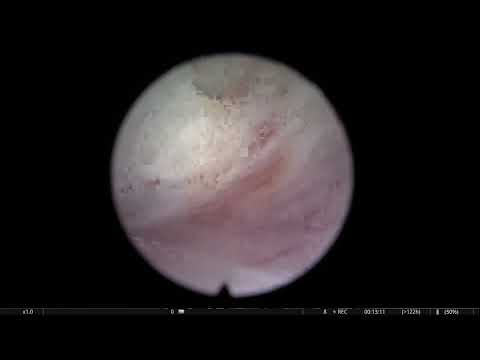
A HoLEP reoperation with multiple intracapsular nodules and a difficult plane. The description focuses on correcting a dissection that becomes too deep or too superficial. It also discusses checking yellow tissue in the capsule to determine whether it is an adenomatous nodule.
Documented details and sources
Only details explicitly stated in the sources. Missing information does not mean it did not occur.
- Difficult dissection plane
This is an interesting case as it had many intracapsular nodules and a difficult plane... the video shows how one can correct the plane when it gets too deep, or not deep enough... when we see yellow tissue in the capsule we have to dig a little to see if it is a nodule and if it is, out with it!
- Redo surgery
RL HoLEP case 41: Redo interesting case
- Prostatic nodules
This is an interesting case as it had many intracapsular nodules and a difficult plane... the video shows how one can correct the plane when it gets too deep, or not deep enough... when we see yellow tissue in the capsule we have to dig a little to see if it is a nodule and if it is, out with it!
Source checked: 2026-10-06.
Available transcript · English
Automatic YouTube captions, not clinically reviewed. Names, technical terms and numbers may contain errors.
They may contain transcription or translation errors; check the explanation in the video.
- hello this is Fernando gome sancha and here I am presenting another video on a redo case after previous uh trp and uh it is an interesting case because the plane is quite difficult to follow and I think it shows uh how one can you know Chase the plane and try to correct a previously wrong plane to try to keep in in a in a good plane and and and remove the adoma completely here um I have to say that I have received a lot a lot a lot of uh letters and uh tweets and messages and everything from many urologists around the world who are appreciating the these videos and the advice that uh they contain and so you know I thought you know my job was done uh showing the basics of of holip and all these examples but uh they they
- asked me to to keep posting videos and um of course I have to find the time which is not so not so difficult not so easy sorry uh but here I I saved this case because I thought I thought it was it was quite interesting and I hope you you enjoy it okay so in the redo cases you always have the impression that uh there is some areas that are properly reected or and then some remaining fragments or you know atic uh residual tissue that has to be removed but um and I guess if you would if you were going to treat this with another trp for example you would resect the bulging pieces of tissue and you would not probably resect so much in the areas where the previous rection seems to be good and complete but nearly always
- always I would say always and uh I have seen a case after open prostectomy where there was only a big nodule hanging from the bladder neck and the fosa was perfect and I didn't uh uh try to to to look for the plane because it was absolutely obvious that there was no adoral left inside the fosa just uh in the bladder neck and and let's say median lob growth in in every redo case I do the the white line and I tried to look for a circumferential uh Liberation because even in the areas that looked as if they were reected properly there is uh always residual tissue issue so I go for a circumferential uh removal of the atoma here you can see how I entered you know the classic way the normal way um enter
- one side of the ver uh firing a little little bit against the floor of the veru and then connect in the midline you see there is not much tissue there but there is tissue okay so if you think that this patient is going to have his second operation Maybe it's nice to try to make it the last so that's uh then the development of the posterior line here you see I'm not looking anymore for a beautiful plane because I think it's very painful when you try to recognize a beautiful plane it's very painful because not always you can find a beautiful plane and not always um you can keep seeing it because with this new enhanced uh newer generation lasers even if you are in the beautiful plane most of the times the
- energy is going to obliterate this beautiful aspect of of of the plane so we have to start thinking I think and and I think the mentality is probably less frustrating that we need to look for a capsular plane and a capsular plane is a plane that looks fibrous that looks relative smooth that is mainly white in color because the adomus component is usually a little bit more yellow than the the proper capsule and here you can see that this is a nodular prostate you start to see that uh if you want to get all these noals out you will have to dig dig a little bit deeper no so as I was saying as I was saying we try to look for a capsular plane also the capsular plane is is sometimes not easy to recognize and
- specifically if you look at a single frame you know if we if we stop the video in one moment and we look at a photo it's very very difficult to say this is capsule and this is adenoma you know many times you see that's the yellow aspect of the adoma that's why I'm pointing the fiber outwards to see if I can find you know the capsule external to these nodules which is not easy you notice that in order to keep oriented instead of digging deep in one small you know line in the in the atoma I always try to do broad lines okay so here this was the ascending ascending dissection towards 12:00 um and uh in this side it was a little bit tricky because we found this yellow nodules stuck to the to the external
- capsule and it was a little bit tricky to to find them but if you want to avoid getting lost you know in in in this we have to carry these long lines you see the movements are quite usually quite Broad in order to try to develop lines that we can recognize lines that are let's say unique Al so only one line not many and try to connect always these lines uh you know around the around the prostate so we can have a nice uh reference system so here now this is would be the start of the ascending dissection uh towards 12:00 I always start by deepening the white line deepening the white line is going to open that tissue like a book and typically the plane is going to be in the external page of that book if I
- if I am making myself uh understood but here you see sometimes you doubt is this a good plane or not so carefully you try to develop the the line of dissection and we are always revisiting you know we're always questioning uh what is the proper plane so here I not knowing for sure okay so I'm looking for the white fibrous smooth plane of course I follow the steps of the of the operation you know we always cut the opical attachments first because if you try to go up uh having the scope inside you might be traction putting traction on the sphincter so here you see here I was not very convinced that this was a good plane so but still I was trying to do a relatively organized line but you see there's more
- tissue there there you can see there's a nodule so it was a little bit a little bit tricky of course these prostates have already undergone surgery and probably some more inflammation sometimes you know sometimes planes are not so friendly and the only way you can defend yourself is to try to to investigate investigate if the depth is enough or not here you see we are starting to connect or to finalize the appical dissection but when when we cut the tissue it's not very convincing convincingly smooth convincingly white convincingly capsular you see there we see that there is a nodule so we always have to investigate and uh of course trying to use a smooth uh effect of the energy in the tissue so
- that it dissects s a little bit it doesn't go extremely deep you know I think in this moment or probably near there's going to be a little bit of fat visible and when we see fat of course we need to correct the plane here I was trying to also you see I'm correcting I'm going deeper anteriorly than the ascending line from the left side of the patient was showing you see so here again we are correcting you see the plane that I was following was much under what I'm following now so there's always room for correction and you have to be ready to investigate that's the fat I was mentioning so probably that was going a little bit deep so we will keep that in mind of course if you see a small perforation
- and this is the idea know if if we're going to see a perforation it has to be small you know the fiber M measures half a millimeter so what we're going to do is to choose a little bit less depth correct our dissection plan and usually there is no not so much uh not so much uh danger in a in a in a very small perforation here you can see clearly how the plane is correcting itself there we are you see that's a little bit of uh fat visible probably millimetric uh small perforation so we're going to continue always trying to move slowly always trying to develop a proper line here again you see that plane that we are taking from above coming down is not um it's deeper than the one we had so we try to connect the lines try to
- understand better it's uh sometimes tricky and we have to we have to try to you see connect the lines and try to see what plane is more convincing if you are investigating a plane that is going a little bit deep and you find you know that you're coming out of the capsule then of course we have to correct but using the energy with a soft effect you see that I don't try to be excessively aggressive dissecting the plane I want to do several passes and each pass is doing a little bit so that allows us to understand a little bit better how things work you know here that's anterior I'm trying to keep a little bit lower than the the the the little perforation we saw there to try to develop a safer plane but you see my
- obsession is always trying to connect with the lines uh around it so that we can have a broader line of dissection now there you see that uh we are trying to understand uh that's the deeper anterior line that we were developing so I'm going to follow that path because of course you want to remove the whole anoma sometimes it's very sticky and it's very interesting you know this idea of of the plane this idea of the plane um because we cannot always recognize what is capsule and what is anoma we have some features that we have discussed before like the whiteness the fibrosity the uniformity of the plane you see when you see the capsule it has to look uh uniform but also we have to use our already the anatomical knowledge
- we have about about the shape of the atoma in relation to the capsule if you look at MRIs uh pay some time looking at them and and look at the transverse sections because um because it helps a lot when you when you combine let's say what you see here you can see this is nodular again you see so we have to be revisiting the plane all the time but as I was saying we know the features of the capsular plane but we also have to have some other information for example as I said when you see a photogram you don't uh recognize what is capsu an anoma luckily we have memory and we remember the previous photograms and of course that can help you know uh getting the idea of how the plane is going we can
- predict how the lines are going to go more or less so if you're going up in this direction on the right plane of of the patient of course you know that the the line is going to start correcting itself as you get anterior you know so the recognition of the plane is not based only on what you see it is based also in what you already know about the anatomy of the prostate um the lines have to be coherent you know if if we have a nice depth in the posterior line and then we connect this line to the lateral line you know it has to make sense and of course often we're going to penetrate a little bit in the in the cups and we going to see small perforations and I I usually say that small preparations are
- allowed in the sense that sometimes in difficult cases like this they're inevitable but uh we don't want to make them big okay so we use the energy carefully to prevent doing big preparations if we start to see that we're coming out of the capsule then we have to correct before it's let's say too bad or too late but uh also there's this concept that the peripheral zone of the prostate has no important function you know what I mean that we don't have to preserve the peripheral Zone perfectly in every case you know because uh of course there's people who think that when you deepen in the capsular plane you know when you're going a little bit extra anatomic uh maybe there is a little bit more discomfort
- postoperatively [Music] or you know but the truth is that often we follow a capsular plane that is maybe not exactly the the the best anatomical plane and uh what I'm trying to say is that this is not the end of the world uh we might be taking some of the peripheral Zone with the adoma in some areas so we are deepening but if you are not outside if you're not Perforating it doesn't really matter that much it's not going to compromise I think a good result postoperatively and and of course many times we don't have the ideal prostate we have let's say the the difficult planes or the inflammatory prostate or so we have to get used to to this concept no we look for a capsular plane not always it's going to be
- beautiful we need to do this broad movements to carry very nice lines that will allow us to understand a little bit better where is the limit between you know pran Anda um and of course yeah this will allow us to finish even the difficult cases okay so here you see now how we have this circumferential line around the prostate I think now we have found a relatively you know good satisfactory plane uh some people are not so happy to remove these nodules I think these nodules have a potential to grow fast uh after the the the operation if you leave them inside to you know so I I tend to take them out always even when they they close to the sphincter I I tend to to be aggressive and try to remove all the BPH
- tissue and maybe sometimes a little bit more you know because of course when you have a very beautiful plane and you can recognize it very nicely it's nice to to be there it's nice to follow the perfect anatomical plane but here we had a hint that we were in a in a very nice depth uh for a moment here also you see that's that's probably the good anatomical plane and the depth that we are following the line we're following is coherent with this depth so probably we are okay we are okay and there we are progressing around progressing around until uh we can start seeing the the sign that we are going to enter the the bladder neck so yeah this this is a it's incredible how you know we are surgeons we do an
- operation and then we look for these philosophical Concepts know that that uh helped us I don't know understand better or adapt better to to the singularity of each case um you see that's the clear entry into the bladder at 12:00 on top of the anterior commissioner so now the rest of the case is going to be quite quite standard I think yeah but um yeah I think if if you look for a beautiful plane you will be frustrated many times because you cannot find it you cannot find it all the way around the prostate you cannot find it maybe you see a good plane posteriorly but not anteriorly or vice versa you know there's a lot of variability um and then it is Paramount to work slowly you see that the movement of of
- my scope is like uh in slow motion it's always calm and relax I think the speed in holip comes with the ability of working continuously rather than uh the speed of what you do so you can go slowly and if everything you do has a purpose and has a reason and is effective you know if you use the energy to dissect or if you stop for a moment to coagulate these are effective uh Maneuvers so that will make the procedure relatively fast we're now 20 minutes inside the the procedure you see that the line circumferentially uh surrounds the atoma we have a satisfactory plane now and that's a little bit of hemostasis because you don't want to accumulate too many vessels uh bleeding at the same time so there we are trying to follow
- this line again you see we follow this line we try to connect with what we had on the other side and um and there we are you see coming around the atoma again that's a nodule you see that many times you can see that's a nodule you see we you see this line that goes around it you see the color so sometimes we have to dig a little bit deeper to try to remove these nodules these nodules usually grow into the capsule and they make the capsule much thinner so that's why some people are a little bit afraid of removing them you see the nodule so in these cases you have to use your knowledge of of the basic uh way to use the fiber to use the energy you know the the settings of the laser are are defining how the energy is
- coming out of the fiber but it is the surgeon who decides how the energy reaches the tissue which means that depending on the working distance depending on the speed of movement and also depending on where you target the energy you're going to have different tissue effects and obviously when you have a SC capsule or when you are uh working closer to the bladder neck the capsule tends to be a little bit more perpendicular to the fiber so you have to start firing a little bit closer to the adoma to the edge of the adoma okay we follow the line but instead of firing against the line because in this case you see the energy might go directly into the capsule you need to keep close to the Border close to the to
- the side of the adenoma you see and and then then uh you are able to cut the attachments of the anoma with the capsule but only some coagulation you know takes place in the capsule we're not using the energy in a way that the disruption can cause uh deep perforation if you go a little bit deeper in the capsule if you recognize that you are starting to enter the capsule then you have to correct you have to fire even closer to the anoma so that the energy as you can see there usually in the posterior plane uh we have to keep the energy anterior so if you if you identify the line no which with two planes no the capsular plane and the and the anom plane you know it's like always firing against the the the the the open
- uh the line formed by by the pages of a of an open book no and my what I'm saying is instead of firing in against the line you fire in the upper page on the on the on the upper page side you know that that will keep the energy close to the anoma that will not penetrate in the capsule and it will allow you to dissect these planes even when they the capsule is totally perpendicular to the fiber um you know the energy will be used to cat the fibers that you join or attach you see the adoma to the capsule but there will be very little energy uh heating the capsule with enough uh ability to to to cut it or open it or perforate it so these three factors the working distance the speed at at which you move the fiber
- along the line and the targeting in relation to the line of dissection is is are the factors that will allow you to use the energy here for example is very obvious I'm firing more closer to the anoma than the line you see and I try to keep there because that will help me dissect and um carefully carefully separates um anoma from from capsule so you see if you are calm if you move slowly if you are ready to correct your targeting you know depending on what you see and the depth of of the tissue uh you can safely develop these planes you can safely even Explore that's another nodule you see I'm going out a little bit more now because I want to go deeper and remove this nodule but of course I have to use
- a very very careful uh dissection energy so that it has a very soft effect on the tissue and it's not very disruptive okay and this is the this is this is how you get the Mastery of of of a nucleation you have to know how to use the the energy what distance what speed and and of course where do you target the the energy so you see for that the calulation of of the vessel that I just did I was using the same pedal but just I increased the distance to get an coagulation effect and here you see that the fiber is aiming constantly towards the upper part towards the atoma you see so that the energy is not in is not coming into the into the capsule it's more on the on the upper page of the book you know if you know what I mean
- here we are we are seeing that the capsule gets very very thin okay so instead of panicking you know you try to avoid making it uh deeper making it uh worse and you keep the fiber closer to the to the atoma so I'm a little bit repetitive but I think this is one of the most most important aspects of of uh a nucleation and there we [Music] are that is now um the attachment at 6:00 you see sometimes these areas are quite sticky and here again I keep the fiber close to the side of the adoma to make sure that we can continue the dissection without deepening and trying to complete the the procedure you see it's now 27 minutes in the operation so you know it takes What It Takes I'm not um you know competing for
- Speed but of course if you are able to work continuously or let's say work most of the time if you don't hesitate too much then you can progress very fast um and and try to complete these operations often at the end we are going to see that we are nearly undermining the bladder neeg these things if if you can keep them let's say reasonable reasonably deep you know if you don't go too far they have no no consequence and uh that's how you adapt to to to a difficult case trying to use of course a surgical strategy that we all know you know if if if you do an in blog technique and the early appical Liberation you follow certain steps um but of course we have to be conscious of the surgical principles of
- how to use a laser how to how to modulate the effect of the laser you know how to make the most of of the of the settings that you are have chosen to I'm sorry for the noises it's a my daughter sending messages so she's very communicative and and uh I will reply right after the the finishing of this video so there we are trying to fin finalize trying to finalize the posterior dissection always keeping you know that's another you know trional nodule you see that this is a big nodule here I keep my laser up up up up there you see to try to stay and leave some capsule or some capsular elements of course the the fosa is now very distended because of the pressure the moment we put a catheter all of this
- is going to collapse and I think all these fibers and things are going to stick together and there will be an inflammatory process you know cloth formation all these things that will uh uh allow the the capsule to to heal very fast usually we remove the catheter the next morning the following morning except if there is a you know very deep uh undermining of the Trion which is not very usual and sometimes it may happen and then we might decide to keep the catheter for a couple of days rather than just one day that's uh reaching to an end in many instances we can Elevate the low and flip the adoma sometimes we flip one L first sometimes it goes in uh and here at the end sometimes I find it easier to
- use the fiber at 6:00 you see that's uh that's the uo so we are okay and we will go to the other side check for the bladder neck that's a you all in on the other side and now we can finalize the The Liberation of the 6:00 attachment trying to follow the curvature of of of the bladder neck uh some people do incisions in the bladder neck after uh removing the the anoma I think in this case there's already a very good depth and uh you see we have we have uh managed to get into a very you know very good capsular plane we are sure that there's no remaining adoma and now of course I have to do hemostasis if if you get deeper you know in a certain region you might find that the bleeding is is a little bit more you know when you when
- you find a very beautiful plane and you follow that this surface has very little tendency to bleed but when you go into a slightly deeper area you might find find that uh there is more bleeding and also more I don't say uh I don't know how to say more unpleasant I think to find Venus sinuses you know because Venus sinuses are difficult to coagulate you see big veins you know probably the patient is absorbing some celling into the bloodstream and that's a situation that uh is better avoided and if it happens it is is going to complicate the the morcellation phase as well because if if the pressure in the bladder Falls you know when you have a a Venus sinus open the visibility is going to be compromised so often if you see a
- Venus sinus you can try to stop it by using the rolly ball and the you know the rectoscope and the rolly ball or if you have a big uh electrode you know sometimes this is helping a little bit more and um well you know we we have to try to master this procedure so that we don't go too deep um and we don't see this these sinuses because they make things a little bit more difficult and especially morcellation I would say and also they put the patient at risk of absorbing liquid and having consequences from absorption so I tend to look at the saturation of oxygen of the patient because one of the things that you might notice when when the liquid goes into the bloodstream is that there is some you know hyper volemia and maybe there's
- a chance to develop pulmonary edema or rigidity so that's I look at the saturation of oxygen on the on the monitor of this of the patient and if he's saturating really well I you know you can continue more or less safely sometimes we lower the h of the irrigation bags trying to you know keep the pressure as low as possible um and uh yeah these are the things we have to tackle you know if morcellation becomes impossible it is always safer and better to put a catheter and come back to more slate you know maybe two three four five days after when the tissue has already been you know very soft and and um and so uh well these are the things we have to tackle interestingly that little preparation with uh some fat
- visible was not relevant no it was too small and probably the way that I went below uh left a little flap of tissue that probably you know I was even looking for it I think at the end and I couldn't really see where it was clearly so it was a very very small uh intraoperative uh situation that I was able to to manage here you see that I'm being very very careful with hemostasis normally with this pulse modulated lasers you tend to have much better coagulation that than what we had before but occasionally especially when the plane is difficult we might see that there is uh you know still a lot of bleers and we have to spend sometimes so some time coagulating to to be able to to you know stop the bleeding and see
- properly uh during morcellation here I'm using different settings um although I coagulate sometimes with the the same 250 two juw 50 HZ setting with virtual basket just by separating the fiber a little bit more but when you use high power and the capsule is very thin I'd rather use one Jewel and probably 40 Herz something like that because this is much softer effect much softer effect and uh it's a little bit slowlier but it um provides very nice and I I try to use a very long pulse or the Bubble Blast uh setting which coagulate really well uh and of course we have to pay attention to the Mosa Mosa you knowum Cuts in a very disruptive manner so that's a you so so when you cut the mukosa it's
- a it's it's a very rough cut you know so not always you can get good hemostasis when you when you cut the mosa and the mucosa sometimes is well inside the the the the bladder side of the bladder neck and and if you don't check it many times you start the mation and then you see that the visibility is not very good because you left some small vessels like the ones you have just seen at the BL and muosa Edge that are going to make our life difficult with with morcellation so spend some time doing morcellation especially when you start with HP because I have to say with practice and with experience you can morcate under bad visibility conditions you know I put the tip of the morat on top of the bladder neck I separate from
- the bladder and often even with relatively bad visibility we can morcate safely but of course this is one of the dogmas of of of morcellation you should try to have the best possible hemostasis if you don't get good hemostasis with the laser go in with a rectoscope and pass the rolly ball to get the best possible uh hemostasis here I'm changing the the instrument I'm going to use the moros scope or the nephroscope to to be able to introduce the blade and I will start the morcellation so you see I put the morcellator inside usually there you have to focus the camera to see a little bit better you see that I was not able to culate the mucosa there perfectly but here now I have the mors lator in a safe position
- two or 3 cm above the bladder neck and see how I keep the blade a little bit inside so that I can see two black triangles on the sides of the blade that tell me that I'm far away from the mcosa and um yeah with the panium oscillator we have we have a reasonable good uh morcellation rate of about 10 10 11 gr per minute although morcellators tend to be temperamental and you know some days they work better than others also the tissues sometimes are very hard uh compared to to other tissues so we see some variability in the quality of morcellation what happens almost always is that during morcellation the visib is going to Decay unless if you do a perfect hemostasis which is not always easy or achievable and that's why you need a
- relatively fast morcellator now there's a Lori coming around my house you know with loudspeakers maybe you got that which is going to stay there forever and um so there we go I I really um I'm quite happy to receive so much feedback from people who find that these videos are helping them to do holip and learn new stuff and I'm very grateful and happy that uh all this all this effort to to prepare the videos and discuss them and so on is is helping people out there um I met one guy in in in Buenos aides he told me that he he had been left by three girlfriends because he was staying late at night watching the video so I was very sorry for that and but uh yeah I think you know holip is is is really a wonderful operation and it's
- important to keep training yourselves to to be more efficient it's important to try to improve and maybe leave your comfort area try new things you know because if if you can if you can Master this procedure you're going to make a lot of patients happy you will have very low stress incontinence rates and if there is incontinence is going to be mild and and very very fast uh you know it it it will disappear and um you will make uh a very very high proportion of your patients Happy by you know the development of your skills also I think being effective and doing faster operations reduce the stress on the urethra um so yeah I think I think it's always it's always a learning process I have to say that I I still learn a
- lot uh you know every week uh it's it's now I think this technique the theblock technique with early appical release and the preservation of the appical mosa is is now very welld developed you know know it's quite mature we could change or modify some of the let's say steps uh but not not this uh appical dissection so much I think the appical dissection has been very well standardized and um you know maybe you can open the bladder neck a little bit earlier and then complete the lateral and posterior dissection or or you might uh Try to Make a Better dissection of the lateral and and even posterior before opening the bladder neck these are optional optional things I think that everybody probably will will make
- different but um but there's always new challenging cases and new you know situations where you have to test uh yourself and I have to say if you stick to the basic principles of how to use the energy especially recognizing capsular deepening and modifying your line you know so that you get closer to the adoma to prevent deepening even more if you use a soft energy for dissection if you are organized in your steps you know so you know the basic science the basic uh principles of how to use the laser and then you follow a sound strategy carrying the lines connecting the lines so you have a good reference of where you are then it becomes a very affordable procedure and and also very fast so we're coming to an end I think this
- is now uh finishing the morcellation and again I I would like to thank you for all the positive feedback it always makes my day you know when someone says thank you you know your videos help me a lot and I I keep encouraging you to to learn to do HP if you don't have the money you know steal it get yourself a laser get yourself the instruments get yourself a good camera and uh start you know start because you will help a lot of patients and they will be very happy and grateful so let me know in the comments if there's something you want to discuss or comment or and uh I will be happy to reply and if you want to come and visit us sometime uh get in touch reach out and we'll see what we can do to to help you
- here you know we have these uh small buckets for the water in in Bulgaria so we can do a fast change but right at the final moment you know we had to change because the bucket was full so this explains the little pause and then I will try to capture the last little bit of tissue before before coming out out there it is okay so that's the end thank you very much for your attention and all the best