
Surgery
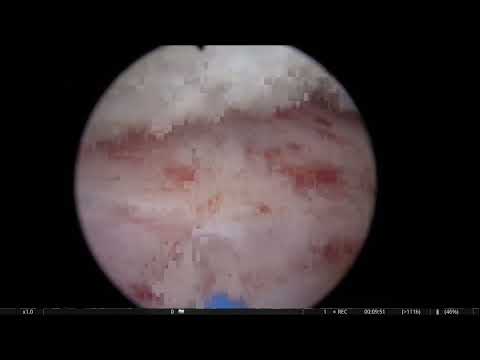
RL HoLEP case number 37: 400 cc prostate
Dr. Fernando Gómez Sancha · ICUA
Dr. Fernando Gómez Sancha · YouTube
Language: English. YouTube audio metadata.
Surgical content for professionals. Contains footage of an operation.
Playback connects to YouTube. Your search query is not sent to the player.
About this video
An en-bloc HoLEP in a 400 cc prostate using Virtual Basket at 2 J and 50 Hz. The author explains that this longer upload replaces an earlier short version. It includes the whole enucleation phase but only part of the morcellation, so it should not be described as a complete recording of every operative stage.
Documented details and sources
Only details explicitly stated in the sources. Missing information does not mean it did not occur.
- En bloc
This is a 400 cc prostate En-bloc HoLEP performed with Virtual Basket at 2 J 50 Hz.
- Virtual Basket
This is a 400 cc prostate En-bloc HoLEP performed with Virtual Basket at 2 J 50 Hz.
- 400 cc
RL HoLEP case number 37: 400 cc prostate
Source checked: 2026-10-06.
Available transcript · English
Subtitles exported from the original-language YouTube Studio editor. Not clinically reviewed; source identity and timestamps verified, full audio coverage not verified.
Selected spellings of enucleation, morcellation and holmium terms have been edited. This is not a full audio or clinical review; the original captions remain the source.
They may contain transcription or translation errors; check the explanation in the video.
- hello this is fernando with sancha and this is an unedited recording of a an in block a nucleation with holmium laser using virtual basket from quantum systems in a very very large gland the estimation of this gland's volume by ultrasound was that it was bigger than 400 grams i entered the bladder because i didn't feel any resistance to enter if i had resistance to enter i wouldn't have forced my way in because with the unblock technique you don't need to [Music] force the entry you know when it's difficult or if you're afraid that the end forcing the entry is going to damage the sphincter then you can just stay at the apex and start with your procedure of course this is an extreme case and i could record the
- enucleation and part of the morcellation then the recorded the recorder stopped working so we cannot see the end of the morcellation but i think the interesting aspect of this video is to see how such a big prostate is tackled with with homum laser so that's the sphincter you can see there are some apical masses there there is some decubitus produced by the catheter and as always because the technique the block technique is always the same irrespective of what you're doing a redo case a small prostate a big prostate you know the steps are always the same uh i'm marking the white line so the white line is this incision that you do at the apex to try to set the landmark of where the apex of the adnoma finishes and where the sphincter starts
- so this landmark will help us throughout the operation to know where is the apex and to protect the sphincter which is the ultimate i think or the most important objective of of this operation so here i'm trying to go around the apex and try to mark this circumferential white line that will determine where the limit is of course in this very large glance very often the adenoma grows and pushes the sphincter [Music] a lot and you can see that the very montanum is very very far away so here i am entering the the plane on the left side of the patient and as you can see my movements are a little bit slower than usual so the idea is when you do a very large gland you have to of course you have to be fresh
- this was the first operation in the morning in a list of seven seven hollops for the day and it was carried out in bulgaria we had some visitors there who enjoyed the case with me and well it was a very nice very nice case you can see that the plane is very rewarding very nice but the objective is going to be to progress uh slowly so that i can maximize the advantages of the virtual basket setting which is that with this laser setting i can develop the plane and at the same time i can get a fairly good hemostasis so but uh you know when we do smaller glands often we get more carried away with the dissection effect and uh you know you don't care that there is some bleeders on the way because you at the end
- you can do a fast uh a fast review of of the fossa and you will coagulate small bleeders if there's any and that doesn't take much time but when you're going to treat such an enormous gland you want to progress very safely and pay as you go which means that you have to make sure that the coagulation you are achieving is is good uh because uh you don't want to accumulate a lot of bleeders in such a big fossa because then it will be very difficult to to to coagulate there will be clots forming and everything will be much more difficult so here you will see that i follow the same steps i entered the left side i entered the right side and now i am connecting in the midline you can see that the plane is opening very nicely
- thanks to the energetic effect of the laser also i usually recommend to keep your endoscope aligned with the line of dissection so that you can see the line in the center of the screen and you can see a little bit of capsule and a little bit of adenoma that needs a little bit of how they say a little pressure on the scope to get close enough to the to the line so that you can see the line and of course the tip of the endoscope is going to make a little effect on putting a slight tension on the line on the plane and of course when you fire the laser uh it's going to dissect much easier than if you were firing with your scope further away on the fiber more introduced you see that usually with this equipment with the richer wolf equipment i i
- can keep my fiber at one third of the let's say diameter of the lens and then i try to get close to the line so that the effect is is good but um that positioning of the scope usually generates this tension so when the plane is very good probably there is some effect as well of the tip of the scope aiding in the dissection but i always tell people who want to learn this that the objective is not to push the objective is to see and i hold the camera with my fingertips so i'm totally unable to put a lot of pressure on the plane it's just wanting to see that drives the pressure i do to connect or to to position my scope against this line and as you can see the plane is quite nice and i'm stopping to coagulate and i will often
- go back a little bit and review what i am doing for the moment i am developing the posterior plane and i will do that until i find some resistance or some difficulty the idea is that when you do the posterior plane the scope is looking down a little bit looking down the sphincter is not under tension so you can develop this plane very fast usually at the beginning of the procedure and it will give you a space that you can irrigate it will give you good visibility and it will progress very fast you know when that's uh interestingly that's probably the both educator adults you see that have been cut near the middle uh so if you see that you can you always have to go above that to continue trying to follow the plane
- often we don't cut them but sometimes if the plane is a little bit deeper or in this case probably the adenoma is pushing so hard that there was just a little amount of tissue between the the edge of the adenoma and the the declaratory ducts there it usually doesn't matter of course the patient will have for sure retrograde ejaculation but uh in this case i think it was a relatively old patient so yeah ejaculation is not a concern like in in i would say the majority of patients we we operate of old age you know he was having a catheter so of course in a case like this there's no room for minimally invasive strategies of course yeah it's it's a difficult case but here you see that i'm stopping i'm taking the time
- to carry the hemostasis usually i would say if you take your time to do hemostasis as you go it will pay off because once you have secured a good hemostasis in an area it's normally not necessary to return too much to that area and then you can progress with good visibility so it will save you time down there down the line down the you know after afterwards in the operation so here i was trying to continue doing a little bit of the posterior aspect but it was promising it was promising you know when you do these cases you never know what's going to happen i think you have to tell the patient that you're going to try uh and then that maybe a second stage might be necessary you can see that
- here i change the fiber to 12 o'clock and that's because i'm going to start the early apical release situation so first i would do a cut on the adnoma following the deepening the white line to see if i can get a little bit better access to the proper plane okay so that's now the initial mobilization of the lateral aspect and this is what i call the mobilize and connect phase where you try to mobilize the lateral aspect a little bit you can see that i will first cut distally and then i will progress towards the bladder neck uh a little bit because if you want to be able to mobilize the apex so that you can start dissecting around the apex you need this mobilization you cannot go up in the to towards the interior
- plane if you haven't mobilized mobilized the apex i remember alex motri when when he teaches a partial infected robotic partial effect to me he says there are three important things for partial effect to me with the robot exposure exposure and exposure no and here i would say that for a nucleation mobilization is the key so i would say there are three important things for a nucleation and that's mobilization mobilization and mobilization initially the prostate is quite the normal it's quite fixed to the capsule and as you progress carefully and you start mobilizing then things start getting better and better and then you can progress you see that the movement of my endoscope is quite slowly
- because i'm trying to use the energy in a way that will provide a very consistent first pass coagulation so i'm very careful in in these cases sometimes you can afford speed under certain conditions but these cases could be unforgiving if you rush the case of course the speed of progression in the nucleation is not a factor of how fast you move i think it's more a factor of how efficient you are in the sense that nearly every move you make advances the procedure so as you see i dissect the plane when i go up i dissect the plane when i go down so what i'm trying to get at is a nearly constant of course when we have vessels we want to get the vessels and control the bleeding and that needs sometimes to keep the fiber still and deliver some energy that will
- accumulate and blanch the the tissue you see the tissue gets white so you have to be careful and control the bleeders as you go as i said the speed of the procedure is not a factor of how fast you move you can move relatively slowly but progress quite fast if your movements are designed for for efficiency here spend the time on on hemostasis because it will pay off at the end so here as you can see i try to progress towards the bladder neck a little bit because i want mobilization of the apex you see to me it's very striking when when you try to do a 12 o'clock incision in a big prostate you have to push your endoscope downwards a lot because the tip of the of the endoscope has to go up a lot that will surely split the sphincter at 12 o'clock you know often
- that happens but uh interestingly when i go to the same spot using the unblock technique my scope is not tilted it is absolutely horizontal you know parallel to the floor and that is because when you get to the to the anterior commissure to the when you're going to open the bladder the adnoma has moved has been mobilized and the scope is pushing a little bit no more downwards so there's no need to angle the scope so much okay so mobilization is the key word uh if there is a philosophy to everything we do in surgery i think this is this is the philosophy of hollop you need to progressively detach the enoma from the capsule and if you do it in a way that makes things easier and easier then you will see how doing any nucleation and endoscopic
- nucleation in a patient with a huge gland like this is a possibility but of course we have to be very strategic and follow follow the steps i think that the steps i described for for and blocking nucleation are very well thought of and are the result of a long long experience and a long process of questioning you know what works and how how should i do this so that it is consistent and allows me to protect the sphincter while we while we operate okay so i think early apical release means that you're going to release the apex completely early in the operation but not it's not an immediate release it doesn't mean that you go in there and you try to to go around very fast and release the sphincter in the first two minutes because you can't i mean
- you see how when you start releasing the the the sphincter and this is this is uh apical applicable here that's the edge of the sphincter we mark the line two millimeters more inside but now they they're normally showing us where it wants to go so we follow and well you see how going interior now is not so difficult because there has been some mobilization so there we are on the other side initially i will deepen the white line a little bit because i want to to get some access this is sometimes misunderstood by by people who watch this procedure so want to learn and they think well if you cut in the white line you're cutting into the adnoma and then that means that you will be leaving tissue but
- the truth is when you do this cut you get a little bit better access to this apical part and then you can follow the real plan usually you will remove the anoma completely and we have checked often in the operating room with trans-rectal ultrasound and we can see that there's no tissue left at all when you follow these steps so also there's a lot of people suggesting that you should leave a little bit of tissue interiorly to protect the sphincter i think it's not necessary because we don't do it and we're quite radical at removing everything in the apex and patients are perfectly continent so i think the main factor for good postpartum continence is to preserve the mucosa not necessarily you need to leave something up there that could hang at some stage and uh
- grow and become obstructive you can't remove 400 grams of tissue or 360 like we did in this case uh and then you know have the patient come back because you left a little bit of tissue at the apex that has grown and is behaving obstructively it is possible so here as you can see i'm trying to develop the lateral plane i'm trying to mobilize the lateral plane i'm pushing this towards the bladder neck and i'm trying to correct uh you know if if i see that the plane goes very deep basically what you have to do is you have to start pointing a little bit closer to the anoma uh this will and this is a constant feature of olive you know you have to read the anatomy that you're seeing in the screen and you have to adapt accordingly the idea is if you
- start penetrating the peripheral zone the capsule you have to recognize that and then correct the aiming of the laser so that you don't deepen into the peripheral zone but you you try to correct you see so if i see that the plane looks a little bit deep then i will have to target my laser a little bit more medial more against the adnoma or the side of the anoma than than before sometimes bleeders are a pain and if you cannot control a bleeder like that i would suggest developing the plane a little bit more and then having more space to to control this this bleeders i don't usually care much about the bleeders coming from the adenoma because as you devascularize the norma they will stop bleeding but if they're
- a nuisance then of course i would treat them so here i'm coming back to the apex because i want to to catch the attachments at the apex before i start moving my scope up you know because i don't want to cause distension or or trauma in the sphincter if you get carried away and you dissect deeper and you start bringing the developing the plane towards the anterior part without having cut the optical fibers then of course you're going to rip a little bit the area and you might have you might have trouble so always come out and always try to cut the distal fibers first before you move uh your scope into that uh region you know of of of the clock uh trying to dissect the plane because uh here you can see that
- we're almost now connecting i'm trying to find what is the good plane sometimes you see before i was saying if you want to correct the plane because you're getting deeper you have to fire closer to the abnormal now i'm saying if you have to correct a plane because you went not deep enough then you have to fire a little bit outside of the line of dissection so that you can correct the plane so it's always a balance you see people always talk about settings and they tell me what settings you use and i say okay settings are important but they're not the only determinant of the interaction of the laser with the tissue you know there are other factors and there are three factors that are important the the first factor is how far you fire the fiber and against the tissue
- so how far from the tissue you fire that will determine if the effect is more coagulative it's more dissective or if there's no effect at all if you're too far maybe there's no effect at all but now you see we have conquered the anterior part we can cross from one side to the other the sphincter has been liberated completely so this is the end of the early apical liberation here of course i'm checking that i can go around and i have to find there it is you see the plane that we were carrying from the other side sometimes you can create these double planes and things like this you shouldn't get very anxious about them just try to connect the planes and if you think that the objective of of the operation is to push
- the meat of the orange inside the bladder then you have to make you know a dissection that allows you to do that so connect the lines so i was saying that uh settings are important then there's another factor which is the distance at which you fire from the tissue then of course it's there's another factor which is the speed of the movement you see you can move the fiber slowly that will ensure that the energy produces a good coagulation and because if you keep the fiber still there will be no dissection so the section is based on movement and then of course you have to decide how fast you move sometimes in a region where the plane dissects very beautifully you can move a little bit faster but of course if you move too fast you
- will leave some vessels without being coagulated so so you have to find the balance and so factor one working distance factor two speed of of movement i like to move what i call in slow motion so it's not and it has to be a very controlled movement you don't want to lose control because while you move the fiber you want to keep the right distance you know that's the trick if you for example move very fast and you come in contact with the capsule then maybe the effect will be more explosive more cutting and maybe you would have a hole in there in the capsule so that's why you need control movements and then of course these movements i like them to make them very wide i like to make them very wide because
- if you have a white line like this you see you go from one side to the other it's not a short movement up and down it's more like a very long movement then you can carry a more or less uniform line and it makes it easier to move the the fiber along this line and keep the right distance that you want so you know if you have a very regular plane with mountains and valleys you know and you have to dissect you if you wanted to keep the good distance all the time you should be adapting the the distance of the fiber all the time so of course there is some tolerance ah there are not perfect lines but if you try to carry good lines that are uniform that are long then it's easier to keep a good working distance that will continue with the dissection
- this is some bleedy bloody area where there's a lot of vessels so you have to spend the time and control the bleeding before progressing that's that's obligatory one of the nice things of the block technique is that you have difficulty controlling bleeding for some reason and you go to the other side of the dissection you know on the on the on the contralateral side the normal is in the middle and it will compress that area so occasionally i have i've done that you know i go i've gone to the other side and then when you return often there is a better situation the bleeding has improved or has stopped so in a case like this because in in smaller prostates sometimes i don't overcoagulate the the fossa in the sense that
- if i see these red vessels crossing they are parallel to the surface they're not bleeding so i probably let them be i wouldn't you know coagulate all the red but in a case like this i'm i feel more tempted to do so so you know if you want to keep a good hemistasis in a big fosa then you have to be a little bit more thorough i think and maybe spend a little bit more time trying to get rid of all these red vessels even when they're parallel to the to the surface i think it's probably safer to try to to get this better hemostasis there's always a balance knowing things and often i recommend things and then maybe i don't completely follow what i'm saying uh because there's some tolerance to to to to what we do and there's some relativity
- of everything we say and do but uh in general this is the idea if if you want to do very good hemostasis in a very large gland you have to be a little bit more thorough and try to [Music] keep very very good especially good hemostasis i guess if you want to do same-day discharge of patients you should also adapt the technique accordingly because often we have you know these populated lists we have a lot of work to do and then you say okay i'm going to do a hemostasis that is going to leave the patient with reasonably clear urine he will have an irrigation until tomorrow and you know if there's a light hematuria he can he can wait or he can be like that or or we can tolerate that there is some minor bleeding overnight that slowly fades off
- and uh you don't worry so much of course if you have the pressure to provide a hemistasis that will allow the patient to go home right away then of course you have to pay more attention and you might say why don't you do that in every patient because you know maybe patients will be much more happy if they don't bleed at all and there's no light hematuria well on the other hand is the overcooking of the fossa we don't know exactly but if you use a lot of energy you coagulate the tissue too much maybe there is more irritative symptoms afterwards so you know we don't there are some things that we just don't know we don't we don't know if if if it's if what i have said is true or not we don't know if putting more energy produces more
- uh irritative symptoms later on but as i said once one tries to find the balance of of what is logical i i have to say that the tolerance of hollop is excellent only occasionally we see patients that complain of a little bit of pain at the end of voiding usually treatable with you know anti-inflammatory non-steroidal anti-inflammatory drugs but many of the things we know are not scientific they are based on experience practice common sense observation and well i'm just telling you what what i do you know if you want to do a big land like this i think it is logical to try to keep a good hemostasis and then of course things things will will progress smoothly you know so here you see now we are doing the circumferential dissection of the adenoma
- here as you can see the fiber and the line of dissection are kept in the middle of the screen as well we can see capsule in one side and adenoma in the other side and i'm trying to find as always the right distance of of a firing the right speed of movement of my fiber and very importantly the right aiming of the fiber in respect to the line of dissection you see at the beginning of the procedure if you fire against the line usually the plane will open very nicely but then of course there's going to be a very steep change of direction of of of the plane and then of course if you continue firing against the line there might be a point where the cap should start to get perpendicular to the fiber and then of course
- there's a risk to to penetrate the capsule and to perforate so the example i i usually say is that this is like when you're taking a curve with a motorbike you know you you have to tilt your motorbike and your body weight towards the curve in order to to adapt to the to the to the curve and here it's more or less the same so when the curve starts um changing you know if you're on the lateral side as we are now lateral anterior maybe if if you're getting closer to the bladder neck then you have to tilt the fiber towards the adnoma so that the energy fires preferentially against the adenoma it will be enough to cut the fibers that are attaching a normal and and capsule and the the explosions in the in the tip of the fiber caused by by the holmium effect
- uh will try to open the plane following the path of least resistance to developing the the plane between that normal and capsule but of course as i said these three factors have to be in constant flux you have to decide every second what is the working distance you choose you can do contact sometimes when you feel it's a little bit safe and you want a more cutting effect you can do uh and that is the entry into into the bladder huh this is what i say in this moment my scope is horizontal and that's because what what is happening is that my endoscope is on top of the normal and the anomaly is being let's say pushed backwards a little bit and deformed by by the presence of of the scope there so there's no need to tilt the adnoma so much that's why i think also that
- decent block approach helps preserving the sphincters anatomy tries to minimize the the mechanical stress that the the sphincter is going to take so here again we are cutting the bladder neck you see everything is very similar to the standard and block technique that we use just the dimensions are are bigger it is paramount in this case is to be calm and to be patient you know you have to give the oppression the time it needs of course we don't want to lose time you know i'm obsessed with trying to make things better all the time so every minute the operation should be better than it was before because we have advanced in in our objectives so i don't like to lose time and you know many people lose a lot of time by i don't know
- so if you have to look backwards you have to look to understand something of course you have to do that but then right away continue continue with the work if you have a difficult area where dissection or access is difficult try to go somewhere else where it's not so difficult and keep mobilizing you know and the mobilization mobilization will make difficult things easier so don't struggle too much in one area here this is an example of how i am changing the targeting you see i'm following my line i know where i'm going but i don't want the energy to penetrate in the capsule so i keep the fiber close to the adenoma so that it opens the plane but it doesn't deepen in the capsule and this is how a nucleation is done this is how energy is used and this is why
- the settings are not determinant some people think if i choose the settings everything will be all right or if i copy the settings that this guy is using everything will be all right no you know apart from the settings you have to be using the energy properly here i was looking for the uo now we can come in the bladder easier than before you see many people talk about having to do a perennial urathrostomy in large glands i have never had to do it in my life and i do [Music] a lot of prostates every month i do 80 60 100 cases every month depending on the months but and i have never had to do that because if you want to do [Music] to enter the bladder in a prostate like this sometimes the length of the middle lobe plus
- the length of of the prostate plus the length of the urethra is too long and then you cannot almost enter the bladder all right but if you start doing the unblock [Music] the unblock technique even you you don't need to enter the bladder before starting the operation ah there's no no need to enter the bladder at the beginning you can you can start at the apex then of course the entry into the bladder especially posteriorly is going to be much shorter because you're going to enter the bladder at the base of the middle lobe not at the tip of the middle up so uh you know well this prostate had this normal size and i was perfectly able to perform the the nucleation without having to do uh a bull bar you know access
- so here trying to interpret where is the plane i always trust my lines a lot so to me it's very important to have this circumferential lines around the prostate then i i'll also look at the characteristics of the tissue that is a nodule you see that is a bph nodule i am deepening the dissection because i see that this is bph tissue and we will have to to take it out sometimes these nodules are very very large and of course in a prostate that biologically grows like this one if you like if you leave a nodule it will grow and even when you think the fossa is enormous the fossil will collapse or after some months and you will see that the patient has a very small residual prostate so even a not so big nodule could become obstructive so i'm in favor of removing this this
- nodules you can see that's the executor redux we saw before and above that there is a nodule that is digging a little bit deep there so i'm always happy to explore what happens of course you have to be strategic as well on how to remove this this this nodules here well this is an additional complication you can find i'm trying to leave some capsular tissue you know take the nodule out but you can start seeing the contour of the nodule so probably at the end we will see the footprint of of this nodule in the in the fossa the nodules will make the capsule thinner so sometimes it's a little bit frightening to see that there is only a little layer of tissue very very transparent very thin below these nodules but
- i find it is quite safe to remove these nodules especially if you know how to target the laser so that most of the energy goes to the nodal and there's not so much energy uh permeating the capsule that's trying to get hemostasis sometimes the difficulty lies in seeing where the where the bleeding is coming from and aiming correctly sometimes the blood doesn't let you see where is the where's the mouth of of the vessel and so you fire around the area but it's not being effective until you target the vessel a little bit better so you see here the nodule is not dissected completely but i probably thought let's mobilize the prostate more and more so that i get better access to the nodule
- so mobilization is key mobilization is key now where are we in relation to the bladder neck i want to see yeah the other neck is going up there you see sometimes you can do these second planes or false planes just a little look try to understand what's going on and try to solve the problem it's not not a big deal i always think about the orange you know it's it's not so complex we want to dissect the meat of the orange from the skin and if you get a little bit into the meat or something like that then you're correct what we want is to be able to push that noma in into the into the bladder so here i'm following my line trying to connect you see there's a small discrepancy there in the plane and we have to correct we have to connect let's try to yeah
- continue like that often the lateral lobes will grow and push the capsule laterally and the middle lobe will push a little bit more towards the posterior so in the confluence of the middle lobe and the lateral lobe sometimes you might see a discrepancy in the plane which is the result of having to dissect two different planes that follow two directions and not a mistake in in the depth of the plane i'll see if i can put a picture to to explain this that i have just mentioned and i will integrate it in the video just just after i finish this location so here again this is the second attempt to look at the uos let's see where they are that's probably too far sometimes they're elevated and they're quite medial
- in relation to the middle of it was not so not so easy to see so let's dissect in the inside so we don't let's mobilize mobilize mobilize until we can see so let's progress in the operation you know do not get blocked there uh not knowing what to do you know you have to move forward so keep moving sorry i'm a little bit allergic so sometimes i get this runny nose and i'm i'm sorry again try to carry good hemostasis let's see where you are aim the laser properly you see i'm aiming closer to the adnoma closer to the nodule you see the nodule is connecting with this plane that we have developed a little bit more lateral and close to the bladder neck so i'm trying to move very slowly and very strategically to [Music]
- get things better so that i can safely remove this nodule completely you know so there you are i always recommend people who are learning hollap to use the to use the easy cases to train to train your skill to train your ability to do uh things more efficiently to try to improve and to make your movements more perfect try to move with control or try to you know consciously do the operation so you can consciously train yourself to become more skilled in doing a nucleation and then when you have to tackle this very very large uh glands or these difficult situations look at the nodule you know it's it's going deep into the capsule you see it's so i will try to gain little advances just cutting one more millimeter can make a difference so you
- see little the nodule is complex it's not just one nodule it looks like two nodules connected to each other so you know you're getting better information about the anatomy of this nodule and you get progressive liberation you don't want to do ah i broke the fiber yeah when i was pushing a little bit against the the nodule to see if it would dissect mechanically i broke the fiber it doesn't matter but as you can see sometimes the fiber gets a little bit of a nuisance when when you want to operate and i think i did it didn't take much i think i remember i cut the fiber so that i could at least be more comfortable without this plastic tag hanging out you see here i went not so much under the nodule but i think towards the other side
- to to try to mobilize the other side as well so that we have a nicely mobilized adenoma um near the nodule so here again you see the targeting is very careful i try to keep the fiber closer to the side of the adnoma you see it's almost touching the adnorma so that the energy will not be aggressive against the capsule and if you can master that then you can master hollop you can you can you know tackle any situation and also i would say with any laser if you if you get a laser in your hands you have to check what kind of effects you can get on the tissues you know what happens if you get closer what happens if you separate how much separation can you have and keep an effect and then you start using the energy very subtly very carefully very adapting the
- the energy usage and the effects you can get with different distances different speeds of movement and different aiming towards the line medial to the line lateral to the line and then you of course have to recognize the anatomy probably here i was taking the fiber out to make sure that it was cut so i could see a little bit better and be more comfortable that's the fiber back and probably while it was being cut i would move the tip of the scope a little bit inadvertently but now we're back we're following the line of dissection and coming towards the bladder again there's a small clot sometimes it's not easy to see these retro orifices in these cases you have to progress carefully see the visibility is quite good also because we're doing the block technique the block
- technique especially good in these big cases because you can do the operation with great visibility because the space we are irrigating is very small here look at how i'm keeping the fiber closer to the side of the nodule rather than against the capsule it's very subtle but this way trying to connect with the line of dissection that we had from the other side you see the plastic has broken again one of the things that uh happens with with high power lasers is that that the fiber starts degrading and tends to break periodically so we are releasing small pieces of fiber into the surgical field sometimes it breaks in a way that alters the beam so that you might feel it doesn't coagulate
- like before or it doesn't dissect like before and of course you can always take the fiber out and cut it properly and try to get a good beam but apparently it's not lasting too too long so at the end you have to i think it's more practical to just continue if you have a bad a bad fiber a bad effect or it's terrible or you want to correlate and you don't manage to coagulate then of course you can always resort to to cutting it but you know that the good effect is going to be only temporary until the fiber breaks but this is the dissection of the nodule now you can see here very clearly what i say about aiming against the autonomous side of of the line you know we try to break the attachments but we try the energy to to stay we try to
- keep the energy against the adenoma not too much against the capsule a little coagulation is fine but of course you don't want to have disruptive a disruptive effect on such a thin capsule so this this case was even more interesting because of this modular growth that would generate like a cavity there and we we had to follow we had to follow to try to take it out sometimes i miss my my points oh yeah what i wanted to say is that interestingly if you use a low power laser the fiber tends to break much less because of course the the stress on the fiber is much less than when you use a high power fiber uh apparently moses effect is a little bit different from virtual basket and they claim that
- the fiber will not break as much because of the way that the double bubble is generated apparently the explosion and the mechanical stress is going more forward and not so much backwards and you can have a better fiber during the procedure so all these things all this thinking from the engineers i think it's welcome because it might be subtle but probably it is it is good if we can work in better conditions so if you use a low power laser remember that often if you see that the tissue effect is not good you will have to cut the fiber yourself because it won't break so often so if you're struggling in a case with a low power laser you know cut the fiber and you'll see how the effect look at the cavity that the nodule was was producing look at the footprint of this
- of this nodule okay so again sometimes in the bigger glance like this it's very difficult to get below the adenoma at the middle of a region and develop this plane so sometimes the access is very difficult and because there's virtually no space if the process is very large so in these cases i might go inside the prosthetic urethra and splits the prostate in two so it cuts at 12 o'clock and then cut at six o'clock or seven o'clock whatever depending on the shape of the prostate this cut of course is completely vascular because the prostate has already been you know dissected from the capsule almost completely but it gives you better access and more mobilization but in this case it was not necessary maybe i was able to mobilize things better in a sequence that
- allowed me to to to to gain access to this posterior aspect at six o'clock you know near the bladder neck without having to do the splitting of the enoma so you see every millimeter is welcome here again another attempt to see where the uo is often is close to the base of the to the base of the middle lobe i couldn't really see it so i tried to continue cutting carefully i think at the end we we saw them of course but uh well if if you don't see the uo maybe you hit it you hit it with the energy but it is quite unlikely that it will structure or anything like that because holmium energy penetrates very very little and in this cases when i'm not sure when i didn't see a uo or when i think i might have hit the uo with energy i won't do anything special i will just
- make a note that i have to follow up this patient with kidney ultrasound to check if so maybe i would do a special follow-up for such a patient but i wouldn't i wouldn't put a double j stand or anything because i think that the chances of getting a stricture is quite low even even if you if you hit the laser with with the with the whole new energy i always think you know how difficult it is for a fistula to close spontaneously but then it might not be so difficult that's the ewo so we are okay in that side so it might be not so well you know what i mean i fistula will never close spontaneously but uh so it looks as if the urine wants to go out but then again if you if you damage a uo there's a chance of of structuring no and but uh of course i saw that with green
- light laser because green light laser penetrates more in the tissue but i saw some some cases i i don't remember exactly how many times i did it myself with green light after you know many many years of surgery but i don't remember any consequence of damaging the uo i think probably with green light i would think about resecting the uo to to leave a clean you know with pure cutting to leave a clean clean tissue and then of course monitor the kidney but i never saw complications due to urethral nerve lesion in my patients i saw some cases that came to me for for second opinion and things like this where you know they developed but i think probably that was a very you know inexperienced surgeon or something like that
- a long time ago but with homium it's not something i fear too much of course i prefer to see the uos of course i try to protect them as much as i can but well here you see that the adenoma went into the bladder without any effort and now of course i'm trying to get good hemostasis on the bladder neck area it's interesting how with hormium when you cut the mucosa of the bladder neck this explosive nature of of of holmium and also of this uh virtual basket and moses and like that is going to generate a little bit of mucosal disruption so the same way when you do a resection of a bladder tumor you coagulate the edges of the of the resection to ensure that the mucosal vessels at the edge will not bleed you have to do something similar here
- so you look for the mucosal edge and you see if there's any bleeder and you try to control it that's a cavity that the nodule has left you know the the footprint of the nodule and you can see that the the look of of the capsule is is a very thin very thin capsule so you don't want to you know you don't want probably easier to perforate in such a cavity but uh yeah we managed to cleanly dissect the node or the nodule out of its pocket and successfully so i think some surgeons who are quite experienced with holy say don't worry about the nodules just cut through them you know following your plane and if there is a residual tissue it's very unlikely that it will cause trouble but i am i
- don't know i think the spirit of olip is to remove everything and i think it's worth the struggle because even with a small capsule when you put a catheter everything will collapse and heal i always think of my resident years when i was doing a lot of open prostatectomies and how crude this operation was how you could break with your finger you could break the capsule you could whatever you did uh you know you put a catheter and patients recovered and so i think what we do around here is usually much nicer and much more careful than what we did with our fingers dissecting these big anomas from from the capsule ripping the finger you know the tissues and the the adherences with the finger
- that occasionally would cause some you know ripping of the capsule and so i think we're much more delicate now and if if you have i don't know some some little perfection that doesn't extravasate massively you know it it really doesn't matter when you put a catheter everything collapses there will be a clot forming and we know that these preparations close spontaneously there's a lot of tissues around the prostate also when you do a radical prostatectomy you realize how these fascias and and coverings of the prostate are quite you know quite thick and resistant i guess depending on where you do the perforation you might have um some some tissues there holding the water so that it doesn't extravase it too much
- so i would say that hollap is quite a forgiving operation within some limits i got an email or a message from a guy from south america saying you know my patient had pulmonary edema after five hours of surgery and i told him wow that's a long surgery i i don't think it's if it makes sense to keep operating like that probably much safer to do a second stage uh later on or and of course if if you see that there might be water extravasating or or if the operation is long you might consider using a furosemide iv in the operating room so that the kidney would try to get rid of the excessive water that might be being absorbed so that's the uo in in the left side that's a remaining attachment
- last attachment at six o'clock and now where are you i was looking for the uo sometimes as i said the anatomy is quite altered and i think it was on the other side of this little ridge i think we saw it somewhere sometimes i rely on what i see on the other side see here's the uo it should be around there somewhere and uh that is preserved mucosa what i mean is when you don't see the that you are interpretively um you might be able to anticipate where the you could be and it took me some time to find it huh of course nothing would have changed i wouldn't have done anything if i didn't see the uo but i think at the end i could see it somewhere let's continue with the hemostasis it was a remaining amount of tissue there sometimes if you have some
- residual tissue near the bladder neck you might want to trim it down check how it goes because sometimes you can leave a little bit of vph tissue attached if it's very small you can vaporize it but if it's bigger than that so you see it's been one hour and seven minutes now the total time for a nucleation was like about one hour and now we are doing the trimming phase coagulation phase before proceeding to to more solution so yeah sometimes the clots get in the middle and sometimes a clot forms where there is a bleeder so you can look for the bleeder below the clot no this is near the edge mucosal edge and especially when you anticipate a long musculation you should try to have the best possible heliostasis initially i will trade with a laser
- but if you need to i mean if you cannot achieve a proper hemostasis maybe then you should get in with a rolly ball and try to to get better hemostasis before musculation because it's not nice when you have bad visibility during modulation it is more risky for you know more risk of complications and this is what happens that often the middle lobe grows or sits on the trigon you see sits on the trigon i was wondering if that was the uo but of course you you need to do hemostasis if you want to more slater so this is our work we always take decisions from first thing in the morning to the end of the day of the day what we do in the clinic what we do in the operating room is to take decisions
- and to take sometimes a little risk i was thinking maybe you know the edge is where the uo is but i think we saw it at the end for some reason it was hiding from us there it was you see here absolutely safe so it's a relief always and then i could coagulate the edge nicely so that we can get good good hemistasis before proceeding to the morcellation so there's still some uh some video footage to go and this is the beginning of the most lesson i think before the camera stop recording the cameras are sometimes a little bit temperamental and they decide when to stop and when not i think we have still like 20 minutes to go but i got a request someone commented on one of the videos in the channel that he would like to
- see the full length nucleation of a big land like this and i hope to have showed you and it's perfectly feasible it takes a little bit of time you need to be experienced of course but and you need to stick to the principles it's important to tell the patient that it's a little bit uncertain what's going to happen because you know i cannot be absolutely sure that everything is going to be perfect and smooth in a patient with a you know 400 grams evaluation at the beginning of the operation but we can tell them we can try and you know the worst thing i think that could happen would be if you know we had to do a second stage or if we had to open a cystotomy to take the tissue out well it's important to discuss these eventualities with the patient because these are things that
- might happen here what i'm doing is i'm doing some cuts in the surface of the prostate because that will make it more irregular sometimes these very large glands they're too regular to see if i can improve the engagement of the morse later with with the tissues i don't usually do it but well occasionally i do and if if you mark the abnormal with this maybe you get some initial you know better modulation here we're changing the instruments it takes a little while to change the laser cystoscope with the morse morse scope or the nephroscope that's the view through the nephroscope and now i'm putting the blade inside so one of the drawbacks of morcellation in such a big piece is that we have to attract the the piece
- against the morse later with the suction but when it has a big mass like this it has a lot of inertia you know so of course it moves because the blades are mechanical and the movement the transmission movement is by contact but of course if you think about it when the blade pushes the adenoma in one direction it is a suction that has to keep the anomala engaged you know so against all that inertia and it is a much bigger piece so typically i think with these large glands at the beginning of morcellation the efficiency is a little bit less and then as the piece gets smaller and smaller it gets progressively faster and faster but and i have heard some surgeons who do three lobe techniques to say
- my firstly my most relation is faster than yours because i mostly three pieces and you're more slate only one but you have witnessed how in one hour we were able to enucleate a prostate with such a big size with an excellent preservation of the sphincter mucosa with [Music] excellent hemostasis and visibility throughout the procedure so we didn't have to do [Music] any you know maneuver or anything and with so of course at the end the operation took two hours and a half so we we took one hour and a half well one hour and 20 minutes for as i'm saying now because the more solution just started so one hour and 15 20 minutes to to do the morcellation of the big gland so four or five grams per minute
- more selection rate i think the more selection rate of smaller pieces is much faster and it can go up to 10 11 with the perennium oscillator 10 11 grams per minute and the peak modulation efficiency sometimes could be 18 or 20 grams per minute you know in in in in moments of very very good efficiency in very particular cases where the prostates are smooth and the more slation is very effective here you have to be patient and you have to try to be safe in the sense that well if you follow the rules of morcellation like keeping the tip of the most later a little bit inside the bladder so that you can see anteriorly the anomalous tissue and posteriorly you see the the blade and around the blade you can see two black triangles two black spaces as long as they
- are black that means that you're far away from the bladder wall you can continue with the morcellation if they start getting pink then of course you need to be more careful and you know check the bladder is full and of course stop more sleeping just in case sometimes you get this visibility where the tissue blocks your view i don't like to keep like that for a long time because i it doesn't it is not safe you're not seeing what's going on but occasionally you can tolerate it briefly if you're in a good position with a full bladder as always you know everything we say is a little bit relative and the recommendations are to be followed but uh there is the theory on one side and then there is the real life on
- the other side and sometimes it's not just that ideal so you can see that we alternate moments where we got good morcellation and moments where mostly is not so good if i see the mouth of the most later too much it means that the efficiency is not so good so you have to struggle you know you have to [Music] be patient you have to look for a change in what you're doing that will increase the efficiency sometimes the prostate what wants to move to one side or the other but it is clashing with the bladder wall the bladder neck and so that morcellation is not happening properly because there is some impediment to mobility of the of the adenoma inside the bladder or so you have to check but always try to check try to whatever you do try to do it safely
- here for example i'm bending one of the rules you know the rule is that the mouth of the most later should look upwards always you know and i was tilting the most later a little bit towards the side to see if i could morsel it you know you have to be careful there was no problem with this patient and we put a catheter after the catheterization urine was quite clear and i think in bulgaria he was sent home with a catheter for a couple of days in madrid we would try to remove the catheter the next morning that's because if the patient has a problem he can come to the emergency department whereas in bulgaria many patients come from cities you know they travel to have this treatment on and possibly they they have no their chances
- you know in case they they have problems bleeding uh bleeding or not voiding or whatever are not so good so they tend to keep a catheter for a couple of days or three days and then we know that all the patients will void and there will be less less problems so yeah this is the hard work also during marcellation i think you should cultivate the same the same uh idea that you have to be quite relaxed quite patient don't get anxious here probably the bucket of the perennial most later was full so we had to empty you know probably in these cases the when the most elation is less efficient there's more water sucked out and there's more chances that having to of having to to to empty the bucket so i close the
- inflow i wait for a moment until the more slate is ready again and here you can see we are again resuming the most later morcellation uh in madrid we have these five liter containers i think the bulgaria is like three liter containers so we have to do less changes if you empty the five liter then it takes a little bit longer to generate the vacuum necessary to to start the most elation so i don't know i like the big packets but they're not available in in bulgaria and yeah you have to be patient you have to have a good team that helps you with any more slater problem that could arise you have to have good help to do these changes in the buckets and everything very fast and save time and then of course you have to be careful careful with the more solution sometimes we get
- slightly closer to the to the trigon there with the most later i know that with the bladder full even if when you're a little bit close to the tissue in the bladder it's difficult to suck the mucosa but there is some little risk so yeah you have to constantly pay attention you know you should be looking at the screen and not look everywhere else typically i ask about the waters do i have water do i have water periodically during oscillation but i don't look at the backs because if you look at the bags you take your eyes out of the screen for a moment and if something bad happened you know here i was getting desperate so i thought let's try the japanese concept of morsellating upside down see if that gives me some improvement but i was not
- you know so convinced and ultimately i'm more used to use the using the morse later at six o'clock so yeah it's a struggle sometimes it takes longer than one wish would wish but if you can treat a man an old man with a 400 gram prostate endoscopically without bleeding without transfusions without having to make wounds in the in the abdomen i think it's a nice objective someone was mentioning in in twitter don't you think there is more risk of urethral stricture if you do a two hour and a half procedure maybe there is but uh when you when you consider the overall risk for the patient you know comparing you know with open prostatectomy you're going to keep a catheter for several days which is also a risk factor for stricture with our robotic procedure you're going to do a lot of
- wounds in the in the abdominal wall you know they can develop hernias there's other risks involved and i think if you can do any nucleation in a patient endoscopically with minimal risk it is uh it is it is a very good balance between risk and benefit but of course we have to be patient at the end of the video i will include some photos of the amount of tissue we extracted and the calculation of the size so you can see how massive this tissue was and well i hope the colleague who asked for a you know demonstration of a big land within block will have what he wanted and well i think it's an interesting experience to share because often we discuss these things in congress says and we say that we can do but it's nice to be able to show that we actually can
- and uh well again i think it's a bucket and this this video will only last six minutes more so if you're getting tired maybe you can roast to the end and see the photos that i [Music] because these videos are tedious sometimes i don't know i would edit but then when i edit i get people saying no no we want to see the full time i don't know if anybody is going to be patient enough to watch all this that's another bucket change and back to the most solution as the piece gets smaller the mobility the the suction is more efficient to counteract the inertia of the piece and it is you know much better efficiency of musculation and then of course we progress we progress much much faster we have had a lot of technological improvements all these virtual basket and moses i think when
- you when you're going to face a really large gland it's it's really a big big big advancement and uh although i have done big big prostitutes with low power lasers and like that i think it's a different world you know when you have this moses virtual basket with you you get excellent first pass coagulation and quite reliable and i don't know i feel much better equipped to face any challenge with with one of these lasers than with a low power laser of course as i said i have done it with low power laser but the degree of suffering uh trying to keep a good hemisphere season like that is is much more so i welcome all the technological advancements the same with the most later the most later is now much faster so
- we can we can do reasonable times i also tried the morse later from luminesce the bursa cut more slater and it was much slower and when you use a slow motion later things get much more difficult so you see there have been changes in technology changes in surgical technique that allow us to be much more confident in in terms of telling the patient that he will you know have much much less risk of postoperative incontinence and we will keep welcoming new developments so i was thinking you know for cases like this and if we're going to do more and more and if the laser is going to allow us to do uh bigger cases and with better hemostasis you know more slation has to improve further you know we we will
- have to be able to remove this tissue a little bit faster and uh more reliably and why not preventing possible accidents and blood and mucosa you know lesions and things like that so i know the companies are always trying to improve situate the situation i hear that some companies have some some things coming up in terms of laser you know refinements uh and as well i hear that there are some more slasher morse letters on the way i hope that after so many years of experience with this most latest we can aspire to get even you know further improvements and yeah the future seems to be bright uh in this respect i think there's much discussion nowadays about preservation of ejaculation and i think it's a valid topic but i have to say that in my practice i get usually
- very old men with big prostates who really don't care about ejaculation at all and and then you know a nucleation is is a champion also i think there's a lot of industry pressure on us to consider ejaculation preservation because they make money when we use ejaculation preservation techniques so my feeling is that all these ejaculation process preservation discussion i mean the main driver for this discussion has been companies not not so much patients i'm not aware of a society of patients damaged by prostate surgery you know they there's no such thing i have seen you know such groups of people damaged with a circumcision at birth things like this you know but i'm not aware of of this kind of uh patients grouping
- and demanding us the urologists to pay more attention to ejaculation i think it's more company driven and this is my personal opinion although i respect of course what my patients want and although we discuss ejaculation all the time when when we discuss surgery i tell them [Music] also the other side you know if you opt for an ejaculation preservation technique and this is the photo so the video is finishing i hope you enjoyed and i hope i didn't bore you so much this was the calculation of the three buckets in grams