
Surgery
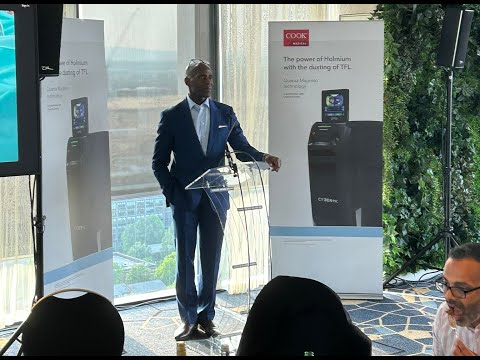
A live case transmission during the BAUS Congress in Manchester
Dr. Fernando Gómez Sancha · ICUA
Dr. Fernando Gómez Sancha · YouTube
Language: English. YouTube audio metadata.
Surgical content for professionals. Contains footage of an operation.
Playback connects to YouTube. Your search query is not sent to the player.
About this video
A live en-bloc HoLEP transmission from the BAUS Congress in Manchester, moderated by Mr Leye Ajayi. The description identifies Cook Medical as the session sponsor and places the recording in the channel's collection of full-length, unedited cases. It offers a demonstration of the operation rather than a written comparative outcomes study.
Documented details and sources
Only details explicitly stated in the sources. Missing information does not mean it did not occur.
- En bloc
A nice demonstration of the efficiency of en-bloc HoLEP wisely moderated by the great Mr. Leye Ajayi from London. I thought it might add to the collection of full length unedited cases of this channel.
Source checked: 2026-10-06.
Available transcript · English
Automatic YouTube captions, not clinically reviewed. Names, technical terms and numbers may contain errors.
Selected spellings of enucleation, morcellation and holmium terms have been edited. This is not a full audio or clinical review; the original captions remain the source.
They may contain transcription or translation errors; check the explanation in the video.
- Hi, this is Fernando Sancha and I want to share this live case that I did uh for the BA Congress in Manchester sponsored by Cook Medical and moderated by the great Le Ay. So I hope uh you enjoy the case.
- Hello. Good night. I'm going to introduce Dr. Gome Sancha. This is a lip surgical transmission and the case is an embro with virtual basket and the laser settings were two with 50 Hz and magneto one 30 Hz.
- While the clinical case was a 74 year old male with type 2 diabetes, hypertension, hyper cholesterolmia, frequent seiatic pains and medications was tendal perabolene and a moridctomy and he was exmoker.
- The patient presents with lower urin urinary tract symptoms suggestive of BPH, an ultrasound with 85 three lower prostate and a normal digital rectal exam. cumments was 4.3 and interrupt and 20 residual time of personal urinary leakage the group PCA he had a gradually um 58 And uh pirates were 73 [Music] sorry per one and two and with a bone 73 and 67 and 88.
- The technique of block hole which is initially with a progressive loss bilateral and we dissect. Then uh we did an early optical release and preservation of filter mucosa and cirial dissection and in blockation emoasis and morellulation of prostate.
- Okay. Hello. Hello Fernando. Finally. Hi. How are Good evening. It's Leia here. How are you? Fine. Fine. Can you see the endoscopic image? Yes, we can see it. We saw it. It's disappeared. We did see it a second ago, but you can still hear me. So, just for on behalf of everybody, just thank you so much for taking the time to join us today. I'm aware it's probably what 9:00 in Madrid and you probably this is your 10th Holap of the day, very likely. So, thank you for taking the time to join us today. So we've heard the history of the patient. So um please over to you please. Thank you very much. Okay. Okay.
- But confirm that you can see the endoscopic image. We certainly can. Loud and clear for takeoff. Okay. So let's uh let's start. As you can see uh we can see the edge of the sphincter here. This is the sphincter. This is the edge of the aex of the adenoma. So I'm going to mark uh the white line which is going to serve as a reference. You see hole I know that hole is very very uh developed in the UK. There's many many people nowadays doing ho but of course uh there has been a lot of black legends with hole know in terms of uh the danger of the technique you know uh it could become risky. I mean people were afraid of developing serious complications during surgery and also there was a fear for incontinents.
- So I have to say that things have changed a lot and our understanding well we have had two main improvements I think in the last years. One has been the technological improvement and as you can see we are using now uh all these sophisticated pulse modulations like virtual basket and magneetto etc that are giving us much better um much better heostasis especially the first pass heostasis which means that when we are dissecting as you can see we can uh have excellent hemoasis at the same time also more got better than the old fashioned uh versatile for luminous but also technically we have understood a little bit better how to preserve the sphincter function. So now in our center the the rates of stress incontinents are
- very very low. And I think people that are starting to realize that you have to be careful with the sphincter mucosa uh to preserve the sphincter mucosa allows you to to to obtain much better um continents immediate continent results.
- So here what yes go ahead. Um no please carry on. Okay. So what I'm doing now is developing the posterior plane. I tend to think of the arenoma as if it was a box. You see? So I'm going to talk about the posterior plane. I'm going to talk about the lateral planes. So I'm going to talk about the anterior plane. And here I am developing a little bit on the posterior plane.
- Normally we're going to have some lateral fixation. So there is a limit to how far you can take this posterior plane. Um but um in my my understanding of of of Pip is that we're going to sequentially mobilize the adenoma by separating it from the capsule and it's going to be a strategic let's say sequence of events because we want to mobilize the abnormma to get access to places where you cannot have access at the beginning. It's like visiting a palace. You know when you visit a palace you open one door you enter a room and then that room has another door and then you enter the next room you know and so you need to unlock let's say or you need to mobilize uh to be able to reach uh places with minimal
- tension with minimal trauma. So this would be this would be the posterior aspect. One thing that you can notice immediately is that I did the white line in about I don't know one minute or two and then right away right away I started inucleating.
- Now I'm going to do a little bit a deepening of the white line here. So we can come up. Can we see the endoscopic? Can we see the endoscopic view please? Thank you. Thank you. Sorry.
- Yeah, they tried to show my hands. So, no. Do you see them now? Yes. We see the end coming back. That's fine. Okay. So, you see what I'm trying to do now is I'm going to ascend in one side from 6:00 to 12:00 towards 12:00. But you see the problem with incontinence in the classic way of doing hol was that people would do this encircling technique. So you see you would be here and you would try to go all around the adoma to get up to 12:00 but this you see the problem is that here there are still attachments.
- So if you go in here and you try to dissect up you're going to pull from this attachment. So in my conception of of polip I think you need to come further down to release this aical attachments first. You see? So because when you is this what you call early apical release of this area? Yes. Yes.
- This is of course it's not an immediate immediate apical release but of course I'm doing a progressive mobilization of the apex. I start you see posteriorly this would be now my lateral line lateral line. Remember I think of the norma like a box. So it's very easy to to understand. Then we would cross over to connect. You see I want to connect because another detail that is very important in this operation is to follow these very long lines. You see I am doing very long movements. So I'm going from you know below here all the way up.
- I don't do this. I don't do this. If you do this you're going to get deeper here but here is not so deep and here is not so deep. So you get an irregular line. But if you do very wide movements of dissection like this, you see, we will always have a nice um orientation system. To me, this is my GPS for HOL.
- You see, so Fernando, you make it look, you make it look so easy. So, thank you for that. Uh question, we haven't really talked about your settings, your laser settings when you're uh doing a hole.
- Could you just educate us on that, please? Okay. You know that u the classic pullet would emit a single pulse each time. These pulses are delivering high energy that has a high affinity for water uh into the water. So the water gets super hot. This is a a state of water that is called super hot water and uh the super hot water will experience what we call explosive boiling. You know when you heat so suddenly with one of these high energy pulses this explosive boiling is going to generate this famous bubble and the bubble is going to generate some pressure wave because of the expansion of the water and then of course if you think about it I'm using 50 pulses per second that means that we're going to have many many bubbles
- trying to expand uh in the interface between adnoma and prostate okay so that's going to that's going to dissect the plane so basically homeium laser behaves like a pair of scissors that is opening you know the the scissors to to dissect that's why when I fire between a noma and capsule you against the line of dissection you can see that it opens up very nicely but of course um the problem with the classic olive was that you see I'm reaching the 12:00 area here in this side you see I dissected now I'm starting my anterior line here so I'm going to go a little bit more anterior just to lets the people of the ANOMA drop a little. Okay. So we get some space.
- So with with virtual basket and uh Moses, you know this this double bubble uh pulse modulations what we can get is u an initial uh pulse followed by a second pulse. So when the initial pulse generates the bubble, the second pulse is going to travel through the bubble and it's going to reach a little bit further. The problem with the classic chromium was that it was very difficult to achieve a dissection effect which could give you a simultaneous heatic effect. So many times you would dissect and you would go back to try to coagulate uh a little bit. But here as you can see with this double pulse we can get uh very nice uh first pass hemostasis which is amazing because as you can see I'm concentrating
- on working. I don't need to concentrate too much on on hemoistasis. Okay. So here look that I mobilize the posterior and lateral uh aspect a lot. I think when you work in the posterior aspect the sphincter is not suffering a lot. So now I'm following my white line to come up. You see, I deepen the white line a little bit initially to get a good view of where the plane wants to go. You see?
- And then I'm going to climb progressively. You see, I go from distal now to more proximal trying to uh capitalize the let's say uh liberation of the apex that I have done up to up to that level. You see here, I don't go further up because I notice here there's still attachments.
- So, I come out, cut the attachments. you see following this white line. Sorry for the So Fernando, we were talking earlier about laser technology and you mentioned about virtual basket for for hole. What about TFL technology for HOA? What are your thoughts? What about your thoughts on thabs?
- Well, uh you know thium thium lasers were here before fiber. Initially we used them as a continuous wave laser and then they uh managed to get some pulse pulses you know even with a let's say trulium crystal you know as the source of the laser energy and these pulse lasers are much longer than the homium pulses which means that if you're going to fire two jewels in one pulse it will take much longer to to deliver the energy to the water. So basically the bubble that is going to be producing is much smaller. So the effect of dissection you know like this uh Caesar opening you know that we were mentioning before is going to be much less.
- Let me stop for a moment to tell you. You see here we have this plane on one side in this side and we have the other plane on the other side. So now we can cut and connect at 12:00. You see? So now this is the end of the early optical release as you can see. And now I'm going to try to work a little bit on my anterior line because when I when I manage to have a continuous line anteriorly that connects very nice from one side to the other we will have a fantastically easy you know uh uh rest of the of the work rest of the job.
- It would be nice to see your hands whilst you're doing this whether you're upside down. Can we possibly see Fernando's hands? Yeah. So, so briefly, briefly they will change for a moment. Okay, you see, so my hands, this is a 12:00 fiber keeps the endoscope very easy to manipulate and I I like to to hold my fiber. Let's change back to the endoscopic. I like to I like to hold the fiber like this because as you can see the movement of the scope is very simple. you know that many I mean the instruments we are using for enucleation are certainly modified rectocopes which means that uh you know many many of these instruments come with a trigger and many people when they get the trigger they will automatically you know intuitively
- use the recctocope as sorry the the laser systocope as if it was a rectocope and if you think about it when you have a rectocope in your hand and you're working at 12:00 the setocope is upside down. When you work at 3:00, the loop rotates, you know, so it faces 3:00 and then 6:00 and then 9:00. So when you see a surgeon using a trigger for HOL, you see that he's moving his hands a lot. He has to raise his arm. So ergonomically, it's much more uncomfortable. So I love this uh way of manipulating the fiber.
- It's very simple and I like simplicity. No, the less is more principle. I mean we taking taking back yeah going back to to the to your question before I think the the problem with based uh lasers either solid state I mean lasers that are produced with a neodymium yak crystal or the tulium fiber laser is that they don't have this beautiful dissection effect. You see the plane opens for me or let's say the energy is looking for the path of least resistance which is normally the anatomical plane.
- So with tulium you have a much better cutting tool. The hemoasis is super it's fantastic but uh often you're going to cut into the adenoma and often you're going to cut into the capsule. So uh I I find it much more difficult to use. Of course surgeons can compensate for the defects you know of their instruments and you can enucleate with a spoon if you want you know uh it's it's I mean if you give me a spoon I can I can do this operation. Yes. You know what I mean? So I did it I did it with green light. This was this was a mechanical dissection. We can do it with bipolar. We can do it with uh you know everything we want. But of course, if you want to learn, I think probably a homemium laser is is the best. Look at
- this. We're reaching the we're reaching the bladder neck. See that? Yes. You're almost there. This is this is what I call the baline uh sign, you know, the whale mouse because have you seen this bal whales mouse? They have a lot of little tooth, let's say, like this. So basically what you see is a circle of fibers of the bladder neck and below them you see the uh vertical fibers.
- Okay, this is the patternic sign that you're going to enter the bladder. Here we are entering and I'm following the shape of the bladder neck now. And you see how easy this is now. It's it's it's becoming very very quickly done.
- Fernando, I mean you're using the magneto laser. Um yes you want to talk about that settings for a second about the actual magneto setting. Obviously you're using virtual basket at the moment and this process is behaving beautifully. There's no bleeding at all.
- There's minimal heostasis required. Uh when do you switch to the magneto setting? Well, you know, there has been a little bit of crosspollinization between lasers because, you know, homeium was not perfect for for for stones. It couldn't achieve the pulverization effect that you can achieve with a tonium laser. And but it was very good for enucleation. And of course, lasers are improving. I mean trulium lasers are improving to to become better tools to do a nucleation for example there are now uh some companies providing trulium lasers here I'm revisiting the plane you see when I see this yellow tissue I try to go a little bit deeper to find out if I I'm leaving some anoma sometimes you're going to find that you see when you go a
- little bit deeper there's no not much danger and you're becoming a little bit more radical trying to remove all the anomalous species you The plane down there looks a little bit thin, but I think it it's a good idea to revisit the planes. If you get too deep, then of course there was no need to revisit so much and then we can go back to what we had before. But I try to be as radical as possible with this inucations.
- So as I said, there has been crosspollinistation and some trulium lasers are getting slightly better. They managed to have a little bit more uh peak power, you know, with every pulse.
- So they get a little bit bigger bubble and that and that that way you know they try to improve the inucation performance. And of course uh holmium also has tried to adopt some of the advantages of of um um trulium based lasers like with magneetto magneetto uh emits a longer pulse longer pulse. So it's not very practical uh to perform a nucleation. I'm a not a believer in low power and nucleation. I think so. I don't think we've talked about your actual settings yet. So, what jewels and hertz do you use for your whole lab? And what is your maximum power? Well, I use 250 which is the classical setting. But I think you know settings are very important with stones but not with prostate. I think it's not the
- fundamental because you see with the same settings if I fire away from the tissue there's no effect. pointless. Yes, you got to be on. So, you see the surgeon has to has to manipulate the energy and he has four things that he can modulate. One is going to be the working distance. You see, if I get too far, there's no effect. If I get closer, there is some coagulation. If I get close closer, there is some dissection.
- Of course, I have to move the fiber from side to side. This is the second huh factor that the surgeon has to use. How fast do you move your laser? Because if you fire 50 pulses per second and you move one centimeter in a second, you're going to fire 50 times in 1 cm. But if you if you move let's say 2 cm in 1 second, you're only going to deliver 25 pulses. You know what I mean? Yes. So the speed the speed of of movement is going to give you um is going to give you uh hemoasis better or worse hemostasis. If you go slowier, you will get better hemoasis. If you go faster, of course, you will dissect faster, but but the heistasis will suffer. So, this is what I call the tempo of the operation. You need to choose your
- tempo, you know, like in music. And usually I like the andante or algro sometimes, but uh algro manontropo, you know what I mean? Yes. So, h there we are. And the third factor the surgeon has is where to where to fire. You see, if I fire against the line here, I'm going to deepen very fast into the capsule. When I was when I was near the apex, the fiber is parallel to the to the tissue. So, it's very difficult to perforate. But when we get closer to the bladder neck, the fiber gets perpendicular. You see? Yes. So, the idea is to fire a little bit more on the edge of the adnoma. You see, when I fire close to the edge of the adnoma, the energy Yeah.
- the energy is is is staying more on the side of the abnormma. It's not so aggressive against the capsule. Okay. And that allows me to work in a very thin plane with a lot of safety. And then there's another factor which is fundamental that the surgeon has. I always talk about the five factors. One is the settings, the other one is the working distance, the other one is the speed of movement. Then we have the targeting. And the final the final idea is that you can fire from very far away like this you see but there is no tension on the line of dissection right what I try to do is I try to get closer to the tissue with the tip of my scope and then I generate some tension you see so this is probably the most most
- difficult yeah it enhances the effect of the laser to dissect you see and here I am in the posterior form of a form of traction would you say traction and counterraction yeah you generate traction and counter traction. Let's let's go in to check where is the UO.
- Normally, it should be it should be very close. Let's see. Hopefully here. Huh. So, now you the the edge of the the edge of the bladder neck here is quite safe. So, I'm going to you know mark it even further here.
- Notice that I brought my fiber to to 6:00 momentarily, but then I will go back to 12:00. What I don't like is when people work like this because they have to move. You see, they they they combine two movement, a rotational movement and a displacement movement. And I only do the you see the displacement. It's a very simple movement when you keep your fiber. So, we're nearly finished. On the lateral side though, how do you avoid that uh movement on the lateral side?
- Oh, no. No. I I keep my fiber always at 12:00. 12:00. Yeah. I start at six o'clock and many many times I finish at uh at six o'clock. You see now I think I can I can probably lift up the abnorma a little bit here. Lift it and then push it. Sorry, push it inside the bladder.
- Let's see if I can flip. You see some people say that when you do and block sometimes the prostate is bigger than the bladder neck. But you see we can flip only one side. This would be the prostatic urethra and this is the bladder neck. And then you see we go to the other side. We have much more space to finalize the dissection. You see here I'm going to fire close to the edge of the adenoma. So I don't deepen. I don't want to go there. I want to stay inside.
- And you see these strategic steps allow you to work continuously. When you work continuously without stopping all the time, you make a very fast operation. And um you are fast because not because you're running too much but because you are constant. And then you see what I'm going to do is I'm going to continue continue the rotation.
- I have rotated very efficient with your I can hear you but uh I I lost some words. So this is this is bladder neck. Now you see I need to I'm not listening to everything you say your Wi-Fi. So we're losing momentarily maybe a maybe it's a Wi-Fi issue. I don't know.
- No, we can see you now. We're back. We're back with you. We're back. Okay. So here again I'm checking the UO. I'm going to mark a little bit the bladder neck here so we are quite careful. Okay.
- So here this is the end of the enucleation. I see under under 30 minutes and um you see the par the paradigm of enucleation has changed. Incredible. I'm missing you. I'm losing you.
- No, we're here. We're here. Everyone's just admiring your work. Thank you. Thank you very much. As you know I was a senior registister for professor Mundy in 1999deed and uh that was an amazing experience for me and I admire the British erology and the way of thinking and uh the I don't know there was magic there I admire the the sessions and everybody had such deep knowledge so for me you can understand it's a great great great pleasure to be able to let's say pay back somehow and share and uh so this is magneto now I'm going to use some some of this magneetto you see often when you look can you tell us what what your settings are for your magneto setting please um I'm using one jewel and 30 htz you know that you can
- yeah you can only use 32 watts maximum yeah so maximum so I'm using 130 which is very similar to what I was using before for coagulation and and I'm paying now attention to the mucosal edge. You see, one of the dis disadvantages of pommium is that it doesn't cut like laser because there is a nearly continuous source of energy coming out of the fiber. Quasi continuum homeium is these very aggressive pulses.
- So when you cut with homeium, it cuts by disruption. Go ahead, Fernando. You were saying about ad admiration for the UK system. I think it was very different in your days compared to now. Um I mean there's a there's a big drive for us to send patients home in keeping with girth which is get it right first time try and do daycase holapse. Do you ever bother with that in Spain in Madrid? Well in my particular in my particular case in my particular case we we do the operations in the afternoon. So we start at 3 and we finish at about 10 p.m. here. This is our you know time for operations. that because you have late nights or any particular reason why you're starting at 3. Uh we we got here to the hospital
- late late you know and uh so we don't have the rights the acquire rights that other surgeons have. So we have organized our activity yeah to operate in the afternoons. So we have clinics in the morning and then and then operations in the afternoon. So basically we leave the catheter overnight and then in the next morning the nurses will uh remove the catheter but first they will do a nice wash out of the bladder. They will remove the the balloon. They will remove the balloon and they will do a wash out of the fossa also and then they will fill the bladder with saline probably 250 300 depending on what the patient tolerates and then they remove the catheter. So the patient pees the first time very fast. Yeah. Right away.
- Interesting. And then we give them 20 milligrams of proamine. This is like the fast track way to send them out of the hospital probably around 120 or 1 uh the next morning. Most of the uh daycase uh operations and centers are sending the patients home with a catheter in the same day and then of course they they they bring them back probably the next day or two days after to remove the catheter. So I think for us it's working quite well. We operate in a private hospital so patients do not want to be pushed out of the hospital too fast you know with a catheter. So for the majority of them having the catheter removed before going home works very well.
- So this is how we do. But of course and if you've done if you if you've done a very large if you've done a a very large enucleation the balloon of your catheter do you inflate it? You still just do about 20 to 30 milliliters in the ca balloon?
- Well I I tend to 200 300 g prostate. Yeah. I tend to leave a little bit bigger balloon maybe 50 60 in the fossa to prevent blood formation and also to allow the the capsule to contract maybe.
- Yeah. Yeah. And in the smaller prostates maybe I use 20 or 40. So I tailor the balloon to the to the size of the bladder neck. Ideally I would like the balloon to keep in the bladder neck on the bladder neck. But uh so here we are.
- Don't go too much. So before you start mossulating, you've done a beautiful enucleation. Are you okay to feel some questions from the audience that come through? Go ahead. Go ahead. Go ahead. Does anybody have any questions for Fernando?
- Well, there's a question um would you inflate the balloon uh inside the prostatic foss? I suspect the answer to that will be yes. Um you can of course I mean the the the thing is with this amazing heostasis the balloon has less importance than with TRP I think okay very rarely we need to put a traction or anything like that so it really I think doesn't matter too much I prefer to leave it in the bladder neck because mainly the possibility of bleeding is in the bladder neck mucosa so if you have the balloon there maybe it will stop any Other questions from the audience?
- I think they're all in awe. Um, Fernando, you've done such a beautiful enucleation. There's a C. Just one second, please. Okay. So, question from the audience. Ask about the use 26 or you trying to do.
- What are your thoughts on that? I hope you heard that question, Fernando. Was that a regarding the size of the endoscopes? Yeah. Yes, we we have we have a 26 French and a 24.5. We have tried the milip also. Um and uh I have to say it's very interesting but I think we have lived through something similar with stones and you know much more than I do you know with a miniaturaturization of the of the nephoscopes and you went from mini mini how do you say this mini miniaturizing here of of your nephoscopes mini yeah yes mini mini there's mini perk mini perk there's ultra ultra mini there's super mini ultra mini super mini And then of course after the initial hype uh everybody became a little bit more conscious and then probably you
- tailor the size of your instrument to the case. No. So I guess um the the 22 French endoscope from Figo is very interesting. Very interesting. The the the vision is fantastic. But then when you want to use the morcellator uh they have a fiber optic uh nephroscope and the view is not so good. You see? So I find that um the endoscope is amazing for a nucleation and I think you probably could do most cases with this 22 French uh size but the moreation is not completely let's say achieved yet.
- So I'm not I'm not sure where you were there in beam when Philip when Philipe from Brazil presented his series on 22 French and that was very impressive to see because they've militarized what they do in his Brazil. No, I agree. It's it's an amazing contribution and I think u the way Felipe puts it is very convincing because he tells his patients you know this is a 26 French endoscope this is a 24 and this is a 22 and this is a 18. Which one would you have to be me to Yeah. to introduce to your penis?
- Yes. He's very convincing. He's very convincing. But I think I think I think when you when you're trying trying to do very large prostate probably uh still the the rate of incontinents we get. I think we finished. So I'm going to get out. You see the morcellation doesn't irrigate properly. So we get we tend to see a little bit of bleeding at the end. And I'm going to put a cassette there and get uh get on with you to answer some more questions if you want. Any other questions from the audience whilst we have um So how long how long do you keep your patients? You said they go home the next day or a couple of you keep for a couple of days. No, no, they go home the next day. We have we have a 5% retention
- rate. And then these patients either you know go home and come back later on during the day and often often they cannot pee very well and we put a catheter again and leave it for another day and then some of them stay and some of the them go. I think the meanantime that we keep them in the hospital is a little less than 24 hours. Okay. Um regarding uh this is s you can see the the urine coming out. There's very little bleeding. Nice. It's nice and clear.
- It's excellent. It's fantastic. We we will leave an irrigation that the nurses will tailor also overnight. You know, they you know that the nurses in the night shift, they always want to keep the irrigations very slow. So that's not a problem. You don't need to tell them.
- Okay. And uh Amelia Ailia. Yes. Hello Fernando. Great to see you here live. I'm Amelia and um I arrived late so I missed the size of this process. If you had to say for the learning curve, how long would it take? How many cases would it take for a new beginner to get to a medium-sized prostate? Well, you see the learning, it depends on how you learn. I think the mistake before and the problem before was that there was no video uh footage to look at. Uh you would visit someone but you could see three cases, four cases and then you would try yourself. it was not so common to invite someone to help you with your first cases and it was not sustainable. You know, you you could have someone in the
- first cases, but maybe he wouldn't come anymore and then you would you would be left alone with minimal knowledge. So if if if I train my residents, they see probably hundreds of cases and then what I do is I do the epical liberation and I leave them to finish the case which is very safe for the patient. When they get good at that then they start doing the aical liberation. And I have to say that uh for example Moes Rodriguez Tokaras with my colleague when I taught him I helped him for six cases and then he flew alone. He's had very good results very good learning curves. He called me once because he had trouble and I you know scrubbed and helped him probably 50 cases later in a more complex case. But
- uh so I think putting a number of of cases that you need to master something depends on how you learn and I my recommendation would be to see a lot of cases there's a lot of videos I put uh 50 whole length videos online on YouTube and I I guess you can learn a lot about the procedure when you do that you have simulators I think simulators might be useful at the beginning um but not not yet helpful you know like you've done 20 cases and then you would spend some more hours in the simulator and this will help you. This doesn't work like that sadly yet but it it's good as a beginning as a initial contact with the laser. So if you watch videos if you understand the procedure or put it this way is easy to do. It's
- difficult to understand. You need to understand it first and then once you understand it and you understand all these factors that I told you about how to use the energy to get the effect you want you know and if you're able to master this energy many times you can dissect the plane with uh with a very subtle effect that is not dangerous you know and then if you deepen a little bit in the capsule you're have a lot of time to recognize and to take um how do you say move your fiber a little bit closer to the anoma to to to to get a good plan.
- Excellent. Another another question, please. Go ahead. Hi, Fernando. It's Ben Dreer from from Scotland and I see um are you started any ejaculatory sparing the nucleations yet or or any desire to do so? Um well, my my problem with the minimally invasive approaches is that they're minimally invasive, but they have a a price. They come with a price.
- you might preserve ejaculation but then you'll have to pay another price and this is usually reducing the durability of the procedure um maybe compromise in the future. So I do of course bladder neck incisions and I stop one centimeter on top of the veto for the younger patients who want to ejaculate the marion syndromes or the bladder neck stenosis um and then I do sometimes middle nucleations uh trying to preserve the the epical tissue but I think it's very interesting I thought uh I I heard Peter Gilling once saying we are the only surgeons that remove a benign tumor partially And it's not true. You know, there are some ENT tumors that are removed partially because if you remove them totally, maybe you cause a problem that
- is intolerable. So, I think it's a it's a nice avenue. My patients are usually very old. They have huge prostates. So, I haven't uh you know denied too too deep in in other strategies. some some surgeons are publishing strategies that seem to speculation very well. I think probably for that the trulium lasers having a much better cutting effect allow you to tailor a little bit better uh uh to to to do the sculpture, you know, to sculpt the the prostate the way you want and preserve what you want.
- Exactly. With a homemium is more difficult because this explosive effect is not so good for cutting. It's very good for dissecting but not so good for cutting. Excellent. So, but it's it's very very interesting. I I think we will end up understanding much better which patients are good candidates for decation preservation. We will understand much better what happens over time and then we will you know we will have a but I think it's probably better to to to try this avenue where you remove a lot of tissue with minimal risk for the patients. They go home and they have a debulking procedure than all these uh you know minimally invasive options that need a more time to to work or like resum or or you put the staples
- inside. So I when you do hb you're so wondered wonderful I mean how do you say that my English is getting rusty is very very good. No, you you I don't find the words. You you get so happy.
- You see the happy happiest patients ever and then uh you know it's you get a little bit lazy trying to settle with with a with a worse you know results in terms of functionality. I see patients 10 15 years after enucleation and they tell me this is the best thing I did in my life and uh so try it if you haven't done uh hol or in nucleation this is really worth learning of course I want to I want to thank you all no are we finishing or there's another question please audience I know you probably want to go and have dinner clearly but over to you my uh point was in what percentage of patients can you preserve ejaculatory function warning homeium laser nutrition. How do you console the patients? Well, in these
- cases um no percentage of patients do you tell the them that you can preserve the ejaculatory function. So let's say is it 10%, 20%, 30%. Well, if if we try an an ejaculation preserving procedure like removing the middle lo only and cutting one centimeter over the vero, I think the the success is very high. But if you do a bladder neck incision, as I said, stopping 1 cm over the vero, it's it's nearly all patients ejaculate. It's quite rare that that you have a a retrograde ejaculation.
- Um but but of course uh I don't have a general I mean normally I try to talk them out of preserving ejaculation rather than because I have done these attempts in the past and I have seen these patients over the years you know even one of my brothers you know he wanted to ejaculate we remove the middle loses five years later he said please take the prostate out I don't sleep you know at night I'm not happy you know ejaculation is if you if you count the the seconds and then of course uh industry has has convinced us that ejaculation is super important for men and I don't disagree that some men find it very important but when you tell them this is the balance you know this is a real balance in the sense we can
- perceive ejaculation you will ejaculate for three years in three years time you will be again experiencing you know urgency disorient you will be on medications again or we can do this you know you won't ejaculate but it doesn't mean that you don't have erection doesn't mean that you have you don't have pleasure you know your wife is going to be very happy because you don't uh spoil the sheets in on the bed all all these things are are are are important and you know for the 60s 65 sometimes if I ask them uh would you like to ejaculate he said yes I would because I haven't ejaculated for the last five years so I hope you so I'm mindful of of the time Fernando It's quarter to 10 with you.
- No, but we have more time if you want. I I was thinking unless there's any more questions. Uh if there isn't, I think we're going to draw this to a close. So, Fernando, really appreciate you as always. Round of applause, please. Thank you very much. Thank you very much and all the best to all of you. And if you ever want to come and visit us, just drop us a line and uh I will be happy to host you and try to share all I know with you. Amazing. Thank you so much for your time. It's been a wonderful case and a great demonstration. Thank you.
- Excellent. Excellent moderation. Excellent moderation. Thank you, Fernando, for your time. Excellent. Thank you. All the best. Bye-bye.