
Surgery
Real Life HoLEP Case number 31: HoLEP in a patient with prostate cancer
Dr. Fernando Gómez Sancha · ICUA
Dr. Fernando Gómez Sancha · YouTube
Language: English. YouTube audio metadata.
Surgical content for professionals. Contains footage of an operation.
Playback connects to YouTube. Your search query is not sent to the player.
About this video
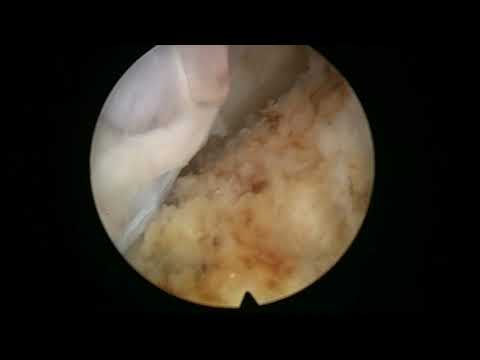
A HoLEP case in an 85-year-old patient with prostate cancer, a PSA of 60 ng/mL and a hard prostate on digital rectal examination. The description introduces the problem of advanced prostate cancer with catheter dependence and discusses the greater operative challenge compared with benign prostatic hyperplasia alone. It does not provide a cancer-treatment outcome or postoperative follow-up for this patient.
Documented details and sources
Only details explicitly stated in the sources. Missing information does not mean it did not occur.
- Coexisting prostate cancer
Real Life HoLEP Case number 31: HoLEP in a patient with prostate cancer
Source checked: 2026-10-06.
Available transcript · English
Automatic YouTube captions, not clinically reviewed. Names, technical terms and numbers may contain errors.
Selected spellings of enucleation, morcellation and holmium terms have been edited. This is not a full audio or clinical review; the original captions remain the source.
They may contain transcription or translation errors; check the explanation in the video.
- hello this is fernando rome sancha and today i'm presenting a case of a patient whose psa was 60 he was carrying a catheter and he was sent to me to treat his retention pending treatment for his prostate cancer he was a very old man i think he was 85 years of age and it's an interesting case i have done a lot of these cases and [Music] it's uh quite interesting that uh one tend to think tends to think that these patients if you do a minimal the obstruction they will do well so often at the beginning i would try to take out the middle lobe and things like this also considering that sometimes prostate cancer can invade the sphincter can affect sphincter function and there is possibly a slightly higher risk of
- incontinence after an endoscopic procedure to to the abstract uh these patients so uh but it was very interesting that when we did that we would see these patients coming back again with the catheter and so i started to think that why not to do a proper nucleation in these patients and uh to my you know liking i i think they do much better and it is sometimes technically a little bit more difficult than the normal cases because uh often we see areas of the prostate where the planes are obliterated by by the tumoral tissue by the cancer tissue and um it is a little bit difficult you have to invent the plane a little bit so it's it's uh again trying to do what you usually do with hollyp but in a difficult pace one of the striking
- things that happens often and in this case it was like that it's the sensation that the systoscope is totally fixed you cannot move the scope from side to side it's very inelastic you know the prostate doesn't it's very rigid so you have to carefully try to advance and provide mobility to that norma by gaining little little by little advantages little improvements and going from one side to the other to see where you can gain this this mobility you will see that in some areas the tissue looks very yellow very strange and in some other areas we would have the impression that we are finding a plane to me these are interesting cases they make the operation a little bit more more difficult and more challenging so i wouldn't
- probably recommend for beginners to to start with this kind of operation but if you do holla regularly i think you will find that uh often most often i would say always in my experience you can find a plane maybe it's not the best plane in the world maybe it doesn't exist anymore the plane that's why you don't find it but you can do a cavitative technique and applying the same steps that we usually apply for the early epical liberation and the sphinctest mucosa protection i i haven't seen uh incontinent patients so far so here you can see the dissection of the posterior plane also i think there is another potential factor that is interesting to to take into account and and if the tissue is very hard sometimes it
- can be i don't know very very hard uh often the more salado will not be able to chew it you know they will not be able to to chew it and then if you release the adenoma completely you will have a lot of trouble more slating the adenoma and then you will end up going in with a receptorscope trying to cut a loose piece in the bladder which is quite quite challenging and difficult and sometimes risky so you have to judge the quality of the tissue because if you try more solution you better be lucky and often what i do is if i feel that the tissue is very hard i will nucleate the nomin block but i will do i will not cut the six o'clock attachment at the bladder neck and then i will resect uh the tissue
- but of course having a pedicle that fixes it to the bladder neck makes things much easier and so i think i have often regretted more to try more solution in cases like this although in this case i think it was successful so take it into account if you see that the tissue is very very hard maybe it's better to do a resection more selection at the end of course this tissue is totally devascularized and there will be no bleeding so you can resect quite safely here you can see i'm applying the same steps i usually apply for early apical liberation just progressing a little bit slowly and well trying to achieve the same goals that we achieve in a in a bph patient so this is the connection of the ascending plane from the right side
- with the plane from the other side so although it's a little bit scary at the beginning when you enter and you feel their gdd in the in the urethra and you feel that it's difficult to move around of course you have to try not to do not to exert a lot of force but gradually the prostate starts mobilizing and you can you can do your nucleation if you find a good plane then it's a happy moment if you don't find it then you have to define one really what we are trying here is to achieve a little bit better uh cavitation than what we would get from a channel to urp also you know once you get comfortable with the laser it becomes your instrument you know the instrument you use for for endoscopy and uh you feel
- comfortable doing bladder tumors you feel comfortable doing uh nucleation of all sorts of prostates so really i i haven't found a case where i couldn't do this and i had to just do a classical channel turp and um i have to say that we see these cases in bulgaria where probably the primary care healthcare system you know it's not very developed and patients go to the doctor when they have no no you know bad symptoms retention things like this so we see sometimes very advanced cases with very high psas and even sometimes in in patients who do not have access to drugs for for the hormonal treatment of prostate cancer we we can do a simultaneous endoscopic nucleation of of the prostate and a surgical castration at the same time
- so which is an option for for these patients in this setting uh here you can see that the plane is not clearly distinguished also i have to say when you do in block you get a better ability to predict how the anatomy of the prostate is going to look like i don't know when you know when you do a lot of these cases then more or less you know where things are and [Music] i don't know how to how to say it so you can intuitively find the plane which is uh probably not too far from the from the real plane if there is any that's the vertical fibers at 12 o'clock in the bladder neck so i knew we could enter you see with this virtual basket fiber and pulse modulation the hemostasis we are getting is is
- fantastic which is also nice uh because you can you can spend the time of the operation worrying about the dissection on the plane and not so much having to concentrate on keeping a good hemistasis so there we are this is below prostate now and trying to progress slowly you can see how rigid the tissue is and it felt very rigid but slowly without doing a lot of force we can progress we can progress with our dissection there you are that is the beautiful effect of this virtual basket energy double pulse double bubble as they call it it's it really has an enhanced uh cutting ability so in cases like this it could be a big advantage because it really disrupts the tissue and helps helps you know
- doing this this dissection i i really like these complex more complex cases because they're a challenge and uh you know you shouldn't uh shy out of of this these challenges because there is a big potential to help the patients if you dare to to to go in and try i am surprised i would say probably every month i do a case like this or two and it's it's quite interesting how well these patients of course improve their situation by removing the catheter and returning to normal normal voiding so sometimes it feels like cutting through a rock and i felt adventurous that day and i decided to try to morsel it also probably because i thought the noma was not very large sometimes you have the full house you know the
- large glands prostate cancer you do a rectal examination you can feel the stony hard prostate which was the case in this in this man he had a very very rigid prostate on palpation and [Music] but i thought maybe the enorm is not such a large one and if we had to resect it would be reasonable and i took the risk of musculating because i thought maybe if i'm successful then it would be very fast and very nice um there you are so carefully you can see now if you see the the videos in the channel i i think the unblocking nucleation technique is quite mature now it's very well thought very well you know meditated most you know there are many papers are out about surgical technique and some of them are
- published when the the the group has a you know reasonable experience but uh maybe not such a big experience and let's say the the the the new uh the new um concepts uh in in these new variations or different variations of similar technique are sometimes more how would i put it let's publish our own technique but i have to say this this this is a technique that has been largely meditated upon you know i i have devoted many many many years and thousands of cases um several thousands of cases to polish the steps and i think it's it's now quite mature and everything makes sense you see here tilting the anomaly in the bladder is not very difficult and here if you wanted to resect you would stop here and then do the
- resection uh maybe well there's a little bit of so you need you need to leave a pedicle especially if you use a monopolar current because if you use monopolar there must be a a way for the current to to exit and uh it will only cut if if you leave a pedicle or if there normally is in contact with with the with the tissue so but as i said i felt a little bit adventurous and i decided to try to morsel it this time you know if you do the resection you'll have to extract the chips and it brings back some memories of the trp era i i haven't done a trp since i think 2003 so it's been almost 20 years now without doing a proper you know trp uh but there i went and that is the fossa it looks uh very reasonable
- you see you might be leaving uh some tissue somewhere and uh you know because the planes are not so good of course we we are doing a palliative surgery and removing such a large amount of tissue uh patients should do well but it's uh better also there's a responsibility for us when we treat these patients to try to make sure that they don't need to return to the operating room uh in the future now it's um if if the catheter is taken out and they have a cancer that is going to compromise their lives in in the future of course you would like to alleviate the situation so that they don't have to return again so that was the motivation to remove this uh little piece you see sometimes you don't find uh the
- good or the best plane but of course we're doing a cavitative technique and it'll be better than if we do just a channel the quality of hemostasis is amazing and this patient had the catheter removed the following day and went home without any trouble and yeah you can see the rigidity of the tissue even up there know how it doesn't look as elastic and as nice as the normal normal tissue so you see even after an extensive experience this can happen and especially in these cases where the plane is not so good but of course also in the normal cases so the trimming phase at the end the revision phase is necessary and [Music] even even in the very experienced hands sometimes we miss the plane but then of course we
- can correct there's no bad feeling about it you know if it happens to you it is absolutely normal and [Music] it happens in the best families you know so that's it almost the end of it and we will move on to more selection soon i guess there we are that bladder neck looks wide open that's the edema from the catheter and i think we will do a fast change it was a 19 minute for a small gland in a relatively difficult case so you see how polished this unblock technique is how fast because you can work continuously with very little pausing time and it allows you to do this these miracles where the patient is very fast free from his catheter and happier after this of course the tissue was sent for
- histology i didn't see the report i operated this patient participating in a waiting list reduction campaign where we did 21 cases i think in two days and so i found that the patient like that i i had no the surgery was indicated by a colleague but luckily the morcellation was quite good and the tissue was chewable by the most later so it was a nice resolution you know typically the morse later choose the soft parts first and if there is a very very hard nodule it will leave it for the end but i think i in this case it was all okay if the more solution is inefficient you have to be careful because the bladder will collapse because you will be sucking too much water so uh you need to pause a little bit let
- the bladder feel again before continuing but no this morcellation was surprisingly good i don't like very much when the tissue is so close to the camera that you don't have any perspective you cannot see the little black triangles um but i was in a safe position a little bit uh over the bladder neck and almost inside the fossa so i kept the pedal down and trying to conclude also i didn't see that i could see the the opening of the blade too much and i trusted that the bladder would keep reasonably filled during the morcellation of these pieces that's the almost if the end of more solution and we were lucky this time as i said if the tissue is very very hard often often i i just resect it at the
- end but that's almost the conclusion sometimes the the blades can get obstructed with the tissue and i don't know if in this case it happened you see there's no suction on the tip because there's some tissue blocking so we had to review it i think and yeah more solution is like that sometimes it makes you stop and sometimes you have to look for alternative plans when the pieces are very small you can here i was trying to suck it with the flow of the bladder emptying but uh it didn't fit so i was not lucky so i think i waited for the most later and finish you could also go in with the recycle scope and use the loop to extract the final pieces sometimes you can extract it through the external sheath and sometimes you just
- grab the piece take everything out and then the piece comes out through the urethra but um you have to be careful not to try to take out a very large piece because that could mean some trouble that's the end that's the end of the procedure i hope you enjoyed the video all the best take care