
Entrevistas y contexto
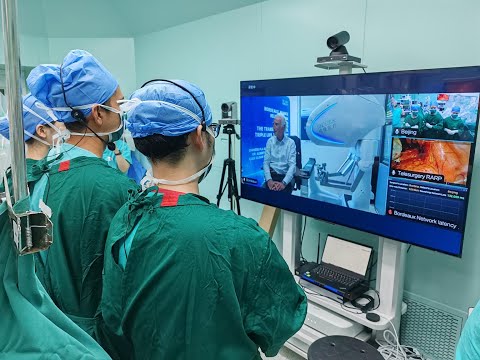
Transcontinental surgery, the surgeon in Europe and the patient in China.
Dr. Fernando Gómez Sancha · ICUA
Dr. Fernando Gómez Sancha · YouTube
Idioma: Varios idiomas. Descripción publicada.
Al reproducir se conecta con YouTube. Tu consulta de búsqueda no se envía al reproductor.
Sobre este vídeo
Entrevista a los doctores Richard Gaston y Moisés Rodriguez Socarrás después de una prostatectomía radical robótica transcontinental. La descripción sitúa al cirujano en Burdeos y al equipo que asistía al paciente en Pekín. La grabación incluye consecutivamente español, inglés y mandarín; esta última versión se realizó con ayuda de una aplicación de doblaje por IA.
Idiomas y procedencia de las versiones
La descripción publica tres puntos de entrada: español en 0:28, inglés en 9:11 y mandarín en 17:07. Indica expresamente que la versión en mandarín utiliza doblaje con ayuda de IA; no acredita que los participantes hablen ese idioma de forma nativa.
Datos documentados y fuentes
Solo datos expresos en las fuentes. Un dato ausente no implica que no ocurriera.
No se han extraído características clínicas de un caso para este vídeo.
Título y descripción originales en YouTubeFuente consultada: 2026-10-06.
Momentos del vídeo
Transcripción disponible · Inglés
Texto y tiempos de la pista publicada por el canal. Puede contener errores; no se utiliza para inferir atributos clínicos.
Pueden contener errores de transcripción o traducción; verifica la explicación en el vídeo.
- Robotic telesurgery, a historic milestone. This is an interview I did with Dr. Richard Gaston and Dr. Moisés Rodríguez Socarrás, both members of ICUA, who have performed surgery from France to China with Edge Medical's Chinese surgical robot. I'll leave you with the interview. First of all, Richard and Moisés, congratulations on the excellent surgery broadcast, the surgeon in Bordeaux, the assistant in China, over 8,000 kilometers away. Regardless of all this, how is the patient? What is the outcome of the operation? Hi, guys, how are you?
- Well, thank you very much. Thank you very much. We are living in a historic moment. I know the patient is doing very well, he's in the best condition, he is recovering very well. I spoke to the medical team today from the hospital, and his postoperative recovery is going perfectly. He'll be discharged very soon. Well, congratulations, Richard. This surgical robot is a recent creation, isn't it? It's a robot that's about two years old. We can also operate with this robot, but they're going to change a few things to improve the robot, but I've operated under ideal, ideal conditions, yes. Is it difficult to adapt to change from one robotic system to another? No, I can say I worked with Da Vinci, I worked with Hugo.
- And now I work with Edge Medical. It's a little bit like changing cars, but the overall philosophy is absolutely the same. That's great. Have you had different sensations working remotely than when you normally work, both of you in the same operating room? No, I mean there's really very, very, very little difference. I was a little scared, but the latency is 130 milliseconds. It means it's almost, almost nothing. And the most important example is when we coagulate. When we coagulate, at the same moment we press the pedal we
- hear the sound of the scalpel in the operating room in China. Almost, almost at the same time. And we see the smoke coming out of the tissue at almost the same time. I was... I was afraid, but in the end you don't notice the latency. Amazing. And Moisés, how did you notice from there, from China, the communication with Richard? In Bordeaux. It's great. It's like we're in the same operating room. Really. The adaptation to the robot for me, from the point of view of assembling the components, is the same. The instruments are very good. And I didn't feel any difference. It's as if I were here, as if we were in the same operating room. It's amazing because, as I was saying, on a flight, on a plane,
- at 1,000 kilometers per hour, it takes you 11 hours. From Madrid to Beijing. And it's amazing that with this, in real time, in less than a millisecond, it's incredible. It's as if we were in the same operating room. This is incredible. What do you think the impact of this technology is going to be? What's the future going to be? I mean, how do you visualize, after you've experienced it yourself, how you think this is going to change medicine and surgery? I was at the ERUS conference and we've talked a lot about this evolution. And we can say that we've seen a first revolution from open surgery to laparoscopy. Second revolution, from laparoscopy to robotics.
- And now it's another revolution from robotics to telesurgery. It's obvious. For me there is no discussion possible. It's obvious. It's obvious that this system is going to have a huge, huge, huge future. It's certainly progress and we can't go backwards. I think that from a center that has a lot of experience, that has a significant volume of patients, from this center we will operate. Anywhere in the world, patients very, very easily. Very easy. And there is no question about it.
- It's the future for me. And you think the patient is going to have a good acceptance of this possibility? To think that your surgeon is 4,000 kilometers away, for example. How do you think this will go? We have to... You have to look at some small details, especially the assistant. And we have to see how we can handle the complications. But we know the complications and we can be very, very careful that there are no complications. Decrease the risk of complication. But, of course, it's one of the problems, the complication, but the surgical act seems very clear. Fantastic. And, Richard, you working in France and in Spain at the same time,
- how do you see the level of robotic surgery in Spain? It's a very high level. At this conference, ERUS, there were over 100 urologists. We've seen live surgery with urologists from Spain. And I think the robotics centers in Spain are some of the best in the world. They're like the centers of the big cities of Western Europe at a very, very, very high level. Well, you have... You have a lot to do with all that because you've been our teacher for many years and you've trained a great many Spanish surgeons and for that we have to be very grateful to you.
- Well, I think that concludes this interview. Congratulations to both of you for setting a milestone in the history of surgery. Two surgeons operating along... with a brutal distance between the surgeon and the assistant, with the patient a long distance away. And I think it's something to remember and probably the start of something incredible that, as you say, is going to become a reality very soon. Thank you very much, Richard. Thank you, Moisés. Thanks to you guys. Thanks to Moisés for helping us through two surgeries, a partial and a prostatectomy. Thank you. Thank you very much. A huge, huge event in Europe. Congratulations, Richard. The truth is that it is very romantic that you have been there
- at this culminating moment of your professional career, at the most important robotic event in history, which is also the beginning of a new era. And I think I'm very glad that you were the catalyst for this whole... world event. Thank you very much. Thank you very much. Fantastic. Well, first of all, Richard and Moisés, congratulations on the excellent broadcasted surgery. Surgeon in Bordeaux, assistant in China, more than 8,000 km apart. Regardless of all this, how is the patient? What is the outcome of the operation?
- Hello? Good. How are you? Well, thank you very much. We are witnessing a historic moment. I know the patient is doing very well. He is in the best condition and he is recovering very well. He has spoken with the medical team today at the hospital and the post-operative recovery is going perfectly. He will be discharged very soon. Good. Congratulations, Richard. Is this surgical robot newly created? No. It is a robot that is... About two years old. We can also operate with this robot, but they are going to change a few things to improve the robot. But I have operated under ideal conditions. Ideal. Is it difficult to adapt to switching from one robotic system to another? No. I can say that I have worked with Da Vinci,
- I have worked with Hugo, and now I work with Edge Medical. Yes. It's a little bit like changing cars, but the overall philosophy is absolutely the same. That's great. Have you had different feelings working remotely compared to when you normally work? Together, in the same operating room? No. I mean that there is really very, very, very little difference. I was a little scared, but the latency time is 130 milliseconds. It means it's almost nothing. And the example, the most important one, is when we perform coagulation. When we perform coagulation, we understood... At the same time that we pushed on the pedal, we heard the sound of the scalpel in the operating room in China, almost at the same time.
- And we see the smoke coming from the tissue almost at the same time. I have had more fear, but in the end, it is not noticeable. The latency time is not noticeable. How amazing! And Moisés, how did you notice the communication with Richard in Bordeaux from there, from China? It's great, as if we were in the same operating room. The adaptation to the robot, for me, from the perspective of assembling the components, is the same. The instruments are very good, and I didn't feel any difference. It's as if I were here, as if we were in the same operating room. It's incredible because, as I was saying, on a flight, in a plane traveling at 1,000 kph, it takes 11 hours to get from Madrid to Beijing. And it's incredible that with this, it's
- in real time, in less than one millisecond. It's incredible. It's as if we were in the same operating room. It was... You who have experienced it firsthand, what do you think will be the impact of this technology? What is the future going to be like? I mean, how do you visualize it after having experienced it? How do you think this is going to change medicine and surgery in the world? I was at the ERUS congress, and we talked quite a bit about this evolution. We can say that we have seen a first revolution from open surgery to laparoscopy, a second revolution from laparoscopy to robotics, and now it is another revolution from robotics to telesurgery. It is evident. For me, there is no possible discussion. It is clear that this system is going
- to have an enormous, enormous, enormous future. It is certain that this is progress, and we cannot go backward. I believe it comes from a center that has a lot of experience, and a significant volume of patients. From this center, we will operate on patients anywhere in the world. With great, great ease. Very easy. And it's certain that there is no question it's the future for me. And do you think the patient will have a good acceptance of this possibility? To think that their surgeon is 4,000 km away, for example? How do you think this will go? We need to look at some small details. Especially the assistant. And we need to see how we can manage the complications.
- But we know the complications. And we can be very cautious to prevent complications. Reducing the risk. Of complications. But naturally it is one of the problems. The complication. But the surgical act seems very clear. Fantastic. And Richard, you who work in France and Spain at the same time, how do you see the level of robotic surgery in Spain? It is a very high level. At this congress, there were more than a hundred urologists from Spain. We have seen live with urologists from Spain. And I think that the robotic centers in Spain are among the best in the world. They are like the centers of the major cities
- in Western Europe at a very, very, very high level. Well, you have a lot to do with all of this because you have been our teacher for many years. And you have trained a great number of Spanish surgeons. And for that, we have to be very grateful to you. So with this, I think we conclude this interview. Congratulations to both of you for making a milestone in the history of surgery. Two surgeons operating with a brutal distance between the surgeon and the assistant, with the patient at a long distance. And I think it is something to remember and probably the beginning of something incredible that, as you say, will soon become a reality. Thank you very much, Richard. Thank you, Moisés. Thanks to you all. Thanks to Moisés for helping us with a partial prostatectomy.
- Thank you very much. A huge event. Huge in Europe. Congratulations, Richard. The truth is that it is very romantic that you were there. At this pinnacle moment of your professional career, at the most important robotic event in history, which is also the beginning of a new era. And I truly am very glad that you are the catalyst for this global event. Thank you very much. Thank you very much. Thank you very much. [The same interview, dubbed into Chinese]
Transcripción disponible · Español
Subtítulos en español publicados por el canal. Pueden ser una traducción asistida por IA; no se utilizan para inferir atributos clínicos.
Pueden contener errores de transcripción o traducción; verifica la explicación en el vídeo.
- Telecirugía robótica, un hito histórico. Esta es una entrevista que hice al doctor Richard Gastón y al doctor Moisés Rodríguez Socarrás, ambos miembros de ICUA, que han realizado una cirugía desde Francia a China con el robot quirúrgico chino de Edge Medical. Os dejo con la entrevista. En primer lugar, Richard y Moisés, daros la enhorabuena por la excelente cirugía retransmitida, el cirujano en Burdeos, el ayudante en China, más de 8000 kilómetros de distancia. Independientemente de todo esto, ¿cómo está el paciente? ¿Cuál es el resultado de la operación? Hola, buenas, ¿qué tal?
- Bueno, muchísimas gracias. Muchas gracias. Estamos viviendo un momento histórico. Sé que el paciente está muy bien, está en las mejores condiciones, está recuperando muy bien. He hablado con el equipo médico hoy del hospital y está viviendo el postoperatorio perfecto. Será dado de alta muy pronto. Bueno, enhorabuena, Richard. Este robot quirúrgico es de reciente creación, ¿no? Es un robot que tiene más o menos dos años. También podemos operar con este robot, pero van a cambiar algunas cositas para mejorar el robot, pero he operado en condiciones ideales, ideales, sí. ¿Es difícil la adaptación a cambiar de un sistema robótico a otro? No, puedo decir que he trabajado con Da Vinci, he trabajado con Hugo.
- Y ahora trabajo con Edge Medical. Es un poquito como cambiar de coche, pero la filosofía global es absolutamente igual. Qué bueno. ¿Habéis tenido diferentes sensaciones trabajando a distancia de cuando trabajáis normalmente, estando los dos en el mismo quirófano? No, quiero decir que realmente hay muy, muy, muy poca diferencia. He tenido un poquito de miedo, pero el tiempo de latencia es de 130 milisegundos. Significa que es casi, casi nada. Y el ejemplo más importante es cuando hacemos una coagulación. Cuando hacemos una coagulación, entendimos al mismo tiempo que empujamos
- sobre la pedana, entendimos el ruido del bisturí en el quirófano de China. Casi, casi al mismo tiempo. Y vemos el humo que sale del tejido casi al mismo tiempo. He tenido más, he tenido miedo, pero al final no se ve, no se ve el tiempo de latencia. Qué bárbaro. Y Moisés, ¿cómo notaste tú desde allí, desde China, la comunicación con Richard? En Burdeos. Es estupenda. Como si estuviéramos en el mismo quirófano. Vamos. La adaptación al robot para mí, desde el punto de vista de armar los componentes, es igual. Los instrumentos son muy buenos. Y yo no sentí ninguna diferencia. Es como si estuviera aquí, como si estuviéramos en el mismo quirófano. Es increíble porque, como yo decía, en un vuelo,
- en un avión, a mil kilómetros por hora, te tardas 11 horas. Desde Madrid a Beijing. Y es increíble que con esto, en tiempo real, en menos de un milisegundo, es increíble. Es como si estuviéramos en el mismo quirófano. Es increíble. ¿Cuál creéis que va a ser el impacto de esta tecnología? ¿Cuál va a ser el futuro? O sea, ¿cómo visualizáis, después de haberlo experimentado vosotros, cómo pensáis que esto va a cambiar la medicina y la cirugía? Estaba en el congreso ERUS y hemos hablado bastante de esta evolución. Y podemos decir que hemos visto una primera revolución de la cirugía abierta a la laparoscopía. Segunda revolución, la laparoscopía a la robótica.
- Y ahora es otra revolución de la robótica a la telecirugía. Es evidente. Para mí no hay discusión posible. Es una evidencia. Es una evidencia que este sistema va a tener un futuro enorme, enorme, enorme. Es seguro que es un progreso y no podemos ir detrás. Pienso que de un centro que tiene mucha experiencia, que tiene un volumen de enfermos importante, desde este centro vamos a operar. En cualquier lugar en el mundo, pacientes con mucha, mucha facilidad. Mucha facilidad. Y es seguro que no hay pregunta.
- Es el futuro para mí. ¿Y pensáis que el paciente va a tener una buena aceptación de esta posibilidad? Pensar que su cirujano está a 4.000 kilómetros de distancia, por ejemplo. ¿Cómo creéis que esto va? Hay que... Hay que ver algunos pequeños detalles, especialmente el asistente. Y hay que ver cómo podemos manejar las complicaciones. Pero conocemos las complicaciones y podemos tener mucha, mucha precaución para que no hay complicaciones. Disminuir el riesgo de complicación. Pero, naturalmente, es un de los problemas, la complicación, pero el acto quirúrgico parece muy claro. Fantástico. Y, Richard, tú que trabajas en Francia y en España a la vez,
- ¿cómo ves el nivel de la cirugía robótica en España? Es un nivel muy alto. En este congreso, ERUS, había más de 100 urólogos. Hemos visto cirugía en directo con urólogos de España. Y pienso que los centros robóticos de España están en los mejores del mundo. Son como los centros de las grandes ciudades de Europa Occidental a un nivel muy, muy, muy alto. Bueno, tú tienes... Tienes mucho que ver en todo eso porque has sido nuestro maestro durante muchos años y has formado muchísima gente de muchos cirujanos españoles y por eso te tenemos que estar muy agradecido.
- Pues con esto yo creo que terminamos esta entrevista. Enhorabuena a los dos por haber marcado un hito en la historia de la cirugía. Dos cirujanos operando a lo largo de... con una distancia brutal entre el cirujano y el ayudante, con el paciente a larga distancia. Y creo que es algo para recordar y probablemente el inicio de algo increíble que, como tú dices, se va a establecer como una realidad muy próxima. Muchísimas gracias, Richard. Gracias, Moisés. Gracias a vosotros. Gracias a Moisés que nos haya ayudado por dos cirugías, una parcial y una prostatectomía. Gracias. Muchas gracias. Un evento enorme, enorme en Europa. Enhorabuena, Richard. La verdad es que es muy romántico que tú hayas estado ahí
- en este momento culmen de tu carrera profesional en el evento robótico más importante de la historia, que además es el principio de una nueva era. Y creo que me alegro mucho que hayas sido tú el catalizador de toda esta... acontecimiento mundial. Muchas gracias. Muchas gracias. Fantástico. Bueno, en primer lugar, Richard y Moisés, enhorabuena por la excelente cirugía retransmitida. Cirujano en Burdeos, ayudante en China, separados por más de 8.000 km. Independientemente de todo esto, ¿cómo está el paciente? ¿Cuál es el resultado de la operación?
- Hola. Bien. ¿Qué tal? Bueno, muchas gracias. Estamos siendo testigos de un momento histórico. Sé que el paciente está muy bien. Está en las mejores condiciones y se está recuperando muy bien. Ha hablado con el equipo médico hoy en el hospital y la recuperación postoperatoria va perfectamente. Será dado de alta muy pronto. Bien. Enhorabuena, Richard. ¿Este robot quirúrgico es de nueva creación? No. Es un robot que es... Tiene unos dos años. También podemos operar con este robot, pero van a cambiar algunas cosas para mejorar el robot. Pero he operado en condiciones ideales. Ideales. ¿Es difícil adaptarse al cambio de un sistema robótico a otro? No. Puedo decir que he trabajado con Da Vinci, con Hugo, y ahora con Edge Medical.
- Sí. Es un poco como cambiar de coche, pero la filosofía general es absolutamente la misma. Qué bueno. ¿Habéis tenido sensaciones diferentes al trabajar a distancia en comparación con cuando trabajáis normalmente? ¿Juntos, en el mismo quirófano? No. Quiero decir que hay realmente muy, muy, muy poca diferencia. Estaba un poco asustado, pero el tiempo de latencia es de 130 milisegundos. Significa que es casi nada. Y el ejemplo, el más importante, es cuando hacemos la coagulación. Cuando hacemos la coagulación, oímos... Al mismo tiempo que presionamos el pedal, escuchamos el sonido del bisturí en el quirófano en China, casi al mismo tiempo. Y vemos el humo saliendo del tejido casi al mismo tiempo.
- He tenido más miedo, pero al final, no se nota. El tiempo de latencia no es perceptible. ¡Qué bárbaro! Y Moisés, ¿cómo notaste la comunicación con Richard en Burdeos desde allí, desde China? Es genial, como si estuviéramos en el mismo quirófano. La adaptación al robot, para mí, desde la perspectiva de ensamblar los componentes, es la misma. Los instrumentos son muy buenos, y no sentí ninguna diferencia. Es como si estuviera aquí, como si estuviéramos en el mismo quirófano. Es increíble porque, como estaba diciendo, en un vuelo, en un avión que viaja a 1.000 km/h, se tarda 11 horas en llegar de Madrid a Pekín. Y es increíble que con esto, sea en tiempo real, en menos de un milisegundo. Es increíble. Es como si estuviéramos en el mismo quirófano. Eso fue...
- Vosotros que lo habéis vivido de primera mano, ¿cuál creéis que será el impacto de esta tecnología? ¿Cómo será el futuro? Quiero decir, ¿cómo lo visualizas después de haberlo experimentado? ¿Cómo crees que esto va a cambiar la medicina y la cirugía en el mundo? Estuve en el congreso de ERUS, y hablamos bastante sobre esta evolución. Podemos decir que hemos visto una primera revolución de cirugía abierta a laparoscopia, una segunda revolución de laparoscopia a robótica, y ahora es otra revolución de robótica a telecirugía. Es evidente. Para mí, no hay discusión posible. Está claro que este sistema va a tener un enorme, enorme, enorme futuro. Es seguro que esto es un progreso, y no podemos retroceder.
- Creo que viene de un centro que tiene mucha experiencia, y un volumen significativo de pacientes. Desde este centro, operaremos a pacientes en cualquier parte del mundo. Con mucha, mucha facilidad. Muy fácil. Y es seguro, no hay duda: es el futuro para mí. ¿Y creéis que el paciente aceptará bien esta posibilidad? ¿Pensar que su cirujano está a 4.000 km de distancia, por ejemplo? ¿Cómo creéis que irá esto? Necesitamos ver algunos pequeños detalles. Sobre todo el ayudante. Y necesitamos ver cómo podemos manejar las complicaciones. Pero conocemos las complicaciones. Y podemos ser muy cautelosos para evitar complicaciones.
- Reducir el riesgo. de complicaciones. Pero naturalmente es uno de los problemas. La complicación. Pero el acto quirúrgico parece muy claro. Fantástico. Y Richard, tú que trabajas en Francia y España al mismo tiempo, ¿cómo ves el nivel de cirugía robótica en España? Es un nivel muy alto. En este congreso, había más de cien urólogos de España. Hemos visto cirugía en directo con urólogos de España. Y creo que los centros de robótica en España están entre los mejores del mundo. Son como los centros de las grandes ciudades de Europa Occidental a un nivel muy, muy, muy alto. Bueno, tienes mucho que ver con todo esto
- porque has sido nuestro maestro durante muchos años. Y has formado a un gran número de cirujanos españoles. Y por eso, tenemos que estarte muy agradecidos. Así que con esto, creo que concluimos esta entrevista. Enhorabuena a los dos por marcar un hito en la historia de la cirugía. Dos cirujanos que operan con una distancia brutal entre el cirujano y el ayudante, con el paciente a larga distancia. Y creo que es algo para recordar y probablemente el comienzo de algo increíble que, como tú dices, pronto se convertirá en realidad. Muchas gracias, Richard. Gracias, Moisés. Gracias a vosotros. Gracias a Moisés por ayudarnos con una prostatectomía parcial. Muchas gracias. Un evento enorme. Enorme en Europa.
- Enhorabuena, Richard. La verdad es que es muy romántico que estuvieras allí. En este momento culminante de tu carrera profesional, en el evento robótico más importante de la historia, que también es el comienzo de una nueva era. Y estoy realmente muy contento de que tú seas el catalizador de este acontecimiento mundial. Muchas gracias. Muchas gracias. Muchas gracias. [La misma entrevista, doblada al chino]