
Surgery
Real Life HoLEP #38: 90g Prostate in Elderly Patient — Full Surgery
Dr. Fernando Gómez Sancha · ICUA
Dr. Fernando Gómez Sancha · YouTube
Language: English. YouTube audio metadata.
Surgical content for professionals. Contains footage of an operation.
Playback connects to YouTube. Your search query is not sent to the player.
About this video
Based on automatic YouTube captions; not clinically reviewed. Check technical details against the video.
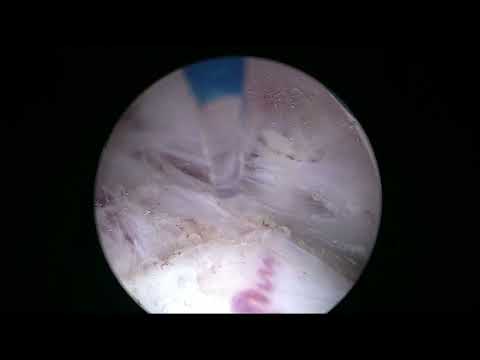
Case 38 of the Real Life HoLEP series, presented as a full operation in an elderly patient with a 90 g prostate. The available automatic captions focus on a systematic sequence and keeping the dissection line centred in the endoscopic view. They also discuss how the use of energy changes the visual appearance of the plane.
A systematic sequence
The surgeon describes an increasingly consistent sequence of movements. The teaching focus is repeatability and orientation during the operation, rather than a quantified comparison of techniques.
What to follow on the screen
The commentary describes keeping some capsule and some adenoma visible on either side of the dissection line. It also notes that the energy itself alters the appearance of the plane, a point relevant to interpreting the operative image.
Documented details and sources
Only details explicitly stated in the sources. Missing information does not mean it did not occur.
- 90 g
Real Life HoLEP #38: 90g Prostate in Elderly Patient — Full Surgery
Source checked: 2026-10-06.
Available transcript · English
Automatic YouTube captions, not clinically reviewed. Names, technical terms and numbers may contain errors. Check them against the video; complete audio coverage has not been verified.
Selected spellings of enucleation, morcellation and holmium terms have been edited. This is not a full audio or clinical review; the original captions remain the source.
They may contain transcription or translation errors; check the explanation in the video.
- hello this is felona sancha and this is the first video of the year 2000 2023 I have been a little bit busy and it's getting difficult to have the time to prepare these videos also we have some technical problems with the ability to record in the operating room so I have to you know edit the video and put some voice to it and it takes some time but this is uh this is an 85 year old gentleman who has a 90 gram prostate something like that and I thought the case was nice because I was having a colleague standing by me and I was trying to explain
- the procedure to him so I think there's some features of this video that are probably nice to to make some points that are maybe maybe quite useful for people who are learning and trying to improve their and block technique so here's the white line as you can see I have marked the white line and now we're going to enter the the planes I think the procedure is getting in my hands more and more systematic and I tend to do always the same always the same always the same and that helps a great deal this is the entry into the plane I think this is something that um you have to start doing without hesitating too much well I see a lot of videos of people who
- take a little while to to enter the plane I think it's very simple if you put your fiber in the floor of the veru you know lateral to the barrel it's right down to the floor and then you start moving in and out laterally like this you will enter the plane very nicely and very fast then if you cut the midline on top of a very montanum then uh when you cut the frenulum you'll have the posterior line of dissection this is what we have now and uh as always the scope should look or try to keep the line of dissection in the center of the image so we can see a little bit of capsule and a little bit of adenoma and the fiber is moving widely from side
- to side you don't want to do little holes little dissections you want to go from side to side with this ample movements to get very broad lines that will allow you to understand the plane a little bit better I um lately I'm telling you know everybody that looking for the beautiful plane you know sometimes it's not easy because there's not always a good plan and there's not always beautiful and sometimes you don't find it so I don't try to find a very beautiful plane I try to find a capsular plane which is defined by a number of things here this is the entry now into the lateral plane so you see what I want to do is to
- to do a little bit of entry into the lateral plane I don't want to I don't want to to to do a very you know certain dissection of the lateral plane but just a little bit you know near this winter I try to go um sorry this is some manipulation of the device I tried to do a little bit of dissection you know like four five six millimeters near the sphincter and then take this dissection uh towards the bladder neck maybe about halfway towards the bladder neck and this will mobilize the the Apex and also it will help us to connect the lateral line with the posterior line here this is the mucosa of the sphincter I always do this uh access incisions
- initially so you want to cut a little bit it doesn't matter if you cut a little bit into their normal these access incisions initially are vertical like here you see and then as you go more anterior they start to rotate or change direction to become more horizontal and then again we're going to gain a little bit more of the lateral plane so here you see I try to go up and down like that to gain a little bit more dissection and always connect the line because the lines are super important if you if you have a nice posterior line that is showing you you know the depth of the of the interface between capsule and anoma and then you mobilize a little bit the the Apex you see the the distance
- that that you create between the Noma and the capsule allow you to enter these anterior Zone with better access better mobility of of the Apex as I said before this is now quite horizontal because the sphincter is right above us and initially you have to cut a little bit horizontally like this to find the the good plane and to follow because we are doing an ascending dissection on the lateral aspect on the right side of the patient and I'm trying to construct the the line of dissection of the lateral plane so you see this line is formed by the convergence of a Noma and capsule when you approach uh you know the edge of of the dissection you find
- this this line and here probably I would I was doubting a little bit if the depth of the dissection was okay so I I was showing my colleague you know if you're in doubt sometimes you can do a little bit of mechanical dissection here we see the beautiful plane you see but the thing is with this with this new Energies when you try to dissect the plane it's going to be altered by by the energy it's going to be coagulated it's going to be you know more difficult to to keep seeing the beautiful plane so you have to stop thinking about the beautiful plane and start thinking that you want to learn to distinguish what is a capsular plane now we're going to do the same on the other side
- here you see I'm deepening the white line a little bit here you see because I want to enter the lateral plane and it's only two four five three millimeters what I need to start developing the the lateral plane you see we had a very nice posterior line and now you see going up and down like that I'm going to mobilize the Apex a little bit and connect the lateral line that I'm creating now with the posterior line again exactly like we have done on the other side and this is what I mean when I say that I'm trying to be always very systematic I always do the same and it seems to work really well for all kinds of prostate sizes and you know situations also for the redo cases
- so but before ascending in with this section we have to make sure that the optical part is released because if you release the apical part first when you go up with your scope you're not putting tension in the in this sphincter you're not damaging this winter so this is the principle you liberate first the most distal part and then you continue The Liberation towards the bladder neck trying to construct a line that you can recognize and a line that you can then connect you see with the uh posterior line so here again you see mostly in this part of the operation the fiber is pointing against the line huh this will change later because the capsule now is quite parallel you know the direction of the capsule is quite
- parallel to the fiber so there's very little risk of Perforating in the beginning of the operation so you see here I come again towards the Apex because we have to cut the apical attachment first here I'm trying to keep horizontal we are um in the white line but we know that this sphincter is right above us and there's you can see a little bit of mucus on the left side uh there you know that represents that we are right at the at the white line level where we marked before and here I'm trying to carefully carefully liberate most apical parts so then we can progress with our dissection toward the bladder neck a little bit more so you see that it's like uh
- uh having to to take a letter to to to with some steps the first step is four or five millimeters uh to start the lateral line and then we take another four or five millimeters and we dissect towards the bladder neck but we always come back and return today to the Apex to check you see here and the nice thing is that when you have uh passed from the lateral to the anterior line which sometimes happens just like that you see there are no more Falls a little bit and then the 12 o'clock fibers are uh shown you know are exposed you see there is some space between their normal and the capsule at the top and now we can easily cut the 12 o'clock fibers so that's my favorite approach to go
- and dissect the lateral plane on one side then the lateral plate on the other side and then when the tip of the anoma is descending because we have liberated the attachments to the anterior capsule then it's easier to try to cut the 12 o'clock fibers I think you have to be careful here to of course to protect the sphincter but also to go up and to be aggressive going up uh 12 o'clocks because we don't want to leave a lot of tissue there okay sometimes you see the capsule looks a little bit flimsy there and there you have to be careful with your targeting you don't want to make a hole in the capsule so you have to Target your fiber so that it uh continues developing the plane as safely as possible
- so you see now we have a line that goes around the adenoma that we can follow all around you can follow lateral planes we can follow anterior plane we can follow posterior plane so now the apical Liberation has been completed now the sphincter is totally separated from the Apex which causes us a great relaxation you know we're not fearing that this sphincter is going to be damaged uh during the operation as I used to experience when I did the three three lope classic technique you know here the nice thing is in in the first 10 minutes it's 11 20 now um you have released the sphincter and then you can concentrate on a careful dissection of their normal circumferentially okay so here
- you know everybody asks about the settings I use and what settings what settings and the settings are going to determine how the energy is coming out of the fiber but the main determinant of how the energy reaches the tissue is the surgeon because you can play with the working distance you know if you fire too far there will be no effect if you get closer you will see some coagulation effect if you get even closer then you will see some disruption of of the plane and then of course if you touch then that will be the most disruptive uh you see here I'm calculating by separating the fiber a little bit if you get closer it gets more disruptive so the surgeon has to handle the fiber at the distance that
- produces the desired effect and I think for for the development of the plane it's very nice when you have an effect and as you see here I was probably explaining things to my colleague um you want to choose the effect that is is going to give you the the feedback you know the you're going to see what effects you're getting in the tissue and then you modulate the distance of the fiber and the tissue to to get the effect you want of course another aspect which is Paramount is the speed of movement of the fiber you see the fiber dissects when it's moving so if you move too fast maybe you will uh realize that uh you're having a nice dissection of the plane but the hemostats is the first passingostasis is not very good
- so you have to find the balance that this is a very difficult balance I often you know get carried away with that dissection and I forget to do you know careful hems does he says as you progress you know the more confident you are sometimes you know you and then you pay the price because you pay the price because at the end of the procedure you have to spend more time doing hemostasis so you have to find your Tempo okay so the speed of movement of the fiber is another factor that the surgeon manipulates to get the dissection and hemostasis he wants okay so here as you can see I'm moving from side to side trying to get a soft uh effect you see the energy is disrupting the fibers that connect the plane with
- the the capsule with the abnormal this is a beautiful sign of that we are getting to the bladder entry but I want to finish the dissection laterally on this side I worked more on the other side and I would like to have a Freer you know on the sides before I open the bladder if you think about it now the irrigation and and here's what you shouldn't do or you see you shouldn't create a new line you know here I was cutting on their normal on purpose to show my colleague you know what can happen when you're learning you know you lose your plane and then you start having four or five lines so try to try to take care of your line you know try to stay on the line so that you can
- progress and you will always have a beautiful reference of of where you are you see here sometimes you think well I'm getting deeper than I would want but as you will see if you've have a good control of the working distance you have a good control of the speed of movement of the fiber and then of course the third Factor related to the surgeon which is Paramount is the targeting you know where you fire your laser in relation to the line of dissection is is fundamental to to to to to dissect uh safely okay so if the effect if the distance you choose produces a soft effect you see it's not a very disruptive effect this is a little bit of adenoma probably a small nodule that
- I want to take out so I'm correcting you see I'm not afraid of going uh close to a very thin capsule because as I said I am trying to be extremely careful using the energy so it does a soft effect you see it's not very disruptive if we open a hole in in the capsule it's going to be a very small hole I remember the fiber measures half a millimeter so and and also you see I try to move the fiber with a speed that allows me to have this you know blowing effect this is like you know I if I was blowing against the the fibers and this this this this air coming out of the fiber was separating the plane no something like that so you want this smooth effect
- because the smooth effect allows you to control really well uh uh you know the depth of of the dissection and the effects of of the laser now of course here now we have to continue with a connection that's an nodule you see that's a nodule so I go outside to get it but I keep very close to the nodial with my fiber so that the energies mostly absorbed by the nodule not by the capsule you see so if you master these three factors you know the working distance movement of the fiber the speed of the movement of the fiber and and you target the laser because if you think about it now the capsule is starting to get perpendicular to the to the fibers so when that happens you start to fire closer to the
- adenoma I put the example of the motorbike driver when he takes a curve he has to tilt uh his body and the motorbike against the curve you know and here when you want to take the curve with the fiber you have to start firing more close to to the adenoma if if you can I mean while before we enter the bladder we have excellent irrigation of the space that we are developing and excellent visibility so it's not a bad idea to check a little bit your hemostasis before entering the bladder because if there's blood in the in the medium you know in in the in the water and the bladder is open then the blood will enter the bladder and then it will be more difficult to wash out so just check your hemostasis
- and check your lines you know it's very nice when you have a a nice line but as you progress often the lines get a little bit distorted and then you have to to try to keep constructing them you know so you get your life easier you make your life easier for the following steps rather than more difficult so that's again you see very softly very carefully trying to come up some some hemostasis as we go and then well you know you see that the fiber is broken there's some it's not a regular surface I think um but with homium fiber breaks a lot and sometimes that can affects the the
- quality of the beam but of course we kind of stop every three four five minutes to to to cut the fiber again and to have a very beautiful beam so we have to work with what we have so mostly I cut the fiber when I see that you know the the beam is not uh helping me or it's making my life very hard but I try to adapt a little bit to the beam that I get you know because otherwise it would be you know too slow and and you'll see that this uh prostate will the whole procedure the whole whole app will will take about 40 minutes and this is quite standard you know for for this prosthetic size sometimes we do faster sometimes a little less fast depends also on the
- quality of the more solution but this this and block technique has one feature I think that makes it very attractive and this is that you have good visibility and you can work constantly you see there's no need to stop so we stop very little and most of the time the procedure is advancing because you know every minute things are better than the previous minute so of course we can do some composing time but it's it's really minimal posing time so the operating time is used in the dissection rather than in you know trying to find out where you are and things like that so here I'm trying to carefully stay uh stay in the plane you see that sometimes visibility is not so good but if you trust your movements
- then you know with practice you can continue moving and you know where you are exactly as it happened with with DRP you know sometimes visibility was compromised and you would cut uh because you would know where you were huh so here this is the the bladder neck on the other side so I tried to follow the curve you know that the fibers the circular fibers of the latter neck are showing here the mucosa you know homemium laser is very explosive in nature and which means that it makes a disruptive dissection rather than a clean cut and when you come to the mucosa often the mucosal vessels are opened and there could be mucosal bleeding so you can as you cut it you can spend a little bit of time trying to coagulate
- or you can remember to coagulate the mucosa before moving on to more solution because because otherwise you will have trouble with visibility during more solution and many times these are the vessels that bother you with visibility with more solution so here again you see I'm doing now more of the posterior line and I'm trying to connect the dots you see I'm trying to connect the lines I'm trying to see where I'm going here maybe I was going a little bit into the capsule but now we are correcting it's always it's always like that you have to correct if you find out that you're going too deep and if you go into the anoma then you have to correct as well
- so the thing is that you work in a way that allows you to correct before it's too late you know what I mean so if you do a dissection that is has a soft effect and you don't deepen too much you're not very Brusque uh uh you know and Reckless doing the dissection then uh when you see that you're getting into the castle you have time to correct and that's that's the key you know trying to avoid I I tend to say small perforations are allowed you know what is not allowed is to make a big one so you know just continue with your dissection try to focus on keeping your lines recognizable so you can go from
- from side to side that is a small nodule and again you see I tried to remove that tissue if I can I'm not afraid to to test you know a little bit deeper uh because I know that if if I'm going too deep then I will have time to correct and and this is this is the key to to this procedure you see constant advancement uh in the operation you know don't lose time uh try to work not necessarily fast you know but constant and if you constantly can push the the operation forward and I have to say that doing hemostasis is a very good idea because it saves you time most of the times all the time that you spend doing
- hemostasis during the nucleation phase uh tend to two to be time saving at the end because when you finish you carried a better hemostasis and then you can morcellate you know right away almost right away after finishing the nucleation and here again you see that there's some tissue that looks a normative so I'm going to try to take it out sometimes I make a mistake on what I see as a normal tissue is a little bit of the capsule but you can also vaporize small amounts of tissue if you want oh this laser has a Precision effect so for for minimal pieces of tissue you can probably evaporize them and here here when you when you're under the adenoma here's where you have to be extremely careful trying to keep the fiber anterior anterior to
- to avoid you know firing against the caption deepening in the capsule because now the capsule is almost perpendicular to the fiber so if you if you choose to to use a very soft effect like this one you see a very soft effect that develops a plane but doesn't go too deep you know you can probably um let's check the uo there it is there's a funny little you know calcification near the uo but I judged in this 85 year old man probably it's not significant we will keep an eye on him but um it didn't look very bad to me and uh I
- decided not to not to touch not to biopsies or close to the to the uo the fact that it is bilateral and [Music] um bilateral and near the U.S you know it didn't look like a tumor problem to me it looked more like probably some kind of maybe maybe during mixture and nutrition the the U.S were contacting with the lobe or something like that so here you see I'm firing up you see upwards remaining very close to the to the anoma remaining and trying to cut some of the fibers superficially at the end you have so much control you know that
- it allows you to work uh with with great safety here usually [Music] um yeah I'm lifting the the lobe and pushing it in you see so the prostate is rotated a little bit and that gives me a lot of space to to see you know the final fibers attachments of their Noma at six o'clock that's the uo there this side and the funny little bump with some calcifications it looks more irritative to me than than anything else and some more hemostasis before cutting the last attachments sir
- following the smile line it's like a smile following the curvature of of the bladder neck and uh well this almost the end of the nucleation uh it's really a piece of cake as we normally schedule five or six lately six cases in one afternoon in one session you know evening or afternoon session we start up around 3 P.M and we tend to finish around uh nine nine PM something like that so basically we can typically do one case per hour which means that the operation takes 30 40 45 minutes and then we try to be very fast uh doing the
- changes dco was a little bit hidden there and I was looking at it so you have to be careful at the end when you're cutting the the attachments to try to visualize the uo There It Is Well very very close and to protect it so it is not hurt by by the laser there we are that is the final attachment being cut and now I will spend uh some minutes perfecting the hemostasis as you can see this this idea of not looking for the beautiful plane but just you know recognizing the capsule you know maybe we can go sometimes a little bit deeper than if you
- you know where to remain in the perfect plane and uh but uh you know this is a distended fossa when when you stop the pressure in the bladder this will all collapse and uh clinically you know we remove the catheter the next morning patients do really well um so as I said maybe sometimes we go somewhat you know deeper in the peripheral Zone in some cases but uh the thing is if you don't perforate it really doesn't matter too much and uh you know sometimes I think the prostate is like an onion you know sometimes you can find uh you know several planes that are very
- close to each other it's like do you find the plane and then one millimeter less deep there's could be another plane and then one millimeter deeper there's even a lot of plane that you could be developing so uh yeah this is this is how I I do it I I I look for the for the characteristics of the capsule that tells me this is capsule I'm not living at normal behind maybe sometimes I'm taking a little bit off the capsule of the peripheral Zone tissue but uh here we are that's a line that I marked perfectly respected the mucosa is perfectly circumferentially uh covering the sphincter so I know this patient will be perfectly continent after the operation in terms of sphincteric function
- of course sometimes patients can have a little bit of urgency and you know if they had urgency before the oppression it's likely that they will have it for a couple of months or three months after uh but they will get better but they're not leaking uh you know when standing or walking or coughing or sneezing or something like that so they're usually very happy patients especially when they're very obstructed all these catheterized patients you know they're super happy that the catheter can be removed the next morning and it's it's really a joy to to do holip I think when you start doing it you start loving it so much and uh there's a positive feedback by your patients you know the rate of complications is low when there are complications
- um relatively easy to manage I would say that um bladder next stricture can happen sometimes but uh when it happens we do we do a bladder neck incision and corticoid injection under sedation so I try to minimize you know these two to the patient and say okay if you had a colonoscopy you know it would be just a sedation and and we're going to do something like that just to check that the bladder neck opens and I I recently heard from the Polish a urologist who does a lot of stones and and holep that in his experience these blareness strictures
- don't tend to record and I think it's true I I in my experience uh it's quite hard to see a recurrent bionic structure you know when they have a blood and extraction you do an incision then they tend to get better so this is now 32 minutes from the beginning of the operation so it was relatively nice procedure sometimes I Rush the procedures a little bit more and then they're not so pretty you know they're not so nice to see because it's it's going very fast and maybe it's not so educational uh as we're trying to uh to to let's say progress in the lists know that we do but I was with my colleague it was the last case of the day and we were you know enjoying
- discussing the you know subtleties of of holy no and this is uh now the more solution this is the pirania system and here I'm trying to keep the the blade a little bit inside so I can see these black Triangles around the the blade that will help me um be sure that I'm not close to the bladder okay so more slisha also has improved a lot and uh it's only in the very very large glance when we do you know more than 200 grams where it becomes a little bit tedious but it takes a little bit longer um but in general it's a relatively fast
- part of the operation for the average prosthetic sizes which in our hands I think it's about 65.75 gram prostates on average so so this is it I I hope you you enjoyed the the case I can see that polyp is becoming more and more popular there's more and more people doing chromium and other lasers in nucleation I still think that the distinctive advantage of holmium is that the peak power of these later uh opens up the plane better than the the other lasers the the twilium fiber laser and the
- petroleum post lasers do not have this feature that I find very nice and very reassuring and uh but they have other features they probably the hemostasis of these lasers is even better than what we get with uh pulse modulated homune lasers but maybe the plane is a little bit more difficult to follow with with these latest who have such good cutting properties but not so high peak power that uh you know doesn't uh doesn't open the plane through the path of least resistance which is the the interface between the capsule and the anoma so
- yeah it's very interesting to see the interest I get a lot of uh emails and people writing me already sharing me and thinking for these videos that are they say reassuring for them that they can learn and of course they can and they they're happy after some time and um yeah I think this uh subtle Concepts that I'm discussing are Paramount you know sometimes it's difficult to communicate what you know and uh but this idea of developing the lines you know the lines in the right depth and then once you have a circumferential line around the anoma just follow these depth towards the bladder neck carefully you know aiming your laser uh
- depending on what you find so you don't go into their Noma and you don't go into the capsule I think it's a concept that probably it's going to be also very relevant for for the new laces for tfl and pulse the tilium lasers because um you can Orient yourself very well you can have orientation with this following these ideas if you understand this concept of the lines and the development of the lines and connecting the lines you know the posterior with the lateral the lateral with the anterior and um and I think and block is also gaining adapts you know more and more people are starting to see them block
- is a very nice approach also the the limitation of the interface between this sphincter and the adenoma the white line the protection of the mucosa these are Concepts that slowly are becoming more and more you know acknowledged and of course people can see in their experience when they start applying these principles they don't see uh stress incontinence if they used to have before so that's a very welcome very welcome change and uh also the unblock is fast one of my colleagues started doing a two log three log technique despite my insistence but he joined me in Bulgaria to to see a session we saw like you know 25 cases there and he started applying the method and
- then block technique and his surgical times were you know shortened so much that instead of doing two cases in their normal list he could do four so now he's defending and block as well and also he he values that when this winter is released you relax a lot so it's more relaxing to to to release this thing too early and know that this patient will you know have a almost zero chance of incontinence after after the operation and this is uh well more solution in progress I tend to keep the the blade in a safety position you know what we usually say in the center of the bladder
- far away from from the bladder wall it's not the center of the bladder but it would be more or less the center of the opening uh uh in the bladder neck maybe one or two centimeters inside the ladder this is the safe position I like to to see the the peace dancing you know moving from side to side if you don't see the mouth of of the of the blade that's a good sign that more solution is sufficient and also it's a good sign that there's not much water coming out so you can confidently keep pushing the pedal unconfidently moving forward with the nucleation here this is the the thing the most later can despite we we throw one piece into the
- bladder and much later can cut it into many pieces so often we see that uh there is a lot of uh nodules that have been um [Music] selectively cut away from from the big piece of anoma I tend to say that they're normal is like a peach you know if if you have a harder nodule the most later will eat the meat around but it will respect the nodule and then you will be left with these beach balls at the end you know the harder nodules uh that sometimes take a little bit more time to to more slate and here you see I'm playing the catch and more slits you see I go near the bladder and then I lower my hands so the tip of a much later goes up you see here
- I go down to pick the piece with the suction pedal only and then before I activate more solution I lower my hands so the tip of the much later goes up of course don't lower your hands so much that you get up to the bladder neck on the other side because you could be you know inadvertently more solid era against the bladder neck so thank you for your attention I hope you enjoyed the video I hope to be able to post some more all the best to everyone