
Surgery
Real Life HoLEP #40: 250g Giant Prostate — Unexpected Intraoperative Findings
Dr. Fernando Gómez Sancha · ICUA
Dr. Fernando Gómez Sancha · YouTube
Language: English. YouTube audio metadata.
Surgical content for professionals. Contains footage of an operation.
Playback connects to YouTube. Your search query is not sent to the player.
About this video
Based on automatic YouTube captions; not clinically reviewed. Check technical details against the video.
Case 40 of the Real Life HoLEP series, in a prostate identified in the title as 250 g. The available automatic captions discuss the white line as a reference, returning to a recognisable dissection line and the effect of laser distance and movement. The title mentions unexpected findings, but the selected passages do not establish their nature.
Maintaining a reference during dissection
The commentary uses the initial white-line mark and a single recognisable dissection line to orient the operation. It emphasises being able to return to that reference as the dissection progresses.
Laser handling in the commentary
The cited discussion considers working distance and movement of the laser as determinants of its tissue effect. It does not provide a validated universal setting or a comparative outcome.
Documented details and sources
Only details explicitly stated in the sources. Missing information does not mean it did not occur.
- 250 g
Real Life HoLEP #40: 250g Giant Prostate — Unexpected Intraoperative Findings
Source checked: 2026-10-06.
Available transcript · English
Automatic YouTube captions, not clinically reviewed. Names, technical terms and numbers may contain errors. Check them against the video; complete audio coverage has not been verified.
Selected spellings of enucleation, morcellation and holmium terms have been edited. This is not a full audio or clinical review; the original captions remain the source.
They may contain transcription or translation errors; check the explanation in the video.
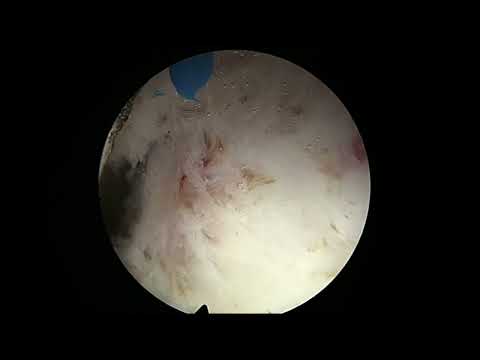
- hi this is Fernando Rome Sanchez again and this time I'm going to show a polyp I performed recently in a patient who came with an ultrasound estimation of a very large gland uh around 250 grams uh on on the ultrasound estimation which as usual showed to be a little bit smaller so this is the endoscopic look you can see how the veru has a very long um a very long tail because he had Noma when it grows pushes downwards and then the barrel is not anymore a good indication of where
- the sphincter is so sometimes it's uh two three four even well I guess it's more two centimeters uh also away from the sphincter you see the big um apical lobes that's me putting the fiber inside and that's the edge of the sphincter so as always I start trying to Mark the the white line so basically here I'm marking the limit between the sphincter and the Apex of their normal always you know checking and I don't think you have to be particularly you know extra careful to do the white line more inside you
- know because basically the plane is where it is and if you try to go one centimeter more inside to do this mucosa incision trying to play it safe the thing is that when you develop a plane mucosa might rupture uh not through your incision but following that anatomical plane so I think you have to get very close to the to this winter to mark this mucosal line and often in the bigger glance like this you can find that there is mucosal bleeding at the beginning so my advice is try to complete the mark of the white line as much as you can to have a reference because you want to
- have an easy reference to recognize the applicant limit of of the operation and then just go inside you see that's a white line once you have done the white line there is a reliable Mark of where is this limit so that looks like a relatively good plane let's go to the other side now and repeats the maneuver because we want to develop a posterior plane before we move on to trying to release the Apex I think this is called early apical release because the release of Apex is performed early in the operation but it cannot be immediate you know you need some access
- if you want to reach around the center around the Apex circumference circumferentially without causing stretching and and probably damage to the sphincter so that's why I think it is important to mobilize a little bit the Apex so it can move freely and that will reduce the tension on the center and here after entering the plane in both sides this is the connection in the midline cutting the frenulum of the barrel and trying to stay in in a plane that is not you know going too deep because if you cut deep over the very often you're going to see that you're cutting the
- executor reduct which I think is probably not so relevant not so important but probably it is better if you don't if you don't cut it occasionally very very seldom we have seen patients commenting on painful ejaculation after after whole episode maybe maybe it has something to do with cutting the the ejaculator notes I think we see very few patients with this complaint and we see more of the you know during the dissection sometimes we cut the this duct or the um maybe a depicts or maybe even you know
- closer to the bladder neck and I would say that we cut them much more often than we get complaints no but uh in in some patients it might might be it might be a course for this for this complaint okay so here uh this is the access lines you know it's it's difficult to explain but if you want to access the lateral plane which is what I'm doing now this is what I call the mobilize and connect face here I'm mobilizing the lateral aspect posterior lateral aspect of the anoma and I make sure that I connect the line of dissection with the posterior line so we always have a nice reference
- of where we are trying to keep only one line so you don't want to do several Lines Just Keep keep on your line you know and correct if you go too deep you have to aim your laser a little bit closer to there normally if you if you um see that you're leaving tissue behind then you have to go out and try to correct but try to keep a single line that you can always recognize you can always come back to as as a reference and this is a careful Ascension towards the 12 o'clock region you see here initially you have to make a cut on the tissue even if you cut on their normal it doesn't matter this cut is going to open some access you know you will get gain access it
- will gain access and slowly you can continue the immobilization you see that I don't stay too close to the center I want to go maybe one two three I don't know centimeters in the direction of the bladder neck because that is what gives Mobility to the Apex you know if the Apex is attached to the capsule it's very difficult to find the elasticity you know in the tissue to be able to access the 12 o'clock region without causing you know stress and Trauma so this mobilization he here you see that as we Ascend it becomes easier and easier to to see what's going on to reach the 12 o'clock area so of course always you have to have in mind that you have
- three three factors that you have to all the time you know think about during the operation and that is the working distance working distance will give you uh a more aggressive or less aggressive effect of dissection or cutting then you you have to take into account how fast you know you're moving your fiber if you've moved slowly you will give the energy time to to coagulate we move faster of course you you will progress faster but I think speed in a nucleation is not achieved by rushing you know the operation
- I think it is achieved by developing the skill you know your skills so you can work most of the time you can see that we pause a little bit the laser action for some moments but we keep the the pausing time very very very uh to the minimum so you don't want to to stop too much here I probably was doing some explanation how uh distance is important to to do the tissue effect and also if you don't move the laser there's no effect so these two things have to be computed okay here I think I had some trouble with the leg you know sometimes you want to reach uh laterally and you have some trouble with the leg so I probably had to move it a little
- bit to to be able to gain access and uh probably that plane was not good enough okay so here you can see how the third Factor comes into play here is the distance there's the movement but also you need to be good at aiming you know so normally in the first part of the operation you're going to aim generally speaking towards the line of dissection but in cases like this where you find that you were losing the plane you were you know cutting into the anoma you you have to actually correct correct this plane here this is about mobilizing entering the lateral plane and mobilizing the Epic so this is mobilization and connection you see we
- try to connect my lines so I'm not I'm not getting lost you know and there there is some apical tissue it's somewhat difficult to reach because of the you know lag interference as I said we have one of these movable you know leg supports that you can handle yourself uh through the through the drape and they're very very useful for this for these cases you see but instead of forcing too much or you know making a lot of tension in the tissue you you know patiently try to gain a little bit uh more and more and again I think I was explaining during the case how it is important to
- think about how the distance you see firing outside of the line firing against the line or firing uh what what I was saying is if you think that that's a false plane this is a good plane so we correct there's no problem and then we try to progress towards the interior part carefully that is obviously a noticed issue so we have to keep going uh you know peripherally externally to try to get a better idea to try to understand where the plane wants to go and so that we don't leave abnormatus nodules sometimes we see them at the Apex and they are a course for you know abstraction over time and I have had to reoperate some
- patients not very common but it can happen a patient where you remove a lot of tissue will develop substructive voiding because there's some tissue left behind so that's again you see coming up ascending you know going around the apical tissue but after proper mobilization you don't want to go in there you know trying to get up and make a lot of force and make a lot of tension and what you want is to progress carefully you see when you go up near the sphincter you have to be careful typically I I hold a camera and I hold the the scope and the fiber with my fingertips I don't want to be stressing you know doing fours very very rarely I do and if I do some
- Force it's more like a I don't know how to say sometimes you have to do a little bit of progressive careful um very careful Force you know force is not it's not a good idea in endoscopic procedures and I think this this uh you know careful approach to the Epic space of base of there was a tweet recently where someone said I do in block and I have stress incontinence well you know if that happens the thing you need to try to you know evaluate how careful you are while dissecting the Apex and pay attention to detail because we really get a very low incidence of stressing goodness sometimes sometimes
- it happens you know but but of course it's not uh 20 30 of the cases it's more like two or three percent one or two percent it's really a problem that uh when it happens it's usually mild incontinence and of course uh uh you know we are not uh able to prevent it always but most of the time you know when you try to do this approach and here you see the advantage of coming from both sides is that now you can see you see the prostate has descended a little bit and you can know where to start cutting the 12 o'clock tissue and where to finish your cut so this idea of releasing the epics early I think
- is a good idea to protect uh continents you see we don't pay any effort to leave tissue in Apex I think it's not necessary or you know we we don't concentrate on that we don't do any particular measure to preserve apical tissue anteriorly and we we get good continents because I think it's more this careful approach you know mobilizing the Apex so it can move towards the side it gives you access to to the to the 12 o'clock area once the sphincter is totally released from the Apex I think
- the stress to this interest must less than when there are attachments and you're moving your scope around and here you can see how with this technique you can work almost continuously you see there's no need to stop you should train yourself to be able to dissect when you go up or when you go right and keep dissecting when you return you know to the to the some people stop go back to the starting point and then lace again of course sometimes you have to look and see what's going on but you see the pausing time if we measured it it would be very very little and that is what gives you the speed okay there's no rushing
- I don't know what happened here maybe you know someone asked a question or there was some so I did a brief stop during the operation but uh what I'm saying is you should work with the tempo that allows you to dissect the plane of course you want to find a nice balance and be fast but not too fast because if you are too fast often the quality of hemostasis is going to be compromised also you can see that I'm doing very wide movements you see when I start going up I keep going up and I follow the lines of the dissection trying to keep in mind what is the working distance what is the speed of movement
- are and where do I aim with my laser to get the effect I want of course uh at the beginning of the operation probably the first half of the operation the fiber remains mostly parallel to the capsule so if you fire against the line of dissection there is very little risk of perforation but as we approach the bladder neck there is a change in the direction of the plane and it will become perpendicular to the fiber so in that situation in the second half of the operation you will have to Target your laser closer to the anoma because when you target the laser close to the anoma very little energy reaches
- a capsule maybe some coagulative energy and and then of course uh you uh protect her and prevent the possibility of a capsular perforation um you you need to be very conscious of the different effects that you could get with the settings you choose to use and then you have to make the most of them you know trying to apply the effects in a way that makes you progress safely and remember to do wide movements if you do white movements like this going from side to side you will advance the line it will be a
- uniform line so you see if you are aiming towards a uniform line it's much easier it's much easier to keep the the right distance you know the right working distance if you do a very irregular line you know sometimes you will get too close sometimes you will get two I mean fire from too far maybe not be effective and also you know keeping the lines healthy and nice and structured is hard worker you have to decide you know how where do you go next what do you do next but trying to keep a coherent line that
- will uh Orient you and will help you because often very often you know just by looking at the anatomical characteristics of the plane you cannot tell if you are in the right plane or not but if the line you know in some areas you can see the fibrousness of the capsule you can see how you know capsular this plane looks so that means that if you follow these lines and it is coherent you know where you are we all have uh in our minds you know we all have how these lines go normally in in the prostates and I always recommend to think about an MRI
- of the prostate in a transfer section you know you can see you can somehow have the intuition that where the line is is going to go and or how is it going to go and then of course you have all these anatomical details and then you have the coherence off of the line um often you know the capsule is quite White and The Enormous more yellow so we we have to be careful here you can see how I'm starting to Target the the Noma and you will see it it's very very subtle but if you target your fiber a little bit closer to the anoma you will see that even when the plane changes Direction
- you can safely um uh progress with your dissection without a Perforating so it's a Mastery of working distance and understanding and anticipating the tissue effects and here I think we're getting close to see this vertical fibers that you know tell us that we are close to the entry into the bladder and that's again a very nice moment in the operation because you have entered you have entered the the bladder and now you have a nice additional reference to to know your Anatomy I think this is especially
- useful when you want to when you want to to do the posterior plane near the bladder neck so I always try to say to develop the lateral plane enough so that you can see the bladder neck uh there and that will help a lot if you have this on both sides then tackling the posterior remaining region is quite easy and here of course we have to try to see where the uo is there it is so there's quite a lot of distance and um there we are trying to do the same thing
- on the other side huh going from the posterior aspect towards the anterior trying to following the lines but you can see now how the laser fiber is preferentially very very close to the anoma you can see how by keeping the fiber there you can continue with the dissection and not deepen you know the into the into the capsule so you see you keep your fiber very very close very very close and if the capsule gets energy it's more coagulating energy than disruptive energy okay that's fundamental you have to master this subtleties of how to manipulate the fiber and how to make the most of the
- settings you you choose to use many people ask me what settings you use you know and I think settings is just how the energy is coming out from the fiber and more much more important than that is how you manipulate the fiber to get the tissue effect you want I always say that small perforations are allowed meaning that sometimes you know when we do holep you will get very often you know in some area in some point you might get some deepening of of the plane some deepening into the into the peripheral Zone um even you know you might see some
- little fat but you want to keep them small okay so recognizing that you're entering the peripheral Zone and being able to re-target your fiber closer to their Noma to prevent uh going in I think it's it's Paramount so again you see you have to work hard to make your lines uniform to correct the regularities here the fiber you see it's mostly close to the anoma trying to cut the attachments between a normal and capsule but trying to keep the effect of the energy on the capsule very very um limited no very not aggressive
- and also regarding the attitude of the surgeon you know you have to be very relaxed this is a very technical operation where emotion or anxiety or fear you know has no no place so you are a technician and uh you will be very very analytic and very very observant of what's going on and you take the right decisions during the operation to make it progress don't get anxious don't get you know stressed because it can be a very relaxed operation a lot of fun you know to perform and just you know be technical huh and if if
- something happens that makes the procedure unsafe for the patient you can stop Buddha turn you come back another day you know and this probably might happen at the beginning of your experience but then it will happen you know less and less often it is very very rare that I have to stop an operation because something bad happened but I am absolutely convinced that I will do if if I need to so I'm generally very relaxed and very happy performing uh holep using the energy and you see if you can carry a nice hemostasis like this it's a joy it's a joy to perform and interestingly you know sometimes the this final part of them block approach is a little bit tricky in the
- sense that you have to achieve gains in in Mobility you know progressively and strategically to be able to enter the posterior plane and reach the bladder next so here for example if you don't liberate if you don't release this this attachments of the Noma to the bladder neck you know the mobility of that normal is is quite low it's quite bad so you know the approach to the to the posterior aspect is is very Progressive and you have to release the attachments around it uh in both sides in order to be able to get there without using a lot of force and without doing traction without endangering you know traction also is a bad idea
- when you do hola because in some patients especially in the patients with prostates like this with very large prostates you will risk damaging the capsule if you do Force you know it's a very thin capsule sometimes I don't know it might be two or three millimeters you know thick in in some cases so if you push too much if you do Force if you try to do you know hard mechanical dissection things like this you can you can you can perforate so I like to be able to dissect with the laser you know not needing to do mechanical dissection here again you see we check the position of the uo and every every minute of the operation things get better every time you release a little bit of
- that attachment of the anoma to the capsule the axis gets improving so if you find that there is an area where you can hardly access go somewhere else and release somewhere else because the mobility of that normal will be constantly improving and you will find your way I understand this could be a little bit difficult for beginners you know but my advice is to go where it's where it's easy to work and then you know the difficult areas will become easier so I guess for those of you who have watched more of my videos this is just repeating the same mantras and the same ideas but I think they make sense here you can see I'm trying to see if I can
- push their no mind to the bladder and and that happened I could push a little bit of that side and now the other side is more open and again so this is a nice trick for the end of the operation if you see that the attachment of the abnormal at six o'clock is not so bad it's not so big you can try to push gently the one of the sides of the unknown mind to the bladder and then the other side will get much better access and space never push too hard because if you push very hard you can break the capsule and you see all these attachments if you're pushing the contralateral side this attachment will pull from the capsule and might open uh
- a perforation you know so here again you see always until the end try to do lines that will allow you to recognize uh where you are keep hemostasis if you can all the time you spend doing homeostasis while they had no mice in the fossa is a good idea because if there are numbers in the fossa the irrigation irrigates very well and when you push it in the bladder then all the bleeders that you have in the capsule are going to throw blood and the irrigation is less efficient you know at that time so here I wanted to push slightly more on that side and again you know we gained a little bit more of Mobility and
- yeah you keep on going you know don't don't rush it don't lose your temper you know your patience just keep going you know accept that the operation will need the time it will need here often I change the fiber to six o'clock uh towards the end of the procedure where's the uo it's around there somewhere just a little bit elusive ah there it is and the other side also quite separated from where we are but it's nice to to be able to see where it is and sometimes it's funny yeah there it is that's a little bit hidden so now the Nomas flipped completely into the
- bladder and uh just we have to cut the attachments at six o'clock you see so the prostate was not as large as advertised you know I will show you at the end of the video the pathologic report I think it was 150 3 grams of that Noma but you can see that took 30 minutes 32 minutes to a nucleate it and I never rushed it too much it was not a crazy um you know nucleation it was just a very very efficient step-by-step Liberation and good hemostasis as we go uh
- of course you always have to check the mucus at the end you have to get in and look and make sure because I think this is where most of the visibility problems with more solution um can happen you know if you you don't go inside and have a look at the mucosa often you might miss some leaders that are not so easy to see from the inside of the fossa and uh it is very nice to more select when you have good visibility and good hemostasis and it's very stressful to more slate with bad visibility and bad hemostasis so my advice is to gain a good hemostasis before rushing into more solution with experience you are very safe
- morcellating even in low visibility but that comes with with time and understanding and I have to say the feeling of morcellating with low visibility is not uh not nice it's much better to to have this good mucosal control here I am using uh one joule I think 35 Hertz and I I chose to use a long pulse you know the long pulse is very hemostatic and the low energy makes it not too aggressive you know against the tissues so the main effect is is more hemostatic than disruptive you know there we are so nice fossa nice kiss
- nice progression and and I think this is how a nucleation should look you know you should you should um I don't know tend to improve your skills so that you are able to um progress steadily you know no need to rush and of course make a very very very precise use of the energy to achieve the effect you want um reading you know to me correctly is is important and this is something that doesn't come easy at the beginning you know if you see two or three cases you you will feel lost you know if you try
- to do it yourself with such a short uh experience so my advice is to see a lot of operations to see a lot of videos you know to do spend the time there's an American colleague who told me I lost 10 pounds watching your videos and I said how come and he said well you know I use the static bike while I watch your videos you know and so I lost a lot of weight so this is the spirit I think watch videos you know try to try to learn uh from everybody and [Music] um of course um there's a lot of people now publishing their videos which is great but you have to try to um
- be aware that there is it's very easy to publish a video but it's very difficult to to have the the knowledge and the concepts and to have the sound advice so you should listen to what people says critically even to what I say because as you know expert opinion is is the lowest form of quality of evidence but you can see that the sphincter has been very very nicely preserved and because I is covering this sphincter and we have managed to to perform a very very carefully nucleation with very very careful manipulation of the scope without traction without aggressiveness you know very delicate dissection and uh despite the apparent could him stasis I'm a little bit
- thorough to try to especially in the large Clans you know in the large glands you need to be as thorough as you can be to to ensure that you have a good hemostasis patients really appreciate this when in the post-operative period if you can get a little bit clearer urine I don't think that this is going to cause you know irritative irritive symptoms even if you think about it we've been lazing all the time in the force and they're still areas that look uh alive you know and bloody and red so that is I think a proof of how shallow the penetration of the of the laser is so so
- that's nice now I'm changing the I'm changing the laser System Scope for the nephroscope this is the Maneuvers needed to change because we will need a nephroscope to introduce the more slation blade there we are open water [Music] I I tend to use only a single irrigation Channel many people use two trying to maximize the entry of water into the bladder and trying to prevent the collapse of the bladder my extreme suction but what I do is and I think this is a you know decision that you have to take carefully what I do is uh try to make sure that I
- only aspirate when the mouth of the more selector is not visible okay so here you can see that the tissue is covering the mouth of the Morse later so there will be a lot of tissue coming out and not so much water so you know when you see that there's no engagement of the most later with a tissue I think you you should try to stop sucking water because the the bladder will empty very fast if you keep the blade rotating and the aspiration aspirating for too long you know before the the bladder empties and also there we are it is true that at the
- beginning of the modulation of large glands this suction has more trouble trying to move such a big mass of tissue you know and if you think about it the blade can move the piece because it's floating in the bladder the blade has a mechanical effort so has a mechanical movement so it's a hard transmission of energy to to the adenoma and when it's moving to one side there are no nice thrown towards that side but then the suction has to keep it and it is more difficult I don't know what happened oh there he goes it is it is more difficult to keep the they are normal attached to the to the blade when it's a big big piece but of course very fast it will get
- smaller and the ability of the suction to keep the engagement will increase this could be you know pointed out as a disadvantage of the n-block approach but I have to say with this fast marcelators it is just a relative problem even in this very large glance we can achieve relatively fast more solution rates and but you can see the joy of morcellating with with good visibility you know uh here as you can see I push the the blade a little bit inside the bladder because I don't want to be too close uh to the tissue and I really like to be able to see the two
- little triangles lateral to the blade in the lower part of the image you see when you see black color there that means that you're far away from the bladder so there's no no danger of catching the bladder mucosa sucking it into the more solution so I I really like to work like this some people are afraid to push the tip too much into the bladder because they think that this could be dangerous but I think it's safer actually when when you have some reference of where you are in relation to the to the bladder mucosa sometimes you will get a little bit scared because you see proper mucosa no being more slated and that's usually
- the inside of the adenoma you know the prosthetic urethral mucosa or the middle lobe mucusa but uh of course you will get used to eat and and we use quite large containers to to gather the water that comes out there's a filter that catches a tissue and it is a five liter container so we have had to stop much less during more Solution by using this larger containers so if you can find them you know the five liter ones I think it is an advantage to to be able to modulate for longer without having to change some more
- Slaters do not need this and you don't have to stop uh but well reducing the number of stops is a is a good idea there we are you see slowly we're starting to eat a tissue this also takes time and you have to be relaxed you know enjoying it and not get anxious you know sometimes if you have been very stressed during the operation and that's why I don't recommend not to be stressed you know just have this technical mentality then you can get very tired uh very wasted to more solution and more slation needs all of your attention you know so
- that's why you need to develop this calm attitude towards the nucleation and um also try to you know fall in love with it enjoy it of course we have a hard work uh surgeons you know we have these lists of patients and we have also to go through the hardships of life you know like anybody else you might have trouble problems at home you know any any kind of problems you know and then you have to come to the operating room and let all these things aside and at least try to enjoy the the moment I always think in the philosophy of of the medical attention no this patient and all has lived in the world for many
- years and then your paths cross and in that moment you're going to try to help him with what you're doing you know and then whole expertise of your life the whole effort that you did to to study medicine you know to do your residency all those you know nights with uh or you didn't sleep because you were on call you know all the learning from your Masters and your colleagues you know everything that put you there at that precise moment is there to help these patients so um I think it's beautiful and I don't know I it's very nice also of course when you have experience
- to you know get rid of the stress you know that comes with with operations so that's why also I recommend very very much to have a trained team you know if you can rely on your team if you know that they're going to respond if you know that they can help you fast they know what they're doing you know they're not going to forget to give you water for irrigation and things like this the more structured you know the procedure is in your operating room the more motivated people are you know in my team I think we're all quite proud that we can you know perform this operation with such level of uh uh prowess side I think it's the word uh
- I don't know we are proud and I'm proud of my team you know that I always tell them they have to be present in the operation not not in the operating room they can be present in the operating room and their mind could be somewhere else I need them to be engaged in the operation which is sometimes difficult because we we do sometimes long lists with many patients but I try to keep them motivated and I am demanding you know as a responsible person in the operating room so I point out when they forget something or when there is you know something that doesn't work well I try to maintain the standard as high as possible of course I tell them when I get angry you know it's not
- personal when I tell you you know this is not good enough it's not personal don't take it personally it's it's we we have to work as a team you know with the highest possible standards to take care of the patient and we cannot afford you know mistakes and forgive uh to forget things or you know because they as you know you know if you forget putting water in the bladder there might be some trouble you know and uh so but of course if you have this team then you can just concentrate on what you're doing you don't have to keep control of everything that happens in the operating room because it's a lot of people engaged in I always say that four eyes see better than two and for example when you change the instrument
- to start the more solution you have to remember to open the water and I have instructed my nurses to make sure that I do so if I forget and sometimes I do you know maybe I start noticing that the the vision is not clear and then I realize no but most often they tell me open the water doctor you you forgot you know and that's uh double check you know and uh so you try to build in safety measures in in your practice okay sometimes if modulation doesn't progress very well I like to use this Japanese or all right Asian approach to more solution which is to put the more Slater upside down and uh you know their normal tries to flow tries to float
- tries to go up and the most Legend sometimes uh goes well you know often as you know more selection eats selectively the softer tissue and dissects a harder tissue so it looks as if in the lower part of their no mother was more heart tissue and just by changing like this while you get a you know some feeling that you're progressing with your nucleation this is just a little twist but sometimes it can be very helpful you know once the a normal gets smaller also I I like to get in the fossa like this you see and then again this is more even more relaxed than Marshall eating in the bladder because
- it is very hard to catch the the capsule and make a hole in the capsule so of course these these things could happen now but what I mean is that you're a little bit more relaxed when you more slate in the fossa and also the the walls of the fossa contain their normal so it doesn't it moves freely but it doesn't if it wants to go away too far it doesn't you know because it's inside the fossa and then it's much easier to catch it again and more solution efficiency is is very good even when their last tissue that you morcellate is the hardest I always tell the example of the peach you know if you eat a peach you eat the soft meat and at the end
- you're left with the bone and the most latest behave similar similarly so it chooses the soft tissue but when it reaches a very hard nodule just cannot chew it properly and then at the end you're left with the heart nodule you know this is the beach balls that we are referring to it is true that the perennial more Slater can chew almost everything you know sometimes you can see these nodules how they are dissected you know from the rest and then you're left with the with the hard nodules so another teaching from this video is that ultrasound estimation of size is not very accurate and
- most of the times when they tell you 300 grams is not true you know it's not not really 300 you know and uh of course you have to be sensible to choose your patients wisely according to your experience but if you use the smaller glands to train your skill you know very very fast you're going to be able to progress towards larger glands you know it's the same surgical principles it's the same surgical strategy you just need to be able to work continuously without stopping because otherwise if you stop a lot if you're unsure of you know many things better not engage this very large glance you know until you have more
- experience but if you you know progress uh nicely and you try to develop these skills you know the ability to dissect continuously you can run very nice lines of dissection you know uniform and then you can you can progress sometimes paradoxically doing large glance might be easier than doing smaller glance because the quality of the plane is is much better you see it's a nodular remaining prostate and here I think the bucket of water got full and we had to change this is a brief stop here as you can see I closed the inflow of water
- to keep the pressure constant and I don't want to over distend the bladder to do a you know these two distension but it's interesting that many patients of course we give them anti-inflammatory drugs for the first week but many patients who complain later on of bladder hyperactivity symptoms usually tell you that they have felt much better the first two or three weeks after the operation you know so I wonder if this distinction of the bladder will somehow weaken you know the bladder in the first couple of weeks and that's why they feel less
- this irritative irritative symptoms it is clinical observation but it's quite quite common I have to say I don't know if if you will have experienced such comments from new patients but I tend to explain to them like that you know maybe we did a little bit of distension of your of the bladder and that's why you don't feel the the rate of symptoms so much maybe it's the wound you know Evolution that gets more you know inflamed or maybe it's because you stopped the inflammatory treatment yeah there are so many things that we don't know so here again I open the water irrigation and now I have much better suction you know when we change the
- the water we also change the collecting basket because sometimes it gets full of tissue and the suction has trouble getting you know all the way to the to the to the mouth of the more Slater blade and you can see these are the the beach balls the fibromasts inside the adenoma the final moments so I hope you enjoyed these videos I get some feedback from people who ask me for more and I will try to keep uploading these videos it takes a little bit of time to prepare but I'm happy if you keep finding them useful and inspiring and I really really think
- that one of the best things you could learn as a urologist to help a lot of patients is to do this this technique that's a histology 153 grams total surgical time less than one hour bye bye