
Surgery
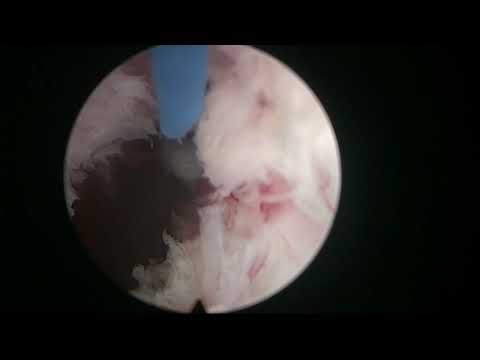
Real life HoLEP case number 12: Redo 10 years after GreenLight
Dr. Fernando Gómez Sancha · ICUA
Dr. Fernando Gómez Sancha · YouTube
Language: English. YouTube audio metadata.
Surgical content for professionals. Contains footage of an operation.
Playback connects to YouTube. Your search query is not sent to the player.
About this video
A HoLEP reoperation ten years after GreenLight vaporisation. The description identifies regrowth of adenomatous tissue as the reason for retreatment and presents the en-bloc approach used in the case. It does not provide a measured postoperative symptom result.
Documented details and sources
Only details explicitly stated in the sources. Missing information does not mean it did not occur.
- En bloc
A nice example of how good the en-bloc approach is for the retreatment of patients already operated.
- Redo surgery
Real life HoLEP case number 12: Redo 10 years after GreenLight
- After GreenLight laser surgery
Real life HoLEP case number 12: Redo 10 years after GreenLight
Source checked: 2026-10-06.
Available transcript · English
Subtitles exported from the original-language YouTube Studio editor. Not clinically reviewed; source identity and timestamps verified, full audio coverage not verified.
They may contain transcription or translation errors; check the explanation in the video.
- let's go in right so see we see a lot of these colors here this cops colors you have to go in carefully we are that's a cynic yeah it's interesting you know we need a favor let's cut through it I think he had some previous trip ah maybe no if he looks as if he has this is a redo case it's a redo case you can see that this area it looks as if the resection was quite boot this is the you all the other one we cannot see for the moment but there is a big let's say growth of tissue on the other side and I'm happy that we have this space because I'm going to show you how this all green lights ten years ago okay so he had this unique yeah so you can clearly see the sphincter limit here I'm going to mark the sphincter limits all around like we do in normal it's
- a initial case or is that you don't have any treatment before I'm going to try to mark say the white line all around the prostate even in the areas where I think the resection was good enough okay wait upon this way this way this is like a butch a white line here of course I'm going to go inside this winter so trying to bring this this white line down well this is this is counterintuitive because it looks as if they did a very good work on that side no yeah okay but in my experience you have to do this because there's usually a lot of tissue behind even when it looks like a nice fossa ah a nice resection so again this is the rarer montano so I will cut on top of the vero just as we do in a virgin case let's say and then
- we're going to try to follow let's say the same method the same intention the same method huh protocol yes the same step-by-step strategy huh so here we go in the plane you see that's the proper plane and I'm trying to to bring it to the other side well it's like this I'm going to cut this attachments at the epoch so we don't damage the sphincter from 6 o'clock we see 2 to 3 here is where the obvious spot Bach of tissue is now you see as we develop the plane look at the variance here you're going to find that it's also tissue on the other side now I'm going to put the fiber 1204 and let's continue with the dissection this is how the plane is looking here - attack this is the other side that's
- the white line the way we marked it it's actually attachment something say 9 o'clock right then it's not so good we are this is the interior aspect also let's develop the posterior aspect a little bit more like we do in normal let's say thesis this is what I told you before sometimes when you're here in this kind of plane it's because it's very inflammatory or sometimes it's because you're going in the peripheral zone I don't know for sure let's see how can we develop this be careful stay close to the ANOVA let's see something like a good plan to me now let's see over here it is less clear and so it's worth checking you know because many cases we have seen that despite the look of a it's a well resected fossa well there is a significant amount of BPH tissue behind and
- these patients what you want to do is to try to give them a definitive solution or we leave a tissue behind maybe after some years they will need to come back again so this is the posterior aspect and now we are going to focus on liberating the apical parts okay so this would be say the access to the to the plan this is still you know white line some tissue there let's see alright now we want to come up upwards towards this area here so 90 bucks here a little bit more for example these are always very interesting pieces the reading pieces still because they're never the same well they're always different and you always learn these pieces let's try to go up up you see that's an odd moolah let's
- see that [Laughter] looks like a knob you'll stay more eccentric it's no deal okay so here we are reaching let's say the 12 o'clock line we did you see on the other side so try to connect this side we are going here yeah [Laughter] what easy cases witness miss or reading cases it's I mean the challenging sometimes but if you follow let's say there are surgical principles you're going to be okay it's it's difficult to say where where is where is the good man let's follow and we can see for the moment and here for example is where transrectal ultrasound can tell you huh after a while or when you want to check if you believe a proper the extraction it won't help you a lot but I think now we managed to
- to release this inter almost completely from the ethics here there's still some touch me behind me Vampir lets a plane okay it's more partial water I think we're able now to see the anti airplane now we knew our dissection so one of the things that conditions what we're doing with this operation is that we are using receptor scopes or sister scopes that work let's say designed for T or P which means that TRP usually you have a central cavity and then the scope is moving it's a inside that cavity not so so the orifice is for drainage of the irrigation fluid are around the tip but here we are working on a very very restricted space you know sometimes the irrigation is compromised by the design of the endoscope you know because the the space is not enough and the orifices
- to drainage are a little bit compromised by the walls of the prostate or by the sphincter closing on there so sometimes we have a little bit it's a compromised visibility we are discussing we're not companies to produce let's say to design all instruments specifically for this approach and block approach so maybe where they inflow and outflow could go in the tip or closer to the tip you know what I mean you see now we are following the circumferential plane we haven't seen a proper plane but we haven't seen I'd say structures that tell you if you're going out of the capsule for the moment so we are probably in the right plane of a new creation yeah we're coming upwards this is the interior tissue here maybe if you look at the tissue you see that this is the cavity
- we have known we are finding that there is still some tissue around here maybe we can remove what this plane is a little bit strange no it's very spongy I don't know how to describe it maybe fasting with previous treatment well sometimes BPH is like that no you have a lot of it's a small validations that's what we are seeing here we are reaching until you only see we keep a good visibility and that's that's really important because you can in progress and you can judge if you are too deep in the caption or not here again I'm trying to bring the plane of dissection a little bit downwards now because we are we have surpassed the equator of the prostate and now we need to go a little bit
- further down to try to look for the property bottleneck if you are let's say dissecting and you don't get to see the bottleneck and you're afraid to continue you know because at the beginning of your experience you find it scary let's say - you are afraid maybe if I cut here I will go let's say auntie New York in the prostate no other one into the bladder there's one trick you can use and the trick is very simple what you do is you go again inside the prostatic urethra you know to have a look and you make a 12 o'clock incision alright see that because then then of course you will be able to connect let's say this space with the the other space alright because it's very close if you cut there you're going to end up here this is what I
- try Here I am looking and yeah we are you see so we are removing all the tissue that is remaining it's blutter Nick beautiful case I love this business they're much more fun than it's a virgin prostates yes because this all is well know it's always fun of course you have to be careful now here we don't know for sure if we are deep or not you see over there is looking that's like a big vessel maybe yeah got to be careful as long as we are inside the prostate it doesn't matter sometimes you can take a little bit of the virtual zone with you or a little bit of the central zone as well the prostate with you and as long as you don't perforates you see it's it's very very alternately sir to be careful but we can enjoy it see if I can come from above like this
- stay close to the Roma know if you are in doubt you know you go a little bit it's a big vessel and it's a fun thing you see let's see you leave it there for the moment maybe we have to tackle it later yeah this is bladder neck it's not so very interesting you know when you get a lot of next feature after TRP many times you're tempted to do a bladder neck incision but also many times less resilient tissue so I'm often doing an important intonation of the residual tissue which also lets say a new clay it's the stricture bladder neck you know I mean and so I remove the residual tissue with the bladder neck that's a little bit scary this one also on notifier from on the distance to see if I can get some energy to travel a bit small otherwise yeah we got it at the end
- we are also when you're doing let's say post ERP or sometimes some areas of red fibers because of the previous inflammatory let's say insult no you can find that it's not easy to develop Leonor there it's not a good plane so going around the adenoma gives you very important anatomical news know where you are more or less what you're doing that looks like possibly similar this apartment so this happens sometimes all you see the similar base but it doesn't seem to matter very much maybe we are in the central zone after all you know it looks like seminal vesicle but maybe it is not the seminal vesicle yes the it's a ejaculatory or the differential appeal how do you call it's the dilated you know initial part
- of the vas deferens inside the prostate it's possibly telling us you need to go a little bit further up to find a good plan here we have to be careful and stay very close to the Anoma huh let's see we can release the natural lateral plane and even better so we have better information where we are want to stay up up up you don't want to go there we want to stay up just leave there that's flimsy capsule there and try to stay close to their normal to cut the attachments of the Annamma to the cut zone without damaging the capsule it's one of the major only say teachings you can take back home with you all right staying close to the Anoma when on the angle of dissection changes no here this is a nodule this is
- a nodule I want to take it out I'm going to come here I'm going to close to the no deal these noodles have to be removed you see they they grow in the capsule many times and they leave a footprint so the capsule becomes very very thin oh look how thin you know but I I try to take them out always even if I leave a very thin cut so behind some reason now we are distending the or the irrigation pressure and like that then we understand in the Xhosa but when when the pressure goes down this is going to contract and many times we do interpretive ultrasound or postpartum ultrasound and we see that there's not nearly no externalization of urine so we remove the catheter the next day equally and we don't keep the catheter longer
- we see this kind of thin capsular layer they're close together normal talks to the Anoma all the time you see here we are in the bladder neck so we are quite happy there let's see over here let's bladder neck but you see there's still some tissue here I'm going to try to follow this this way it's quite fibers here due to the previous operation it's a beautiful case I love this business I really have a lot of fun and enjoyment having to do this we do faces it always reminds me how important it is to try to provide the patient with complete clearance of their normal fashion now is to preserve in circulation and I think for those patients who are it's a very keen on reciting inoculation it's perfectly
- reasonable but of course they have to accept that they will have a higher retreatment rate so if a man doesn't care about the declination I think the best service you can give him is to remove the whole adenoma and prevent its further growth and solve it's weird eye problems forever also it's true that as a holic surgeon or an dyspeptic a new creation surgeon we get used to the excellent results you know functional results excellent floats total emptying of the bladder very low pH says most apparently so it becomes harder and harder for you to compromise we see these patients 10 years after they're in creations and they still as good as they were the first day and they're very happy and they tell you it's the best thing I did in my
- life so as I said when when a patient is really keen on steel ejaculating then you can try to trade durability for definition preservation but otherwise I think we shouldn't let ourselves let's say be influenced by industry's interests now with all these new options for vph that mildly improve the patient situation in terms of your dynamic improvement on symptomatic improvement but for seven equations there's a lot of discussion going on about that there's very strong proponents of preserving interpolation at all costs but in my experience many older patients they do not really care so much anymore about this and they would happily let's say accept a result that lets them sleep at night properly and a nice flow and see properly stopped the
- urgency and Victoria there we are the last judgments and see whether you always good you see we are giving the patient a new bladder neck you know what I mean when there is the bladder next feature and residual fragments this is an excellent option as well well that's the posture this is the sphincter we managed to preserve because of this things are on the sphincter it's a little bit of lovely tissue but not relevant I think let's do some viruses see it was very scary at the beginning now we can see that it's not so bad looks like he'll be deep in the peripheral zone but that's about it II would be standing nice interior petition removal small irregularity you think that the fiber measures 0.5 millimeters
- it's this is a 2 millimeter or 3 millimeter let's say residual pregnant but let's take it out because most likely these fragments will fall off later on and the patient will be a little scared he sees that we passed this is a limit retro trade-off but we are good I think okay let's postulate we are presenting with zero video on radio thesis I think both in the yeah you anyway it's a beautiful technique and I'm pretty sure this man will not come back because of prostate tissue you know regrowth so it's probably a definitive solution for him simple hopefully he has to make you can go home and after the second operation have a final resolution of his urinary symptoms in common no but the patients are more and more accessing videos in YouTube
- and things so they are very knowledgeable about about the options you know now they discuss with you what kind of laser are you going to use with me and why the Internet is let's say giving them a lot of information but sometimes also miss information that's why we are here now to try to help them decide what you do also you know when I want to preserve ejaculation in a patient who has for example young patient with a middle lobe you can do an indication of the middle lobe and reserve the ejaculatory ducts by staying you know 5 or 10 millimeters cranial to the very montana these patients find improvement in their urine eye symptoms and they nearly always preserve circulation so that's why
- you know I have a tool that allows me to tailor the treatment for the individual they feel much better doing that for example than doing a your left and leaving staples inside the prostate see again offer for a small middle oh yeah you can do you can do that you can remove the middle lobe you can remove actually you can remove the bladder neck as long as you could set the apical tissue the patient is going to ejaculate so we can also do education restoration with column volume or green light with green eyes you can sort fit me let's save a price the amount of tissue you want it's like a sculpture you know you can this was a very interesting study by Burton dokic's a French surgeon he was doing boiling Sixtus cookies yeah so he was doing a cystoscopy with
- a flexible instrument he was asking the patient to pee and he would stay at the very moment and I'm looking up to see how the prostate behaved during micturition so many times he could tell where the obstructive problem was you know so sometimes you could see the middle lobe folding and coming into the prosthetic fossa and you could tell if I cut here the patient is not going to be attracted you know but he was recognizing this let's say preoperative voiding cystoscopy to find out what is the cause for the abstraction of the patient well okay I think we finished the bladder is empty that's why we see a little bit of bleeding there we are so many times we do also learn incisions in patients were young and they preserve its activation let me put the finger