
Surgery
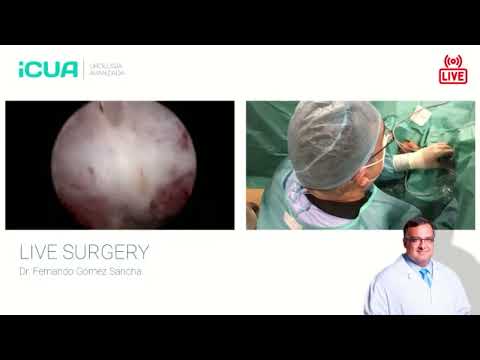
Live transmission: 2 cases of HoLEP with Virtual Basket
Dr. Fernando Gómez Sancha · ICUA
Dr. Fernando Gómez Sancha · YouTube
Language: English. YouTube audio metadata.
Surgical content for professionals. Contains footage of an operation.
Playback connects to YouTube. Your search query is not sent to the player.
About this video
Two live HoLEP procedures with Virtual Basket, transmitted from ICUA–Clínica CEMTRO in Madrid. The description identifies discussion of the en-bloc technique and practical advice on learning and starting a HoLEP practice. It does not provide separate measurements or outcomes for the two cases.
Documented details and sources
Only details explicitly stated in the sources. Missing information does not mean it did not occur.
- En bloc
It worked out well and I think we discussed lots of tips and tricks and advice of how to do En Bloc HoLEP as well as how to learn and start your HoLEP practice.
- Virtual Basket
Live transmission: 2 cases of HoLEP with Virtual Basket
Source checked: 2026-10-06.
Available transcript · English
Subtitles exported from the original-language YouTube Studio editor. Not clinically reviewed; source identity and timestamps verified, full audio coverage not verified.
Selected spellings of enucleation, morcellation and holmium terms have been edited. This is not a full audio or clinical review; the original captions remain the source.
They may contain transcription or translation errors; check the explanation in the video.
- to show you the surgicals this meeting is being recorded let's go we're getting ready you can see the the chair comes here comes to me the nurse is giving me a clip to hold the water collector and i'm getting the instrument on my hand let me do the white balance there you are so now we should see probably both the outside image on the on the inside uh we need another urethratum you know i don't like to force the entry into the urethra or this whatever so so i prefer to do a small uh very careful ortis at the distal urethra the navicular urethra just to facilitate the easy passage of the spoke you see that my nurse is helping me with the jelly gel she's always trying to be there at the right time let's see if i can go through can you see the endoscopic image
- okay perfectly okay good so you recognize uh the anatomic anatomy this would be the sphincter i like to come in and have a look you know be very careful not push aggressively and you can see this image it's very important because this tells you where is the limit of the sphincter and where is the limit of the apex now you can perfectly see the line that's the very montanum but i like to watch this image as we go in huh it has a middle lobe i'll check the uos but i will not do a very tough cystoscopy so because often you can produce bleeding if you if you if you do a very rough cystoscopy and that will make uh more difficult for you to start the operation so i'm getting the fiber you know that i use a 550
- fibers it's quite thick thicker than what we use normally for stones okay there you are so middle lobe natural lobes and here i hope you can see the image i'm going to try to focus to be able to see the fiber properly and what i'm going to do you see i recognize this line and i'm going to mark the edge of of the stinker i'm working at two joules and 50 hertz this is the classical setting and i'm used to to work like this remember that the settings are not the only determinant of the interaction of the laser with the tissue huh because also the working distance the distance between the fiber and the tissue and other factors like the velocity at which you move the fiber are going to influence the tissue effect so
- settings are important but it's important what you do with the settings as well you see this is what i call the white line huh it's a reference here's mucosa of the sphincter here is the white line here's the mucosa of the lateral lobes so i'm going to to try to complete the white line by by going to see around the vera montanum over there and all the way here now this would be the the completion of this uh white line and now of course i'm going to try to detach the center from the apex in the lower part here and then i'm going to try to touch the floor about a colicular floor and move the fiber laterally like this you try to find the proper plane on the other side i will do a mechanical entry so you can see how often you can you can use the
- the scope carefully to find the right plane okay so that would be the plane between the norma and capsule here i'm going to cut again this fibers because i want to make sure that when i do the my lateral movement with the scope i will not harm the sphincter at that level and then this is the varu i'm going to put a scope near the very root i'm going to do a little bit of lateral pressure you see the plane is opening for me all right so these are the two ways that you can find the plane huh either mechanically or by using a little bit of energy we're seeing some little stones that tell you that you are probably in the right interface between the nomad capsule all right so i will develop
- you notice that for the beginning of the operation i kept my fiber at six o'clock and i will do so until a little bit later i will show you when so now i'm going to cut over the very montanum often you can see this nodular structures it tells you that you have to go below them to remove you know bph is a nodular disease and many times nodules grow and sometimes they even grow into the peripheral zone so but here what i'm doing is i'm trying to construct the line of dissection posteriorly okay so my camera is positioned and my scope is positioned in a way that the line of dissection is going to be in the middle of the screen you see that one side is going to be capsule one side is going to be adenoma when i say capsule i mean surgical capsule
- and you can see that i'm moving because if you don't move if you stay in the same place really nothing important happens you have to move not too fast so it has to be a controlled movement but you have to keep the motion going and i would recommend you to always use very long very long movements so you don't try to go like this back and forth very short movements trying to develop something but more try to go from side to side because this is going to keep you in the good plane and it's going to allow you to progress in an uniform manner very very carefully of course at the beginning of the procedure because as i told you you position your scope to see the line of dissection and theoretically you could fire against the line you could fire
- against the capsule or you could fire against the adenoma so at the beginning of the procedure you fire against the line of course you don't want to fire against the capsule because then you will miss the plane and of course at the beginning you don't want to fire against the adnoma because basically you want to to to develop this this plane of course the dissection is now very favorable in the sense that when i fire towards the line well here's the there's another important detail you can see this is special and the color is white this is a little bit yellow you see the yellow stuff is usually vph so when i see yellow i try to correct a little bit my plane to see if there's a nodule
- you see it's very very subtle but i think it's very important that you take uh or you develop the sensitivity to be able to tailor the distance of the fiber to the tissue the speed at which you move you see from side to side and also targeting against the line of dissection okay when now the angle you see when you start the operation the angle is going down a little bit so when you do the initial dissection when you fire against the line of dissection you're going to get a very nice opening of the plane okay so now i'm going to put my fiber at 12 o'clock this is the moment where i change you see that i don't like to operate and move the fiber at the same time i'd rather have a fixed fiber because in my opinion it makes the procedure much simpler
- and now this is uh this is the mucosa of the sphincter you can see it here and this of course you see the abnormal is going sideways it's going up much further than the sphincter so we have to start mobilizing the abnorma carefully and progressively so we can gain mobility and we can gain access so initially as you see i'm following the line of the white line and i'm firing a little bit against the adnoma all right that seems a little bit strange but really what's happening is that i'm dissecting and peeling the the apex of the prostate from the sphincter and gaining a little bit more access you see that there's a big nodule here sorry the leg is bothering me a little bit no so before i couldn't see this part very well but when i did this incision
- everything opened up for me and now i'm going to go and look for the good plane so initially i'm going to try to develop the plane between this nodule here and the capsule but instead of going very epic pal i'm going to try to develop the initial millimeters and take this towards the bladder neck a little bit okay so here you see i'm connecting with the line that we had developed before the posterior line so now i'm starting to develop a lateral line i'm connecting both lines so when i want to follow the dissection i have a nice connection from one line to the next then i go back again you see here we can see the edge again and i'm going to make another little cut try to separate sphincter from apex okay i'm going to take it all the way towards
- 12 o'clock this is 12 o'clock and then of course i will have gained a little bit more access even more access so now you see this notion epical nodule here i will try to develop a little bit more of it and again i will take my dissection towards the bladder neck carefully i think the leg is bothering me a little bit which happens often but here i'm going to gain again i'm going to take my dissection a little bit you see towards the bladder neck this way when we come back here you see this was totally attached here we have separated that so the axis i'm gaining now to go further up is getting better and that means that as we progress as we progress i will be able to dissect a large abnorma using a very little keyhole which is
- the sphincter okay so it's a progressive dissection i go upwards a little bit more so initially we went maybe until seven eight o'clock then we went until nine you see initially at the apex and then progressively towards the bladder neck this is helping me to develop a nice mobility of of the adnoma i always remember that to connect you see my line with a posterior line so we have a nice recognizable line of dissection that goes around the abnorma and progressively i'm going out but here i don't want to continue going up because when you go back you see you realize that there's still attachments here so always the plan is to release the attachments at the apex first to gain access and then develop the access i don't know if
- i'm making myself clear and i don't know how well you're you're being able to watch this to see this so here again i'm gaining more access and now i'm coming up and around the abnorma trying to fire still towards the line of attack i'm trying to keep this movement you see this movement that dissects the plane just keep the energy close enough to the tissue to have a good effect but far away enough uh to the tissue so that you cannot cause a big perforation or anything like that you know you want to have a soft effect on the tissue all right so here if we go to the other side i will stop more or less at 11 o'clock and i'll tell you why later here i'm going to look at the same anatomy here is the mucosa of
- the sphincter this is the sphincter this is the the white line i'm going to make an initial cut on the prostate on the adnoma it's not very deep it's just three four millimeters so basically what i'm achieving with this is to gain a little bit of separation between the sphincter and the apex and then i'm going to try to gain initially you see here i am going until probably three o'clock four o'clock and i develop this towards the bladder neck okay why because i i will gain a lot of optical mobility i'm not sure i'm going in the right plane so i will check you see this is yellow huh you can see that so we want to go lateral to that yellow if we can or at least we want to explore that because we don't want to leave a notice tissue behind so
- here i'm coming downwards see we cannot if we can connect this with with the line from below you see here connecting here dissecting a little bit towards the bladder neck you know everything we do in the posterior aspect i think is not going to stress the sphincter so but it's going to give us a lot of access you see this was attached here and now when we come out and we see this thing there now we need to release this part so i will continue coming up close to this thing turn near the white line but of course respecting the mucosa this is a little bit of nearly 12 o'clock tissue here and then i will go to look for the good plane and it's very important when you're going up here to look at the fibers
- in the capsule you see the fibers in the capsule will tell you what direction to go often you have to remain a little bit eccentric because what you don't want to do is you don't want to go now horizontal too much so you leave a normative tissue above but of course we don't want to force this thing to which has attachments here so let's cut a little bit initially the more distal attachments and then progressively we will try to look for the nice dissection plane and take this towards the bladder neck so we have mobilization of the apex we can put the scope on top of the apical part of the prostate i hope that you have noticed already that bleeding is almost not a problem with this excellent
- pulse modulation that we are using it really helps dissect the plane and at the same time it provides an excellent first pass hemostasis so we can have a very nice visibility throughout the the procedure which is very nice because you can recognize the anatomy here you see here we have the other side here we have this side this is why i stopped at 11 o'clock because i want to go to the other side i'm realizing more and more than if you try to do a cymetric ascension then the 12 o'clock region which is the biggest problem for most people who start with a block becomes much easier so here i'm trying to stay up up all the way because i want to make sure that i remove all the bph tissue but basically here what i'm doing is connecting one side with the other
- and i will try to check the sinker now in a moment so you can see that whatever we have done has not stressed the stinker too much i hope and has not damaged damage distinctive mucosa i think mucosal preservation is very important here for example i'm not very sure this is the good plane or we can take out a little bit more it seems that it's not a big difference you know that the fiber has a half a millimeter diameter so probably this amount of tissue is not making a big big difference but here i am trying to construct a nice recognizable line that we can follow from side to side and i'm going to connect it to the previous lateral lines you know here i am anterior below the fiber is the
- the norma above the fiber is the capsule and here i can connect to the other side and you see now the operation is going to be about going around in circles you see i could go all the way around this would be the posterior aspect i could cross to the other side it's very easy now to recognize the anatomy you see we have a space and this space is very very very well irrigated by the laser system because it's a very small space it's very small okay so let's go back a little bit and we will check the quality of the sphincter preservation here you can see this thing there and you can see that the mucosa is on the sphincter when you look at the sphincter after a classic technique often you see mucosa at 12 o'clock but
- all this mucosa has been removed from the sphincter because the dissection was not careful at the apex so i think it pays off to to do this very careful optical dissection because the advantage is that we don't see or almost never see stress incontinence after the procedure very very rare now i think it's about one percent of patients will have a little bit of stress incontinence usually mild and not the big rates of stress incontinence that we found before okay now we have been working firing against the line of dissection but now the angles are starting to change if we follow the posterior plane you know that this posterior plane is going to start climbing up towards the bladder neck if we go laterally the plane is going to start going towards the midline so instead of
- firing now against the line of dissection the line of dissection i'm going to try to stay a little bit inside of the line because when i stay inside of the line the energy goes mainly towards the adenoma it's enough to cut the attachments between adenoma and capsule but it doesn't hurt the capsule so it's quite difficult to make a big perforation like that so you see also i am now anteriorly this is the capsule this is the anoma i start to go a little bit downward so i have to keep excuse me my laser fiber closer to the adnoma and you see incredibly yeah i'm not doing anything very fast i'm not rushing it but we have had excellent visibility throughout the procedure we have had excellent orientation all the time
- even people who come to watch these procedures understand what's going on because it's a mechanism of an orange i used to say you know if you understand the anatomy of an orange then you understand the operation we start in one side we start going around in circles and very simple here i'm doing a little bit of the anterior dissection and we're going to recognize the anatomy here for example you can see that the fibers are going around these are the circular fibers of the bladder neck but here we are starting to see vertical fibers so if you fire against the vertical fibers you're going to see that you're entering the bladder neck it's absolutely pathognomonic when you see these fibers
- you know that you're going to enter the bladder you know above the commissure of of the prostate and here what i'm going to do is i'm going to follow more or less the direction of the fibers of the bladder neck you see this this arc follow this arc here i'm going to keep my fiber a little bit closer to the abnormal because the angle is changing no this is lateral aspects i need to dissect this a little bit more before i can reach the bladder neck this is posterior posture lateral lateral now on this side and carefully coming up also you know what you really have to concentrate on holleb is to carry a nice line of dissection that is very well developed very nicely uh looked after because then you will have excellent orientation and then of course you have to try to
- understand the anatomy here there's a nodule you see so you have to take down the nodules don't cut you see my line is like this it was going this way but i find this nodule so you have to go around it huh try to take it out but of course keep the fiber always very close to the nodule so that you don't perforate uh the capsule huh remember from the three points where you can fire outside against the capsule against the line or against the noma a little bit closer to the anoma we stay now closer to the abnorma because this way the energy will tap the attachments between anoma and capsule but will not be aggressive against the capsule okay here below for example i can continue dissection dissecting the lower part
- but i will try to keep the fiber more close you see to the upper part i will not fire here i will fire almost against the adenoma because when the scope develops opens up this plane you see it's like a tempting situation here the tissue tense a little bit is pulled up and you don't want to cut right in the in the middle you want to cut near the abnormal so the capsule stays in place and you don't cut through it you see here you can be as careful as you want you have good visibility you can recognize the anatomy the nice thing of these very long lines is that when you don't see with clarity if your plane is good or not here for example we have you see this plane and this plane you can always uh you can always go a little bit
- uh towards one side towards the other side and get oriented and if the tissue is not telling you for sure you know sometimes we see a beautiful plane but other times we don't know for sure at least you're following this very nice line of dissection that probably it's telling you uh where to go even when the plane is not the same not all prostates look the same some planes look different than others you see and here uh i'm going around i have this nodule it's very clearly visible this is the footprint of the nodule in the capsule and then of course i will try to release it to go under it let's see where this takes us you can confidently explore all the yellow tissue you see you see for example here there is some yellow tissue but of course you have to
- be very very gentle with the energy and the way that you use the energy to dissect the distance between the fiber and the tissue will determine the tissue effects so be gentle be careful let's do this this uh side to side movements they're very good they're very efficient because you you cut you let the energy dissect the plane for you very carefully it gives you very good hemostasis so often when we finish the the dissection of the adnoma we can move on almost uh straight ahead to to morcellation there's no need to do a long time to spend a long time checking the quality of hemostasis there we are carefully trying to join the posterior line here with the uppermost uh here lateral line see sometimes there is a little bit of uh
- careful pushing you have to do to get to see the the line of dissection here is the bladder neck you see here we didn't cut we cut on the other side but here we haven't cut yet so i'm going to follow the arc off the bladder neck i'm going to cut the mucosa and submucosa here and the nodule is there on the way a little bit sorry if i'm moving too fast but here yeah here's the bladder neck on this side let's see where the uo is uh positioned so we know if we are close to it or far from it i cannot see it very well because of the reflection of the light on the tissue here it is huh so there is some distance let's see the other side as well people are afraid sometimes of damaging the uos so you have to be careful just look at the uo
- and check how far you are from it now i think if we cut in this region we are quite safe far away from the sinker and you see the operation the part the nucleation part is nearly finishing you see that of course we can go much faster when i'm not explaining but even when everything goes slowly you see the surgical time is probably not so much so now i'm going to i'm going to show you what to do to to tilt the prostate in the bladder so this is the right my right and i'm going to lift the normal a little bit so that you see it's positioned in a way that if i push i know that it will go in the bladder there will be no no okay no difficulty usually it's only one lobe that goes into the bladder now
- i pushed and all the anomaly went into the bladder so easier even easier i'll try to show you in the next case how i do it's a bigger prostate so you should be able to see often the explosive nature of homium when it cuts the mucosa it will leave some bleeders in the mucosa here we have the uo it's okay this is a little bit of bladder neck region there are some bleeders you see so you have to spend a little bit of time looking after this uh taking care of these bleeders here off the gladder neck to make sure that they don't bother you during more selection and now we're going to cut the little bit no the tissue i think it's uh i think when i pushed i i broke this a little bit there was an attachment still at six o'clock but it broke i didn't do a lot of force i promise but
- and the nucleation is finished it took us 25 minutes for this estimated size of 60 60 65 60 grams so this is quite uh usual and most of the cases take us less than one hour so that's the hemostasis if we go out we will see again that the sphincter is quite nice and thick there's a little bit of uh shattered mucosa because of the movements of the scope maybe some ischemic aspects but i think the manipulation the force has been minimal and we will surely achieve that this patient will have immediate perfect continence there are some areas this is where the nodule you see was pushing the capsule so it's a little bit thinner here here i will change my pedal so i don't want to be very aggressive
- with hemostasis i'll change my pedal and i will change my setting i will use instead of using the virtual basket setting you see this virtual basket was developed to break stones better with less retropulsion but it turned out that uh it's an excellent excellent setting for for a nucleation this is the region here that uh was the the pedicle let me try to remove a little bit of this tissue that is coming out there if we clean clean this a little bit it's also a little bit yellow so i'll try to take it out there we are let me check the hemostasis and clearly they have to check that there are no uh very big bleeders that might uh make a more selection more difficult it's always little bleeders the first pass is is really good you know we don't have a lot of
- bleeding we haven't seen much blood uh during the operation and this time with the vote for himself it's much much less huh also but of course as you know the prostate is a formidable enemy so you have to make sure that you control the bleeders i would like to show you do you have an external view correct i would like to show you the look of the hosa with the ultrasound so what we're going to do is we're going to use a laparoscopic shift ah it turned off sorry sorry we will do it later after musculation let's uh let's more play then you know this this cable in the back is a little bit loose so i will take out the fiber and we will make a change so we have fast change it's important that you see how it's gone you see my nurse is already holding me the nephroscope
- she's cleaning the camera so if it's wet we don't have a problem with a wet camera you see all these little steps are important because a wet camera can can make your life very difficult you have to change the instruments again so now we have the nephroscope inside and i'm going to push the morph later you see it's ready it's given to me my i can feel it on my foot the most later pedal already so you see the people that are helping well the team that is working in this case is perfectly coordinated so that i don't lose time from one thing to the next so here's the more selection well you see for more selection what i try to do is i try to always keep the mouth of the morcellator blade looking upwards i never rotate
- towards the sides i look for reference the bladder neck i fish i fish the tissue and i lower my hands so that i am away from the bladder wall and then i will uh mostly it i don't use a second inflow many many people use a second inflow but i am very conscious of the balance between the inflow and the flow so when you see that the mercilator is moving around and you cannot see inside the jaws of the of the blade this is because the tissue has a very good opposition against the blades so there's going to be a little amount of water coming out there will be water coming out but not too much so i can confidently morsel it if a moment like that is like this comes i don't keep sucking because then the bladder will get empty i just stop for a moment
- fish tissue again and then i will morcellate again you see the water inflow is open the backs are a little bit higher than before because i want to have pressure of the inflow and i tend to use my good habits so i then often ask my nurses do i have water do i have water so that of course if one person in the operating room makes a mistake or forgets about something someone else will catch it up and there will be no consequences so i instruct my nurses to look at my instrument and uh show this you see they instruct them to look at my instrument and see that the airflow is closed and the inflow is open during musculation because i don't want to make a mistake often when you change the instruments you can't forget to open the info
- or you know so all sorts of things can happen so i finished with the marcellation this is a iranian oscillator is very fast and now i'm going to show you the ultrasound let's see what you see uh okay so you can see this is the instrument inside the prosthetic fossa i'm going to take it out the instrument gradually so you can see the fossa you see the anatomy dissection is perfect this is the longitudinal view now and you can see the endoscope here and you can see that uh i am uh i watch the fosa you see from side to side and it's perfect so let's finish that there's some bright lights on there on the screen so instrument comes out battery comes in and the case is finished so how long do you take valencia
- so it was 35 minutes 35 minutes for a 60 like prostate maybe it's 50 yeah but really uh you can see that the block approach makes its perfect sense i think it's very careful it's careful with the sphincter provides excellent visibility throughout the procedure and of course when we use a laser like this uh it's a it's a joy it's a pleasure okay so okay if [Music] you have some questions i will be happy because now we have to wait probably 15-20 minutes to get the next session ready on the chat we don't have any questions so far thank you very much was a really nice case were you able to see it properly yes absolutely and we could hear you fantastic because uh it was very quiet in the or so yeah i think this is one of the
- well yeah of course this is another advantage from the from the from the quanta system laser it's uh very quiet you see we have this uh we can do a test now if you want you know follow me i have an application moment maybe you can see the application it's measuring the not now it's measuring the amount of sound in the operating room whenever i speak goes up you see but it's 50 60 decibels the laser is very quiet yeah which means that there's not a lot of noise in the operating room and i have to tell you when when you uh operate uh five six paces uh most days of the week it becomes uh quite quite bothersome to have a very noisy device in the operating room so this is one of the features that i really appreciate from from this laser it's very quiet
- you know recently i visited quantum system headquarters and they showed me how they produce these lasers and it's really interesting they're really not so big part the laser generating part of the laser device is not so big but it generates a lot of heat and these machines are quite bulky because they need a chiller that will dissipate the amount of heat that these lasers are producing so chillers are usually very loud but they managed with this one too to make it a very quiet device so it's really wonderful to have a quiet operating room you have to work long hours doing this procedure so maybe someone would like to open that i would like to oh yes tell me yeah i'm happy to yeah you can everyone please open your microphone
- and feel free to ask questions uh i would have a question what would your advice for a beginner what are the most important steps or well critical steps when you start you know it's like well i see that the first step is to have commitment you want to have commitment to learn all right so if you want to learn you have to commit yourself to learn you're not going to do this if you start on your own by watching one or two videos or watching one or two procedures it will be difficult that you will succeed so maybe we should go to the other side because this is very noisy also let's let's move on sorry i will continue with the question phenomenal good so uh we were discussing how to learn and my advice would be to when you when you budget
- uh when you decide in your department that you're going to do a nucleation you should budget a little bit of time and money to train yourself because most hospitals buy the equipment they buy the instruments but they don't budget for training and learning so so sorry we are in a very noisy environment so this is one thing the second thing is you should go and see a team that does a lot of work and stay there for a while if you can spend two or three days in the center that will show you a number of cases that would be a very nice starting point to me this procedure is not difficult to perform it's a little bit difficult to understand at the beginning so you need to watch many procedures before you sit down to do uh we go to for example
- to bulgaria and we go now to the south of spain and we do you know weekends maybe 25 30 cases in two or three days this would be an ideal option for someone who wants to learn the procedure but there are centers in germany in england where they have high volumes maybe you can schedule to go and do a similar experience secondly i think the videos are very important if you watch videos if you watch different experts doing the procedure there's more and more audio visual material online go there check the videos i myself has i have uploaded about 30 full-time operations uh with comments uh that you can watch and i have received letters from people saying i felt i was prepared when i went to do my first case because i watched all the videos
- on how you stressed all these concepts once and again until i learned them so if you understand the procedure you will succeed secondly if you're going to or thirdly if you're going to start with wholemium in your hospital you would want to think about inviting someone who can do two or three cases the first day and then mentor you the second day and why is this important because you know the hospital has nurses has anesthetists probably if the hospital makes investment of lazy they want to know how it went so i wouldn't recommend you to do the first case in the hospital because then the anesthetist because it would take longer than than usual you know so the anesthetist will say oh this is terrible
- the nurses in the operating room they will think it's very long and on the contrary if you do an initial session and you invite someone who can do a good job you're going to set the standard you're going to say this is how hollap is and the anesthetist then will understand when you spend instead of 30 minutes you spend two hours they will understand and they will think okay this is going to be temporary until they get better and better to be able to do it in a short time so these are little tips and tricks that are important of course you want to have someone with you when you're going to start that can help you because you shouldn't do this alone the first time but i guess if you have all the background that i mentioned if you watched operations in
- a hospital if you looked at videos if you took some online courses that are available you can probably get there easier regarding simulators i think simulators can help a little but i don't think that after a point spending more time in the current existing simulators will make you any better they're not good enough so sadly you have to you have to start on your own i have to uh i mean on a patient not not on a simulator i have to tell you that if you do this in block technique and you want to teach someone in your department one thing you can do is to liberate the sphincter first and then of course you have a nice line around the adnoma and then you will achieve uh you will give your place to the people the person who is learning and he will have to do
- the rest of the procedure this will make sure that the patient is going to be continent and you can get your initial experience by dissecting the plane following the circumferential line and developing all these concepts that i try to explain so this is my advice try to visit a center of experience try to watch as many operations as you can live on video on youtube and then try to get someone to help you in your initial steps if you choose your patients wisely which means choosing patients with prostates that are between 40 and 70 grams of volume you will be able to start and complete the cases yourself if you are alone and you have problems you can tackle a 40 50 60 70 grams prostate without a sector you know this would
- be the worst case scenario also i always say the same but i think it's important you have to take the decision before you start the operation that if there is a problem that you cannot tackle properly or safely you would put a catheter and you will tell the patient that it was not safe to continue and that you will come back another day when the bleeding stops when the capsule heals after some days you can go back and finish the procedure the patient will not be under a lot of stress because he had a bad complication you just explained to him that it was safer not to continue so this happened to me a couple of times during my learning birth i was very happy that i stopped the operation rather than trying to continue and making things worse there are for
- example cases where musculation is difficult where there is difficulty keeping a good visibility when there are bladders sometimes that tend to have spasms and contractions and you're always risking of course when you are experienced all these problems are not a problem but when you are not experienced you know you may feel that there's a risk to make a hole in the bladder with the most later so you know just uh decide it beforehand so when it happens you recognize what you have to do rather than having to think about this you know possible outcomes of the operation and trying to take a decision when you are stressed in the operating room another piece of advice and i'm talking a lot i don't know if
- if you enjoy something else but another piece of advice for many people they identify holy with anxiety with an anxious operation and i had to recognize that before it was a little in the sense that when the release of the sphincter was done at the end of the procedure you would feel a little bit stressed thinking will this patient have incontinence or not but now the moment you free the thinker you're very relaxed and you shouldn't think that this is a very dangerous operation you should think that this is a very technical operation so you have your instruments you have your setup you have your team supporting you and then you try to perform the operation technically taking the decisions that we discussed
- following the line constructing a good line and taking it to a good end so i think the patient is now out the operating room is clean the next patient's coming in so i hope it wouldn't take much longer to go to the second case are there any questions unfortunately steven no question is from that you are shy or you are explaining it so well and show it so well that uh all questions are already answered um no i think i think it's important for me yes go ahead um i see the major thing is to watch videos to watch a lot of cases to learn but i think there are still some major failures uh what beginners are doing and i think you have there a bunch of or a lot of failures so what are the most common failures what
- they do or mistakes even they have so cases and by cases or hours of videos is it the setting is it how they i think the first mistake is and this is a personal opinion now is to think that the three log technique is going to be easier i think the three-loop technique is probably more difficult of course the initial part of it developing the middle lobe and removing the middle of it's easy but then the rest is could be could be for a beginner a little bit more difficult i think on the other hand uh doing an technique initially the apical dissection can be a little bit demanding so but uh i have to tell you people who come to visit us to bulgaria they spend three four days with us there we do depending on the month and the workload we do 25 30 35 cases
- so they watch the big land the little gland they watched a procedure you know 30 times so they really understand the steps i try to do the same steps all the time and after they you know understand i have taught a lot in my life and i my realization was that when i was teaching people i was the one who was learning more you know they people listen to you but they don't really understand what you're saying what you're meaning it takes a little while to incorporate this this knowledge so when you when you do the homework then you are you are not likely to fail if you fail in your first three four cases then you should have someone with you who can hold your hand and take you you know throughout
- the procedure or take over for a moment solve the problem uh i think the mistake is probably be alone you know be very adventurous choose the wrong prostate size uh you know because i'll tell you we're going to do a another case uh now and uh i think the patient probably will be coming in soon uh they uh this is a 120 gram prostate and it will probably take around an hour or less i hope and but if you do it for the first case it will probably take you three hours or more if you want to if you're lucky enough to finish it you know what i mean so choose the right prostates be sensible we be clever and you shouldn't have to fail of course you have good instruments if you have a good morsel later because with marcellation
- maybe the problem is that when you start marcellation you have a pretty good visibility but keeping the bladder distended for you know 15 20 minutes the bladder will start bleeding a little bit the fossa the vessels in the mucosa also the entry of water and outflow of water the inflow and outflow are not like if you are irrigating with a receptor scope it's much slower there's less water coming in there's less water coming out so there's no proper irrigation it's more an accumulation of blood that happens that makes the visibility get worse and worse as time goes by with more solutions so if you have a slow motion later you might find out that after 30 minutes you cannot see anything so you have to empty you have to go in maybe with a
- laser or maybe the receptor scope again you have to do hemostasis and then of course uh it gets more difficult and this is why it's clever i think to have good equipment it's clever to have a pulse modulated laser if you have a classic laser you have a single pulse of energy instead of a two consecutive pulses so you will have a nice dissection but the quality of hemostasis in the first pass will not be so good can we have the next slide yeah is it ready okay we're going to make a slide ready tell me when you watch it on the screen so yeah the patient is already on the table so we can see it we are you can see the patients ah excellent so uh i was i lost my track i i was telling you okay now you can see the case but i need to save myself
- so i can remember all the details so this patient i think had a retention of urine he's a 70 year old man also on dude arts good art is very popular in spain and he had one episode of urinary attention and i think he's not carrying the catheter because he managed to void again but of course with this prostate volume and all the symptoms and the already episode on retention of retention already on dual art we recommended him to have an operation so he's getting ready and you will be able to start soon okay so i lost track of what i was saying before it was about learning mistakes that people commit was choose choose the right uh tools and oh yeah choose the right tools the last thing was like basically which is why and you know
- we are bad business people in urologists in general and we don't have the business view and many people who are going to start doing holiday think okay i want to do hollap in my private practice and i do i don't know four trps a month or five and then they do they their business plan thinking that they would do five hollops and the truth is when once you start doing hollap you start getting more and more referrals more and more patients so you have to think that the volume of patients is going to sum up you know instead of five a month you will start doing five a week and then more and uh probably that will take some years but for some months but uh it will happen so when you're going to plan the investment you might say
- okay i'm going to buy a cheap laser a chip oscillator and a cheap instrument and i my advice would be the opposite you know buy a good laser because you have much better chances to be successful one of the advantages of the pulse modulation of this laser i think is that when you teach someone there's much less tendency to bleed so it's much more likely that he will learn so with uh we have a young urologist here moises rodriguez he is from venezuela trained in spain and then he spent some time with the widow giusti in milan he does a lot of stone work now he's learning hollap and i have to tell you the first case he did it on his own i was behind him you know hitting his head when he was doing something wrong but
- he could do it on his own and i was not used to this before with the normal lasers you know often i would have to take over maybe do hemostasis before they could continue so that's important equipment teamwork what else how to learn uh and of course there's there's this uh mentality that polyp is very difficult and i would like to tell you you can do holid you know trp is very difficult if you want to learn uh thank you to do turp got as much if we want to learn to do turp that's very difficult go ahead but if you want to do whole ep if you follow the right steps i think you will find yourself doing quality very fast over the years i have had i have had a lot of people coming to bulgaria and i communicated
- with them afterwards and uh they tell me you know they sent me the picture of the of the bucket with the tissue and they tell me i was able to do this uh you know 200 gram prostate 100 grams prostate really with hollap 100 gram 120 is not so difficult but i would probably start tackling those when you are already confident with the 60 70 gram prostates and when your times are not too long because although you know the beauty of a nucleation is that if you think about it a 60 gram prostate has 5 centimeters in diameter and if you go to 100 it's probably six centimeters in diameter and then if you do seven that's probably almost 200 so the amount of extra dissection you have to do in the larger glance is not that much
- and often we see that even with 200 gram prostates we can do the inhibition in 35 40 minutes of course then the more station will take a little bit longer but with a good morcellator we can take out about 10 or 11 grams of tissue per minute so often you know a 100 gram prostate takes takes less than one hour because we do a 40 minute initiation and then 10-15 minutes of morcellation uh and uh that's what you have to aim to it's also one of the most satisfying uh surgical operations in terms of following up the patients you know when you see the patients sometimes they have a little discomfort after the operation i tell them that the only concern post-operatively is that they have a good flow if they have a good flow the
- rest of the problems they might experience will go away some of them have a little bit of discomfort at the end of boiling there's of course some bleeding at the beginning i tell them the first time you pee when we remove the catheter tomorrow morning is going to be uh blood you know the second time the urine will look like red wine then rose and then white wine very fast maybe for the first five or six days you will have a little bit of blood in the initial part of the stream and then the rest will be clear and of course there is some discomfort bladder hyperactivity will take no two three months to go away four months sometimes so i tell them we will judge the result of the operation after about four months
- if you have uh irritative symptoms like uh urgency or important continence that you could have occasionally you could see in patients that typically tell you beforehand before the operation that they have a virgin continent it means very likely they are going to have it afterwards so i tell them what to expect i don't oversell the laser procedure because it's okay it's enough good huh you don't need to oversell it and you can tell the patients the truth because that will save you time later they will not be calling you so much and asking you so much doctor it's been two months after my operation and at the end of avoiding i have a little bit discomfort you know that uh i tell them it's a wet wound it's in contact with urine you know and i tell
- them imagine you have a wound in your arm and you pee on it you know it's going to hurt a little so you know this way you manage these patients and then they come to you and tell you ah i'm so happy my flow is so good i can sleep you know through the night and all these things they're very happy and then i have seen i see these patients 10 years after the procedure and they tell me it was one of the best things and the best decisions of my life so you know it's one of the nice things you can do also you know we have these long sessions patients almost ready i think and you know you go home and you can drink wine because you know that you're going to sleep happily because they will not call you overnight because there's
- bleeding it's very very unlikely it's a very very nice procedure not dramatic so very nice to perform so i'm going to drink a little bit of water i will get scrub and we will get ready don't be shy and ask questions sir if someone has something that would like to comment i would be happy to respond okay so next case well it was nice to see the the ultrasound right it's very beautiful very anatomical it will be even more beautiful i think in this case so i will try to show you as well okay watch so still no questions say okay no we have a very shy group um maybe one question please go ahead um how often or do you see uh generally your retro structure after this operation well the incidence is quite low what is this statistical
- probability i think it's about one percent uh maybe maybe between one and two percent i think what i see more often is that uh when we're going in in many patients uh we see that they already have some kind of difficulty or tightness near the thinker so i write it down and i tell the patient when we went in we found some difficulty because occasionally we see these patients you know we do about 700 cases a year so we see seven eight nine ten pieces of picture uh my way of managing this is to teach them self self dilatation because they are usually very soft mucosal structures and if they subdilate periodically then they start postponing the annotations more and more it seems to go away and most of the patients are happily good after some time uh
- i don't see metal stretchers i have to tell you when when we are careful going in like you saw i use the otis the artist will do a 12 o'clock cut which will make the caliber much larger and we don't see strictures in the miatas it's very very rare so i like this approach very much much better than a progressive violation with normal sounds because or metallic sounds because i think when you do a circumferential stretch of the urethra you will break it in many many places you know there will be different different uh areas where you have damaged the mucosa and then the chances of a structure will be probably more okay so let's get ready thank you of course if we see a big stricture you know and
- that can happen because the symptoms of this picture and pretty much so as i was trying to say if we find a very tight stricture and very long switcher or something like that often we will incise this picture and not do the process to see if that was the problem sometimes we don't know exactly what to do because you see there is some but then you go in and you see a middle lobe and then we might as well decide to tackle the middle lobe i don't know it's always difficult to apply you know there's no rules that are always good okay so let's get ready white balance ours water okay now you have uh you see the endoscopic image yes okay bravo bravo okay so here i didn't have any trouble going in
- i'm using a 26 french scope from richard wolff and again yes here we're starting to see the anatomy of the apex you see i like to look at it you see that there's uh lateral tissue here and the sphincter is very short in this in this case no not so well not so bad you can see that the normal is going further down on the very montanum huh so we will take that into account here i'm trying to go in and you can see it's a relatively bulky prostate so probably the size estimation was quite correct let's see where is the this is the uo this is some kind of uh yeah not very bad looking lesion there and the uo is quite far in this patient so we will be less worried in this case this is the dome as i said i don't want to force too much movement so i don't cause bleeding
- yeah okay my nurse just told me that i had the outflow closed you see so they're very good at telling me what i do wrong and that's if you teach people around you to help you like that you will commit mistakes but they will be picked up by them and you will be saved from the patient as well so here we are their roof i see the fiber perfectly this is apex you see so i'm going to try to go about here because now often i mark you see the lateral aspect here and here you can see that this will tell you more or less that you want to go up a little bit more inside just a little bit like that and then of course we will follow this line here i'm trying to get close to the center but not of course uh too much
- but i don't want to go you know for example five millimeters inside because the plane is going to be where it is you know and it's usually here so if you go more inside then it will be very difficult to continue you will make it difficult for yourself so don't be afraid get close to the stinker i don't lower the power or anything you know i think that when people say lower the power when you're close to the sphincter it's because they're having incontinence and they don't know why they think that the energy is guilty but i think when you do this uh preservation of the mucosa you don't have to worry about you know firing near the sphincter with this power because volume laser as you know has a
- very high affinity for water and the effect the thermal effect is very little it's it's not going very deep yeah you can see this is the entry this side here's the mucosal of the sphincter i'm going to come here to cut this fibers initially i want to release a little bit this part of the apex and then i'm going to go to the floor you see here you see when the prostate is not too big you can anticipate that the plane is going to be more or less horizontal at this level when the process is very big you will anticipate that it's going downwards a little bit because the lobes are big and so you go a little bit downwards you know trying to look for the right place where the plane is going to be
- here you can see that we are entering the right plane very fast you know you don't have of course you develop continent uh sorry confidence as you go as you get more experience you get more confident but also when you watch these a number of times you realize it's not rocket science is not so difficult if you go a little bit deep in this region you have to correct and if you don't go deep enough then you have to correct it's not a big deal huh not so dangerous here you see i'm developing the the line on this side here as we go towards the center we're going to see the frenulum of the very montanum well let's cut over the river montana try to connect both sides remember that the the light is cutting it's not the fiber so you don't
- cut the tissue with the fiber you you cut with the light it's important to develop good habits all the you know everything you know about bph everything you have experienced before is good uh information you know the logical common sense of urologist remains useful so for example once you have developed a posterior plane you could probably check homostasis before you go to the next part of the operation i have to tell you one of the most difficult things of hollap is to have the fine tuning to have the right tempo you know the right tempo would be let's see how i explain this if you the ideal hollap would be one that allows you to complete the annuitation and then move on straight away
- to do uh the more solution with minimal need for doing further hemostasis okay this would be an ideal procedure so you were able to keep a very good hemostasis throughout the procedure you know so good so reliable that when you throw the abnorma into the bladder you can already start more selection because you have very good hemostasis okay so often i find that i get carried away with the dissection aspect of it and i don't pay attention to keeping a good hemostat especially we get spoiled with these pulse modulation lasers with the virtual baskets you know you get spoiled because often you see that even when you are not careful trying to keep hemostasis it happens automatically so but often if you finish and you didn't do good hemostasis you might need to spend i don't know 10
- minutes doing hemostasis no and so see for example might be some leaders around so as i said the common sense of urology applies so if you see that there's some bleeding maybe it's a nice idea to you know consolidate the hemostasis before moving on to the next step and especially when you're learning i think it's important because you want to keep to seeing well you see it's pretty good and now i'm going to put my fiber again at 12 o'clock you know if i wanted to do the white line at 12 o'clock it's more difficult so it's easier at the beginning to tilt the scope and reach let's say in the right angle and but now i'm going to do the release of the apex so here you can see that we have our white line white line and now i'm going to cut a little bit deepening
- on the adnoma i don't mind this and you will see that whenever we do this right either laterally or more anteriorly then we're going to try to look for the good plane so here let's see we can find a good plane here we are here we are and look where is my incision my incision was here you see but i'm going to remove more so this incision is not determining the plane that i will follow later it's just an incision to detach the sphincter from the abnormal now as i was doing before i have touched the apical attachments until around maybe nine eight o'clock eight o'clock maybe and i'm taking my dissection a little bit towards the bladder neck to gain mobility you know you do radical prostatectomy for example with a robot or laparoscopically or even open you realize how at
- the beginning the prostate is quite fixed yeah you don't have mobility but here we have detached this from this and now we have access to the most more interior aspect you see here we're getting closer i will do another cut here i'm going below the center a little bit horizontal reaching 12 o'clock here and then this is my cut but i'm going to look for the good plane further out you see so it doesn't matter that i did this cut it just gave me some access so again i'm gaining some access optically and then i'm developing a little bit more towards the bladder neck on this side you know but i don't continue upwards because if i continue upwards here i'm going to put traction down here you know so i have to release first
- distally i release another you know four or five millimeters distally so when my scope goes in here and i try to go further up it doesn't damage the apex it doesn't damage the sphincter it doesn't you know cause a lot of traction also you can see that now my scope is on top of the adenoma these fibers that originally were parallel to the fiber are becoming now more vertical you see so when we want to cut through 12 o'clock we will see that uh they are easier to cut here is the sphincter limit here's the mucosal incision we made and i'm going to deepen again a little bit trying to go upwards there i cut you see only at normal i don't mind but then of course i have better access and then i can go and look for the good plane for the better plane i will try to follow
- better plane let's see i have to look for the better plane that looks yellow to me a little bit here so maybe i have to go even deeper trying to gain slowly and you know i don't want to go to 12 o'clock it's like you know when you want to i don't know when you want to play or when you want to eat something and you're looking for pleasure you want to uh you want to postpone it a little bit you know the bigger pleasure or releasing the slinger you don't want to go direct to it you want to go you know a little bit around in circles i don't know if you understand what i mean you don't want to eat the cherry the first thing you want to leave it for the end because it will give you more pleasure to
- it's similar you don't want to go up and force your way towards 12 o'clock you rather want to go carefully and slowly so here for example we went until three o'clock because here at the apex there's still attachments okay so now i will release the optical part a little bit more here i'm cutting horizontally because i'm going towards 12 o'clock and the center is right above my fiber so there i am you see i don't mind cutting horizontally near the center because what i'm doing is i'm taking the battlefield a little bit more deep you see i don't mind doing this here of course when we go inside i don't want to cut horizontally because i will leave anoma so i want to follow the fibers here the direction of the fibers here sometimes
- it's clear sometimes it's not so clear but i try to analyze the information i get from the screen to try to understand the anatomy and then you see try to go up up up because i don't want to leave tissue until you're late as i said we're going to take the dissection a little bit towards the bladder neck and i'm going to connect the line of lateral dissection with the posterior line of dissection that we had done before so i want to make that's a nodule a little nodule here but i want to connect you see lateral with posterior so it's a nice transition between the lines and i'm making my life easier for later okay so here you see also this work down there will give mobility to the apex huh so here we're coming upwards this is a little bit of adenoma
- looks like it i'm coming up a little bit horizontal trying to release more and more the apical tissue i'm going to come up here now a little bit more applicable to see if we can see the image that we saw before which was uh some 12 o'clock fibers i'll try to show you in a moment so here i'm continuing with my dissection there's a vessel there here if i look you see this is the plane in one side where is it so it's up here up here you see the plane you see the two elbow clock fibers and there you see the plane as well so now you see cutting these 12 o'clock fibers is quite quite easy huh so this uh this approach from both sides makes sense i think of course with experience you can go from one side all the way cut the 12 o'clock fibers and reach the other side but
- i think this is probably the best approach for someone who is learning at the beginning and getting used to the anatomy of these apex you see we spent about i don't know 10 minutes doing the applica liberation but now the rest of the procedure is absolutely easy i just have to follow my line around the abnorma i have to study the anatomy so i am judging all the time if my plane is deep enough or too deep so here you see i follow the line of dissection i care about the bleeders on the capsule not so much on the abnormal because as we de-vascularize the abnormal the bleeders from the abnormal will will stop here trying to connect the anterior line with the lateral line i saw a bleeder so i
- go back try to stay there for a moment until i can gain the control of the bleeder and then continue oh it was not controlled so here we have to do the helicopter you see the helicopter is this movement where you go around the bleeder sometimes it's it's helpful sometimes it's not so just go for it the idea is that sometimes you don't know the angle at which the vessel is uh you know below the surface so if you coagulate circumferentially around around the bleeder you're going to probably stop it when you cannot stop it by firing directly towards the bleeder mouse no opening so here you see anteriorly we are progressing quite fast well there's some tendency to bleed a little right so we have to be careful maybe stay longer
- check back you know go back a little bit and see many times you leave some bleeders behind i think that uh often the mechanical nature of this laser maybe can pierce can break a vessel and then it will spasm for a while and then it starts relaxing again and gets some bleeding you know so of course despite i enjoy this very nice coagulation i don't think it's a good idea to spend a lot of time trying to hit the tissue you know to burn it overcook it let's say so you have to find a balance between good hemostasis as you as you progress and uh you know not coagulating too much or too too far here i'm trying to follow my line but i'm seeing some tissue some yellow tissue some irregular tissue
- so you have to decide how far you go this is yellow there's a little bit of yellow there so i will try to get because often you see when you follow these yellow alerts that there are nodules like in this case you see this is a big nodule you see that coming out of the of the abnormal this is a nodular growth so you don't want to cut through them and leave the bph tissue there so you constantly evaluate sometimes the plane is very smooth and very nice sometimes it's not so smooth and you have to you know deal with it technically as we said without without stress just use your knowledge and you use your skills to do the best you can you can always come back of course and remove tissue that needs to be removed
- but if you can do it from the first moment i think it's a good idea if you get too deep you know or if you get unsafe maybe it is also reasonable to assume that you're going to take out you know 80 90 of the volume of a prostate so leaving maybe a small amount of tissue might not be so relevant and it's better to be able to finish the case than to complicate it but of course when you get more proficient you have to be ambitious and try to take everything out i don't know if i'm talking i think after some experience and i'm trying to be not so idealistic but more realistic no in the sense that sometimes the perfect could be the enemy of the good but of course we have to aim for perfection so this is the dilemma that we face sometimes
- intraoperatively and you have to deal with it according to your experience and your knowledge and your philosophical attitude towards surgery you know and your confidence as well doing more cases you get more confident and you can go deeper let's say without risking a big big problem okay so here i'm trying to follow the white tissue and the yellow tissue this side seems to be more irregular than the other side so but you see that the way i use the energy i'm not going to do the sun hole because the energy is very soft it just breaks a little bit of the fibres produces same stasis but it's not having the effect of breaking up the tissue if i see uh perforations that starts to open i usually can react before it goes uh very large or very relevant so here for example the tissue
- seems to be a little bit you see as if we went relatively deep that's not a problem right just correct remember to keep close to the anoma we change the targeting to get a dissection of the anomal from the capsule without deepening even more and this is really the the whole thing i think if you understand the principles of this operation if you understand how laser energy interacts with tissue and how to use it in all these important advice like moving your fiber slow but constantly to find a nice plane of dissection and follow the plane correct your targeting you know if you go too deep get closer to the abnorma if you go into the adnoma correct yourself try to keep a good hemostasis as you go and it's really
- not rocket science it's something you can learn that you can do that you can enjoy a lot you know polyp is a lot of fun for the surgeon it's a lot of fun i have done thousands of cases and i don't get tired of doing this operation i have to tell you it's always different patients are not you know not easy to find the same prostate again and as you can see one of the nice things of this operation is that most of the time the laser is activated and i am just moving the fiber along the line of dissection you know i don't have a lot of forcing time i don't pause that makes this operation very fast i can fire continuously for 50 minutes or 40 minutes almost without stopping for hemostasis or dissection i try
- to also you have to look at this as if you had you know if you can imagine rings that would go around the abnorma first ring at the center would be relatively small and then it gets bigger and bigger and bigger until we reach the equator and then there's another ring which is a little bit smaller because the prostate is spheric and that's a big fierce vessel let's see if we can control it it's not so easy when you find a very very large vessel sometimes it takes a little while sometimes you think you control it and you open because there is a plexus around that area so let's see helicopter you see the danger is that you continue deepening a little bit into the capsule but of course you have to follow the vessel try to stop it i lost uh what i was saying again i'm getting old
- so talking about the rings the rings oh yeah it's it's interesting so you know when you go to the equator this would be the widest ring and then of course you have to start following the next ring would be a little bit smaller and smaller and then towards the bladder neck they would be getting smaller no so when you think about the line you have to follow huh initially we do a small ring then it has to get larger so that's why we fire against the line of attack and as you get closer to the bladder neck you have to start firing closer to the arnoma because you want to reduce this diameter of the ring i don't know if i'm making myself understood here of course we see a familiar landmark now these are the circular bladders
- neck fibers and these are the vertical fibers you see that it's very very easy to see to spot so we can cut through we can put puncture here this would be the bladder neck you see it's very remarkable that we can work at high power with a laser uh for you know firing 40 minutes non-stop almost non-stop you know at high power and have a chiller that doesn't make a lot of noise it's very impressive right there we are so this is bladder neck i'm trying to follow my line also one thing that i don't trust a lot is this when you see the direction of the fibers you see here for example they look they're going this way of course if you go below the noma and you go up the way you're pushing the anoma might change the direction of the fibers so the fibers
- sometimes cheat you a little bit they don't tell you you know much so you have to follow your line you have to follow your line of dissection your line of attack here you see i don't really care so much about the direction of the fibers around the arnoma i care about my line i care about the color of the capsule which is white and i care about the color of the anoma which is yellow so i want to see that the yellow stays with the anoma and the white stays with the the capsule of course i don't want to see fat i don't want to see although sometimes you see very flimsy tissue very thin capsule so of course you don't continue firing in a very deep area here for example i don't want to continue firing there i want to go
- you know because that's the way to prevent problems from from happening carefully you know one of the things i say is that if you try to improve the situation if you try to move forward every minute of the operation you know try to make it better a little bit so don't stop don't spend time doing things that don't work you know you want to develop the plane if you do something that doesn't work when i'm teaching my colleagues sometimes they fire like this there's some effect but there's no dissection you see so you have to get closer you have to understand that your laser has to be at the right distance to get the effect you want you know try to make the most of it but as long as you move forward as long as you dissect
- tissue as long as the plane goes you know well and you have to relax enjoy develop these patients you know thinking i don't care if it takes me you know half an hour or an hour and a half i'm ready for everything i'm going to enjoy the rides you know i'm going to enjoy the dissection i'm going to be strategic and learn from what i'm doing maybe in the previous case i did something that may you know made a difference so i will learn and i would use that for the next case but in general the principles are clear progress uniformly as if you were developing one of these rings and then moving on to the next ring and then moving on to the next ring until you reach the the bladder neck you know and enjoy it
- and very fast you will find yourself finishing the case everything will be okay patient will be happy the next morning and you will be also happy and proud you could learn something new that is really a superpower you know when i see a patient and tells me you know i have a 200 gram prostate and they told me that i need open surgery or laparoscopic surgery or robotic surgery i tell them no i don't think so i think we can do your case you know in a little bit more than an hour we'll keep a catheter removing tomorrow morning and then you go home you know one of the patients uh recently told me you know when i listened to you i thought you were a charlatan because you were so sure about what you were saying that i
- couldn't believe it was true you know i have been to hospitals where they told me you know sometimes prestigious hospitals where they tell me your prostate is for open you know there's no other way but then of course i asked other people and they told me no no this man can do it and but i have to tell you many of my pupils people who have learned they sent me the the big prostates the 200 grammars you know the 300 grammers and even bigger i got a photograph from a guy who was looking at my videos and he was kind of grateful and nice to contact me and tell me you know thank you so much and i he sent me a t-shirt even huh he was nice enough to to do that because he was grateful you know to watch all these cases and learn some
- concepts and he found them useful and and the guy sent me a crazy picture of a huge gland on his hand he told me i decided not to merciled this man no because he did an unblocking nucleation probably of a 400 gram prostate or something like that and he thought it was better to open a cystotomy and take it out but you know that patient probably will be continent probably he had very very little bleeding and maybe he had to carry a catheter for two or three days after the closure of the ladder and that's pretty pretty amazing for for such a large gland no so as i said this is like having a superpower you see these patients and you can help them they are so happy usually it's very impressive to see how these very old men you know sometimes
- anti-coagulated they they can they can you know return to their normal lives quite easy with regards to anti-coagulation i think we are getting more and more confident with uh not bridging you know except in you know very very high risk patients or we use relatively low low doses of heparin because i don't want to you know we'd rather keep the patients a little bit tight of anticoagulation at least for the first days so they have a nice uh primary hemostasis and then the rest of the time that they're good we see the occasional secondary hemorrhage but in general we can even tackle these patients with quite a lot of confidence don't think or don't believe what people say or what companies say sometimes
- that you can perfectly do anticoagulated patients without removing the anticoagulation and that they will not bleed because i think they do and when they do then you're in trouble you know an anti-coagulated relation that bleeds is a problem and sometimes a very serious one so be careful you know try to whatever you do breach or or not reach you know try to it's very difficult to understand the concept of risk the risk of a man in atrial fibrillation for example to develop a thrombus the the atrium is quite low if you are not anti-coagulated for a couple of days so you know and you have to you have to measure that probably discuss it with the internists or the anaesthetists or whoever you know participates
- in the care of these patients and trying to reach an agreement on how they're going to be managed that makes sense and that it's uh not because the tendency of uh you know uh internists is often i don't want this patient to have a stroke you know so let's anticoagulate the patient but your your tendency you know it's like partial nephrectomies please don't don't introduce anticoagulation very early don't give the patient a lot of heparin right after the operation just wait a little until we are quite sure that he's going to be okay so always be careful and then everything will be okay huh but there we are this is the posterior aspect as you see i go close to the adenoma and when i go to
- the other side i come up a little bit more when i go towards the normal you see you don't want to continue deepening there you see that in a bigger gland like this you have to move your scope a little bit further towards the side to get to the to the plane but you have to often push a little bit with your scope always very gently to get to the line of dissection often you can tackle the same place from below or from above you have to see how do you make an improved meant in the situation even if it's a little improvement because if you gain two millimeters it's a significant achievement you know it gives mobility to the prostate also in this side it gives you more access so progressively gaining a little bit of access a little bit more
- of dissection will take you to the end don't rush it don't be impatient you know things will get better and better here i think this is mucosa here if we go in and look at the uo it will be far as it was before when we started there it is so quite far and then i go from side to side i try to be symmetric as we did in the apex trying to gain some millimeters you know coming from the side this is bladder neck this is probably just mucosa so here you see we're now releasing the posterior aspect these are the vessels from the mucosa that i was referring to before but again you see that it's a quite large and we didn't do you know it was not difficult it was not crazy it was not very long it's just applying your knowledge and applying your skills
- to uh try to do the best you can gain an improvement every minute to be able to finish with the with the job huh here we are this seems to be bladder neck as well remember that the fiber doesn't cut that's the light cuts huh the fiber is not a sword so you you're trying to cut with the light there it is this is mucosa we are probably under the middle lobe and i think now i can show you what i was trying to show you before if you have to do hemostasis it's always better to do it when the prostate is still inside the fossa because this will keep you this will still give you very good visibility you see there is a laminar flow between the adenoma and the capsule the irrigation flows very fast between the both structures
- so you get very good visibility if you have leaders around it's it's better to control them before pushing the abnorma in the bladder so you try to do your hemostasis you see that in some areas we are a little bit deep but i don't particularly worry about that just be careful here we can see the hemostasis is much better let's see this side let's improve it a little bit so i hope you're enjoying your i hope you can see the the image properly so you can understand everything i'm saying and trying to show team is behaving really really well you know i think i have to uh try to explain to them the benefits of remaining silent because it's a joy to be in the operating room and having so little noise okay so here i am lifting the normal a little bit so that
- it goes a little bit over the cliff here you see this is the bladder neck it's the bladder neck and i i probably hit some vessel trying to power it but what i want is to put the anoma there so when i push you see it goes in the bladder easily you see that it went inside so half of the prostate is inside the bladder so instead of trying to push this one on the other direction what i'm going to do is of course check hemostasis to see if we can do something now that will help us maybe before i push the rest but then i'm going to push following the same direction so from this side to that side so i want the prostate to rotate you see and there it goes it went inside the bladder because what i'm
- have done is to push it so that it went uh how do you say that sideways you know what i mean i push the prostate so instead of going uh acid is positioned anatomically by rotating one lobe i'm trying to push it uh turning the prostate so it's like trying to deliver the head of a baby you know through the birth canal it rotates you know to adapt to the to the passage so i rotated the adenoma so it goes uh sideways instead of being front uh wise you know and then of course the adenoma is much wider than longer so i can push it in the bladder without any problem even when the adanoma is quite big i hope you understood the strategy but it's very very sensitive sensible i think to do it this way it's a little bit counterintuitive
- you know it reminds me of the football players american football players when they want to someone is going to tackle them and then they rotate a little bit counterintuitively to get away from him have you seen this maneuver i don't know what it's called but rotation is key for uh pushing the adenoma into the bladder now keep it in mind so here i'm doing the final hemostasis before most relation trying to control the bleeders in the mucosa and submucosa here going to go around i will you know change the fiber you know what i why i don't like to operate moving the fiber while i operate because you know to me it's very important this distinction i told you firing against the line of attack
- or firing a little bit inside you know so it's very difficult to keep firing in a good plane if you're constantly moving your you know it's very difficult whereas if you have the fiber at 12 o'clock you can easily get better quality in the movement i looked at olympic olympic shooters you know when they shoot a pistol they should like this they don't shoot like the american guys who you know who hold the pistol like that this was developed because if you're trying to to rob something in a counter and they go under the counter you can go like that so like this is more difficult but what i'm saying if you look at the olympic they're not rotating their pistol they're keeping it at 12 o'clock so that's what i do to keep a
- steady hand and try to target the tissue properly you know in a when you are close to the capsule and it's very thin you have to be sure that you can fire exactly where you want so that you will not cause uh trouble huh here there is some tissue maybe we can go like that and remove it i think i think this is probably something that we can remove from the bladder neck i hope i don't go too deep inside my fiber is now at six o'clock but i could do it with my favorite 12 o'clock maybe that's already almost tilting no this belongs to the to the you see the middle lobe was sitting here when i was sitting there the uo is quite far away so we are quite safe to remove this maybe this little bit could bother later on so let's take it out and let's get ready for more selection
- once i develop this deliver this this little piece so there we are fosa amazing fossa amazing sphincter you can see the mucosa is covering the sphincter so this is why this patient will be continent tomorrow huh i'm quite sure about that okay you see this nurse helping me marina has taught a student and very fast the student is as good as she is i think almost so you know they just have to learn the steps how to help my pedal is already on the most later you see the most light is coming to my hand they tell me what to do really huh so i'm not i'm not uh having to tell them what to do they already know okay so let's start with the most relation how long did it take to do the nucleation have you measured that
- so 35 35 minutes more slation maybe oh sorry 45 okay i was trying to be quite didactic you know try to teach as we went so that slows down the procedure a little bit but even you know for a 120 gram prostate 45 minutes is quite good huh probably we're going to finish this under one hour i can see that the tissue is quite soft it's more selecting well so as i said i will position myself near the bladder neck you know safe position fish bring the tissue up and i have to say if you look at the screen of the musculator we have uh the upper part of the screen is white this is the adenoma going from side to side in the lower part of the screen we see the blade and on the side of the blade we can see two black triangles
- okay i was testing about the waters so i like to go under the anoma so i can see these black black triangles because the black triangles are telling me that the bladder is not near you see if you keep your mossy later at this distance you have much more difficult orientation uh with respect to the distance of the blades to the bladder wall you see if i if i let's say push this in let me show you it's difficult sometimes to show what i want to say but what i'm saying is if i'm close to the bladder the triangle is going to look more pinky you see i think but if i go up it will start looking black this is what i want it tells me that i can safely more sleep and yeah i try to relax my shoulders
- i try to relax my hands so i don't you know squeeze the camera or i try to be very relaxed and then uh monitor the morcellation while it happens sometimes uh you see the the musculature is generating vacuum and this vacuum is going to be transmitted to the tip of the blades so when the tissue well when when the tissue approaches the when the vacuum is sucking the tissue the tissue is going to get inside the jaws of the blade that are constantly rotating so they will cut a little piece of tissue and then rotate towards the other side and in the meantime uh of course you think about it when the the blades cut a little bit of tissue then the prostate is loose okay for a moment it will touch the tissue and it will pull from the tissue but
- then once the cut is completed the piece is loose but of course the suction will bring it again so if you call if you use a straw for example and you suck the straw against your finger you know the tissue of the finger is going to get inside the straw you know and then you will get a mark on your on your fingertip so this happens with the morcellated tissue the tissue is elastic and it will go inside and then the jaws will cut the tissue of course this tissue travels with a little bit of water inside the blade through the center of the blade towards the canister that is going to to collect the tissue so sometimes the tissue pieces can be a little bit big and in some of the you know in some moments during this journey inside the blade inside the motor in my hand
- through the tubing you know there could be an obstruction sometimes the tissue plugs inside the the tubing or the blade or the motor and then what happens is that the vacuum cannot get towards the tip and then the tissue will disengage the tissue will float away so in that case you have to go back use the suction pedal lower your hands again so you get away from the bladder try to see the black triangles and then continue with morcellation you see with this quality of hemostasis we can prop see properly inside the bladder it's quite safe there is no drama we don't get anxious during musculation i am totally relaxed because i know you know what i'm doing i'm using a proper technique in the sense that i'm quite sure that i am in a safe region
- and the visibility is good enough to let me see what i need to see during marcellation so again probably we have already eaten up more than half of the anoma sometimes you get scared or you could get scared because you see that there's some mucosa coming towards the morse later and this is the urethral mucosa this is the prostatic urethra so some people get scared thinking that they got the bladder again get good habits teach your your people in the operating room to be present in the operation they don't you know they don't need to be talking they don't need to be uh thinking about something else they need to be present and they need to see as if they were operating you know they need to tell you there is no
- water going in you know or here for example there's a blockage can you press the button there's a button that will probably solve the obstruction no i'm going to suck a little bit to see if yeah there is some tissue okay so now this is a moment where they will have to check them oscillator as you see i'm closing the inflow so i keep the bladder distended but there's no more distension of the bladder and in the meantime they're doing their work they have to find the obstruction they have to find where where the most later got obstructed and give it back to me in a record time marina marina will have a an invitation for a beer you know because she has been extremely efficient that's a little cloth or maybe little stones we will take them out
- but now there's tissue again i go to the position of safety and we finished let's do the ultrasound i'll try to show you now the you see that morcellation didn't take too long it probably took some minutes and now this is the [Music] the ultrasound we have a piece inside the fossa that i did more select so i will go and search for it but you can see that it's a great fossa huh great fossa tell me honestly now you can see the longitudinal way there's not so much jelly so i cannot show you very well but you can see the scope and uh yeah there it is there's the fossa huh there's a piece of tissue there so i will need to marshal it a little bit more somalia so i would recommend ultrasound if you have an ultrasound that you can
- use in the operating room it's always nice to check it's good for learning and i will check here is probably the piece you see the vacuum is being built up and probably there is something here probably it's just a cloth it looked like a piece but uh often clothes can form by gravity there's probably some small bleeding that will deposits there but i'm going to check the fossa the water opened yeah i think it was just this little plot let's see i don't know if it's sucking properly that's a little piece okay but i think now the fossa is quite good i will need i don't think it's necessary to do more more selection but i will try to take out this stone so let's take them off later out sorry
- i'm going to take this out through drop you know typical gravity like in perpetual surgery i'm going to put my scope here and let them drain by the outflow like this take them out so the patient doesn't have to pay to pass the stones but i think it was quite a nice quite a nice place so okay i think we have two nice cases i hope everybody has enjoyed is there any last question you would like to run for before you ask what's up i'm going to put 60 in the balloon we have got meanwhile a few okay more attendees so please feel free to to ask your questions uh directly unmute yourself and uh you can ask dr sanchez directly if you would like to or if you have a question so from my side really excellent thank you very much so you you explain it so well
- that even i understood how to do it you should try pull up uh yourself no it's a it's something we do a lot and we have learned over the years a lot and uh we have realized a lot of things and i think that for some reason we repeat the same messages one and again once and again like all it is long lengthy operation polyp is dangerous all up is difficult and it's not so much of course you have to learn like any other operation at the beginning it will take longer but if you learn the principles of the operation how to deal with the energy to get the effect you want in the tissue then of course you will progress very fast and i don't know i have so many examples of centers not necessarily in first level hospitals you know some small hospitals with motivated people they were
- able to to do whole app to learn how to improve their outcomes to reduce their surgical times so i would invite everybody of you attending today to consider pushing your limits and learning for and it will benefit yourself and your patients and you will enjoy it as much as i do this is the tissue we took out from this prostate gland this is a basket it's uh probably half so i would guess it's 80 90 maybe 18 19 grams probably huh so is there any other questions we still have two more cases to go today but uh we will do them uh on our own this time so but if any of you would like to visit us sometime just uh drop us a line or if you want to go to bulgaria or now we're doing in the southern spain in fedex
- we occasionally go and do 20 cases in one weekend so it could be a nice opportunity for those who want to to learn about this procedure just tell me and we will try to accommodate any more questions i'm not so far so i don't have any i have i haven't received any questions so far so dear attend if you have questions later on please send me or the there is the rep who is responsible for you you can send the mails we will forward it to fernando sancha or and then we will come back to you as soon as possible but thank you very much was really a great case or both cases were great thank you for your time thank you it was really helpful and i hope you enjoyed it as you said i think yeah absolutely
- absolutely so if there are no questions i think we will leave you and you can take your coffee or a glass of wine whatever you prefer maybe the wine later when you finish the episode okay so thank you very much okay thank you for thank you to cook for this uh opportunity and uh i hope uh you know it's it's an open invitation come and visit us or watch our videos or communicate with us any of you if we can help thank you very much bye bye thank you very much you