
Surgery
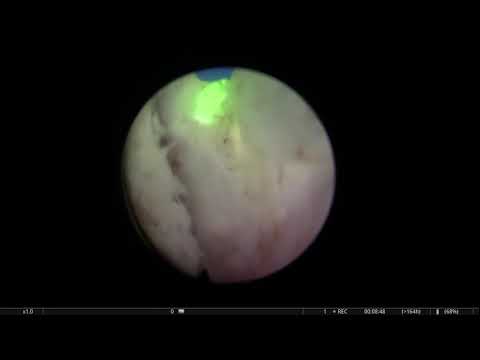
Real-life HoLEP 22: Low power Holmium laser (18 Hz, 2,2 J) in a patient with many BPH nodules
Dr. Fernando Gómez Sancha · ICUA
Dr. Fernando Gómez Sancha · YouTube
Language: English. YouTube audio metadata.
Surgical content for professionals. Contains footage of an operation.
Playback connects to YouTube. Your search query is not sent to the player.
About this video
A low-power HoLEP performed at Hill Clinic in Sofia with an Auriga XL holmium laser. The title records settings of 18 Hz and 2.2 J. The description identifies multiple adenomatous nodules protruding into the surgical capsule as the reason the dissection plane was difficult.
Documented details and sources
Only details explicitly stated in the sources. Missing information does not mean it did not occur.
- Low power
Real-life HoLEP 22: Low power Holmium laser (18 Hz, 2,2 J) in a patient with many BPH nodules
- Difficult dissection plane
The plane was difficult as the patient had many adenomatous nodules protruding in the surgical capsule... I always want to take them all out. I hope you enjoy it.
- Prostatic nodules
Real-life HoLEP 22: Low power Holmium laser (18 Hz, 2,2 J) in a patient with many BPH nodules
Source checked: 2026-10-06.
Available transcript · English
Automatic YouTube captions, not clinically reviewed. Names, technical terms and numbers may contain errors.
Selected spellings of enucleation, morcellation and holmium terms have been edited. This is not a full audio or clinical review; the original captions remain the source.
They may contain transcription or translation errors; check the explanation in the video.
- hello this is fernando with sanchez and this is a video of [Music] a block hollop case that i did in sofia bulgaria with a low power laser the first thing i noticed when i entered the fiber is that it was quite deteriorated and one of the reasons why you have to cut the tip of the fiber with a low power lasers because these fibers do not break during the procedure so they get cracks in the surface they get progressively deteriorated so you have to you have to realize that the tissue effect is going to change if you don't do if you don't do this if you don't do uh cut you know the the the tip of the fiber to get a better effect you know sometimes if you notice that uh hemostasis is not perfect
- if you notice that um the laser is not behaving like you would want to and you wonder why is it bleeding more than usual why you know just think maybe i need to cut the tip of the fiber with high power lasers this fiber is breaking up all the time and [Music] that's why it refreshes itself and you can work more or less continuously here we are using a low power laser the settings are um 2.2 uh joules of energy and 18 hertz and i think that's more or less 40 watts well i should check it out i think it's about 40 watts so um you see there will be a difference in the way this laser behaves in comparison to uh normal whole beam with higher energy settings and higher frequency like the 250 we usually use
- and you will see that there is still more difference with the pulse modulation lasers that are now available that provides much better cutting and coagulation so this is you see this this low power allows you to dissect allows you to coagulate but i think it's possibly a slower laser and sometimes we face difficulties with hemostasis of the large bleeding vessels so here as you've seen the the marking of the of the white line at the edge of the sphincter you know that some people are looking for this white line when they see these videos they think where is the white line no the white line is the line you mark to delimitate the sphincter limit with the apex so there's no anatomical landmark that is a white line
- that you have to follow it's more you have to recognize where the sphincter is and you have to mark this white line which is going to serve as a reference for the rest of the procedure so here you know the entry into the plane has been made the connection between both planes has been made by cutting the tissue above the midline and you see this white line has the role of protecting the the sphincter and especially the sphincter's mucosa we'll get a nice view at the end of how this sphincter was at the end i think it's it's an interesting case because you see there are some apical nodules and the differentiation of the plane is not easy so all the operation we're going to be testing testing if the plane is correct
- if the depth of court is correct you know and there's many many small anomalous nodules that are growing into the capsule and make the dissection a little bit of a challenge prostate endoscopically looked small but it was actually quite big i think it was about 100 grams of tissue that we took out at the end so sometimes it's bustling how an endoscopically short prostate can be very wide and so sometimes endoscopy doesn't tell you the real you know volume of of the procedure these apex i typically cut on their normal a little bit you know because i don't want to cut into the anomaly i want to separate the the attachments that the sphincter with the with the apex you see here we have a nodule so instead
- of cutting through the nodule we're going to try to to see how can we release it this is an apical nodule it's very interesting that sometimes when you find such an apical nodule you tend to find it also on the other side so for some reason these nodules are symmetric and i'm thinking embryological causes here you know that the the formation of the prostate is genetically determined and [Music] it's a very complex process but i i'm i'm thinking that clinically we find that often these nodules are found on the other side also so there must be some symmetry in the embryology of the prostate that that leaves these germs you know these cells that later on are going to give birth to these adenomas nodules and
- they're probably migrating and you know or generating the prostate in a symmetric way maybe it's just uh you know stochastic but i suspect there must be something embryological about this so here we are trying to do the apical liberation early apical liberation so typically initially we do a little bit of dissection of the lower plane then we try to climb you see on top of the adenoma with the scope because when you climb on top of the adenoma the nose let's say of the adenoma descends and then this 12 o'clock fibers are easier to cut you see that we will find more tissue constantly challenging our plane and having us to correct the the plane you see these are this is the mucosa of the sphincter these are the 12 o'clock
- fibers initially they are parallel to the fiber but as i said when you start descending the nose of the noma they verticalize so you can cut them and initially initially i tried to cut them [Music] also to make an initial liberation of the sphincter and then of course as you get a little bit deeper a little bit more proximal with your dissection you start to have to look up because um one of the difficult aspects of early epic liberation is to reach the anterior plane you know conquer the anterior plane communicate the dissection we're doing the ascending dissection we're doing from one side look this is the same nodule on the other side you see symmetric so initially i was cutting through here but i recognized
- the nodule and we will go back to to rescue that so you see initially of course i try to cut on the adenoma and to release the adenoma from the capsule but and sometimes it's not easy to to to to to find where is the good plane and in this case it was remarkably like that so you know [Music] i found a plane and then i realized that there was nodules there so you see here i'm coming back this is a smaller nodule than the other side but it's exactly in the same you know symmetrical position there it goes and here i'm correcting the plane again so you have to be careful at the apex when you have these nodules because of course you don't want to you want to protect the sphincter at all costs so you have to be very careful you know
- we have we have in madrid we have a the visit of richard gaston every month he comes to do robotic procedures with us he has been our master and our trainer and we have been collaborating with him for more than 10 years now so every month he comes and we do a session two or three day session with radical prostatectomies and cystectomies and everything and he is an extremely talented man who has an immense experience and if you see him operating you know it looks as if he's going slowly and he's doing small increments small small dissections here and there you know and he tells you he tells you we have to go millimeter by millimeter and i inherited this this phrase from him because i think in this
- endoscopic nucleation as well as in robotic prostatectomy many times you have to gain one millimeter at a time you know to start liberating the the tissue to start uh i mean to make it possible you know and so you shouldn't get frustrated you know just get things a little better each time advance a little bit a little bit and step by step i think you will get uh to a successful end so here you can see how i am challenging the the the plane all the time so we had an original plane but i see that there is yellow yellow tissue yellow tissue so i'm not afraid to probe you know i'm not afraid to explore because sometimes you have something that looks like a good plane or a reasonable plane but then
- you find that you can go even further to to to to look for the real plane and so you shouldn't be afraid to try i mean if you're careful and you're getting in the capsule you're going to you're going to realize that you're going in the capsule and you will be able to stop before you go too deep so you have to be as i said careful advance in in terms of millimeters rather than having to do very deep cuts and very you know just slowly slowly carefully you know try to try to probe and see and challenge you see if you see that the tissue doesn't look like capsule or it looks a little bit bumpy you know there's a bump on the tissue that looks like a nodule then you have to test you have to see if you
- can raise up these nodules this bph nodules sometimes grow into into the peripheral zone you know so when you remove them they're going to leave a footprint a depression on the on the peripheral zone so this was a specifically i think more difficult than usual i mean in this case because we didn't have a beautiful plane but we had a lot of this nodular let's see tendency you know so here this is still 12 o'clock fibers a little bit lateral and i'm cutting uh very slowly because with with this low power you know with this low frequency um you can you can't cut very fast you know this so here's where i miss the pulse modulation which allows for a much better cutting so you have to go slowly and um we
- we use an auriga laser in in sofia bulgaria and for for these cases and it is a 50 watt laser but if we pump up the power all the way what happens is that the laser stops you know it gets hot and it doesn't let us work continuously we have to wait let it cool down and then continue so i decided to work with this low power sometimes i don't know it it behaves strangely and uh we have to lower the power a little bit more so we have worked uh sometimes at 36 watts and uh well but it it allows you to to do the operation now you can see there's some uh surgeons like jesus calfoni who who defend this low power thinking that the that the um [Music] the low power is going to cause less thermal damage to the capsule and the
- tolerance patience is better i think this is this is just a thought i think there's no clear data that demonstrates that yet and also in my my way of thinking is that when you use higher power possibly you move much faster around the capsule so despite using more power the the time of contact of the laser with the capsule is is less you know so i'm not sure that the laser determines what happens to the capsule i think it's the surgeon who will overheat or overcoagulate the capsule uh or not [Music] so here you can see that also we have a slightly difficult plane we are you know trying to get there but uh this was not a forgiving case you know it was not a straightforward case of course you could probably follow the
- internal plane and lift some anomalous tissue you are removing you know big big anomalous chunk anyway but uh i think if you probe if you if you look around if you see you know when you suspect that there's not much tissue if you go for it you will develop the skills you know to to to move uh in deeper planes let's say with uh with more confidence and i think sometimes uh you can find a remarkable amount of tissue that otherwise would remain there and and uh in my experience it's it's quite safe if you can move around and be careful and recognize the the details one of the nice things of holmium and i think i think it's specifically important in this this operation is that you need to be present
- you know you need to be actively concentrated on analyzing the details you're getting from the anatomy you are analyzing the distance you know how far are you from the tissue what tissue effect are you getting are you able to coagulate at the same time as you dissect or not you know these these lasers these low power lasers have a worse first pass effect i think but uh you then post modulation lasers i'm i'm referring to um so you have to be present and you have to analyze you know all the details you're watching you know is this tissue looking good should i go deeper you know sometimes it gets you into a little bit of trouble you know for example that plane there looked a little bit deep so i'm just
- guessing i'm just finding out um where is the plane going in this case you know so that's the idea correcting you know checking the tissue if that area looked a little bit deep i'm going to tilt the fiber a little bit closer to the to the adenoma so my dissection is not going to follow the path to the deeper areas but just stay in the in the interface between a domain capsule so and here again we see that the block approach provides us with a very good visibility we are irrigating just this small space between the capsule and the adenoma and even when there is bleeding you know the the the blood is going to be washed out and the visibility will remain clear so you see as a holy surgeon you have to
- be a very delicate delicate surgeon who can you know tailor tailor your incision and i think we will see also in the posterior aspect how that is true you have to check always have the feedback from the what you're seeing you know and adapt your your what you do today to the situation that was a deeper plane that i liked more and [Music] i was trying to follow that plane [Music] sometimes this this attitude gives you let's say several possible planes and maybe you will see that we will leave a piece of tissue there and that we will remove at the end but as i said i think it pays off to be thorough to be good at removing the whole amount of tissue when you when you leave these nodules i remember there was a
- book by john blundy on transurethral resection of the prostate this was the bible for most people you know who wanted to learn to rp and john blundy used to do his own drawings you know and he illustrated his books with his own drawings and they were beautiful drawings and very conceptual and he was really a master you know a guy who taught a lot of people and he passed away some years ago and i was very very sad he was really a gentleman and so he had a graph where he showed the the prostate you see this is again a nodule you see that so you have to probe you have to see if what you're doing is correct or if you can go a little bit deeper and and do a better job uh sometimes the plane is so clear that
- there's no doubt but some other times you have to be guessing you know and trying okay so john blandy did this graphic where he showed the tiwar fossa so it was like an empty orange and he painted a small an anomalous nodule left behind so in the moment of the operation the the fossa is quite big and this nodule only occupied a peripheral you know area in this so there was a big cavity a small bump protruding into this cavity which was the nodule but then he said several months after you know he painted a much more collapsed prostate and then this small nodule which didn't seem to be relevant after right after trp became obstructive because the prostate had collapsed it the total volume you know of of the
- prostate has had been reduced and then this nodule became more relevant and obstructive so that's why i insist and i have seen many cases where one of these nodules caused problems i remember one patient i did a nucleation we took out 100 grams but we left a small apical nodule and he came back to me several months later with a catheter and he said you know i went to i went to to another colleague and he he told me he did a hystoscopies he said you you were not operated properly and i took out the post-operative ultrasound of the guy and showing this amazing fossa and i took out the histopathological analysis and it was 100 grams of tissue you know and i said what's going on and he had just an audio at the apex
- which was causing this uh embolic effect so it it obstructed my tradition completely so we did a removal under sedation uh of this very small nodule in obstructed nodule at the apex and i learned the lesson so despite removing a lot of tissue if if you want to achieve your goal which is to provide a long-standing effect you know definitive effect you have to be thorough and look for the nodules so here this is more anterior you see i'm taking my time trying to find my way you see one of the nice things of of the block approach even when you have a relatively difficult plane like this where you have to search and probe and and correct and then you have double planes and like that is the visibility you know when you have
- good visibility you can you can progress you understand what's going on even when you have several several little planes after all we are uh trying to remove the the meat from the orange from the capsule now to to to peel off like te baja was saying the other day i like to peel off you know it's not dissection through cutting its dissection through you know localization of the right plane and development of this of this plane all right so here again this is a posterior aspect you see sometimes the the bump of the middle lobe towards the posterior aspect uh makes a depression there and uh it is confusing i i have i have thought about this a lot you know the middle lobe is pushing down and it makes a depression on the capsule
- then the lateral lobe is pushing lateral so many times when you go from the posterior middle lobe to the posterior lateral lobe you see there is like a change of plane sometimes well we're not seeing it now anymore but i have referred to this quite often that many times you have to recognize that there is a lateral plane like here you see and then you get to that point where what you're seeing is the the the impromptu the imprint of the middle lobe on on the capsule and there seems to be a change of direction so you know always try to go to the to the limit always try to find this this this nodules and see if if you see yellow tissue you know probe it because go there and see if you can take it out because
- that's really and i don't know no matter and there we are we we get very interesting cases in in sofia bulgaria because their healthcare system is quite [Music] difficult to access and [Music] excuse me someone's ringing the door well i'm back sorry for the interruption um as i was saying the healthcare system in bulgaria the primary care is difficult to access and many many people just go to the hospital when they have a problem you know retention we operate more patients in retention we operate more patients with stones so we see let's say more advanced cases than we usually see for example in madrid so here uh you see how careful and how nicely you can decide uh what plane to follow you know sometimes you have a very nice
- line of attack that tells you exactly where to go and the feedback you get from the tissue is is good you know you know that you're in the right place in the interface there's no yellow tissue left behind and then it's a little bit easier to to progress sometimes you're more in doubt and then you have to start looking around a little bit trying here and there and see which could be the good plane if you get the information that the plane is a little bit deep because you're starting to see capsular looking tissue then you have to correct and and this is it really this is a this is the the essence i would say of the dissection of the plane if you are careful and you don't do crazy movement or crazy cutting
- or you don't want to rush it too too much then you're going to be okay so it is a combination of of of skills you know the skill to position the fiber where you want the ability to predict you know what is the energy going to do in the tissue to to dissect the plane and then the understanding of the anatomical information you're getting from what you're seeing you know the look of the plane the color the consistency the the presence of fibers you know the direction of these fibers is also going to tell you a lot and [Music] sometimes you have to also keep in mind the spherical like shape of the adnoma because also you have to take into account where are you accessing the plane from you know because sometimes
- you are under the adenoma dissecting the the posterior plane sometimes your lateral sometimes you are doing the lateral plane from below sometimes you're doing the lateral plane from above and that can change a little bit the relationship of the direction of the fibers you are cutting and the direction of the plane all right so you have to take all these things into account to start you know to understand what's going on of course the the excellent visibility helps a lot you know not having blood all the time that is blocking your vision it allows you to and here it it pays off to be careful and carry a good hemistasis and with low power lasers you have to often go back stop the vessels that are
- bleeding and try to this way carry a good hemistasis so when you finish the inoculation phase you can move on to musculation relatively fast it's interesting how surgical speed works because if sometimes you see surgeons like richard stone i was mentioning earlier when you see them operating it seems that they're going very slowly but they progress very fast because they don't lose time you know you don't lose time everything you're doing is contributing to advance in the case you know it's contributing to to move things forward but not necessarily you're moving too fast or anything just what you're doing is sound is solid is properly performed it contributes to the to the goal to reach the goal
- that you want to reach so this is the bladder neck anteriorly and we had done an entry into the bladder and now we have to cut the bladder neck fibers here i think it's where the low power falls a little bit short you know when you have to cut fibers it's very boring it takes a while you have to be very patient to to to it is it is logical it's like uh uh how do you call them the the these guns the repetition guns the gun machine or the yeah so this this laser is now firing [Music] as i said 18 bullets per second you know a 2.2 joules this would be the caliber of the bullet the bullet and so if you have a machine gun that fires many more bullets of course you're going to cut the tissue much faster it's
- only logical so it takes a little bit longer but of course if you know what you're doing if you do meaningful things if you keep a steady hand it's very important many times when i see videos from other colleagues it's moving around so much they're jumping from place to place you know it's difficult to to understand where you are where are you going you know just keep a steady hand move slowly move in slow motion you know you don't want to move too fast and uh whatever you do you know just has to be logical and this way you you get to the end also i have to say cultivating this patient approach to hollap in the sense that you are progressing slowly you know you're you're not let's say you all
- there you're not wanting to rush it you know just trying to add a little bit to the operation by doing something which is correct which is good which is safe which enhances visibility which you know helps you progress through the case this prepares you very much for the very large glance you know when you do very large glance it is very important to be patient to be calm you know because uh and to progress you know this philosophy will take you to finish the case sometimes when you of course you're building up your experience you have to face a larger gland and you cannot get anxious you cannot get to panic you know you have to be quite relaxed and just move forward it'll take longer or no you know you shouldn't have this
- pressure you shouldn't put it on yourself and this way you will get to do the large glance as well of course in this operation if you stick to the principles you know progressing in the interface not going excessively deep removing the abnorma keeping good hemostasis etc then you're going to be able to do this separation successfully so this is the end of the operation just cutting the six o'clock attachment here sometimes if i feel it's more more comfortable here i lost my way a little bit but if you feel that it is more comfortable i would turn my fiber to six o'clock sometimes you know it's okay like that but there is uh that's the end of the nucleation phase all right so we carried a rest a
- reasonably good hemostasis maybe there's some small bleeder it's very easy to to tilt to push the normal into the bladder and then we will do the trimming phase and the hemostasis phase this is what we are seeing now that with pulse modulation it is not so needed anymore because you get a much better first pass hemistasis and [Music] but overall i think the visibility is quite good just have to find if there's any vessel bleeding you know these bumpers these pumping blood vessels kind of secure visibility and can complicate the post-operative recovery here i realized that i left you see some tissue but this is not so important i think this is something you can perfectly do at the end of the operation
- you know if you see any remaining tissue just remove it because these little bumps of tissue they're viable i mean sometimes they're so correlated that they will just fall off but if they're viable you know if there's bph tissue there you will you can have this situation where the prostate will collapse and the nodule will become more prominent and maybe exert an obstructive effect so that's a little bit more hemostasis and a little bit of struggle to remove that piece of tissue due to the limited cutting properties you know my machine gun here is not so fast so i have to be careful and fire it you know several times until you can get your it's important to remember that you you cut with the light so you you don't cut
- with the fiber so you shouldn't be using this the fiber as a sword to to cut the tissue because it won't cut it sometimes well you get a little bit closer trying to get a an enhanced cutting effect but the truth is that it is the light that has to cut the tissue and not the fiber so trimming phase finalizing phase making sure that there's no big you know remaining nodule or tissue or even i mean if this is already almost dissected but it's still hanging from there it's probably going to cause the patient some discomfort ultimately it will fall off and he will have to pass it you know and he will be very scared if he passes a piece of tissue so i think it's a good idea to to to check if this happens but you can see
- there's a nice fossa there's a reasonable reasonable visibility here you see that the fiber is again a little bit degraded at the tip so if if you are doing hemostasis and you find that the hemostasis is not happening properly then just take it the fiber out cut it with uh normal scissors you don't need to have specific scissors to to cut the fiber just cut it with a scissor and that's the nodule that's a noma for ready for motivation so that's the change we have an excellent team in sofia bulgaria it's so comfortable to work with the nurses and the people who are helping the aesthetic team in the operating room they really work very very hard to [Music] to make this very very uh successful you know
- situation sometimes we do eight nine even ten cases in one day my personal record is 13 cases one day that was too much maybe but uh we can comfortably do eight or nine cases from eight in the morning to 5 pm and that's because they have a very fast turnover they're extremely efficient team in sofia bulgaria i think this is one of the reasons why visitors benefit not only for the i mean not only from seeing how the technique works and how things are carried out but also it's very inspiring to see the teamwork and how hollap which was traditionally you know a complex operation which could take hours you know if you streamline all the processes so the nurse knows her job the anesthetist knows his job the you know person who is
- helping you with the more slater knows the most later very well then thinks things happen a very organized quiet relaxed way and we can we can do this uh eight or nine cases sometimes you know 100 grammars you know typically in less than one hour this morcellation is very efficient now so this is a big big advantage and uh it allows us to take out tissue very very fast very very fast so it's no longer a painstaking you know process where you had to wait and you couldn't see and then you had to go in and coagulate again and empty the bladder fill it up again you know which was time consuming and exhausting for for for the surgeon and personnel around the surgeon and it's now much easier much nicer much faster
- and it really changes the picture a lot so i'm very excited to see that we get pulse modulation lasers we get fast oscillators i think soon we will have a lot of options for miniaturized endoscopes so instead of using a 26 french we can use 24 french 22 maybe so it would be very nice to have better hemispheres and like that so here i think the the most relation of the big piece has finished but i decided to have a last look last look you know in in bulgaria it's a poor country and [Music] irrigation bugs are very expensive so we try to make sure as much as possible that the patients will not really need a lot of irrigation post-operatively because that is quite expensive and it's uh so i have to be very careful and it's
- i'm much more liberal let's say to to use the the receptor scope at the end of the procedure to check if there's any you know mucosal bleeding this is the most typical bleeding postoperatively you know the mucosal edge you know the explosive nature of hope sometimes makes the mucosa incision a little bit rough in the same way when we cut the mucosa at the apex we get bleeders when we cut the mucosa at the bladder neck we get bleeders also so and these bleeders often are looking towards the bladder and when you go in with the laser fiber you don't get to see them so easily so sometimes this this final check with the reciprocal is helpful and it reduces the amount of uh poster body bleeding probably we put a
- catheter the bleeding will be there for some time and then it will subside but as i said we try to be as though as possible to prevent [Music] bleeding post-operatively if there is bleeding post-operatively i think it's imperative to go back to the operating room not let the patient bleed you know sometimes you you think if i wait maybe it will subside but i think you see bleeding that is abnormal i think early early and look at the sphincter right it's a excellent preservation i think this is the end of the procedure i think there's a small nodule there that has to be taken out and possibly the end that's uh going in again yeah going in again to check the bladder and i think that's that's the end so i hope
- you enjoyed the case thank you for your attention see you around bye-bye you