
Surgery
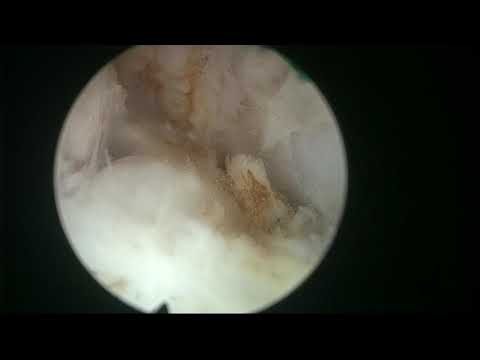
Real life case 11: a biggish prostate with a subcervical nodule.
Dr. Fernando Gómez Sancha · ICUA
Dr. Fernando Gómez Sancha · YouTube
Language: English. YouTube audio metadata.
Surgical content for professionals. Contains footage of an operation.
Playback connects to YouTube. Your search query is not sent to the player.
About this video
A HoLEP case with a subcervical nodule in a relatively large prostate. The description focuses on dissection of benign prostatic nodules extending into the capsule and retrotrigonal space. It gives an anatomical teaching focus without a numerical size or outcome.
Documented details and sources
Only details explicitly stated in the sources. Missing information does not mean it did not occur.
- Prostatic nodules
Real life case 11: a biggish prostate with a subcervical nodule.
Source checked: 2026-10-06.
Available transcript · English
Automatic YouTube captions, not clinically reviewed. Names, technical terms and numbers may contain errors. Check them against the video; complete audio coverage has not been verified.
They may contain transcription or translation errors; check the explanation in the video.
- so we're getting ready to start okay so this is a 65 year old man who had a lot of urinary symptoms little bit tight Bob are you hipsters in Turek urethra I'm going to go in very carefully carefully there we are coming in and he is very bothered with his symptoms despite medical treatment with dual art and they estimated his prosthetic volume by ultrasound as 70 grams 70 grams probably probably
- somewhat bigger let's see that's the you all in one side Rebecca dated bladder as we always nearly always see in this patients so we're going to use the mostess fiber again that's the sphincter limit until early so I'm going to mark here both sides and I will try to bring the white line downwards downwards and then towards the barrel huh here you see this is the sphincter edge to edge so we are in a good good position
- that's the pipeline from 12 up of fibers at the beginning of the procedure they are horizontal and as we dissect the Anoma in the epics they become more vertical then we are coming up white line stablished almost circumferentially i'm going to cut this optical fibers in the lower aspect here that will give me very nice access to the to the lane down there here I'm going to do the same just cut the attachment here that's going into the direction of the vero that's actually the prostatic plane we can dissect a little bit mechanically
- if we need to but many times you can just continue with the dissection you started with energy here we're going to go above the vero and try to connect both sides there we are you know we have joined the posterior plane and now I'm going to put my favorite 12 o'clock as I always do and try to control this bleeder a little bit aggressive bothering us here a lot stay
- still or do the helicopter around the vessel to to stop it so here it looks like the line of attack in the posterior aspect we can see some stones that usually means we are in the right right plane and I'm going to move dynamically from side to side trying to develop this posterior plane carefully letting the energy do its job as we encounter new vessels see it's a big one it's a big prostate that it's not not too small
- can tell by the length of the this line in the posterior aspects of the width of the prostate it's a wide process right Buster's so as you see this is always the same developing the posterior aspect until it's comfortable there we go I'm trying to keep the laser pointing in our direction that provides the dissection and that it's also respectful with the capsule huh we don't want to fire directly against the capsule okay so that's the posterior dissection now you can see this is the sphincter here it's inter and all the epochs has been released posteriorly we have now to
- release the anterior part so I'm going to cut only a normal following the white line this was clearly a nodule you see apical no do so I want to take it out I don't want to leave it there so I don't mind cutting on the Annamma first and then I will go and look for the good plain it's always the same always the same that's a systematic approach to blocking in creation you have to do a little bit of dissection the posterior lateral tissue to give some mobility to the epics but here you see we are under the sphincter and we're going to cut following the white line towards midline here
- that's horizontal cutting but again then we will try to go look for the good plane what we did was to separate the sphincter from the sorry something was pulling my cable and it rotated the scope here I'm coming more interior again continuing with this it's a horizontal line this is a 12 o´clock fibers then once we saw horizontal at the beginning have verticalized now you see we are pushing the epics downwards I'm putting my scope here and that's bringing the fibers you know into a vertical position
- so then they're there now much easier to cut here I want to follow the uppermost plane anteriorly we know that we are in the white region so the sphincter is not going to be affected by this but we don't want to cut through the ethical interior i've known as a stitch we just want to go above it all right there we are let's check the other side here we have the white line again white line I'm going to cut see here on the prostate to make a five-millimeter 3 4 5 millimeter depth incision that will liberate the apex from the from the
- sphincter and then we can look for the good plain sometimes I'm a little limited by the leg of the patient but it's usually not a big not a big deal there we are so coming up coming up coming up but remember the only don't get carried away with your dissection because you could be stretching this thing just go out and cut these fibers don't continue your dissection that can damage the sphincter cut the fibers where you want and on that it's rip where it once okay there we go coming up coming up again trying to follow the uppermost plane and
- to connect to the plane we developed on the other side and we are see the beauty of this Moses system is that the quality of the cutting is very good [Music] and see whatever it touches there is a good hero status so we can progress with our dissection let me pose Elise mahidol tone overpower these people speaking around me and get disoriented so there we are progressing anteriorly we connected already in the midline and
- clearly so the apex is completely free now see we were able to connect and we can cross from one side to the other side and clearly and it will go out you're going to see the the sphincter perfectly preserved and we can continue with our dissection this prostate has a beautiful plane so it's going to be very easy it looks as if we're going to be able to progress very fast now that we have this let's say circumferential plane to develop just have to adjust to the shape of the prostate go around it follow the line of attack circumferentially and try to keep it in the same level of dissection don't dissect one side to leap and then the
- other side so you should progressively cross from side to side and advance in the direction of the bladder neck in both sides so here many times people talk about high power and low power you see if you use high power about the time of contact of the laser with the tissue is very limited like now because I'm moving by fast you see moving quite fast it's giving me very good hemostasis but the contact time of the laser with the tissue is very limited might be less damaging than using a low-power laser and moving the fiber very slowly you know and burning the tissue at low power but depositing a
- great amount of energy in the tissue so I think the power settings you are using are not the only determinants of what's happening with the tissue how much your coagulating how deep this population is reaching because there's a mixture of factors they're not only the laser settings but also the manipulation of the fiber so if I am asked I'd rather use the high-power laser because it gives better dissection properties you know the blast in the tip of the fiber is produces a mechanical wave that probably done six playing better than the lower power see this is the circle
- of fibers this is the vertical fiber so we can cut here so as I said the energy settings the laser you use is one thing and then the other thing that is super important is the surgical technique so you don't stay too long in the in the area of interest we're going to have a fast dissection and you're going to have a very nice violation as well this makes this gives you the chance to do very fast a nucleation procedure and very safe as well because it's less bleeding there's good visibility and you don't have to
- struggle with the vessels sometimes when you use low-power coagulating the big arteries can be a challenge and I work half of the time with the low-power laser so that's it's not that I don't use it I use it every month but if you ask me what I prefer I prefer this and I don't perceive any I'd say clinical difference patients do not seem to complain more of Missourian problems with the high-power laser than with the lower power laser I think if I was blind to the treatment that was used I wouldn't be able to tell the difference
- okay this is very interesting you see this is a nodule you see the plane seems to be going up there but here there's a big unnoticed nodal so you have to follow this nodules of course I'm going to keep the fiber very close to the adenoma you see so you can only make a coagulation effect on the tissue below which is going to be compressed surgical capsule which has gotten very thin over the years I guess and so it would be easy to perforate there but if you are careful and you keep the energy pointing towards the Anoma rather than the capsule itself you're going to be able to say remove the tissue without
- perforating but it's always let's say sensible to I don't know because now I see vph tissue everywhere let's see maybe I didn't take the right playing or maybe there are more nodules around here I'd like to explore this when I see tissue that looks like adenoma I'd like to explore this because many times you can take it out it's a be more thorough in your clearance of the enormous tissue and take the nodules out these nodules are BPH nodules and they can grow so they could say grow after
- the operation so you don't want to leave Vth nodules insightly you can help it this is lateral aspect I'm coming up coming up I want to connect to the ladder neck where we opened it see that's bladder neck so we can open the bladder neck follow the circumference of the bladder neck here it's bladder mucosa very mucosa here we have to check where are we in relation to the retinal orifice it's relatively close now all of that is free
- and I was checking maybe we have to remove the tissue from here maybe it's just a small amount and it's not going to be relevant but I like to explore this because sometimes you see if we go deeper I think we are getting too deep so I will stay here it's a little bit thin thinning of the capsule so I will stay in the uppermost area here you see maybe I was already following the good plane but there's no damage in looking it up for example this is an audio it's the b ph nodule they grow into the capsule and they tend to leave a footprint in the capsule when
- you take them out so and happier if i can take them out there we are it's important to stay until your and to stay in contacts with the nodule to protect the capsule which is very thin in this areas in these regions but slowly we can progress also you can vaporize let's say small amounts of tissue with your living some enormous tissue behind ok so let's see what is happening around here yeah see this is posterior aspect here I'm trying
- to remove all that tissue there trying to get my fiber up every time I pass from one side to the other I correct a little bit the position of the fiber so it goes further up and allows me to dissect the apical sorry epical no the inaudible sir I'm a little distracted today anyway I hope you enjoy the videos anyway my intention with these videos is to give you many cases to watch different cases easy cases difficult cases you see I want you to make I want you to see me making
- mistakes and see how I behave afterwards I want to give you some say background to how to tackle situations and problems encountered when doing communication and I guess the only way to do it is to post videos of surgeries even when they are not perfect or ideal of course when visibility is not very good or the plane is not very clear or the operation is more difficult or when there is a small capsule of perforation that of course is very very unlikely to affect the surgical result so even when
- we do a difficult case or when we do a little bit longer case or patients do really well because we are removing the hole in oh man oh we are talking about say having some difficulty during the operation and that's the information you want because you want to see that what it's happening to you it's happening to me as well just I I don't pay too much attention or I mean to the the problem I mean I don't get anxious when I see a small perforation and maybe you know when you start getting anxious in the operation you start committing mistakes maybe you do something that is not needed so there we are we are about to connect now posteriorly in the bladder
- neck we have to have a look at this ureter orifice there's a middle lobe here that is growing in retro trigon only so that's why we see this very very flimsy very thin capsule see where the UO is sitting there okay the other side was a little bit closer at this stage I think we can try to flip their normal into the bladder so many times just lifting it and pushing it will go sometimes it's not so easy and then what I try to do is to come here so lift a little bit push one side you see push one lobe so to imprint a rotational movement in the normal so instead of taking it as it goes in the in the in the prostatic fossa I try to take it it
- make a rotational movements to to push it into the bladder and here here we can already access the bladder neck much better this is retro or trigonal this is some letter neck Mufasa it's one of the typical places where there can be some bleeding and here we are this is the last attachment maybe look at that that's a nodule we took out which was sitting here you see we can leave it there but it will grow but if we take it out with care it's not a big problem it's just a little bit thin capsule there when they bladder
- distension ceases and we put a catheter we will take batter out tomorrow and the patient will void without any problem so now we are finishing the operation this is the end let's push here and do some hemostasis there we are so that's a you this is the other you oh this is the posture you see the quality of homelessness is with Moses is fantastic and this is a sinker huh perfectly preserved all the mucosal preserved and see how we pose just a little bit retro trigonal a violation that's mostly [Music]
- okay let's change the instruments again there you are and it's morcellator that's the bladder neck is going to be my reference I am feeling the ladder up while I put the instrument inside because when we do the change of instruments there's going to be some emptying of the ladder so this is the most Latian position I know where the bladder neck is just below the most later I'm pushing my hands a little bit downwards so the tip of the scope elevates and I keep the tip of the scope a little bit far from the from the blade tip because I want to see black
- triangles on the sides of the blade they tell me that I'm not anywhere near the bladder wall so this will take some minutes to oscillate because it's a pretty big but with this millennium or later we can take out 10 or 11 grams per minute so probably it will take us six or seven minutes to remove this tissue many people think that in block procedure is not good for the larger glance and just today I treated a histology report from a patient coming back with 294 grams
- tissue waited by the pathologist this was an Walker case I did it with Moses patient left the hospital the next morning and he came to see me one month later extremely happy and he told me that he was dry from the very first day so I think this technique it works wonderfully well across states that are all sizes and I think it it is a beauty because it's fast it's safe we work with the good visibility at all times and it allows for a fast operation and fast recovery safe operation patients need very little for surprisingly they can go home fast they feel well they are not
- anemic you know if you do an open prostatectomy or a Terp many times they leave the hospital with anemia and it takes six weeks for them to go back to normal life on these patients many times two or three four days after the operation they can go to work we can do a normal life I tell them not to have sex and not to do exercise for two weeks as a precaution but otherwise they can go back to a normal life very very fast so providing them with this solution that is so definitive and so satisfactory these patients have a lot of symptoms you know they have very damaged bladders and they tend to recover some take longer than
- others you know depending on the time their bladder hyperactivity was let's say happening but there we go we finished