
For patients
HoLEP: prostate size, retreatment and tissue analysis
Dr. Fernando Gómez Sancha · ICUA
Dr. Fernando Gómez Sancha · YouTube
Language: English. Editorial classification in the patient catalog.
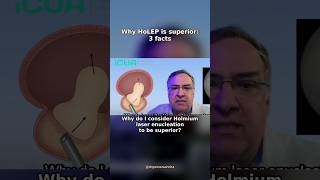
Playback connects to YouTube. Your search query is not sent to the player.
How to interpret retreatment figures
Retreatment rates depend on what counts as another intervention and on the follow-up period. A percentage without a stated follow-up cannot be directly compared with rates at five or ten years.
At five years, Epic Cosmos (2026) reported surgical retreatment of 4.4% for HoLEP/ThuLEP combined and 7.1% for TURP. This is an unadjusted observational comparison between groups; it does not establish superiority for every patient.
Editorial clarification based on the cited sources. It does not establish a new medical review of the video.
About this video
Documented details and sources
Only details explicitly stated in the sources. Missing information does not mean it did not occur.
No clinical case details have been extracted for this video.
Original title and description on YouTubeSource checked: 2026-10-04.
Available transcript · English
Source: subtitles available on YouTube.
They may contain transcription or translation errors; check the explanation in the video.
- Why do I consider Holmium laser enucleation to be superior? Because of the data. Firstly, it works for any prostate size, there is no limit. I have operated on prostates from 25 to 30 grams up to over 500 grams using the same technique.
- Secondly, the long-term re-treatment rate is less than 2%. Compare that to the 15 to 20% for transurethral resection. And thirdly, you obtain tissue for histological analysis. If there is an incidental cancer, we'll detect it.