The church and the modern cystoscope, a story of Maximilian Nitze
A light inside the bladder helped transform urology.
Publicly demonstrated in 1879, the Nitze–Leiter cystoscope combined optics with an internal light source to allow doctors to look inside the bladder. It opened a new era in urological diagnosis and helped lay the foundations of modern endoscopy.
Discover the origins of cystoscopy and the ingenuity behind this milestone in the history of urology.
Sources and image credits
History of cystoscopy, EAU:
https://history.uroweb.org/history-of-urology/diagnosis/looking-into-the-body/nitzes-cystoscope/
Portrait: Wellcome Library, London, L0002815, CC BY 4.0. Restored, colourised and animated using AI; body and setting reconstructed.
https://commons.wikimedia.org/wiki/File:Portrait_of_Max_Nitze._Wellcome_L0002815.jpg
https://creativecommons.org/licenses/by/4.0/
Cystoscope diagram: Willy Meyer, 1888, figure 1. National Library of Medicine / Internet Archive. Public domain. Cropped figure.
https://digirepo.nlm.nih.gov/ext/dw/101282430/PDF/101282430.pdf
Historical recreation
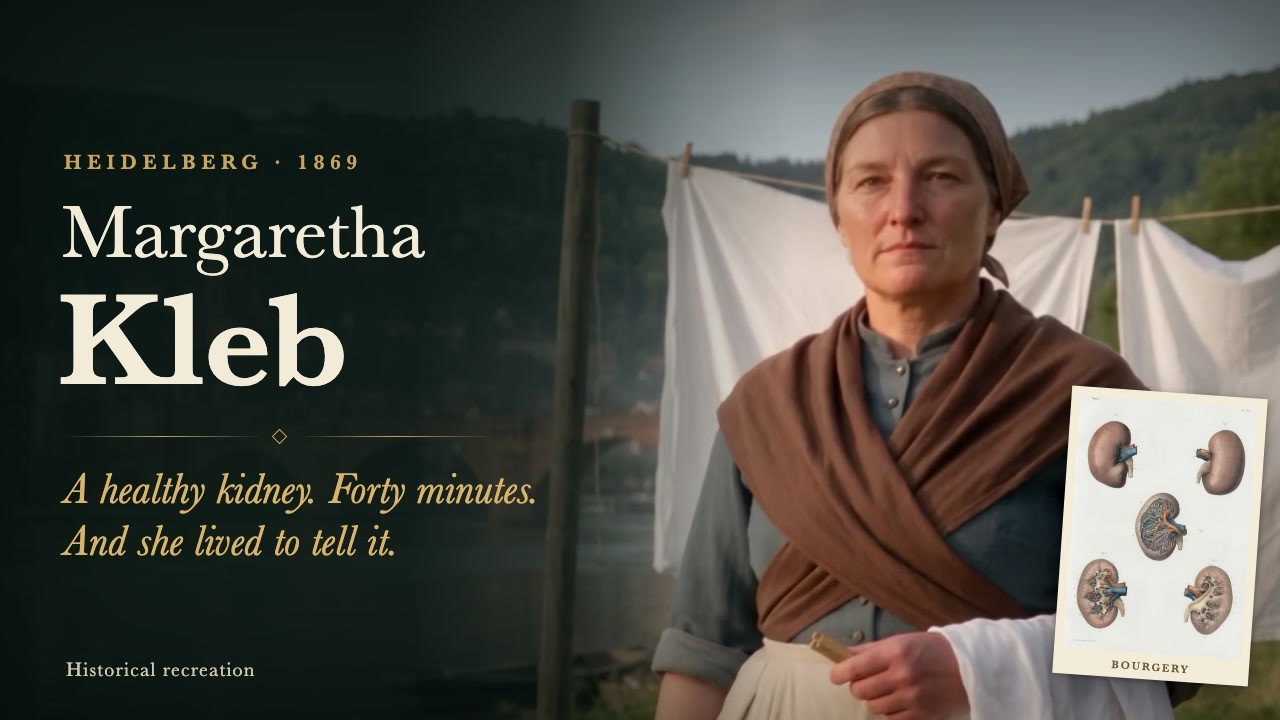
This video uses AI-assisted historical recreations. The character and voice are dramatizations. The church anecdote follows the historical account used for this episode; it is not presented as a documented verbatim quotation from Nitze.
If you or a family member would like advice on a urological problem, meet the ICUA team and request an assessment. Contact ICUA