The Emperor and the Wax Candle: Charles V, His Surgeon and a Secret Stolen Twice
An ailing emperor, a surgeon who cured himself and a secret that was stolen twice.
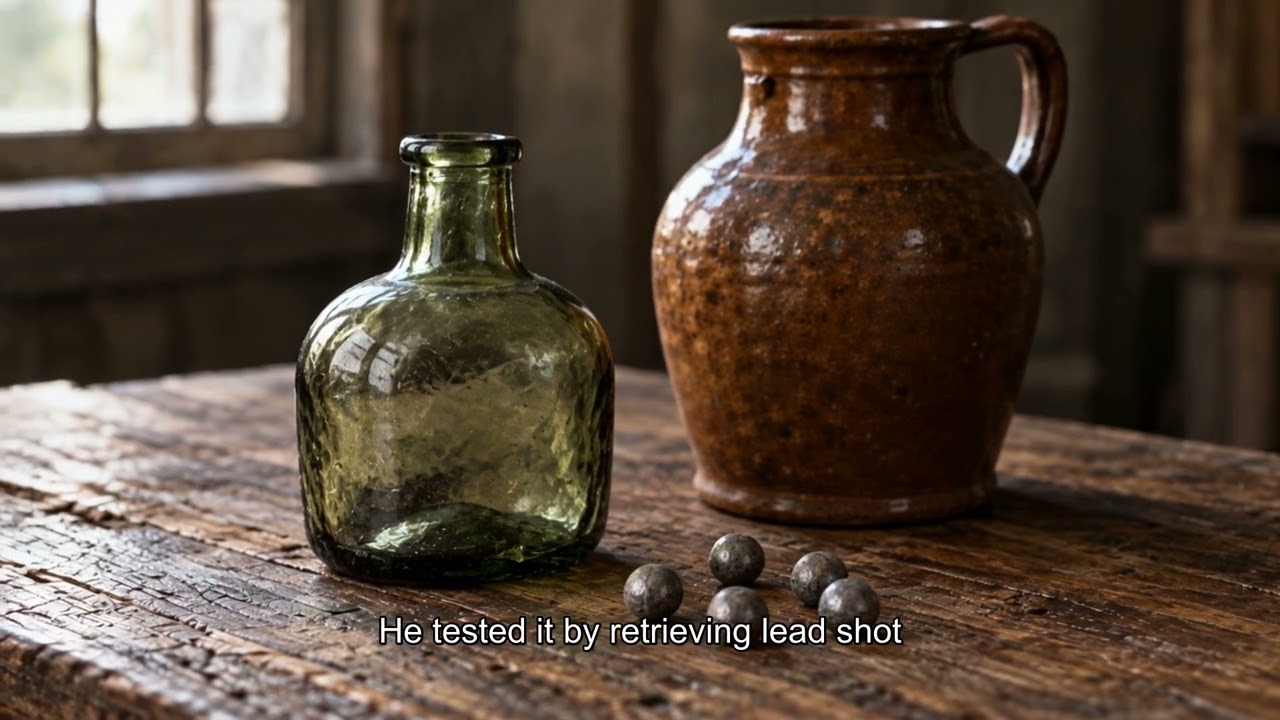
Yuste, Spain, 1558. Charles V, retired and crippled by gout, has little faith in physicians, but he remembers one who was worth something: Master Philip, his Portuguese surgeon. Philip suffered from a "carnosity" that blocked the passage of his urine. He cured himself with a small wax candle coated with a caustic of vitriol, orpiment and verdigris. An apothecary stole the secret and took it to Rome; another stole it from him and taught it in Valencia, where the city paid him three hundred ducats. The cure ended up in Francisco Díaz's book (Madrid, 1588), regarded as the first treatise of urology.
Did Charles V himself have carnosities? Was he treated with wax candles? No document of his time says so. The man who had the carnosity and cured it with the candle was his surgeon, not the Emperor. It has long been repeated that Charles learned to catheterise himself, but that version comes from a misreading of the original text. Only one sentence survives about the Emperor's urine: in March 1558 his physician noted, with concern, that a great deal of urine was staying in his body. From that single line the cause cannot be known. That is why, in the video, Charles himself sets the legend straight.
What was then called a carnosity corresponds, in most cases, to what we now call a urethral stricture. Today it is assessed with endoscopy and imaging, and treated with dilatation, an endoscopic incision (urethrotomy) or reconstructive surgery (urethroplasty), depending on each case.
Historical context
- Main source: Miguel de Leriza (Valencia, 1597). The inventor of the cure was "a great surgeon of the Emperor Charles V, who was called Master Philip", and it was he who "had a carnosity". The 1922 edition of Francisco Díaz's treatise sums it up: the physician discovered the cure because he suffered from the condition himself, "and not King Charles I, as some have wrongly stated".
- The letter is from Dr Henri Mathys, the Emperor's physician at Yuste (15 March 1558): gout, a sore on the little finger and urine staying in his body. It is the only urinary reference in the Yuste correspondence published by Gachard.
- Charles V arrived at Yuste in February 1557 and died there on 21 September 1558, of malaria. Andrés Laguna (Rome, 1551) had already described the cure before Díaz.
Sources and image credits
- Leriza M de. Tratado del modo de curar las carnosidades y callos de la vía de la orina. Valencia, 1597 (1665 reprint): https://archive.org/details/recopilaciondet00lerigoog
- Díaz F. Tratado nuevamente impresso de todas las enfermedades de los riñones, vexiga y carnosidades de la verga y urina. Madrid, 1588 (1922 edition, pp. 51-52): https://archive.org/details/tratadodetodasla1922dazf
- Gachard LP. Retraite et mort de Charles-Quint au monastère de Yuste, vol. II. Brussels, 1855 (pp. 326-327): https://archive.org/details/retraiteetmortde02gach
- Plates shown on screen, all authentic period material: Enea Vico, Charles V, 1550 (Rijksmuseum, CC0) · Charles Clifford, Yuste, c. 1858 (Archivo de la Diputación Provincial de Cáceres, Public Domain Mark) · Vesalius, Epistola, 1546, and Paré, Dix livres de la chirurgie, 1564 (BIU Santé, Paris, open licence) · Laborde, Voyage pittoresque, 1811 · Leriza, 1665 ed. (Internet Archive) · Díaz, Tratado, 1588 · Ortelius, Regni Hispaniae, 1570 (David Rumsey Map Collection) · M. Jadraque, Charles V at Yuste, 1877 (Museo del Prado) · Titian, Charles V Seated, 1548 (Alte Pinakothek). Those with no licence stated are in the public domain, via Wikimedia Commons or Internet Archive.
Historical recreation
Charles V, his voice and the gallery at Yuste are AI-assisted recreations. They are not original footage or recordings. His face is based on Titian's portraits. The narration is a first-person dramatisation based on documentary sources, not a literal quotation. Three captions (Mathys's letter, the ingredients of the caustic and the sentence from the 1922 edition) were typeset by us from the sources; they are not facsimiles. Quotations are translated from Spanish.
If you or a family member would like advice on a urological problem, meet the ICUA team and request an assessment. Contact ICUA